
Advanced Search
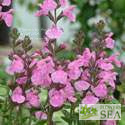
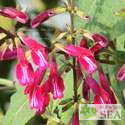
(Violet Calyx Sage) Here's another abundantly blooming sage from the cloud forest slopes of Chiapas, Mexico. Violet beelines mark the lower lip of the crimson blossoms, which are so numerous that it can be difficult to see the foliage at times.
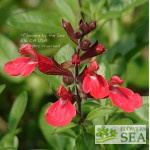
(Lipstick Autumn Sage) Similar to a little bit of lipstick on a pretty face, the rosy flowers of this hardy, heat-tolerant sage add a finishing touch to a perennial Salvia border. The creamy pinkish-red blossoms have a contrasting white throat and are cupped by rosy brown calexes on long spikes.


(Giant Brazilian Sage) Yes, this one is gigantic. The first season we grew this heat-tolerant sage, it reached 8 feet tall by July! Masses of small, red-orange, trumpet-shaped flowers attract hummingbirds and honeybees to long, upward curving flower spikes towering over heart-shaped foliage.
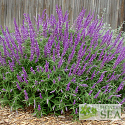
(Santa Barbara Mexican Bush Sage) This compact Mexican Bush Sage was found in the Santa Barbara garden of Kathiann Brown. It is, without a doubt, the finest short Mexican Bush Sage -- hardy, tough and long blooming. Add drought tolerance and dark, rich purple flowers to its list of merits.
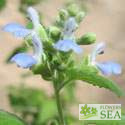
(Mejorana) In Spanish, Mejorana means ‘marjoram.” Similar to oregano-type Marjoram – another Mint family member -- this sage is used to flavor meat dishes. Our cultivar, which is native to Texas and Mexico, has lovely bluish-purple flowers that bloom summer to fall amid fragrant, fine, furry green foliage.
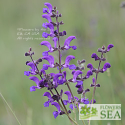
(Siberian Sage) Deep violet flowers surrounded by burgundy bracts form a handsome contrast with the pebbly, mint green foliage of this drought-resistant sage. It comes from the Central Asian steppe, which is similar in climate and geography to America’s high plains.
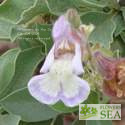
(Pilgram's Rest Pink Sage) Spring into summer, this heat-tolerant sage from South Africa produces lilac and white blossoms with profuse, fragrant, gray foliage. It's the burgundy calyxes, which turn a rusty pink after the flowers blossom, that give this sage part of its common name.
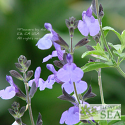
(Elk Blue Moon II Jame Sage) The phrase "blue moon" signifies a rare event. Elk Blue Moon Jame Sage is an unusual combination for a Salvia x jamensis hybrid -- dusky violet flowers with pale-blue throats, dark blue calyxes and mid-green foliage.
Note: This is a new (2014) cultivar that we chose to replace the original 'Elk Blue Moon'. It is a superior grower, and otherwise very similar.
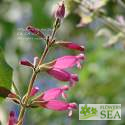
(Nuevo Leon Downy Sage) From the high mountains of Nuevo Leon, Mexico. This unusual variety has very large flowers in loose clusters. Early to bloom and more cold tolerant than other Downy Sage varieties, it is ideal for gardens on the edge of it's climatic adaptability.
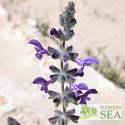
(Wooly Arabian Sage) "Radiant" is the word that garden writer and Salvia specialist Betsy Clebsch uses to describe the halo of white hairs covering the foliage and calyxes of Salvia lanigera.
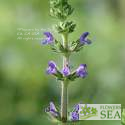
(Wild Sage) Toothed and attractively wrinkled, the gray-green, basal foliage of Wild Sage contrasts prettily with deep lavender-to-purple flowers supported by grassy green bracts. This cold-hardy sage is native to northern Africa and parts of Asia and Europe.
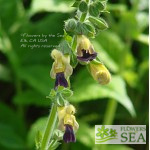
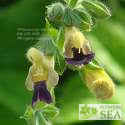
(Purple & Yellow Yunnan Sage or ji ye shu wei cao) Confusion about this plant's scientific name cause it to appear in some sources as Salvia flava var. megalantha. Whatever you call it, this Chinese species from Yunnan Province has enchanting yellow and purple flowers that attract viewers as well as honeybees.
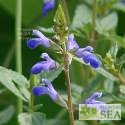
(Arizona Deep Blue Sage) In contrast to the lavender-blue flowers of Arizona Blue Sage (Salvia arizonica), the blossoms of Arizona Deep Blue are nearly purple. They are the kind of deep lavender that you might see in a southwestern sunset.
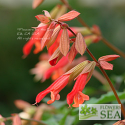
(Ember's Wish Sage) Bright coral-colored, tubular blossoms contrast handsomely with the deep maroon stems, rusty rose calyxes and mid-green foliage of Ember's Wish Sage.
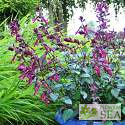
(Love and Wishes Sage) Deep purple calyxes support the magenta-purple, tubular blossoms of Salvia x 'Love and Wishes'. They contrast handsomely with dark stems and mid-green foliage.
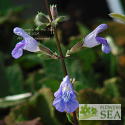
(Turkish Tea Sage) Sometimes an attractive plant is also medically powerful. That's true of the lavender flowered Salvia aucheri, which has strong white beelines. This Turkish native is consumed as an ingredient in teas used as folk remedies for many problems, including abdominal bloating and infections.
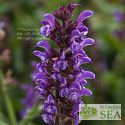
(Lyrical Silvertone Meadow Sage) European Meadow Sages are known for their intense color. However, Salvia nemorosa 'Lyrical Silvertone' is exceptional for its violet-blue and silver two-tone flowers supported by dark calyxes.
(Campanula Leaf Sage) The deep yellow flowers of Campanula Leaf Sages are scarce among Salvias. If British plant explorer Chris Chadwell is correct, what he has identified as Salvia aff. campanulata 'CC#7713' should be a sunny Himalayan beauty.
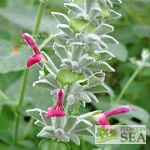
(White Headed Sage) One of the most visually stunning members of the genus, this large growing, tender, winter blooming species from the mountains of Ecuador will turn every head with its furry white calyxes and brilliant magenta red flowers.
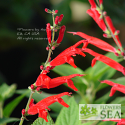
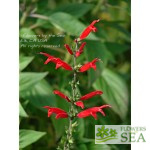
(Elk Sonoran Red Pineapple Sage) A new Pineapple Sage variety that has the traditional fruity fragrance but blooms much earlier in the season than the traditionally grown clone. Short and compact, it resembles the varieties 'Honey Melon' and 'Tangerine' size wise, but has the unmistakable aroma of ripe pineapples.
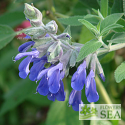
(Bolivian Lace Leaf Sage) A large decidious woody shrub, this is a distinctive and somewhat unique Salvia species. The large clusters of deep blue flowers appear in the spring and again in the fall. A native from a tropical savanna climate in Bolivia, this species grows best in climates with year-round warmth.
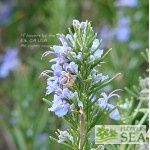
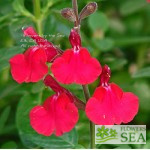
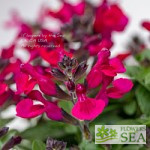
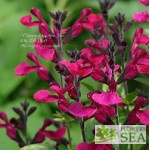
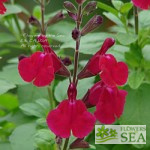
(Elk Raspberry Moose Sage) The deep raspberry flowers of this Salvia x Jamensis look good enough to eat, like spoonfuls of a silky, mouthwatering mousse dessert. Yet the 'moose' in its name isn't a misspelling. It refers to flowers that are larger than normal for a Jame Sage.
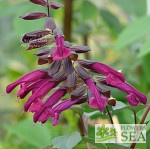
(Fashion Burgundy Sage) Pendulous deep burgundy blossoms and dark bracts attract the eye to Salvia Fashion Burgundy™. Although similar looking to an Australian Wish Sages, it is more compact than the Wishes or the Skyscraper series.
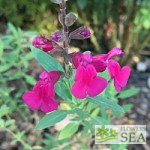
(Windwalker® Desert Rose Sage) Hot pink flowers top glossy, mid-green foliage top Windwalker® Desert Rose Salvia. Due to drought resistance, Salvia x 'Desert Rose' is a great choice for dry gardens. However, this petite beauty also grows well with moderate watering.
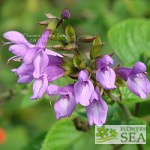
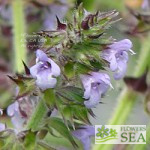
(COOL Lavender Blush Anise Scented Sage) Dusky green and red-edged bracts surround the pale-throated lavender blossoms of Salvia COOL Lavender Blush. It's a magnet for hummingbirds.
The following terms were added to your search to help improve the result. Click here to exclude these extra terms from the search.
- make
Results for makes from the blog
| Salvias Down South |
| 1. Salvias Down South: 15 Thirsty Salvias for Florida |
| Flowers by the Sea grows Salvias that are already popular in the Southeast as well as others we would like to introduce to gardeners seeking thirsty flowering plants that can also adjust to dry spells. Many are fine choices for Florida hummingbird gardens. Our suggestions are organized into categories based on moisture tolerance – average and ample -- as well as sun requirements. |
| Salvia Small Talk |
| 2. Salvia Small Talk: Planting a Therapy Garden |
| Salvias are good additions to sensory gardens, because of their fragrance, texture and visual appeal. Plants with sensory appeal stir memory. |
| Butterflies in the Garden |
| 3. Salvias Down South: Southern California Butterfly Favorites |
| Wildscaping a butterfly-friendly garden in Southern California is an act of kindness, especially toward imperiled species. Gardeners from Santa Barbara southward may want to group coastal sage and chaparral plants in their butterfly gardens, because those are among favorite sources of nectar for adult butterflies and host plants for caterpillars. Sages are popular nectar choices. Plants, such as Milkweeds and Impatiens, that work well both as nectar providers and caterpillar hosts are important additions. |
| Salvias Down South |
| 4. Salvias Down South: Texas Butterfly Favorites |
| Wildscaping is a way to landscape to attract pollinators. Butterflies are one of the most important. In Texas there are 463 species. Steering some of this herd of Lepidoptera toward your yard is easier if you know what butterflies frequent your region and which plants they favor for nectar and for laying their eggs, including Salvias. The Texas Parks and Wildlife Department, the Lady Bird Johnson Wildflower Center and Flowers by the Sea all can help Southwestern butterfly gardeners. |
| Culinary Sages |
| 5. Sassy Sage Holiday Cooking |
| Nothing says holidays like the fragrance of sage coming from the kitchen. It has even inspired writers, such as newspaper columnist and mystery novelist Denise Hamilton. Sage is the stuff of musky perfumes, fragrant Christmas candles and great homecooked meals cooking in the kitchen. It wraps us in the warmth as well as the chill of the season. |
| 6. Six Herbaceous Chinese Salvias for Shady Summer-to-Fall Bloom |
| Creating a flower garden in partial shade is not as challenging as planting in full shade, yet it requires selecting the right plants. Herbaceous Chinese Salvias can form a harmoniously composed partial-shade garden that soothe the eye with calming pastels. |
| 7. The Power of Scent |
| While it's true that not all Salvias smell, well, pleasant, many varieties are grown specifically for the aromatic or even sweet aromas that they release into the air. These ten Salvias are our top picks for the best-smelling varieties in the garden. |
| 8. Winter Blooming Salvias (Part I) |
| Some of the most dramatic Salvias bloom in the Winter. Most of these are from Southern Mexico, and are very well adapted to grow in Zone 9 gardens. |
Common terms in this search: flower child mountain sage inches tall smallest microphylla grow its common name based plant's lavender-to-pink flowers which abundant they sometimes seem outnumber leaves sages native american southwest mexico usually much larger than many reach feet cultivar part turbulent sixties series from california's monterey bay nursery where found single-branch sport famous 'bezerkeley' clone brightness offset dark bluish-black bracts bloom time spring