
Advanced Search
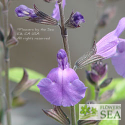
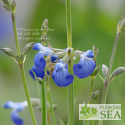
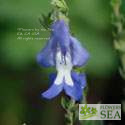
(Azure Hybrid Sage) Despite its name, the flowers of this tiny hybrid aren't really blue. They are a light purple. Due to its size, long bloom time, heat tolerance and drought resistance, Salvia x 'Mesa Azure' is a fine groundcover for areas where summers are hot and dry.
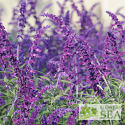
(Midnight Mexican Bush Sage) The typical Mexican Bush Sage has purple flowers surrounded by furry white bracts. This clone from the San Francisco Peninsula has deep purple flowers, calyxes and stems. It is a good groundcover due to a mounding habit, smaller size and generous amounts of flowers.
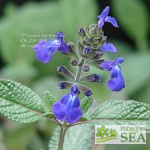
(Elk Blue Little Sage) if it were up to us, we would never have named this plant Little Sage. Although it is dainty, it is also one of the most fascinating species we grow. We particularly love its pebbly, oval leaves that are a shiny purple/green on top and a furry white below.
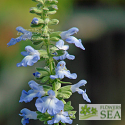
(Big Pitcher Sage) As its scientific name indicates, this sage has very large flowers. They are almost two-tone, changing from deep violet to a light blue or white at their base where they are cupped by dusky purple calyxes.
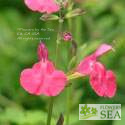
(Pink Preference Autumn Sage) Two-tone, hot pink flowers and contrasting bracts make this Autumn Sage stand out. This drought tolerant Autumn Sage from Central Texas is also compact, rugged, heat tolerant and capable of handling Zone 6 chill.
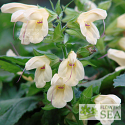
(Kyushu Woodland Sage) We are in love with this short forest sage from Kyushu, Japan. Its clusters of large creamy flowers pale as fresh-churned butter begin blooming in September. Even when not blooming, its foliage is showy in a shady garden.
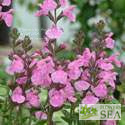
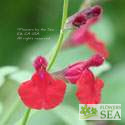
(Cherry Red Mountain Sage) This isn't just another red sage. Brilliant cherry-red flowers with dark purple bracts and cold weather tolerance to USDA Zone 6 make this a valuable landscaping plant.
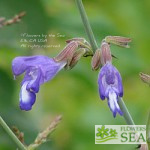
(Mount Olympus Sage) The deep violet and white flowers of Salvia ringens are eyecatching. Their wiry, branched spikes rise up to 5 feet tall from a dark green basal rosette.
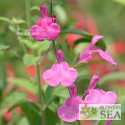
(Trinity Mountain Sage) Heat and drought tolerant, this Salvia microphylla is native to Northeastern Mexico where summers are dry and temperatures can rise to more than 100 degrees F. It can survive winter temperatures down to 0 degrees.
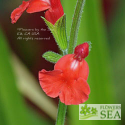
(Big Orange Mountain Sage) When temperatures are cooler in spring and fall, the persimmon-orange flowers of this large Mountain Sage darken. Gray-green foliage, bright green calyxes and reddish-green stems add to the plant's fascinating look, which mixes well with yellows and blues.
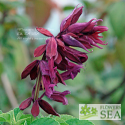
(Sao Borja Scarlet Sage) Three-inch-long, smokey purple blossoms that bloom from spring to fall are a major clue that this heat-tolerant perennial is not your grandmother's Scarlet Sage.
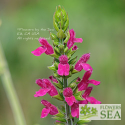
(Shaggy Chiapas Sage) This is a sweetheart! Glowing magenta flowers lure the eye as well as hummingbirds to this heat-tolerant sage. It begins blooming in late summer where weather is warm and in fall where it is cooler.
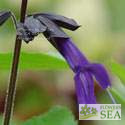
(Friendship Sage) Thank you Rolando Uria of the University of Buenos Aries for this very fine plant. Discovered in 2005 at a plant show in Argentina, this truly unique hybrid sage has generated a great deal of excitement in the Salvia world.
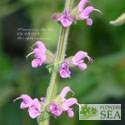
(Royal Crimson Distinction Woodland Sage) Grown for hundreds of years in cottage gardens throughout the world, Salvia nemorosa was described by Carl Linneaus in 1762. This variety's large flower spikes bloom a dark violet-crimson, then age to a softer pink.
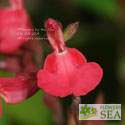
(Furman's Red Autumn Sage) Selected by noted Texas plantsman W.A. Furman in the 1970s, this hardy Texas native is beautiful and tough withstanding heat, drought and freezing winters. Its flowers, which bloom spring through fall, are a rich, saturated red bordering on magenta.
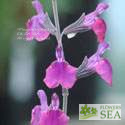
(Diane's Autumn Sage) Chip Schumacher of Hill Country Gardens in Texas selected this lovely Autumn Sage hybrid, which has handsome foliage and abundant two-tone dark purple flowers. This fine variety is often the first Salvia greggii to bloom in spring.
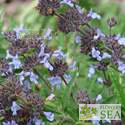


(Giant Brazilian Sage) Yes, this one is gigantic. The first season we grew this heat-tolerant sage, it reached 8 feet tall by July! Masses of small, red-orange, trumpet-shaped flowers attract hummingbirds and honeybees to long, upward curving flower spikes towering over heart-shaped foliage.
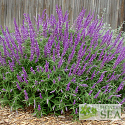
(Santa Barbara Mexican Bush Sage) This compact Mexican Bush Sage was found in the Santa Barbara garden of Kathiann Brown. It is, without a doubt, the finest short Mexican Bush Sage -- hardy, tough and long blooming. Add drought tolerance and dark, rich purple flowers to its list of merits.
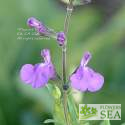
(Saint Isidro's Sage) This hardy, lavender-blue-flowered Salvia comes from Southern Texas and has the same breeding as the famous Ultra Violet Autumn Sage. Although it needs warmer winter temperatures and has smaller foliage, it also does well in stressful conditions, including drought.
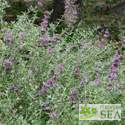
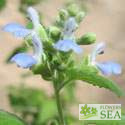
(Mejorana) In Spanish, Mejorana means ‘marjoram.” Similar to oregano-type Marjoram – another Mint family member -- this sage is used to flavor meat dishes. Our cultivar, which is native to Texas and Mexico, has lovely bluish-purple flowers that bloom summer to fall amid fragrant, fine, furry green foliage.
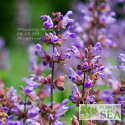
(Wand Sage) Whorls of deep violet blossoms are cupped by dark bracts on the flower spikes of this mid-height herbaceous sage from Turkey. Its foliage is thick, corrugated and fragrant. This plant is lovely and hardy, so it is surprising that it wasn’t introduced to commercial cultivation until 2007.
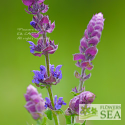
(Stem Clasping Violet Sage) Like a candelabra lit up with whorls of violet blossoms, the erect, branching flower spikes of Salvia amplexicaulis make this native of Southeastern Europe shine. On the Grecian island of Thassos, it brightens areas near the beach.
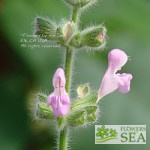
(Turkish Cliff Sage) Spring into early summer, Turkish Cliff Sage produces erect, branching flower spikes 24 to 36 inches long that rise from basal foliage. They’re covered with whorls of pale pink blossoms with delicate white markings.
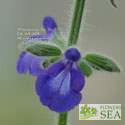
(Double Saw Tooth Sage) Vivid deep violet flowers bloom from summer into fall and contrast prettily with the bright green, rumply foliage of this tall sage from southeastern Mexico. Belgian botanist and orchid lover Jean Jules Linden was the first to record its discovery in 1838, according to records on file at Britain’s Royal Botanic Gardens, Kew.
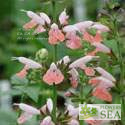
(Brenthurst Tropical Sage)Tropical Sage is popular as an annual throughout America and as a perennial in warm zones. It is particularly beloved in the Deep South where it withstands heat, wind, heavy rains and excessive humidity to bloom prolifically season after season. Brenthurst is a coral-flowered cultivar with dramatic, dark bracts and bright green, heart-shaped leaves.
The following terms were added to your search to help improve the result. Click here to exclude these extra terms from the search.
- border, borders
Results for Border from the blog
| Views from the Garden |
| 1. Hummingbird Falls Salvia: A Natural Nectar Nirvana |
| Salvia BODACIOUS® ‘Hummingbird Falls’ is a natural substitute for sugar-water feeders. It’s also the world’s first hanging basket sage. Hummingbirds love this long blooming, cascading sage as you can see in this video filmed in a greenhouse at Flowers by the Sea (FBTS) Farm and Online Nursery. Hummingbird Falls is a heat-tolerant Salvia guaranitica hybrid developed at FBTS by Kermit Carter, who demonstrates how to plant it for optimum growth of its dense, glossy foliage and abundant, violet-blue flowers. Carter offers tips about choosing the best size and type of planters, selecting well-draining potting mix , avoiding soil compaction, and creating a snug planting hole that protects roots and encourages growth. This video about Salvia BODACIOUS® ‘Hummingbird Falls’ is part of our Views from the Garden video series published in the FBTS Everything Salvias Blog. Flowers by the Sea is a farm and online, mail order nursery specializing in the Salvia genus. |
| Shade Gardening |
| 2. Made for Shade: Japanese Woodland Salvias |
| Sturdy, shade-loving Japanese Salvias are lovely additions to woodland gardens with their lush, large-leafed foliage and delicate-looking flowers in colors including pinks, purples and yellows. They're ideal for bordering shady paths where they invite visitors to pause for close-up views. Flowers by the Sea suggests Japanese species for woodland gardens and organizes them according to their cold hardiness. |
| New at FBTS |
| 3. New at FBTS: Vermilion Bluffs ® Mexican Sage |
| A 'mass of scarlet awesomeness' is one way that Denver Botanic Gardens Senior Curator Panayoti Kelaidis describes Vermilion Bluffs® Mexican Sage (Salvia darcyi 'Pscarl') at his Prairie Break website. Unlike so many Southwestern sages, Vermilion Bluffs is surprisingly cold hardy as well as being drought tolerant. Its common name is taken from the spectacular red bluffs of the Vermillion Basin Wilderness in Northwestern Colorado, an area redolent with the scent of sage on hot days. But the plant is native to the Nuevo Leon area of Mexico's eastern Sierra Madre Occidental mountains. The story of how its parent plant arrived at Denver Botanic Gardens (DBG) and, eventually, at Flowers by the Sea is one of diaspora. |
| Cultivating Color |
| 4. Pantone Pageant: A Chorus Line of Grayed Jade Designer Salvias |
| Sage is the common name for the uncommonly beautiful Salvia genus. But when designers describe a product as being sage-colored, they mean a shade of gray-green that they say is soothing and that harmonizes with a multitude of colors, including soft pastels, hot oranges and deep purples. A version of sage called "Grayed Jade 14-6011" is one of the Pantone color-matching system's top shades for the design industry this year. This post identifies some Grayed Jade plants in the Flowers by the Sea collection. They are fine peacemakers amid a Salvia garden based on a mixture of Pantone's top greens for 2013, which you can read about in previous articles from our Pantone Pageant series of designer colors in the landscape. |
| 5. Plant Safari Salvia in the South African Fynbos -- Part 1 |
| Twenty-six species of Salvia are native to South Africa and of these, 10 grow nowhere else in the world. Salvias play an important role in providing habitat and food for wildlife as well as brightening the semi-arid landscape in the Western Cape province of South Africa. Some are used in cooking or provide material for herbal remedies used in the alternative medicines taken by many South Africans. Flowers by the Sea grows a number of tough yet lovely South African Salvias. |
| Portraits in Gardening |
| 6. Portraits in Gardening: Ward Dasey |
| Portraits in Gardening is a blog series from Flowers by the Sea that profiles customers who are passionate about the Salvia genus. This article focuses on wildlife gardener, birder and dedicated volunteer Ward W. Dasey III, who grows Salvias at New Jersey's Palmyra Cove Nature Park. Dasey and nature-loving friends proposed the park to make bird watching easier on the Delaware River. |
| Quick Digs |
| 7. Quick Digs: Planning a Salvia Garden Calendar |
| This is our second article in a Quick Digs series about preparing for spring in Salvia (sage) gardens. It's easier to succeed at almost anything if you make plans and set goals before beginning a project. This is certainly true in Salvia gardening. Creating a gardening calendar ensures greater success in planning. |
| Views from the Garden |
| 8. Repotting Salvias: The Basics |
| When a container-planted Salvia grows too large for it pot, it's time to move it to roomier quarters. But how much extra space is too much and what kinds of containers are best? In this video from Northern California's Flowers by the Sea family farm, FBTS horticulturist and co-owner Kermit Carter shows how to select the right size of pot for a Salvia based on its size and need for moisture. He talks about the differences between plastic and clay pots: Carter explains that although plastic pots may be best for conserving moisture in semi-arid parts of the nation, he prefers terra cotta clay pots for their better breathability and drainage. FBTS specializes in the Salvia genus, which contains about 1,000 species. This video is part of the FBTS Everything Salvias Blog series Views from the Garden . |
| Sage Experts |
| 9. Sage Experts: Nancy Newfield, Hummingbird Gardener, Part II |
| Salvias are among the best hummingbird flowers and red is tops. That's what hummingbird researcher, Nancy L. Newfield began discovering more than 40 years ago. She found that flower nectar was more attractive than nectar feeders. This is the second article in a 3-part series on Newfield and hummingbird gardening. It includes an excerpt from her book Hummingbird Gardens and an FBTS list of red hummingbird favorites. Bud Hensley photographed the hummingbird pictured here enjoying Salvia subrotunda. |
| 10. Sage Experts: Nancy Newfield, Hummingbird Gardener, Part III |
| It is ironic that one of the least social types of birds inspires so much sociability in human beings. We refer to hummingbirds, which are the object of festivals and the communal effort of bird banding research nationwide. This is the third and final article in a series about renowned hummingbird expert Nancy L. Newfield, who grows many Salvias in her hummingbird gardens. We recount a visit to Louisiana to observe Newfield and her team banding hummingbirds in winter. You'll also find a rainbow of top hummingbird Salvias listed here. (Photo credit: John Owens) |
| Views from the Garden |
| 11. Rootbound Salvias: Assessment & Treatment |
| Before planting a Salvia in the ground or moving it to a larger container, you should determine whether it has become rootbound and needs to have its rootball loosened. Salvias tolerate being rootbound more easily than most flowering plants. However, a Salvia needs extra attention before replanting if its roots dangle from the pot's drain holes and are so dense that they overwhelm the soil. Then the rootball feels too firm and can't be replanted as is. In this video from Northern California's Flowers by the Sea family farm, FBTS horticulturist and co-owner Kermit Carter removes several plants from their containers to show different stages of heavy rooting. Carter demonstrates a variety of methods for loosening roots and soil before replanting. FBTS specializes in the Salvia genus, which contains about 1,000 species. This video is part of the FBTS Everything Salvias Blog series Views from the Garden . |
| Sage Experts |
| 12. Sage Experts: Nancy L. Newfield's Hummingbird Journey |
| Renowned hummingbird bander Nancy Newfield of southern Louisiana shares her journey from 1970s stay-at-home mom to citizen scientist and one of the nation's leading hummingbird researchers. This is the first article in a three-part series about Newfield's work and gardens, which abound with Salvias to feed hungry hummingbirds that overwinter in her suburban yard near New Orleans. It includes plant lists and the Louisiana Winter Hummingbird Project tally of banded hummingbirds from 1979 to 2015. |
Common terms in this search: azure hybrid sage despite its name flowers tiny aren't really blue they light purple due size long bloom time heat tolerance drought resistance 'mesa azure' fine groundcover areas where summers hot dry may related microphylla greggii which native american southwest well mexico parentage mystery however displays many traits from those plants including being excellent choice gardens garden uses include short