
Advanced Search
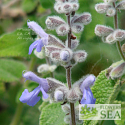
(Big Grape Sage) This lavender-flowered native of Northern Mexico resembles Salvia melissodora (Grape Scented Sage), but is bigger and also has larger leaves and flowers. It's a great companion plant for its little brother, which shares the same cultural needs and affinity for Zones 8 to 10. Both bloom from summer into fall.
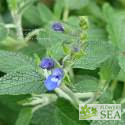
(Furry Colombian Sage) The leaves of this rare shrub are a glossy mid-green on top and fuzzy with hairs underneath, which is why it's commonly called Furry Colombian Sage.
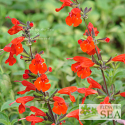
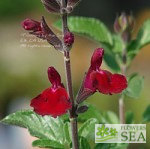
(Summer Jewel Red Tropical Sage) Butterflies, hummingbirds and honeybees enjoy this Fleuroselect Gold Medal winner, which is an outstanding choice for bright red color from June to autumn. This type of Tropical Sage is generally the first to flower for us.
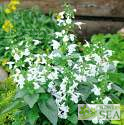
(Snow Nymph White Tropical Sage) Butterflies, hummingbirds and honeybees enjoy this award winner, which is an outstanding choice for pure white color from June to autumn. This type of Tropical Sage is generally the first to flower for us.
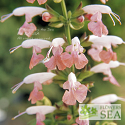
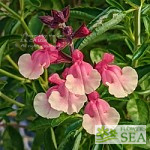
(Summer Jewel Pink Tropical Sage) Butterflies, hummingbirds and honeybees enjoy this Fleuroselect Gold Medal winner, which is an outstanding choice for bright pink & white color from June to autumn. This type of Tropical Sage is generally the first to flower for us.
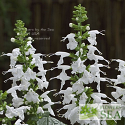
(Summer Jewel White Tropical Sage) Butterflies, hummingbirds and honeybees enjoy this All American 2016 winner, which is an outstanding choice for pure white color from June to autumn. The Summer Jewel varieties of Tropical Sage is generally the first to flower for us.
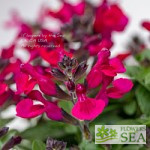
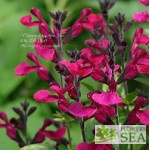
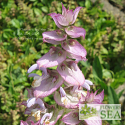
(Clary or Clear Eye Sage or Eyebright) Pink-purple bracts and violet-purple flowers form a pastel cloud over the large, rumpled leaves of Clary Sage in summer. It is a towering beauty growing up to 5 feet tall. Sacred to some due to age-old use in herbal remedies, it is heavenly to look at.
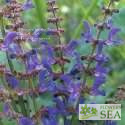
(Romanian Sage) Here's a great selection for mixed Salvia borders in zones with colder winters. This herbaceous perennial features deep violet flowers in large whorls atop tall, branched spikes.
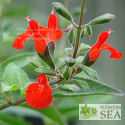
(Painted Lady Eyelash Sage) Small, eyelash-like hairs on the edge of its leaves give this Mexican native part of its name. A compact, gently mounding Salvia, it spreads gradually by underground stolons.
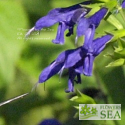
(Sapphire Blue Anise-Scented Sage) The large, sapphire blue flowers of this Anise-Scented Sage glow in the full-sun or partial-shade garden from summer into fall. Similar to Salvia guaranitica 'Blue Ensign', this is a somewhat taller variety of the water-loving species.
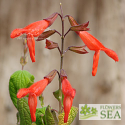
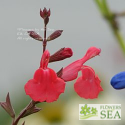
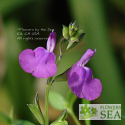
(Royal Purple Autumn Sage) Salvia muelleri is related both to Autumn Sage (S. greggii) and Mountain Sage (S. microphylla), which are closely related species.
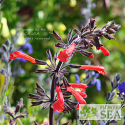
(Venezuelan Red Sage) Purple stems and calyxes so dark that they almost look black contrast dramatically with the deep red-orange flowers of this South American beauty. This tall, spectacular sage has been in cultivation for decades but is still rare in gardens. We'd like to see that change.
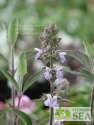
(Kellerman's Sage) Rare in the United States, this wooly leafed, upright shrub comes from Southern Mexico and Guatemala. Mid-size, powder-blue flowers bloom on its long, airy stems from summer through winter in mild climates. It's lovely in mixed, drought-resistant plantings.
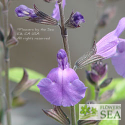
(Azure Hybrid Sage) Despite its name, the flowers of this tiny hybrid aren't really blue. They are a light purple. Due to its size, long bloom time, heat tolerance and drought resistance, Salvia x 'Mesa Azure' is a fine groundcover for areas where summers are hot and dry.
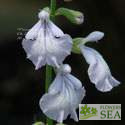
(Heart Leaf Sage) From the rich plains of Northern Argentina comes this delicate looking sage with heart-shaped leaves and pale blue flowers so perfect they seem to be molded in wax. Although a slow grower that requires good garden culture, this Salvia is exquisite.
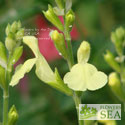
(Elk Lemon Light Jame Sage) We are proud to offer this luminescent, pure yellow Salvia x jamensis -- a color breakthrough from our own breeding program. The bright, light blossoms cool the landscape similar to white flowers, but with colorful impact. The glossy green leaves are quite small - a very attractive and distinctive characteristic.
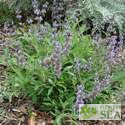
(Dry Earth Black Sage) Black Sage Salvia mellifera is one of the most common and fragrant native shrubs in the California Coast Ranges and is ideal for dry gardens. At 12 inches tall by 5 feet wide, this variety is an excellent groundcover.
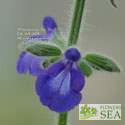
(Double Saw Tooth Sage) Vivid deep violet flowers bloom from summer into fall and contrast prettily with the bright green, rumply foliage of this tall sage from southeastern Mexico. Belgian botanist and orchid lover Jean Jules Linden was the first to record its discovery in 1838, according to records on file at Britain’s Royal Botanic Gardens, Kew.
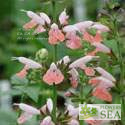
(Brenthurst Tropical Sage)Tropical Sage is popular as an annual throughout America and as a perennial in warm zones. It is particularly beloved in the Deep South where it withstands heat, wind, heavy rains and excessive humidity to bloom prolifically season after season. Brenthurst is a coral-flowered cultivar with dramatic, dark bracts and bright green, heart-shaped leaves.
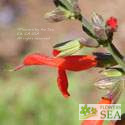
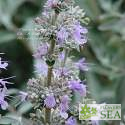
(Gayle Nielson Hybrid Sage) Whorl-like clusters of violet-blue flowers on slender stems as well as its height and width indicate that Gayle Nielson Hybrid Sage is related to some form of Salvia clevelandii.
The following terms were added to your search to help improve the result. Click here to exclude these extra terms from the search.
- enjoy, enjoyed, enjoys
Results for enjoyment from the blog
| 1. Winter Blooming Salvias (Part III) |
| Small Flowered Pink & Purple Species Part I of this series took up some of the early Winter bloomers, Part II the blue and dark purple flowered varieties. Here we look at four of the small flowered, purple to violet varieties. |
Common terms in this search: big grape sage lavender-flowered native northern mexico resembles melissodora scented but bigger also has larger leaves flowers its great companion plant little brother which shares same cultural needs affinity zones both bloom from summer into fall similar used indigenous tarahumara people chihuahua medicinal herb another commonality smell like ripe grapes fact young children enjoy confirming addition fragrance appealing furry white