
Advanced Search
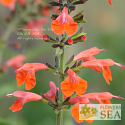
(Vermilion Tropical Sage) Tall and full of large, orange flowers, Salvia coccinea 'Vermilion' is a strain from the Louisiana gardens of hummingbird guru Nancy Newfield.
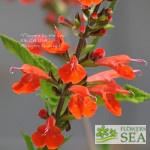
(Elk Vermilion Tropical Sage) Tall and full of large, orange flowers, Salvia coccinea 'Vermilion' is a clonal variety developed by FBTS.
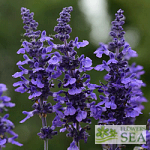
(Mysty Sage) Salvia x ‘Mysty’ is a dwarf version of Mystic Spires Sage and is a dramatic border plant with dark green, corrugated leaves and long blooming flower spikes abundant with deep, violet-blue blossoms.
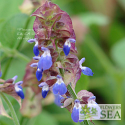
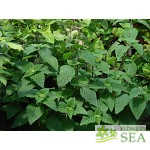
(Rosy Bract Sage) Sub-shrub salvias have both woody and soft, herbaceous growth. Rosy Bract Sage is a tidy, small leafed sub-shrub smothered with large clusters of 1/2-inch, violet-blue flowers and rosy red bracts. Its bracts deepen in color as the season proceeds.
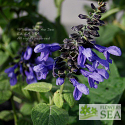
(Costa Rica Blue Sage) Although this handsome plant is often listed as an Anise Leaf Sage (Salvia guaranitica), we think it is a hybrid based on differences in its growth pattern and flowering season.
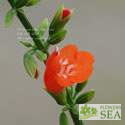
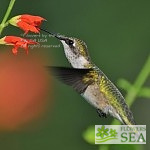
(Giant Brazilian Sage) Yes, this one is gigantic. The first season we grew this heat-tolerant sage, it reached 8 feet tall by July! Masses of small, red-orange, trumpet-shaped flowers attract hummingbirds and honeybees to long, upward curving flower spikes towering over heart-shaped foliage.
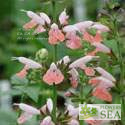
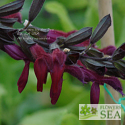
(Brenthurst Tropical Sage)Tropical Sage is popular as an annual throughout America and as a perennial in warm zones. It is particularly beloved in the Deep South where it withstands heat, wind, heavy rains and excessive humidity to bloom prolifically season after season. Brenthurst is a coral-flowered cultivar with dramatic, dark bracts and bright green, heart-shaped leaves.
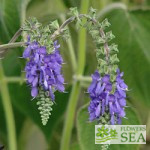
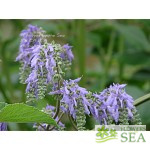
(Nodding Sage) "Dancing in the air" is how garden writer Joseph Tychonievich describes the tall, graceful flower spikes of Nodding Sage, which can tower up to 5 feet tall over the plant's 18-inch-tall foliage during the summer flowering season.
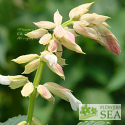
(Elk White Scarlet Sage) The first tall white Salvia splendens variety, this new introduction from Flowers by the Sea is vigorous and free flowering all season long.
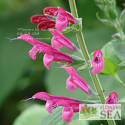
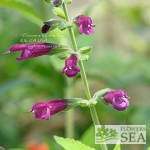
(Envy Hybrid Sage) A natural hybrid found in Peru and Bolivia, the parentage of this special variety is at this point unknown. The uniquely colored flowers are abundant all season long, and the hummingbirds love it.
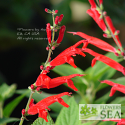
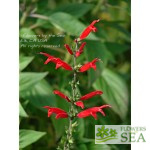
(Elk Sonoran Red Pineapple Sage) A new Pineapple Sage variety that has the traditional fruity fragrance but blooms much earlier in the season than the traditionally grown clone. Short and compact, it resembles the varieties 'Honey Melon' and 'Tangerine' size wise, but has the unmistakable aroma of ripe pineapples.
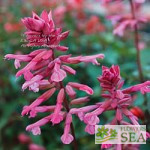
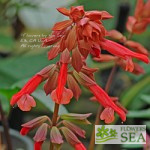
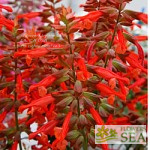
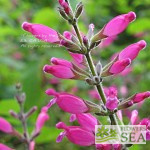
(Roseleaf Sage) A glorious bloomer, Roseleaf Sage starts producing hot pink blossoms in late summer and continues into spring -- growing more spectacular every day -- unless cut down to the ground by hard frost.
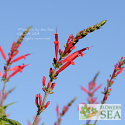
(Pineapple Sage) An indispensable fall-blooming addition to the garden, this tender perennial is, perhaps, the best of all hummingbird plants. When in bloom, it is covered in 3-inch-long red flowers.
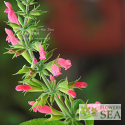
(Karwinski's Sage) From moist mountain areas in Mexico and Central America, this rugged, winter-blooming shrub is found in oak or pine forests at altitudes of 4,000 to 8,000 feet. This may account for this winter bloomer producing a few bright red flowers during short periods of freezing weather with temperatures as low as 20 degrees F.
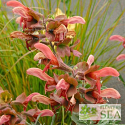
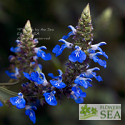
(Bog Sage) Highly adaptable, Salvia uliginosa is ideal for the beginning sage gardener. It isn't fussy about soil type, sun exposure, drainage or frequency of watering.
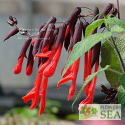
(Giant Bolivian Sage) Hailing from Peru and Bolivia, this tender specimen is found at altitudes of 9,000 feet in the wild. This multi-stemmed, woody-based, climbing Salvia needs support. Hummingbirds love its 5-inch-long, crimson flowers, which are the longest grown by any Salvia and flower from late summer through autumn.
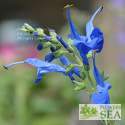
(Big Swing Sage) With its large, cobalt blue flowers displayed on strong, wiry, branched stems, this eye-catching sage wins the FBTS "best of class" designation for being our top Salvia macrophylla.
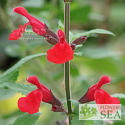
(John Whittlesey Sage) Hardy, vigorous and long blooming, John Whittlesey Sage is a hybrid of D'Arcy's Sage (Salvia darcyi) -- a native of Mexico -- and Mountain Sage (S. microphylla), which is native to the American Southwest and Mexico.
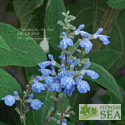
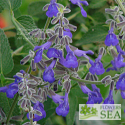
(Pale Sage) Powder blue flowers are cupped by lavender calyxes on this lovely yet little-used sage native to moist meadows in Argentina. It is a tall, narrow plant with delightful oval-shaped leaves with scalloped margins.
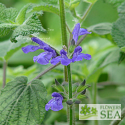
(Blue Bush Sage) Furry, large and heavily textured, the mid-green leaves of Salvia urica contrast attractively with its violet-blue flowers that bloom spring into summer.
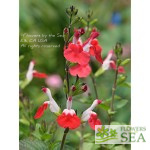
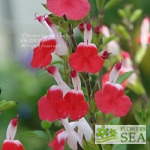
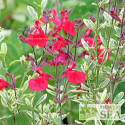
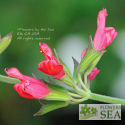
(Hot Lips Sage) What a winner for fascinating flowers! Salvia microphylla ‘Hot Lips’ is a native of Mexico that produces a combination of solid red, solid white, and bicolor red and white blossoms all on the same plant and sometimes at the same time.
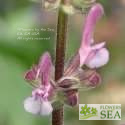
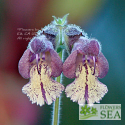
(Jerusalem Sage) This lovely herbaceous perennial is native to Cyprus, Israel, Jordan, Lebanon, Syria, and the West Bank. Its clear pink flowers change at times to a pink highlighted with violet lines and dots. Prominent glandular hairs on the buds, bracts and floral stems exude a fragrance that is delightful on a warm day.
The following terms were added to your search to help improve the result. Click here to exclude these extra terms from the search.
- season
Common terms in this search: vermilion tropical sage exciting new color species grown annual most tender perennial areas warm winters grow vigorous plant will repaid bounteous season-long flowering attracts honeybees hummingbirds but not deer location rich soil full sun partial shade ideal fragrant which water lover also thrives average supplemental watering it's great back-of-border choice rarely seen we're thankful nancy newfield casa colibri her generosity