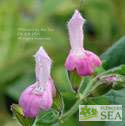
(El Butano Downy Sage) El Butano is a horticulturally rich area of Cumbres de Monterrey National Park in the mountains of Nuevo Leon, Mexico. El Butano Downy Sage was discovered in this area where it grows at elevations of 4,500 to 8,000 feet.
The selection that we grow was collected at 7,000 feet. The "puberula" part of the species' scientific name refers to the velvety hairs of its light green leaves.
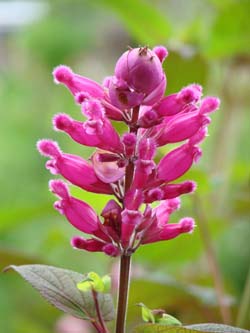
This is a large shrub reaching up to 6 feet tall and 4 feet wide. Its deep magenta flowers are also big, growing almost 4 inches long in clusters atop tall spikes that look pretty in floral displays.
If you live in an area with mild winter temperatures, you can expect intense color from fall into winter. Where we live on the Northern California coast, our established plants continue to bloom most years until early spring, even following snow, hail and multiple days of cold rain. Also, we've found that a hard pinch back during summer makes for a more compact plant at bloom time.
El Butano Downy Sage grows well in full sun to partial shade and in USDA Zones 7 to 11. It likes well-drained soil that is neither poor nor rich and requires average watering based on local conditions. Grow it as a screen, background planting or part of a shrub border.
Highly recommended!
Posted: Sunday, June 28, 2015
Synopsis:
Differentiating between the plants in a closely related group can feel similar to being an outsider attending a large family reunion. Identifying who's who and how they are connected is a challenge. That's the way it is with Mexico's Roseleaf Sage (Salvia involucrata) Group, which is well loved by hummingbirds. FBTS Online Plant Nursery grows a number of species from this winter-blooming group.
Read the Article
Posted: Saturday, May 2, 2015
Synopsis:
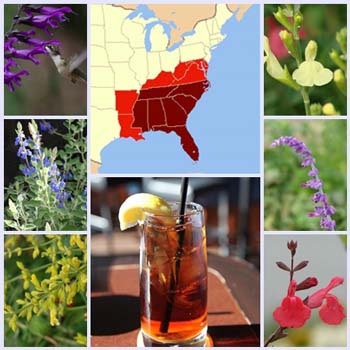
True sages are members of the Salvia genus and number in the hundreds. They are native to a wide variety of environments worldwide, which is why some are ideal for the dry gardens of California and others can handle the abundant moisture of the American Southeast. Flowers by the Sea raises many sages that grow well in the Southeast, including some that are either native to the region or have jumped fences from gardens into the wild.
Read the Article
Here are some guidelines for success with this plant in your garden.
Click on an individual icon for more detailed information.
Exposure

This plant needs or tolerates more than six hours of intense sunlight daily. Many Salvias only thrive in wide-open locations where they receive long hours of full sun. However, full-sun species sometimes tolerate a bit of partial shade. Or a Salvia that loves partial shade may be amenable to spending part of its time in full sun.
In general, this sun/shade adaptability shows up in Salvias that do best in cooler climates when grown in full sun and thrive in hot climates when partial shade is available. So full-sun Salvias sometimes are also categorized as partial-shade plants and vice versa.

This plant grows well in partial shade, such as the kind on the edge of woodlands or under deciduous trees with breaks in the foliage through which dappled sunlight penetrates. Many Salvias thrive in partial shade, including ones that spend part of their day in full sunlight. Some species need partial shade to overcome severe heat and dry soil.
Garden Uses

The flower spikes of this plant blossom so colorfully and tenaciously that they make excellent cut flowers.
Depending on local climate and species in your yard, it is possible to create Salvia bouquets in all seasons.
Growing Habit

Plant hardiness Zones defined by the U.S. Department of Agriculture tell you the minimum temperatures a plant can withstand in your garden. The USDA divides the nation into winter climate areas from coldest (Zone 1) to warmest (Zone 11).
However, it is sometimes possible to grow a Zone 6 Salvia as a perennial in Zone 5 if you provide preferential care, such as winter mulching and a location sheltered from harsh winds. In contrast, a Zone 9 Salvia may act like a perennial in Zone 10 if given a bit of shade or extra water.

To create a harmonious landscape plan, it is important to consider the heights of individual plants.
Height also affects function. Short Salvias often make excellent ground covers that conserve soil moisture and discourage weeds while also brightening your yard. Medium-height Salvias, such as ones 36 inches tall, often are ideal border plants. A tall Salvia planted singly can highlight a landscape; multiple plantings can form an attractive screen.

By considering the width of a plant, you can determine how many to place in a row or what other plants to grow with it.
For example, a narrow, moderate-height Salvia may look good interplanted with bushier species, kind of like Mutt and Jeff.
In contrast, wide-spreading Salvias are economical for hiding lengths of wall and fence or for creating hedge-like divisions in a yard.

Shrubs are characterized not only by bushy foliage but also by woody stems.
Shrubby Salvias may be evergreen or deciduous. Some Winter-blooming, deciduous species lose their foliage during hot weather. Some Salvias, classified as subshrubs, have a combination of woody and tender, herbaceous growth.
Salvia shrubs range from tall, upright species to ground covers of short to moderate height. Their spread may match or exceed their height
Water Needs

This plant needs regular watering based on what is appropriate to your local conditions.
In some extremely hot, arid climates, this may mean daily watering in Summer. Although many drought-resistant Salvias survive on little to no watering due to local rainfall and deep roots meeting their moisture needs, others need regular doses. The size and frequency of the dose depends on your climate.
Blooming Season

This plant reaches peak bloom during Spring or flowers for much of the season.
However, it may begin flowering sooner. Some Spring-blooming Salvias begin flowering in Winter; others start in Spring, keep producing color through summer and may continue on into autumn and first frost. Still others flower only in Spring.
There is a great deal of overlap in blooming seasons for Salvias.

This plant flowers throughout Winter.
Many winter-blooming Salvias begin flowering in late Fall and continue on into Spring; there is a lot of overlap in blooming seasons for Salvias. Winter bloomers include evergreen as well as deciduous perennial Salvias.
Depending on type, they grow well in USDA Zones ranging from 8 to 11 with some tolerating the chill of Zone 7.
Wildlife
Unless local forage is in short supply, most deer likely will avoid this plant.
It appears that deer dislike Salvias, in general, due to their volatile oils that make the plants so fragrant and savory in cooking. However, the only completely deer-proof plants are the ones grown beyond reach.
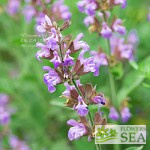
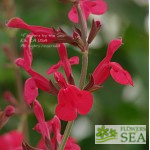
(Windwalker® Royal Red Salvia) Salvia darcyi x S. microphylla 'PWIN03S' is one of the top 2015 plants for USDA Cold Hardiness Zone 5 selected by Colorado's Plant Select®, a nonprofit organization that focuses on promoting plants for low-water gardens.
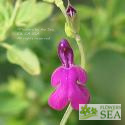
(Navajo Autumn Sage) Even a hint of blue is unusual among Autumn Sage flowers. Salvia greggii 'Navajo Purple' is a rarity due to its magenta-purple blossoms, which hint at natural hybridization including a mystery parent in the blue range, such as Salvia lycioides.