
Advanced Search
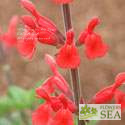
(Vermilion Bluffs® Mexican Sage) The brilliant red flowers of Vermilion Bluffs bloom abundantly from August to October. This variety of the Mexican native Salvia darcyi is cold hardy to Zone 5b at altitudes up to 5,500 feet.
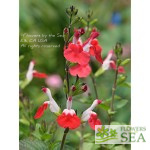
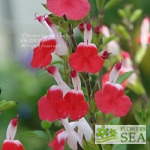
(Hot Lips Sage) What a winner for fascinating flowers! Salvia microphylla ‘Hot Lips’ is a native of Mexico that produces a combination of solid red, solid white, and bicolor red and white blossoms all on the same plant and sometimes at the same time.
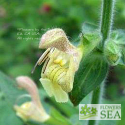
(Himalayan Cloud Sage) Nepal's Muktinath Valley -- a sacred site for Hindus and Buddhists -- is the place to go to see this majestically tall shade perennial in the wild. It grows at altitudes up to 14,000 feet and often emerges while the ground is still snowy.
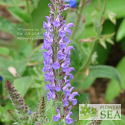
(The Queen's Sage) Regal spikes of lavender-to-purple flowers give weight to this sage's common name. It provides a stately show of bloom during summer in USDA Zones 6 to 10. Cold hardy and heat tolerant, this impressive perennial comes from the mountains of Turkey.
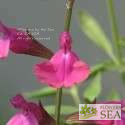
(Plum Wine Autumn Sage) Frilly, lavender-tinged, pink flowers with a pretty white dot at the throat make this another outstanding contribution from North Carolina nurseryman Richard Dufresne.
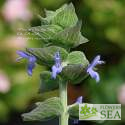
(Dark Flowered Bolivian Sage) Here is a water-loving beauty with dusky blue flowers --a native of the moist Yungas piedmont forests of Northwestern Argentina and Bolivia. Salvia atrocyanea is well adapted to both full sun and partial shade.
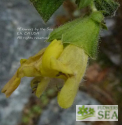
(Campanula Leaf Sage) The deep yellow flowers of Campanulata Leaf Sages are scarce among Salvias. Salvia campanulata CC#7706 is a sunny Himalayan beauty.
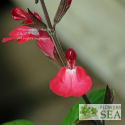
(Elk Bright Eyes Sage) Dark green and red calyxes support the raspberry-red flowers of Salvia x 'Elk Bright Eyes'. The pink throats of the blossoms are topped with white beelines, or eyes. This is a unique and eyecatching color.

(Vermilion Bluffs® Mexican Sage) The brilliant red flowers of Vermilion Bluffs bloom abundantly from August to October. This variety of the Mexican native Salvia darcyi is cold hardy to Zone 5b at altitudes up to 5,500 feet.
Results for cant from the blog
| Hummingbirds in the Garden |
| 1. Ten Favorite Flowers for Butterflies and Hummingbirds |
| Flowers that butterflies and hummingbirds favor are rich sources of nectar. But not all nectar-rich butterfly favorites are easy to access with long hummingbird beaks. Conversely, many flowers designed by nature to attract hummingbirds don't have the structure necessary for feeding butterflies or providing a perch. Here are ten Salvias and companion plants for backyard wildlife habitat that both butterflies and hummingbirds will enjoy. |
| 2. 15 Select Salvias for Dry, Partial-Shade Gardening |
| Learning how to garden in dry shade requires mediation of the needs of all the plants involved. Dry shade is particularly abundant under trees, because they consume lots of water. Fortunately, numerous drought-resistant Salvias can handle life in dry, partial shade. Flowers by the Sea details basic considerations of dry shade gardening and identifies 15 sages for it. |
| Hummingbirds in the Garden |
| 3. A Gardeners Guide to Hummingbird Sage |
| Among the hummers' favorites: Salvia spathacea, commonly known as Hummingbird Sage. As it name suggests, this California native produces the hummingbirds' flower of choice, blooming from late winter through summer -- and sometimes again in Fall -- with rose-pink to magenta blossoms. Available in six varieties, this robust perennial not only attracts hummers with its abundant nectar, it's easy to grow and enhances any landscape with its aromatic blooms and fragrant evergreen foliage. |
| Container Gardening |
| 4. A Guide to Successful Potting Soils for Salvias |
| One of the decisions that Salvia gardeners face in spring is what kind of potting mix to use for outdoor container plants. Find answers in FBTS Farm & Online Nursery's guide to successful potting soils for Salvias. |
| Cultivating Color |
| 5. Add Pale Dreamy Sages to Your List of Moon Garden Plants |
| Moon gardens contain plants with pale flowers -- especially whites -- and silvery or variegated foliage that shine in moonlight. Some gardeners plant them to glow from afar when peering into the dark through a window. Others design these gardens for nighttime rambles. A number of white-flowered sages would be excellent additions to the dreamy design of a moon garden. |
| Ask Mr. Sage |
| 6. Ask Mr Sage: What Kind of Plant Is a Clone? |
| It's helpful to understand botanical terminology such as clone, variety, and cultivar. Mr. Sage explains what the three words mean and how the processes of cloning and plant development work. Ask Mr. Sage is a regular feature of the FBTS Everything Salvias Blog and is based on questions from customers. |
| 7. Ask Mr. Sage: Why Didn't My Fall Blooming Salvia Flower? |
| When growing Salvias that begin blooming in fall, Mr. Sage says it's important to know when first frost likely will occur in your area. Ask Mr. Sage is a regular feature of the FBTS Everything Salvias Blog. |
| 8. Ask Mr. Sage: How Should I Prune my Salvias? |
| Flowers by the Sea Online Nursery specializes in Salvias and often receives questions about how to prune them. Although getting good at pruning takes practice, Salvias rebound quickly if you make mistakes. A key to successful pruning is understanding the varying needs of four main categories of sages. Ask Mr. Sage is a regular feature of the FBTS Everything Salvias Blog. |
| 9. Ask Mr. Sage: How to Control Snails |
| Ask Mr. Sage is a Q&A feature from Flowers by the Sea. This one talks about how to ward off snails and slugs safely through simple organic methods, including barriers and handpicking, as well as through careful use of iron-phosphate pesticides. It also talks about how to nurse damaged Salvias back to health. |
| 10. Ask Mr. Sage: How to Select Plants for Garden Triumph |
| Planning for Salvia garden success requires following the rule of selecting the right plant for the right place. Desert sages aren't appropriate for the damp Southeast. Moisture-loving ones aren't right for desert climates where they need lots of watering to survive. Flowers by the Sea Farm and Online Nursery offers tips for selecting plants based on local climate. Ask Mr. Sage is a regular feature of the FBTS Everything Salvias Blog. |
| 11. Ask Mr. Sage: Why FBTS Uses Foam Packing Peanuts & How to Reuse Them |
| It isn't easy being completely green. Flowers by the Sea explains why polystyrene packing peanuts are essential for shipping and what you can do with them after unpacking your orders. Ecofriendly reuses include donating them to shipping companies and using them to lighten container plantings. Ask Mr. Sage is a Q&A feature based on topics raised in calls and emails to FBTS. |
| Cultivating Color |
| 12. Cultivating Color: New FBTS Tools Aid Garden Design |
| Have we got tools for you! No, we aren't selling Ginzu clippers, rust-free shovels, a miraculous compost-in-minutes machine or anything requiring payments. We're talking about a set of color tools for accurately visualizing and comparing the floral and foliage colors of Salvias. As you wander through the riot of hues in our online catalog at Flowers by the Sea, these tools aid plant selection and landscape planning. Beginning in fall 2014, we began identifying the colors of all FBTS plants based on the internationally standardized color system published by the U.K.'s Royal Horticultural Society. This improves descriptions of plant colors and makes color comparisons of plants easier for garden design. |
Common terms in this search: vermilion bluffs mexican sage brilliant red flowers bloom abundantly from august october variety native darcyi cold hardy zone altitudes feet comes mexico's eastern sierra madre occidental mountain range where grows denver botanic gardens developed withstand colder winter weather rocky region welcome substitute microphylla jamensis which struggle thrives lower humidity climates sun-loving likes loamy soil but cannot tolerate wet soils plant