
Advanced Search
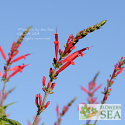
(Pineapple Sage) An indispensable fall-blooming addition to the garden, this tender perennial is, perhaps, the best of all hummingbird plants. When in bloom, it is covered in 3-inch-long red flowers.
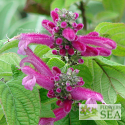
(Big Leaf Scandent Mexican Sage) Bigger leaves, larger, looser flowers and pink petioles -- the tiny stemlets connecting leaves to stems -- differentiate this this clone from its parent plant Salvia iodantha. A winter-blooming perennial, it's covered with velvety, 8-inch-long, magenta blossoms from fall into winter.
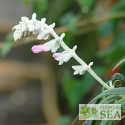
(Pink Mexican Bush Sage) Although native to Mexico and Central America, this elegant variety of Salvia leucantha was hybridized in South Africa. It is compact, long blooming and profusely covered by soft pink flowers surrounded by velvety white bracts.
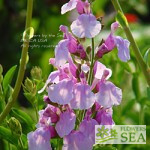
(Pink Beach Autumn Sage) When it blooms from spring into fall, this heat- and chill-tolerant sage is covered with large, two-tone pink flowers that attract butterflies, honeybees and hummingbirds. This compact, drought-tolerant beauty also features small, shiny, bright green leaves.
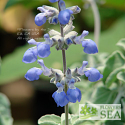
(Cedros Island Sage) From the Island of Cedars off the coast of Baja California Sur comes this delightful xeric sage with deep violet-blue flowers and silvery foliage. The square-shaped, 1-inch-long leaves are densely covered with downy, short, white hairs providing moisture retention.
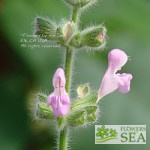
(Turkish Cliff Sage) Spring into early summer, Turkish Cliff Sage produces erect, branching flower spikes 24 to 36 inches long that rise from basal foliage. They’re covered with whorls of pale pink blossoms with delicate white markings.
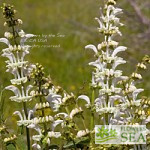
(Woolly White Sage) Salvia candidissima has tidy, upright stems covered with whorls of creamy white blossoms shaped like tiny parrot beaks. They rise from a mid-green rosette of leaves that become fuzzier and whiter as summer heat increases.
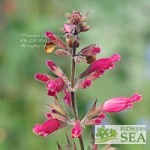
(Gray Roseleaf Sage) The University of California at Berkeley developed this hybrid from Karwinskii's Sage (Salvia karwinskii) and a variety of Roseleaf Sage (Salvia involucrata v. puberula) collected in Mexico by North Carolina nurseryman Richard Dufresne.
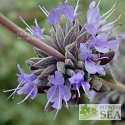
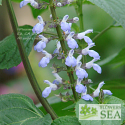
(Silly Mexican Sage) Also known as Salvia roscida, this close relative of Blue Sky Mexican Sage (Salvia caudata 'El Cielo Blue') has thousands of deep violet-blue flowers with prominent white bee lines.
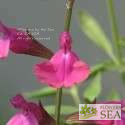
(Plum Wine Autumn Sage) Frilly, lavender-tinged, pink flowers with a pretty white dot at the throat make this another outstanding contribution from North Carolina nurseryman Richard Dufresne.
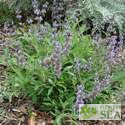
(Dry Earth Black Sage) Black Sage Salvia mellifera is one of the most common and fragrant native shrubs in the California Coast Ranges and is ideal for dry gardens. At 12 inches tall by 5 feet wide, this variety is an excellent groundcover.
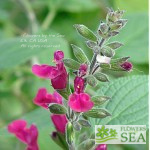
(Elk Red-Violet Hybrid Sage) A very special new hybrid Sage, featuring small but very numerous deep red-violet flowers on a vigorous, easy to grow plant. Loved by bees, butterflies and hummingbirds. A FBTS introduction.
Results for covered from the blog
| Hummingbirds in the Garden |
| 1. A Gardeners Guide to Hummingbird Sage |
| Among the hummers' favorites: Salvia spathacea, commonly known as Hummingbird Sage. As it name suggests, this California native produces the hummingbirds' flower of choice, blooming from late winter through summer -- and sometimes again in Fall -- with rose-pink to magenta blossoms. Available in six varieties, this robust perennial not only attracts hummers with its abundant nectar, it's easy to grow and enhances any landscape with its aromatic blooms and fragrant evergreen foliage. |
| Cultivating Color |
| 2. Add Pale Dreamy Sages to Your List of Moon Garden Plants |
| Moon gardens contain plants with pale flowers -- especially whites -- and silvery or variegated foliage that shine in moonlight. Some gardeners plant them to glow from afar when peering into the dark through a window. Others design these gardens for nighttime rambles. A number of white-flowered sages would be excellent additions to the dreamy design of a moon garden. |
| Business Buzz |
| 3. Buying Salvias Online from FBTS: How to Order & What to Expect - Updated |
| When you purchase plants online, it's understandable to feel a bit nervous. After all, a tender green life is being sent to you in a box. Will it survive the journey in healthy condition? Also, how secure will your credit card information and other data be? Furthermore, how do you sort through all those plants in the online catalog? Flowers by the Sea provides answers. |
| Celebrity Salvias |
| 4. Celebrity Salvias: Fuzzy, Fancy Salvia Oxyphora |
| A bright, cherry-licorice red, the large, fuzzy blossoms of Salvia oxyphora would make anyone stop and pay attention. Commonly known as Fuzzy Bolivian Sage or Bolivian Spearhead Sage, S. oxyphora has equally unusual foliage that fools the eye. At a distance, the plant’s lance-shaped leaves appear to be a smooth, glassy green. However, they are covered with tiny clear-to-white hairs. They’re also large -- growing up to 5 inches long and 2 inches wide at maturity -- and taper to long, sharp points. It was first collected near Cochabamba, Bolivia, by German botanist Otto Kunst in 1892 |
| Container Gardening |
| 5. Creating Oases in Dry Yards With FBTS Container Gardens |
| Container gardening likely began in ancient Egypt with Pharaoh Ramesses III who created garden cities lined with potted trees and papyrus plants. Ramesses didn't have a mail-order plant nursery like Flowers by the Sea to help him determine what to grow and how to do it. He also didn't have three-day mail delivery. But you don't have minions to help you plan and plant your landscape. So FBTS has designed discounted container kits for a variety of growing conditions, including drought. |
| Getting Started with Salvias |
| 6. Getting Started: Salvias for the Southwest |
| Ask anyone to describe the American Southwest, and they're likely to sum it up in three letters : "D-R-Y." Yet precipitation can vary a lot here state by state and even within different parts of the individual states. One thing that is consistent about the story of water throughout the Southwest, is that rain and snow can rapidly swing from famine to feast to misfortune. |
| 7. Getting Started: Salvias for Zone 9 |
| California's small, Mohave Desert city of Barstow averages about 5 inches of rain annually. Across the continent, Pensacola, Florida, has more than double Barstow's population and more than 12 times its amount of rainfall. Yet both cities are part of the U.S. Department of Agriculture's Plant Hardiness Zone 9 where you can plant perennials and shrubs that survive winter lows ranging from 20 to 30 degrees F. Flowers by the Sea takes readers on a triple coast road trip of Zone 9 and suggests plantings for varied growing conditions along the way. |
| Cultivating Color |
| 8. Gray and Silver Foliage Lights Up the Landscape Day and Night |
| It isn't easy describing green in the garden. Foliage can span greens so pale they are almost white to blue-greens so deep they murmur the forest primeval. Amid this range, you'll find shimmering silver- and gray-leaf species. To locate these types of Salvias and companion plants in the Flowers by the Sea catalog, please visit our " Gray and Silver Leaf Plants" category in the FBTS catalog menu. This article includes a small sampler of our selection. |
| 9. July in the Salvia Garden |
| July is a time of lush plant growth and pollinator activity in Salvia gardens. Aside from weeding and taking breaks to watch bees, hummingbirds and other small wildlife, there are many tasks to attend to in the sage garden during July. Flowers by the Sea Farm and Online Nursery offers a list of midsummer tasks to keep your garden buzzing and blooming. |
| Portraits in Gardening |
| 10. Portraits in Gardening: Michael and Kathi Rock's Hummingbird Journey |
| A wedding gift led to Kathi Johnson Rock and Michael Rock's passion for hummingbirds. These Wisconsin birders offer tips and plant suggestions for hummingbird gardeners at FBTS. Although now known as Madison's "Hummingbird People," the Rocks aren't ornithologists or biologists. They are home gardeners and customers of Flowers by the Sea. This article includes a list of favorite hummingbird plants found in the Rocks' gardens. |
| 11. Pretty, Practical Cottage Gardens Rooted in Pandemic History |
| Romantic visions of small, rose-covered houses with thatched roofs and bountifully blooming yards don't tell the story of how cottage gardens came to be in the Middle Ages due to a devastating pandemic. FBTS Farm and Online Nursery talks about cottage gardening past and present. |
| Quick Digs |
| 12. Quick Digs: Overwintering Salvias in Containers Outdoors |
| In chilly climates, such as USDA Cold Hardiness Zones with winter temperatures lower than those of Zone 8, it is difficult for potted plants to survive outdoors when the mercury dips. Soil in containers freezes harder and thaws more rapidly than the ground. This third article in our Quick Digs series on preparation for winter in the Salvia garden discusses how to improve chances of survival when overwintering sages in containers outdoors. |
Common terms in this search: pineapple sage indispensable fall-blooming addition garden tender perennial perhaps best all hummingbird plants when bloom covered -inch-long red flowers forms mound fragrant foliage brilliant color feet tall outdoors shows mild climates because doesn't begin blooming until mid late fall growing season short plant large container overwinter indoors such greenhouse even miss later part its cycle sweet smell culinary sage's leaves