
Advanced Search

(Anatolian Cushion Sage) Rising up only 6 to 8 inches, this is a pixie-sized sage that loves gritty soils. It is perfect for dry gardens with gritty soils in USDA Zones 5 to 9. In fact, it seems to love the colder zones best. We think it is particularly fond of frozen ground in winter, because that helps keep its roots from getting too damp.
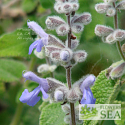
(Big Grape Sage) This lavender-flowered native of Northern Mexico resembles Salvia melissodora (Grape Scented Sage), but is bigger and also has larger leaves and flowers. It's a great companion plant for its little brother, which shares the same cultural needs and affinity for Zones 8 to 10. Both bloom from summer into fall.
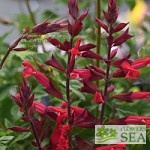
(Roman Red Sage) This handsome, long blooming hybrid sage features a dramatic combination of scarlet flowers and deep rust-to-merlot calyxes. Deadheading spent blossoms prolongs bloom time.
Results for fact from the blog
| Hummingbirds in the Garden |
| 1. A Gardeners Guide to Hummingbird Sage |
| Among the hummers' favorites: Salvia spathacea, commonly known as Hummingbird Sage. As it name suggests, this California native produces the hummingbirds' flower of choice, blooming from late winter through summer -- and sometimes again in Fall -- with rose-pink to magenta blossoms. Available in six varieties, this robust perennial not only attracts hummers with its abundant nectar, it's easy to grow and enhances any landscape with its aromatic blooms and fragrant evergreen foliage. |
| Ask Mr. Sage |
| 2. Ask Mr. Sage: Where Can You Grow Agastache? |
| Hummingbirds love Agastache. Mr. Sage explains that just because one kind of Agastache is wrong for your climate, it doesn't mean they all are and that the genus is native to most of the United States. Ask Mr. Sage is a regular feature in our Everything Salvias Blog that answers customer questions. |
| Getting Started with Salvias |
| 3. Getting Started: What Is Drought and Xeriscaping |
| Drought is a shortage of precipitation over a season or more as in California where four years of drastic declines in rainfall and snowpack have created severe watering cutbacks. Drought is also defined by what and whom it affects from agriculture to homeowners. Flowers by the Sea Farm and Online Nursery explains drought and xeriscape, a water-conserving form of landscaping that is effective for gardening during drought and in dry climates. This article is part of the FBTS Getting Started series for gardeners becoming acquainted with Salvias (true sages). It includes a brief list of drought-resistant sages. |
| 4. Guide to Understanding & Using Fertilizer |
| Identifying the kind of fertilizer your flowers need can be a trial-and-error experience. This is especially true if you are growing plants that don’t thrive in fertile soils like loam. Flowers by the Sea Online Nursery hopes to clear up some of the confusion in this Guide to Understanding and Using Fertilizer . |
| 5. Paperless Catalog Conserves Resources and Lowers Prices |
| Don't expect a catalog in your mailbox from Flowers by the Sea, because we have never printed one and refuse to do so. Print catalogs are tree-munching dinosaurs on their way to extinction due to the rapidly changing world of digital technology. Online catalogs are environmentally friendly and save our customers money, because we can keep our plant prices low. |
| 6. The Power of Scent |
| While it's true that not all Salvias smell, well, pleasant, many varieties are grown specifically for the aromatic or even sweet aromas that they release into the air. These ten Salvias are our top picks for the best-smelling varieties in the garden. |
| 7. A Community of Anise Scented Sages We Adore |
| You might expect the foliage of a plant called Anise-Scented Sage (Salvia guaranitica) to smell robustly like licorice, which shares the same fragrance as anise. Some gardeners detect a hint of licorice after crushing a leaf, but many say the foliage merely smells sweet. These popular sages are native to Brazil where indigenous peoples used their leaves as a medicine. Flowers by the Sea grows many varieties in a wide range of sizes and flower colors |
| Ask Mr. Sage |
| 8. Ask Mr. Sage: How Should I Prune my Salvias? |
| Flowers by the Sea Online Nursery specializes in Salvias and often receives questions about how to prune them. Although getting good at pruning takes practice, Salvias rebound quickly if you make mistakes. A key to successful pruning is understanding the varying needs of four main categories of sages. Ask Mr. Sage is a regular feature of the FBTS Everything Salvias Blog. |
| 9. Ask Mr. Sage: Why FBTS Uses Foam Packing Peanuts & How to Reuse Them |
| It isn't easy being completely green. Flowers by the Sea explains why polystyrene packing peanuts are essential for shipping and what you can do with them after unpacking your orders. Ecofriendly reuses include donating them to shipping companies and using them to lighten container plantings. Ask Mr. Sage is a Q&A feature based on topics raised in calls and emails to FBTS. |
| Hummingbirds in the Garden |
| 10. Bat-Faced Beauty: Gardeners & Hummingbirds Love Cuphea schumannii |
| Most bat faces only look beautiful to their mothers. However bat-faced Cuphea schumannii seems pretty as punch to hummingbirds in search of a sweet drink of nectar. If you take a close look at the ragged, open end of each flower, you'll see two, tiny, lavender petals standing straight up like bat or mouse ears. So, despite its common name, Orange Cigar Plant, this species is known as a bat-faced Cuphea. Aside from being excellent for attracting pollinators, Cupheas are becoming important agricultural crops that reduce pesticide use. |
| 11. Battles in the Salvia Garden: Controlling Spider Mites - Part I |
| Salvias often suffer when spider mites become legion in gardens. This is Part 1 of a two-part series about understanding and overcoming these dangerous pests. As summer temperatures rise, so do the numbers of the family Tetranychidae -- spider mites -- especially if conditions are dry. Controlling spider mites in your Salvia garden may be as simple as keeping plants hydrated and regularly spraying the little nippers off foliage. Or it may take a number of interventions, including biological controls, such as predatory mites, as well as the use of insecticidal soaps, oils and pesticides |
| 12. Battles in the Salvia Garden: Pretty Southern Pink Moth |
| Southern Pink Moth (Pyrausta inornatalis) is diminutive and pretty, but it’s a powerful pest in Salvia gardens. As the common name indicates, it is primarily found in the South. Yet it is flitting into gardens further north. Read more to learn how to identify and control this pest. |
Common terms in this search: anatolian cushion sage rising only inches pixie-sized loves gritty soils perfect dry gardens usda zones fact seems love colder best think particularly fond frozen ground winter because helps keep its roots from getting too damp caespitosa challenging plant photograph actually flowers translucent pale pink rosy golden bracts blooming spring into summer they surprisingly large angle upwards above fine gray-green leaves