
Advanced Search
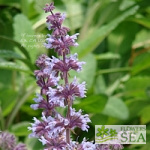
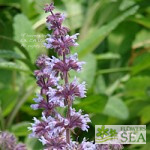
(Lilac Sage) We try not to brag too much, but this is our own variety of Salvia verticillata from home-grown seed, and we think it is spectacular. Butterflies and honeybees also are in love with this long-blooming perennial beauty.
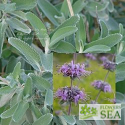
(California Purple Sage or California Gray Sage) This California native is commonly known as Purple Sage for its flowers or Gray Sage for its silvery, velvety foliage. Due also to its hardiness, drought tolerance and ability to attract small wildlife, it is a joy in the dry garden.
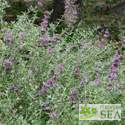
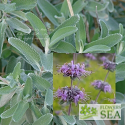
(Spreading California Purple Sage or Spreading California Gray Sage) Songbirds love this California native as do honeybees and hummingbirds. This Salvia leucophylla clone was collected in 1982 by Dr. Dale Smith of University of California Santa Barbara (UCSB #82152) at Point Sal near Santa Barbara.
Results for insects from the blog
| 1. Battles in the Salvia Garden: Controlling Spider Mites - Part II |
| Pollinators lose important food sources when Salvias and other nectar-rich flowers are destroyed by spider mites. This is Part 2 of a two-part series about understanding and overcoming these dangerous pests. Along with the non-chemical interventions described in Part 1 of this series, gardeners sometimes need the help of predatory insects and mites, insecticidal soaps and horticultural oils. Pesticides called miticides may also eventually be necessary, but should be the last resort. |
| Views from the Garden |
| 2. Beneficial Insects at Flowers by the Sea |
| Beneficial insects help control destructive insects in greenhouses and gardens. Flowers by the Sea uses beneficials to keep plants free of pests and to avoid use of harmful pesticides. FBTS is a horticultural farm in Northern California specializing in hundreds of ornamental Salvia species. In this video, FBTS horticulturist and co-owner Kermit Carter talks about the use of predatory mites called Persimilis and Fallacis to attack plant-eating spider mites and Encarsia wasps to control whiteflies. Carter shows how a tiny box from an insectary contains thousands of helpful insects, including ladybugs, which keep his farm free of pests. The microscopically small predatory mites come packaged with bean leaves that make it easy to distribute them in the garden. Paper strips for overhead hanging contain the wasp eggs. This video is part of the FBTS Everything Salvias Blog series Views from the Garden. |
| 3. Battles in the Salvia Garden: Controlling Spider Mites - Part I |
| Salvias often suffer when spider mites become legion in gardens. This is Part 1 of a two-part series about understanding and overcoming these dangerous pests. As summer temperatures rise, so do the numbers of the family Tetranychidae -- spider mites -- especially if conditions are dry. Controlling spider mites in your Salvia garden may be as simple as keeping plants hydrated and regularly spraying the little nippers off foliage. Or it may take a number of interventions, including biological controls, such as predatory mites, as well as the use of insecticidal soaps, oils and pesticides |
| 4. Fall Cleanup: Plant Placement and Pesky Problems |
| You don’t usually have to fuss over Salvias to give them what they need. Yet the end of fall and other growing seasons are good times to seek solutions to problems that affect plant vigor. It is a time for a call to attention as well as a cleanup call to action. |
| Butterflies in the Garden |
| 5. Growing Habitat: Three Tough Milkweeds to Help Monarchs |
| Flowers by the Sea Farm and Online Plant Nursery is serious about wildlife gardening and grows a number of milkweed species considered among the best for supporting Monarch butterflies. Three of the nursery's toughest, loveliest milkweeds are Indian Milkweed (Asclepias eriocarpa), Showy Milkweed (Asclepias speciosa) and Common Milkweed (Asclepias syriaca). Read about the history of milkweeds and the reasons why Monarch butterflies are threatened due to a shortage of these tough yet lovely plants caused by herbicides. Learn how herbicides and pesticides harm Monarchs and other milkweed-loving pollinators. |
| Ask Mr. Sage |
| 6. Ask Mr. Sage: How to Combat Whiteflies Safely |
| Ask Mr. Sage is our blog's new question-and-answer feature, based on calls and emails received at Flowers by the Sea. This question concerns how to safely rid Salvias of Whiteflies and their eggs. |
| Hummingbirds in the Garden |
| 7. Hummingbirds in the Garden: Attracting Hummingbirds to Your Garden |
| Planting a hummingbird garden filled with nectar-rich, long-blooming Salvias aids preservation of hummingbird species that migrate each year throughout North America. It also gives you a front-row seat to a fascinating aerobatics show. Backyard islands of colorful sages are like gas stations for hummingbirds' long-distance journeys. Salvias can keep your garden whirring with the helicopter-like flight of hummingbirds from spring through autumn and -- in warm climates -- into winter. |
| Portraits in Gardening |
| 8. Portraits in Gardening: Ward Dasey |
| Portraits in Gardening is a blog series from Flowers by the Sea that profiles customers who are passionate about the Salvia genus. This article focuses on wildlife gardener, birder and dedicated volunteer Ward W. Dasey III, who grows Salvias at New Jersey's Palmyra Cove Nature Park. Dasey and nature-loving friends proposed the park to make bird watching easier on the Delaware River. |
| 9. Battles in the Salvia Garden: Pretty Southern Pink Moth |
| Southern Pink Moth (Pyrausta inornatalis) is diminutive and pretty, but it’s a powerful pest in Salvia gardens. As the common name indicates, it is primarily found in the South. Yet it is flitting into gardens further north. Read more to learn how to identify and control this pest. |
| Hummingbirds in the Garden |
| 10. 6 Indispensable Hummingbird Flowers for Long, Easy Bloom |
| Hummingbirds are like tiny combat jets dive bombing each other when staking claim to the nectar-rich flowers they need for survival. Fights over nectar habitat can reduce hummingbird gardens to single occupancy. FBTS Farm and Online Nursery details and tells stories about its top six hummingbird flowers. Plant lots of them to accommodate a village of hungry hummers. |
| Container Gardening |
| 11. A Guide to Successful Potting Soils for Salvias |
| One of the decisions that Salvia gardeners face in spring is what kind of potting mix to use for outdoor container plants. Find answers in FBTS Farm & Online Nursery's guide to successful potting soils for Salvias. |
| Ask Mr. Sage |
| 12. Ask Mr. Sage: How to Control Snails |
| Ask Mr. Sage is a Q&A feature from Flowers by the Sea. This one talks about how to ward off snails and slugs safely through simple organic methods, including barriers and handpicking, as well as through careful use of iron-phosphate pesticides. It also talks about how to nurse damaged Salvias back to health. |
Common terms in this search: lilac sage try not brag too much but our own variety verticillata from home-grown seed think spectacular butterflies honeybees also love long-blooming heat-tolerant perennial spring into summer dense whorls blue-to-smoky lavender flowers cover -foot-tall spikes arising fragrant mint-green basal foliage native europe central asia lovely when mixed cut-flower arrangements although only needs average watering based local conditions works well moist