
Advanced Search
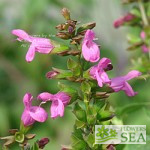
(COOL Wild Strawberry Anise Scented Sage) Prepare yourself for a heaping serving of large flowers the delicious color of strawberry ice cream when you plant Salvia COOL Wild Strawberry.
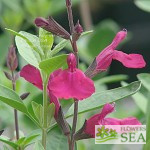
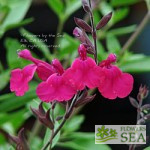
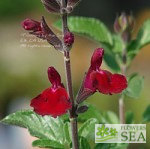
(Raspberry Autumn Sage) Dark calyxes and stems contrast intensely with the bright berry-colored flowers of Salvia greggii ‘Raspberry’. It's one of our fastest growing, earliest blooming Autumn Sages and has fragrant foliage.
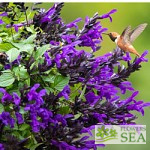
(Hummingbird Falls Anise-Scented Sage) Salvia BODACIOUS® ‘Hummingbird Falls’ is the world’s first hanging basket sage and a plant that hummingbirds battle over. It’s a natural alternative to plastic and glass nectar feeders that require frequent cleaning and refilling.
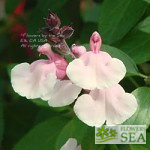
(Elk Crème Anglaise Jame Sage) Framed by minty green foliage, the blossoms of Salvia x ‘Elk Crème Anglaise’ transition from dreamy pale pink throats to white skirts. They look delectable.
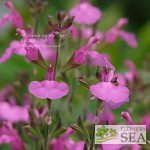
(Elk Xanadu Jame Sage) Like the magical, fictional land of Xanadu, there’s something heavenly about this sage. The flowers of Salvia x ‘Elk Xanadu’ look ethereal due to the bluish cast of their magenta-pink blossoms supported by deep magenta and green calyxes. It's a powerful attraction for pollinators, including hummingbirds.
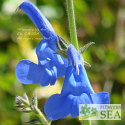
(Guanajuato Giant Gentian Sage) At 3 inches long, the flowers of this Gentian Sage are the largest of any we grow. Guanajuato Giant is also unique for its tall, upright growth and heavily textured foliage. This is our own tested seed strain of this rare plant.
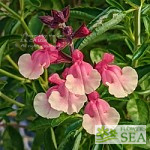
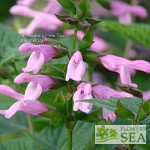
(COOL Shocking Pink Anise-Scented Sage) Dusky green bracts support the pastel magenta blossoms of Salvia COOL Shocking Pink. It’s a hummingbird favorite with bright green, fragrant foliage that may remind you of licorice.
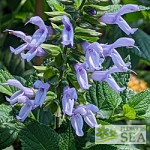
(COOL Periwinkle Anise-Scented Sage) Dusky green bracts cup the lavender-blue blossoms of Salvia COOL Periwinkle that attract hummingbirds. The fragrance of its bright green leaves may remind you of licorice.
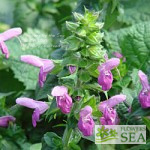
(Autumn Enchanter Japanese Woodland Sage) Salvia glabrescens ‘Autumn Enchanter’ has bicolored orchid pink flowers that are larger and bloom earlier than those of S. glabrescens ‘Shi Ho’. Autumn Enchanter is also more floriferous, blooms longer, and grows more rapidly with greater vigor.
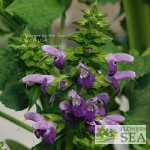
(Autumn Equinox Japanese Woodland Sage) Although similar to the Japanese native Shi Ho Woodland Sage, Salvia glabrescens 'Autumn Equinox' has much larger flowers that are bicolored purple and bloom earlier. Autumn Equinox is also more floriferous, blooms longer, and grows more rapidly with greater vigor.
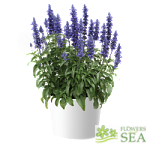
(SALLYFUN™ Blue Lagoon Sage) You can expect early and long bloom from SALLYFUN™ ‘Blue Lagoon', a dwarf border sage with dense, aromatic foliage. Its spikes of deep violet-blue flowers attract bees, butterflies, and hummingbirds.
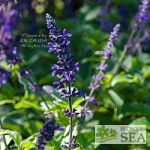
(Indigo Spires Sage) Salvia ‘Indigo Spires’ gains its name from long spikes of rich, deep purple-blue flowers that stand tall and also arch and twist gracefully. It is a chance hybrid discovered growing amid Salvia farinacea and Salvia longispicata at Southern California's Huntington Gardens.
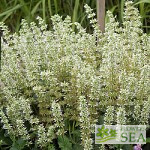
(White Lilac Sage) Dense whorls of white, instead of lavender, blossoms cover tall flower spikes of this long-blooming perennial that tolerates both heat and cold. They rise up from fragrant, mint-green foliage.
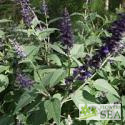
(Anthony Parker Bush Sage) Floriferous spikes of dark blue to purple flowers bloom midsummer to fall on this tidy, mid-height subshrub that grows as wide as it is tall.
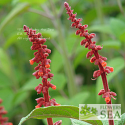
(Red Velvet Sage) Reaching up to 18 inches tall, the floral spikes of this exotic looking Salvia are crowded with small, velvety, orange-red blossoms from mid-summer to late autumn. Its large, dark green, pebbly leaves are beautiful in their own right, making this one of our favorite sages.
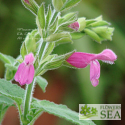
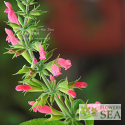
(Karwinski's Sage) From moist mountain areas in Mexico and Central America, this rugged, winter-blooming shrub is found in oak or pine forests at altitudes of 4,000 to 8,000 feet. This may account for this winter bloomer producing a few bright red flowers during short periods of freezing weather with temperatures as low as 20 degrees F.
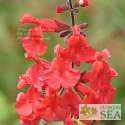
(Scarlet Spires Sage) This is a brilliant cross between the sturdy D'Arcy's Sage (Salvia darcyi) and the beautifully colored 'Raspberry Delight' Littleleaf Sage (Salvia microphylla 'Raspberry Delight').
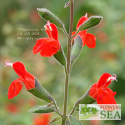
(Diablo Eyelash Sage) Small, eyelash-like hairs on the edge of its leaves give this Mexican native part of its name. It earns "Diablo," which means "devil" in Spanish, from the two yellow stamens that stand up out of each flower like horns.
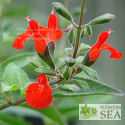
(Painted Lady Eyelash Sage) Small, eyelash-like hairs on the edge of its leaves give this Mexican native part of its name. A compact, gently mounding Salvia, it spreads gradually by underground stolons.
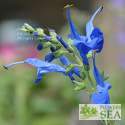
(Big Swing Sage) With its large, cobalt blue flowers displayed on strong, wiry, branched stems, this eye-catching sage wins the FBTS "best of class" designation for being our top Salvia macrophylla.
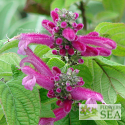
(Big Leaf Scandent Mexican Sage) Bigger leaves, larger, looser flowers and pink petioles -- the tiny stemlets connecting leaves to stems -- differentiate this this clone from its parent plant Salvia iodantha. A winter-blooming perennial, it's covered with velvety, 8-inch-long, magenta blossoms from fall into winter.
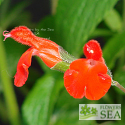
(Eyelash Sage) Small, eyelash-like hairs on the edge of its leaves give this Mexican native part of its name. A compact, gently mounding Salvia, it spreads gradually by underground stolons.
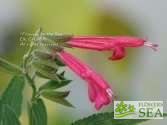
(Hybrid Bolivian Sage) This naturally occurring hybrid is a Bolivian native related to S. orbignaei and S. haenkei. Prettier than its parents, it has large, profuse, long-blooming flowers that are dark pink.
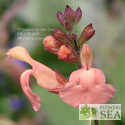
(Yellow Pink Hybrid Jame Sage) Dusty pink with pale yellow throats, the bicolor pastels of this Salvia x jamensis are especially charming up close. 'Yellow Pink' is a compact sage with tiny, smooth foliage.
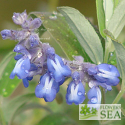
(Blue Ecuadorian Sage) A densely branched shrub with silvery leaves and dusky blue flowers, this rare species was once thought to be Salvia cruickshanksii. In the nursery trade, it sometimes is called Salvia 'Equador'.
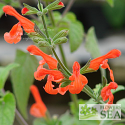
(Elk Super Scarlet Rooster Sage) From the mountains of Mexico we have this stunning Sage, which seems never to be out of bloom. A superior hummingbird plant, the warm orange flowers that cover this shrubby perennial make it a standout in the garden.
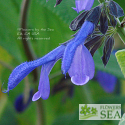
(Ocampo Mexican Sage) Growing from 7 to 10 feet tall each year, this is the largest of our Mexican Sages. Yet due to its erect form, this sage only spreads 36 inches. It has large, deep violet flowers with almost black calyxes that rise up on tall spikes and dark green, heavily veined foliage.
The following terms were added to your search to help improve the result. Click here to exclude these extra terms from the search.
- shaded, shades
Results for shade from the blog
| 1. Salvia Soothes Eye, Heart and Honeybees in Remembrance Gardens |
| In the days following the terrorist destruction of New York’s World Trade Center on September 11, 2001, one article in The New York Times focused on the recovery of 30 acres of gardens of the Battery Park City Parks Conservancy a few blocks south of where the Twin Towers once stood. |
| 2. Salvia greggii: Discovering a Riot of Color |
| It would be inaccurate to refer to the woody perennial Autumn Sage, or Salvia greggii, as coming in a rainbow of colors, because there is no true blue in the bunch. However, S. greggii cultivars form a riot of lipstick-intense reds, pinks, corals, apricots, oranges, lavenders and purples. Whites, pale yellows and bicolors also are members of the vivid species discovered in the dry, rocky landscapes of Texas and Northern Mexico by 19th century frontiersman, doctor, trader, writer and amateur botanist Josiah Gregg . |
| 3. Salvia x jamensis: Painting the Landscape with Pastels |
| Planning a flowerbed with pastel bicolored Salvia x jamensis is a bit like organizing a fancy sweet 16 birthday party. It takes finesse and the right guest list of complementary perennials and annuals for fun and harmony. These Salvias are colorful, but not boisterous flowers. |
| Salvias Down South |
| 4. Salvias Down South: How Salvias Behave in Florida |
| Salvias that grow well in Florida may behave differently from one region of the state to another. This may mystify gardeners who have just moved to Florida or have moved to a different area in the state. Based primarily on seasonal variations in temperature, the four main regions are North, Central, South and Tropical Florida. |
| 5. Salvias Down South: Salvia Success in Florida |
| Florida is one of the wettest states in the nation, yet it is a fine place to grow Salvias if you select shade-tolerant, moisture-loving species and ones native to Florida. Gardeners who are accustomed to growing Salvias in a dry climate face a variety of surprises in Florida gardens. These include recurrent periods of drought, many cloudy days and soil that is so poor it has to be amended for Salvias. |
| 6. The Power of Scent |
| While it's true that not all Salvias smell, well, pleasant, many varieties are grown specifically for the aromatic or even sweet aromas that they release into the air. These ten Salvias are our top picks for the best-smelling varieties in the garden. |
| 7. Winter Blooming Salvias (Part I) |
| Some of the most dramatic Salvias bloom in the Winter. Most of these are from Southern Mexico, and are very well adapted to grow in Zone 9 gardens. |
| Cultivating Color |
| 8. Composing a Symphony of Pastel Salvias Including Elk Rainbow Sages |
| If you want to orchestrate a peaceful symphony in a flowerbed, planting a profusion of pastels is one way to do it. Pastels are lighter hues of bright primary and secondary colors. Although gardeners often visualize bright colors when thinking of Salvias, there are a number of pastels in the genus such as among the Jame Sage Hybrids (Salvia x jamensis spp.), including many in the new Flowers by the Sea Elk Rainbow Series. |
| Getting Started with Salvias |
| 9. Getting Started: Salvias for Zone 8 |
| Rainfall often is heavy in USDA Plant Hardiness Zone 8. It swings in a deep, broad arc from the West Coast to the Gulf Coast and back up the East Coast to the northeast edge of Virginia. What all its diverse areas have in common climatically is an average low winter temperature of 10 degrees F. Flowers by the Sea Online Nursery discusses growing conditions and how to select Salvias for your part of Zone 8 whether wet or dry. |
| 10. Getting Started: Types of Salvias for Zone 7 |
| Winter temperatures can seem moderate, then dip to freezing in USDA Hardiness Zone 7, which covers a broad range of locations from Washington State to Washington, D.C. To succeed, Salvia perennials and shrubs need to tolerate temperature shifts and local growing conditions. Learn more at Flowers by the Sea, an online, mail-order Salvia nursery. |
| Sage Experts |
| 11. Sage Experts: Meet Professor Rolando Uria of Argentina |
| Sage Experts is a new feature on our Everything Salvias blog. It focuses on horticulturalists -- both amateurs and professionals -- in settings ranging from botanic gardens to universities. All have expertise in cultivating plants in the Salvia genus. This first profile talks about Argentina's Rolando Uria, an agronomy professor at the University of Buenos Aires and a presenter at the 2013 Salvia Summit II. Uria is well known for discovering Salvia 'Amistad'. |
| Xeric Choices |
| 12. Xeric Choices: 5 Must-Have Native Salvias for Southern California |
| Native plants are the best ones for local conditions. But sometimes boundaries designating what is native may be artificial. Here are five outstanding Xeric Salvias for Southern California, including one, not far over the Baja border, that offers intense drought resistance and violet-blue flowers. |
Common terms in this search: cool wild strawberry anise scented sage prepare yourself heaping serving large flowers delicious color ice cream when plant add hint licorice from sage's mid-green foliage part fbts collection guaranitica hybrids produced our development program unlike deep saturated blue purple most sages series features surprising pastels native argentina brazil paraguay uruguay grows edge streams forest clearings similar other adaptable full sun