
Advanced Search
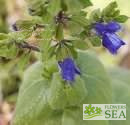
(Little Mexican Sage) This low-growing sage is a shrub in its warmest zones and a perennial in the cooler ones. It's just right for small spaces or tiny gardens. Short and compact, its flowers are similar to but smaller than those of S. mexicana 'Limelight'.
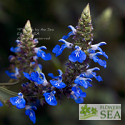
(Bog Sage) Highly adaptable, Salvia uliginosa is ideal for the beginning sage gardener. It isn't fussy about soil type, sun exposure, drainage or frequency of watering.


(Waverly Sage) A pale pink to lavender blush adds delicate color to the white flowers of Waverly Sage, which are supported by plum-colored calyxes. Its mid-green leaves are lance shaped and veined.

(Cayman Island Sage) Compact and intensely fragrant, this shrubby sage is excellent for containers or the edge of a pathway. Small blue and white flowers mass about its densely branched foliage. It loves rich, moist soil and warm weather.
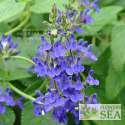
(Scordy Sage) Little is known about this shrubby Ecuadorian native. We're not even sure it is from Ecuador! However, this is another sage that sells itself instantly when seen in bloom. The large clusters of rich, deep violet flowers bloom summer to fall, attracting honeybees and hummingbirds.
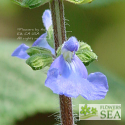
(Bitter Mexican Sage) Hummingbirds love this heat-tolerant Salvia, which is one of our best choices for shady, moist areas. The large-lipped, baby-blue flowers with white striations bloom from late summer through fall.
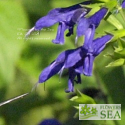
(Sapphire Blue Anise-Scented Sage) The large, sapphire blue flowers of this Anise-Scented Sage glow in the full-sun or partial-shade garden from summer into fall. Similar to Salvia guaranitica 'Blue Ensign', this is a somewhat taller variety of the water-loving species.
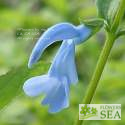
(Cambridge Blue Gentian Sage) Cambridge Blue is one of the most famous varieties of Salvia patens, which was discovered in Central Mexico in 1838. Its powder blue flowers are delightful and cooling in the landscape.
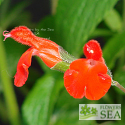
(Eyelash Sage) Small, eyelash-like hairs on the edge of its leaves give this Mexican native part of its name. A compact, gently mounding Salvia, it spreads gradually by underground stolons.
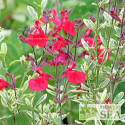
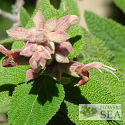
(Wooly Multicolor Sage) In Greek, "lasiantha" means "wooly flower." The flowers of Salvia lasiantha are surrounded by wooly bracts, but are even more notable for transforming from apricot-orange in the morning to reddish-purple later in the day.
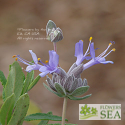
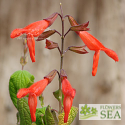
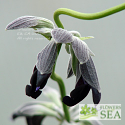
(Purple Bract Peruvian Sage or Concolor Sage) Similar to its wild relative, Peruvian Sage, which is also known as Concolor Sage, this cultivar has foliage that is smooth, apple green on top and fuzzy with silver hairs on the bottom. Major differences appear in the dramatic bracts.
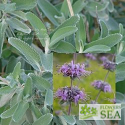
(California Purple Sage or California Gray Sage) This California native is commonly known as Purple Sage for its flowers or Gray Sage for its silvery, velvety foliage. Due also to its hardiness, drought tolerance and ability to attract small wildlife, it is a joy in the dry garden.
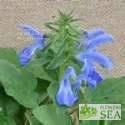
(Patio Deep Blue Gentian Sage) Patio Deep Blue is a handsome, dwarf variety of Salvia patens from Holland. It loves partial shade and has dusky, deep blue flowers that are larger than those of other Gentian Sages.
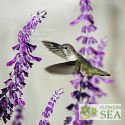
(Mexican Bush Sage or Velvet Sage) Large purple and white flowers bloom abundantly on this compact dwarf plant. If you love the rich colors and velvety foliage of Mexican Bush Sage but have limited space or need a container variety, this one is is for you.
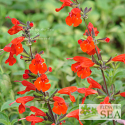
(Summer Jewel Red Tropical Sage) Butterflies, hummingbirds and honeybees enjoy this Fleuroselect Gold Medal winner, which is an outstanding choice for bright red color from June to autumn. This type of Tropical Sage is generally the first to flower for us.
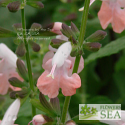
(Coral Nymph Tropical Sage) What a cutie! This award-winning cultivar of Tropical Sage is short and compact yet has a multitude of pastel salmon flowers larger than those of its bigger cousins. It is perfect for annual flower beds or patio containers.
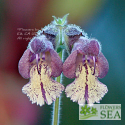
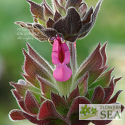
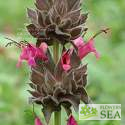
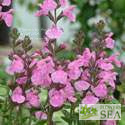
(Giant Hummingbird Sage or Pitcher Sage) Powerline Pink is the largest variety of Salvia spathacea that we grow. Its large, dark pink flowers are surrounded by bracts so furry that they look silvery.
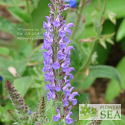
(The Queen's Sage) Regal spikes of lavender-to-purple flowers give weight to this sage's common name. It provides a stately show of bloom during summer in USDA Zones 6 to 10. Cold hardy and heat tolerant, this impressive perennial comes from the mountains of Turkey.
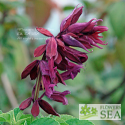
(Sao Borja Scarlet Sage) Three-inch-long, smokey purple blossoms that bloom from spring to fall are a major clue that this heat-tolerant perennial is not your grandmother's Scarlet Sage.
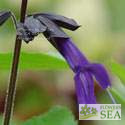
(Friendship Sage) Thank you Rolando Uria of the University of Buenos Aries for this very fine plant. Discovered in 2005 at a plant show in Argentina, this truly unique hybrid sage has generated a great deal of excitement in the Salvia world.
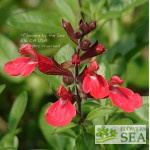
(Lipstick Autumn Sage) Similar to a little bit of lipstick on a pretty face, the rosy flowers of this hardy, heat-tolerant sage add a finishing touch to a perennial Salvia border. The creamy pinkish-red blossoms have a contrasting white throat and are cupped by rosy brown calexes on long spikes.


(Giant Brazilian Sage) Yes, this one is gigantic. The first season we grew this heat-tolerant sage, it reached 8 feet tall by July! Masses of small, red-orange, trumpet-shaped flowers attract hummingbirds and honeybees to long, upward curving flower spikes towering over heart-shaped foliage.
The following terms were added to your search to help improve the result. Click here to exclude these extra terms from the search.
- allen, all
Results for Allen from the blog
| Celebrity Salvias |
| 1. Celebrity Salvias: Hot Heatwave Hybrids from Australia |
| Waterwise landscapes don't have to be cactus gardens if you grow leafy, colorful drought-resistant Salvias, such as Australian Heatwave™ Mountain Sages, which are crosses of Salvia microphylla and S. greggii . Hybridizers Howard Bentley and Steve Eggleton of Plant Growers Australia used these tough American and Mexican native plants to create their series. One goal was to aid water conservation during their nation's hot, dry summers. |
| Xeric Choices |
| 2. Drought Praise: 5 Blue-Tag Beauties for Dry Gardens |
| If you live in a semi-arid climate where rain is a vague memory and the soil is crunchy with gravel, you may find yourself praising the color and resilience of blue-tag plants from Flowers by the Sea. Not all of our drought tolerant plants fall into the blue-tag category. Yet ones that do are extremely capable at surviving with little water. FBTS explains plant care and offers five favorite drought-resistant species. |
| 3. Fall Planting: Commemorating the HMS Salvia |
| Not long ago, we stumbled on an article about a World War II British naval warship named the HMS Salvia. The name made strange sense to us due to the toughness of the genus. Many Salvias survive, and even thrive, in heat, cold, drought and other difficult conditions. This article ponders how the ship got its name. It is also a commemorative of sorts to those who lose their lives serving their countries. |
| 4. Fall Planting: Tips for Salvia Success |
| For people and for plants, cool fall weather is comfortable for working in the garden. As gardeners dig, amend soil, weed and water, newly planted perennials focus their efforts on growing strong root systems before the chill of winter. Most perennial sages ( Salvia spp.) thrive if planted in fall. As temperatures decline, the soil remains warm. These conditions cause plants to decrease their growth above ground and focus on root expansion. Here are some tips about why and how you can succeed in the Salvia garden by planting during autumn. |
| Xeric Choices |
| 5. Four Top Drought-Resistant Perennials for Dry Shade |
| Searching for shade-tolerant plants is difficult. Finding ones that grow well in dry conditions, especially as groundcovers, is even more challenging. Flowers by the Sea talks about different types of shade and four drought-resistant perennials for these varying levels of sun exposure. It also explains how to search the company's extensive product menu. |
| Getting Started with Salvias |
| 6. Getting Started: Salvias for the Midwest |
| Severe winter chill and summer heat coupled with extreme humidity are challenges that gardeners face in the Midwest. Many Salvias are excellent choices as long-blooming annuals in the region while others -- ones that can withstand cold winters -- are reliable perennials. Flowers by the Sea Online Plant Nursery explains the confusing Midwest boundaries from Ohio west to Kansas and North Dakota south to Missouri. It talks about the range of USDA Plant Hardiness Zones in the region and the kinds of sages that grow best there. |
| 7. How to Defend Homes Against Wildfires & Firescape with Salvias |
| Home improvement, including landscaping, involves lots of decisions. This is especially true when modifying your property to protect against wildfires. Flammability is usually the last thought on a gardener's mind when planning what to purchase. But if you live in wildfire country and are a Salvia lover, you may have noticed sages on lists of fire-resistant plants. Read more about wildfire preparedness at FBTS. |
| 8. In the Native Garden: Colorful California Salvias Plus a Cousin |
| Native plants, including California's many indigenous sages, are like the boys or girls next door who were overlooked until outsiders discovered their good looks and other fine attributes. Flowers by the Sea grows hardy, drought-resistant California Salvias that are native to a broad swath of the West Coast ranging from Northern Baja to Southern Oregon. Many tolerate heat. They are well suited to waterwise landscapes, including dry gardens. |
| New at FBTS |
| 9. New at FBTS: Elegant Salvia valentina |
| Flowers by the Sea Online Salvia Nursery has fallen hard for the delicate look but rugged constitution of wildflower sages from Valencia on Spain's Mediterranean coast, especially Strong Spanish Sage (Salvia valentina). S. valentina has upright form and looks elegant dressed up in tall spikes of deep lavender, double-lipped flowers from spring into summer. It's a meadow sage with fuzzy bracts and stems that mature from green to rich Pantone Marsala. |
| Cultivating Color |
| 10. Gray and Silver Foliage Lights Up the Landscape Day and Night |
| It isn't easy describing green in the garden. Foliage can span greens so pale they are almost white to blue-greens so deep they murmur the forest primeval. Amid this range, you'll find shimmering silver- and gray-leaf species. To locate these types of Salvias and companion plants in the Flowers by the Sea catalog, please visit our " Gray and Silver Leaf Plants" category in the FBTS catalog menu. This article includes a small sampler of our selection. |
| Sacred Sages |
| 11. A Guide to Growing and Respecting Sacred White Sage |
| White Sage (Salvia apiana) is a sacred plant for Native Americans, especially tribes in its Southern California native lands. It's a challenging plant to grow. Flowers by the Sea Farm and Nursery talks about the history and religious use of Salvia apiana as well as providing a guide to growing it. |
| New at FBTS |
| 12. New at FBTS: Ember's Wish & Love and Wishes Salvias |
| Plants contribute to our lives in many ways -- as sources of beauty, building materials, clothing, food, fragrance, medicine and oxygen. Add hope and fulfillment to the list, because that is what three abundantly blooming Salvias from Australia add to the lives of seriously ill children. These plants form the Wish Collection -- Wendy's Wish Sage, Ember's Wish Sage, and Love and Wishes Sage. Flowers by the Sea is one of the first online nurseries in America to sell all three. Although we have grown and sold Wendy's Wish for a number of years, Ember's Wish and Love and Wishes are new at FBTS. |
Common terms in this search: little mexican sage low-growing shrub its warmest zones perennial cooler ones it's just right small spaces tiny gardens short compact flowers similar but smaller than those mexicana 'limelight' has broadest temperature tolerance all grow ranging from usda compared our other varieties some which can rise feet tall also petite maximum inches wide even gray-green leaves they contrast handsomely sage's royal