
Advanced Search
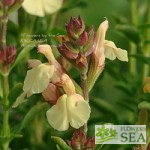
(Golden Girl Sage) Sages can be such tough plants. Many, such as Salvia 'Golden Girl', withstand heat and drought yet have delicate looking blossoms. Golden Girl features yellow flowers with a hint of rosy pink along with dark rose calyxes.
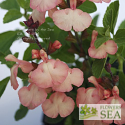
(Glow Peach Mountain Sage) Long blooming Salvia microphylla 'Heatwave Glow' produces prolific quantities of soft peach-to-apricot blossoms along with dense, mid-green foliage.
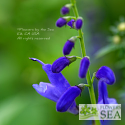
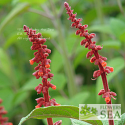
(Red Velvet Sage) Reaching up to 18 inches tall, the floral spikes of this exotic looking Salvia are crowded with small, velvety, orange-red blossoms from mid-summer to late autumn. Its large, dark green, pebbly leaves are beautiful in their own right, making this one of our favorite sages.
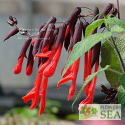
(Giant Bolivian Sage) Hailing from Peru and Bolivia, this tender specimen is found at altitudes of 9,000 feet in the wild. This multi-stemmed, woody-based, climbing Salvia needs support. Hummingbirds love its 5-inch-long, crimson flowers, which are the longest grown by any Salvia and flower from late summer through autumn.
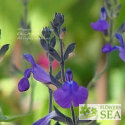
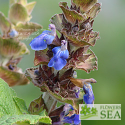
(Michoacan Blue Sage) This unusual and distinctive Mexican sage grows from tuberous roots. It is compact and decidedly vertical with strong, square, winged stems that rocket upward and are topped with clusters of rich blue flowers in large rosy bracts come autumn.
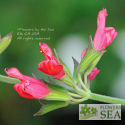
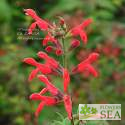
(Cardinal Sage) Aptly named for its cardinal red, 2-inch-long flowers that glisten in the autumn sun, this full-sun sage blooms from fall into winter. Hummingbirds love it, but deer resist its charms. Growing up to 5 feet tall, it makes a fine herbaceous border plant or shrubby screen.
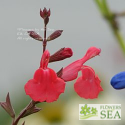
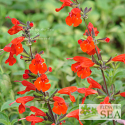
(Summer Jewel Red Tropical Sage) Butterflies, hummingbirds and honeybees enjoy this Fleuroselect Gold Medal winner, which is an outstanding choice for bright red color from June to autumn. This type of Tropical Sage is generally the first to flower for us.
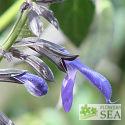
(Door of the Fox Mexican Sage) Purplish foliage contrasts attractively with the violet-to-purple flowers of this big sage, which grows 6 feet tall and 4 feet wide. Bloom time is autumn. This darkly dramatic Mexican Sage makes a particularly attractive entryway accent.
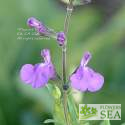
(Saint Isidro's Sage) This hardy, lavender-blue-flowered Salvia comes from Southern Texas and has the same breeding as the famous Ultra Violet Autumn Sage. Although it needs warmer winter temperatures and has smaller foliage, it also does well in stressful conditions, including drought.
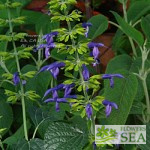
(Russell's Mexican Sage) Expect rapid, tall growth from this Salvia Mexicana . In the ground, Russell’s Mexican Sage can reach up to 10 feet tall and 5 feet wide, providing an effective screen of dark green, heart-shaped foliage. By late autumn it’s bursting with flowers.
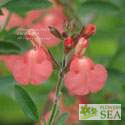
(Tangerine Ballet Hybrid Jame Sage) Soft pinkish-orange flowers with contrasting yellow eyes make this Jame Sage look as tasty as sorbet. Hardy to at least 10 degrees F, Tangerine Ballet is also heat tolerant, drought resistant and long blooming-- all marks of Salvias in the closely related Autumn and Mountain Sage group.
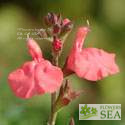
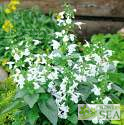
(Snow Nymph White Tropical Sage) Butterflies, hummingbirds and honeybees enjoy this award winner, which is an outstanding choice for pure white color from June to autumn. This type of Tropical Sage is generally the first to flower for us.
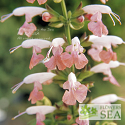
(Summer Jewel Pink Tropical Sage) Butterflies, hummingbirds and honeybees enjoy this Fleuroselect Gold Medal winner, which is an outstanding choice for bright pink & white color from June to autumn. This type of Tropical Sage is generally the first to flower for us.
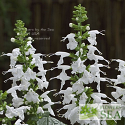
(Summer Jewel White Tropical Sage) Butterflies, hummingbirds and honeybees enjoy this All American 2016 winner, which is an outstanding choice for pure white color from June to autumn. The Summer Jewel varieties of Tropical Sage is generally the first to flower for us.
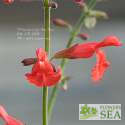
(Silke's Dream Salvia) Large red-orange blossoms combine with heart-shaped, light green, heavily veined leaves in this large, long-blooming sage. It's a subshrub, which means it combines it is a perennial that combines soft, herbaceous growth with some woodiness.
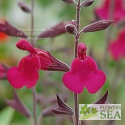
(Raspberry Delight Sage) Dark raspberry-red flowers, burgundy stems and calyxes and deep green foliage make this one of our most attention-grabbing varieties.
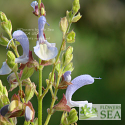
(Rough Blue Sage) Honeybees and butterflies love this deer-resistant shrub, which grows wild on the southwestern Cape of South Africa. It is a member of the most diverse plant community in the world, the fynbos -- an Afrikaans word, meaning "fine bush" and referring to scrub plants or shrubbery.
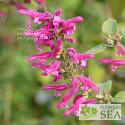
(Scandent Mexican Sage) Here's another winter-blooming hummingbird magnet for gardens in mild climates. This one is scandent, which means it is a climber and needs support. Its abundant, purple-to-magenta flowers are velvety and 6 inches long.
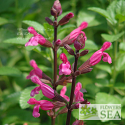
(Mulberry Jam Roseleaf Sage) Magenta flower buds burst into fuzzy, hot pink blossoms in this hybrid sage from the gardens of Betsy Clebsch, author of The New Book of Salvias.
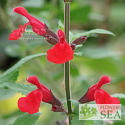
(John Whittlesey Sage) Hardy, vigorous and long blooming, John Whittlesey Sage is a hybrid of D'Arcy's Sage (Salvia darcyi) -- a native of Mexico -- and Mountain Sage (S. microphylla), which is native to the American Southwest and Mexico.
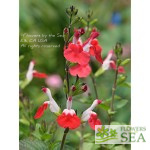
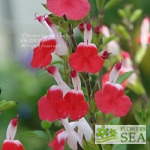
(Hot Lips Sage) What a winner for fascinating flowers! Salvia microphylla ‘Hot Lips’ is a native of Mexico that produces a combination of solid red, solid white, and bicolor red and white blossoms all on the same plant and sometimes at the same time.
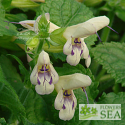
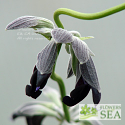
(Purple Bract Peruvian Sage or Concolor Sage) Similar to its wild relative, Peruvian Sage, which is also known as Concolor Sage, this cultivar has foliage that is smooth, apple green on top and fuzzy with silver hairs on the bottom. Major differences appear in the dramatic bracts.
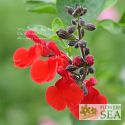
(Red Velvet Mountain Sage) This is one of the most intense red-flowering variety of Mountain Sage we grow. Medium-sized flowers are profuse on this large, vigorous plant -- particularly in spring and fall. Dark stems and calyxes intensify the plant's drama along with glossy green foliage.
The following terms were added to your search to help improve the result. Click here to exclude these extra terms from the search.
- autum
Results for autumn from the blog
| 1. Fall Planting: Tips for Salvia Success |
| For people and for plants, cool fall weather is comfortable for working in the garden. As gardeners dig, amend soil, weed and water, newly planted perennials focus their efforts on growing strong root systems before the chill of winter. Most perennial sages ( Salvia spp.) thrive if planted in fall. As temperatures decline, the soil remains warm. These conditions cause plants to decrease their growth above ground and focus on root expansion. Here are some tips about why and how you can succeed in the Salvia garden by planting during autumn. |
| New at FBTS |
| 2. New at FBTS: Salvia x jamensis 'California Sunset' |
| Viewing the creamy peach-pink and yellow of California Sunset Autumn Sage (Salvia x jamenis 'California Sunset') may remind you of a Georgia O'Keefe painting. Anyone who has viewed sunset dipping into the mountains of New Mexico knows that soft pastels are common to Southwestern sunsets. Similarly, subtle bicolored combinations of pastels are common characteristics of many S. x jamensis species, which are crosses between various Autumn Sages (Salvia greggii spp.) and Mountain Sages (Salvia microphylla spp.). |
| 3. Salvia x jamensis: Painting the Landscape with Pastels |
| Planning a flowerbed with pastel bicolored Salvia x jamensis is a bit like organizing a fancy sweet 16 birthday party. It takes finesse and the right guest list of complementary perennials and annuals for fun and harmony. These Salvias are colorful, but not boisterous flowers. |
| 4. A New Category - Autumn Sage & Mountain Sage |
| Without a doubt, this group of closely related plants are the most widely grown of the genus. From 'Hot Lips' to 'Texas Wedding', there is something here for everyone. |
| Celebrity Salvias |
| 5. Celebrity Salvias: Hot Heatwave Hybrids from Australia |
| Waterwise landscapes don't have to be cactus gardens if you grow leafy, colorful drought-resistant Salvias, such as Australian Heatwave™ Mountain Sages, which are crosses of Salvia microphylla and S. greggii . Hybridizers Howard Bentley and Steve Eggleton of Plant Growers Australia used these tough American and Mexican native plants to create their series. One goal was to aid water conservation during their nation's hot, dry summers. |
| Cultivating Color |
| 6. Cultivating Color: New FBTS Tools Aid Garden Design |
| Have we got tools for you! No, we aren't selling Ginzu clippers, rust-free shovels, a miraculous compost-in-minutes machine or anything requiring payments. We're talking about a set of color tools for accurately visualizing and comparing the floral and foliage colors of Salvias. As you wander through the riot of hues in our online catalog at Flowers by the Sea, these tools aid plant selection and landscape planning. Beginning in fall 2014, we began identifying the colors of all FBTS plants based on the internationally standardized color system published by the U.K.'s Royal Horticultural Society. This improves descriptions of plant colors and makes color comparisons of plants easier for garden design. |
| 7. Fall Cleanup: Plant Placement and Pesky Problems |
| You don’t usually have to fuss over Salvias to give them what they need. Yet the end of fall and other growing seasons are good times to seek solutions to problems that affect plant vigor. It is a time for a call to attention as well as a cleanup call to action. |
| Getting Started with Salvias |
| 8. Getting Started: Salvias for the Rocky Mountain West |
| High altitude, distance from large bodies of water and powerful chinook winds make the Rocky Mountain West a dry gardening environment even in years of higher than average rain and snow. The region's steep mountains have a major impact on where and how precipitation falls. Instead of a single mountain chain, the Rocky Mountains are made up of 100 separate ranges. Similarly, the Salvia genus contains a broad range of sages, many of which thrive in the climactic extremes of the Mountain West. |
| New at FBTS |
| 9. New at FBTS: Salvia x 'Ultra Violet' Defies Heat and Cold |
| In the Rocky Mountain West, conditions can swing from hellishly hot, dry summers to freezing cold winters. Many Southwestern Salvias are ideal for the sunbaked summers but have trouble surviving chilly Zone 5 winters. So we appreciate the cold hardiness as well as the drought resistance of one of our newest hybrid cultivars, Ultra Violet Hybrid Sage ( Salvia lycioides x greggii ‘Ultra Violet’). |
| Cultivating Color |
| 10. Pantone Pageant Cheerful Lemon Zest and Nectarine Designer Salvias |
| Let there be light; let there be brightness. Yellows and oranges are cheerful colors to combine in a grouping of perennials. Pantone's spring 2013 designer colors -- golden yellow Lemon Zest 13-0756 and its hot orange Nectarine 16-1360 -- are fun colors to match to sages ( Salvia spp.) that can turn up the light in a garden whether sunny or shady. Two groupings for sunny or shady gardens are offered |
| Sage Experts |
| 11. Sage Experts: Nancy Newfield, Hummingbird Gardener, Part III |
| It is ironic that one of the least social types of birds inspires so much sociability in human beings. We refer to hummingbirds, which are the object of festivals and the communal effort of bird banding research nationwide. This is the third and final article in a series about renowned hummingbird expert Nancy L. Newfield, who grows many Salvias in her hummingbird gardens. We recount a visit to Louisiana to observe Newfield and her team banding hummingbirds in winter. You'll also find a rainbow of top hummingbird Salvias listed here. (Photo credit: John Owens) |
| Salvias Down South |
| 12. Salvias Down South: 8 Must-Have Salvias for the Southwest |
| You don’t have to be a fine artist to create a work of beauty in the garden. By selecting hardy, vibrantly colored native Salvias that can withstand Southwestern weather ranging from sullen heat and drought to raging rainstorms, you become a landscape painter. FBTS Online Nursery carries many choices for your palette. |
Common terms in this search: golden girl sage sages can such tough plants many 'golden girl' withstand heat drought yet have delicate looking blossoms features yellow flowers hint rosy pink along dark rose calyxes suncrest nurseries watsonville california developed part suncrest's western dancer series which contains hybrids southwestern species including mountain microphylla autumn greggii salvias bushy sun-loving one compact petite girl's leaves mid-green foliage differs