
Advanced Search
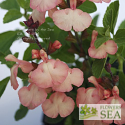
(Glow Peach Mountain Sage) Long blooming Salvia microphylla 'Heatwave Glow' produces prolific quantities of soft peach-to-apricot blossoms along with dense, mid-green foliage.
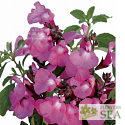
(Radiance Bright Pink Mountain Sage) Long blooming Salvia microphylla 'Heatwave Radiance' produces prolific quantities of hot pink blossoms along with dense, mid-green foliage.
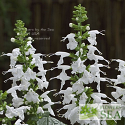
(Summer Jewel White Tropical Sage) Butterflies, hummingbirds and honeybees enjoy this All American 2016 winner, which is an outstanding choice for pure white color from June to autumn. The Summer Jewel varieties of Tropical Sage is generally the first to flower for us.
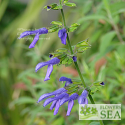
(Margie Griffith Sage) Salvia x 'Margie Griffith' is a big, purple-flowered beauty with glossy green, ribbed foliage. It feeds hummingbirds year round down South and on our coastal, Northern California farm where winter temperatures are moderate.
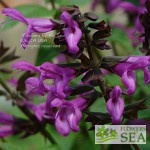
(COOL Fandango Anise Scented Sage) A combination of dark, rosy bracts and magenta blossoms make Salvia COOL Fandango dance. It’s vivid, floriferous, and a hummingbird favorite.
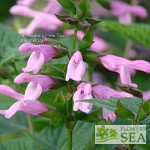
(COOL Shocking Pink Anise-Scented Sage) Dusky green bracts support the pastel magenta blossoms of Salvia COOL Shocking Pink. It’s a hummingbird favorite with bright green, fragrant foliage that may remind you of licorice.
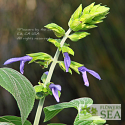
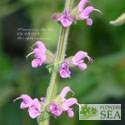
(Royal Crimson Distinction Woodland Sage) Grown for hundreds of years in cottage gardens throughout the world, Salvia nemorosa was described by Carl Linneaus in 1762. This variety's large flower spikes bloom a dark violet-crimson, then age to a softer pink.
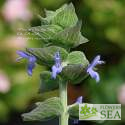
(Dark Flowered Bolivian Sage) Here is a water-loving beauty with dusky blue flowers --a native of the moist Yungas piedmont forests of Northwestern Argentina and Bolivia. Salvia atrocyanea is well adapted to both full sun and partial shade.
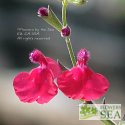
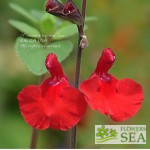
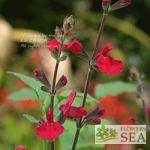
(Elk Crimson Spires Sage) Dark, dusky red stems and calyxes add to the drama of large scarlet flowers and lively green foliage in our FBTS hybrid, Salvia x ‘Elk Crimson Spires’.
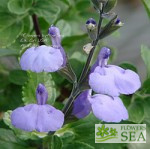
(Elk Blue Moon III Jame Sage) Dark calyxes cup dusky blue flowers that age to lavender and rise up from the veined, mid-green foliage of Salvia x ‘Elk Blue Moon III’.
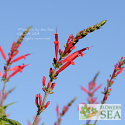
(Pineapple Sage) An indispensable fall-blooming addition to the garden, this tender perennial is, perhaps, the best of all hummingbird plants. When in bloom, it is covered in 3-inch-long red flowers.
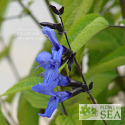
(Black & Blue Anise-Scented Sage) Hummingbirds go crazy for this variety of Salvia guaranitica. The black calyxes contrast handsomely with the rich, royal blue flowers. We highly recommend the much improved Salvia BODACIOUS 'Rhythm and Blues' as an alternative to this older variety.
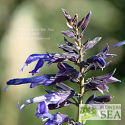
(Van Remsen's Anise-Scented Sage) Big and beautiful, this Anise-Scented Sage grows up to 7 feet tall in rich soil and has lavender-to-purple flowers. In our garden, it blossoms from late spring to fall, attracting both honeybees and hummingbirds.
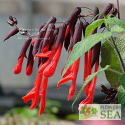
(Giant Bolivian Sage) Hailing from Peru and Bolivia, this tender specimen is found at altitudes of 9,000 feet in the wild. This multi-stemmed, woody-based, climbing Salvia needs support. Hummingbirds love its 5-inch-long, crimson flowers, which are the longest grown by any Salvia and flower from late summer through autumn.
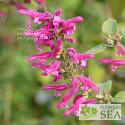
(Scandent Mexican Sage) Here's another winter-blooming hummingbird magnet for gardens in mild climates. This one is scandent, which means it is a climber and needs support. Its abundant, purple-to-magenta flowers are velvety and 6 inches long.
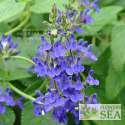
(Scordy Sage) Little is known about this shrubby Ecuadorian native. We're not even sure it is from Ecuador! However, this is another sage that sells itself instantly when seen in bloom. The large clusters of rich, deep violet flowers bloom summer to fall, attracting honeybees and hummingbirds.
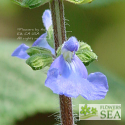
(Bitter Mexican Sage) Hummingbirds love this heat-tolerant Salvia, which is one of our best choices for shady, moist areas. The large-lipped, baby-blue flowers with white striations bloom from late summer through fall.
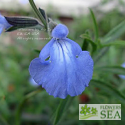
(Prairie Sage) Native to a large part of the central United States, this perennial Salvia is a beloved wildflower, delighting us with large cerulean blue flowers. Hummingbirds and butterflies love it as well.
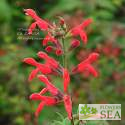
(Cardinal Sage) Aptly named for its cardinal red, 2-inch-long flowers that glisten in the autumn sun, this full-sun sage blooms from fall into winter. Hummingbirds love it, but deer resist its charms. Growing up to 5 feet tall, it makes a fine herbaceous border plant or shrubby screen.
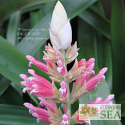
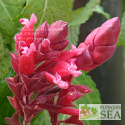
(Pink & White Wagner's Sage) Instead of pink, leaf-life bracts, this variety of Wagner's Sage has white bracts surrounding the hot pink flowers. It blooms from November to March on our coastal Northern California farm where it feeds Anna's hummingbirds all winter long.
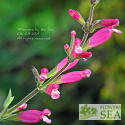
(Hadspen Roseleaf Sage) If you plant this sage in a mild-climate area where hummingbirds overwinter, you'll likely find hummers zinging back and forth among its magenta pink blossoms from fall through spring.
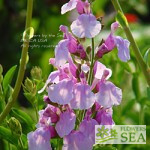
(Pink Beach Autumn Sage) When it blooms from spring into fall, this heat- and chill-tolerant sage is covered with large, two-tone pink flowers that attract butterflies, honeybees and hummingbirds. This compact, drought-tolerant beauty also features small, shiny, bright green leaves.
(Giant Gentian Sage) "Wow!" is what most people say when they see this large Gentian Sage from Central Mexico. Growing to 4 feet tall, it has long, graceful spikes of 3-inch deep, royal blue flowers that are highly visible and easily accessible to hummingbirds.
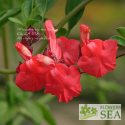
(Big Orange Autumn Sage) Standout color is the big draw for this large growing Autumn Sage. Collected in the mountains of Northern Mexico, it grows well in a wide range of climates, including the hot dry Southwest and the cool moist Pacific Northwest. A difficult color to capture in a photo, it is well described as a warm orange with a scarlet overlay.
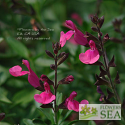
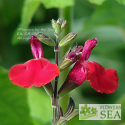
(Black Cherry Autumn Sage) Ripe Bing cherries come to mind when viewing the rich purple flowers of this full-sun sage that is adaptable to partial shade. Butterflies, honeybees and hummingbirds are drawn to its blossoms from spring into fall.
The following terms were added to your search to help improve the result. Click here to exclude these extra terms from the search.
- hummingbird
Results for hummingbirds from the blog
| Portraits in Gardening |
| 1. Portraits in Gardening: Michael and Kathi Rock's Hummingbird Journey |
| A wedding gift led to Kathi Johnson Rock and Michael Rock's passion for hummingbirds. These Wisconsin birders offer tips and plant suggestions for hummingbird gardeners at FBTS. Although now known as Madison's "Hummingbird People," the Rocks aren't ornithologists or biologists. They are home gardeners and customers of Flowers by the Sea. This article includes a list of favorite hummingbird plants found in the Rocks' gardens. |
| Sage Experts |
| 2. Sage Experts: Nancy L. Newfield's Hummingbird Journey |
| Renowned hummingbird bander Nancy Newfield of southern Louisiana shares her journey from 1970s stay-at-home mom to citizen scientist and one of the nation's leading hummingbird researchers. This is the first article in a three-part series about Newfield's work and gardens, which abound with Salvias to feed hungry hummingbirds that overwinter in her suburban yard near New Orleans. It includes plant lists and the Louisiana Winter Hummingbird Project tally of banded hummingbirds from 1979 to 2015. |
| Sage Words About Wildlife |
| 3. Sage Words about Wildlife: 4 Seasons of Hummingbird Salvias |
| Regional differences in seasonal temperature and humidity affect the choice of Salvias to plant in hummingbird gardens. The varying seasons in which particular sages bloom and the part of the world where they originated also determine whether they attract hummingbirds. Flowers by the Sea Online Nursery offers suggestions based on regions and seasons. |
| 4. A Community of Anise Scented Sages We Adore |
| You might expect the foliage of a plant called Anise-Scented Sage (Salvia guaranitica) to smell robustly like licorice, which shares the same fragrance as anise. Some gardeners detect a hint of licorice after crushing a leaf, but many say the foliage merely smells sweet. These popular sages are native to Brazil where indigenous peoples used their leaves as a medicine. Flowers by the Sea grows many varieties in a wide range of sizes and flower colors |
| Sage Words About Wildlife |
| 5. Sage Words About Wildlife: Climate Change Alters Hummingbird Migration |
| Nature doesn't come to a sudden, overall halt, when the timing of its ecosystems slip, including ones involving hummingbirds. Instead, change occurs gradually. Plants and the animals that pollinate them have coevolved to meet each other's needs. You can help by planting hummingbird habitat in your home garden. Learn more in the Everything Salvias Blog at FBTS Online Nursery. |
| Sage Experts |
| 6. Sage Experts: Nancy Newfield, Hummingbird Gardener, Part II |
| Salvias are among the best hummingbird flowers and red is tops. That's what hummingbird researcher, Nancy L. Newfield began discovering more than 40 years ago. She found that flower nectar was more attractive than nectar feeders. This is the second article in a 3-part series on Newfield and hummingbird gardening. It includes an excerpt from her book Hummingbird Gardens and an FBTS list of red hummingbird favorites. Bud Hensley photographed the hummingbird pictured here enjoying Salvia subrotunda. |
| Salvias Down South |
| 7. Salvias Down South: 15 Sages to Pink Up Landscapes |
| Winter is a good time for warm thoughts about rosy colors pinking up the landscape. Not only is pink pleasant, but it is soothing. As psychologists discovered in the late 20th century, it's also the color of calm and is used in serenity gardens. Flowers by the Sea details a variety of pink sages here, some of which bloom in winter. |
| Getting Started with Salvias |
| 8. Getting Started: Salvias for the Rocky Mountain West |
| High altitude, distance from large bodies of water and powerful chinook winds make the Rocky Mountain West a dry gardening environment even in years of higher than average rain and snow. The region's steep mountains have a major impact on where and how precipitation falls. Instead of a single mountain chain, the Rocky Mountains are made up of 100 separate ranges. Similarly, the Salvia genus contains a broad range of sages, many of which thrive in the climactic extremes of the Mountain West. |
| 9. In the Native Garden: Colorful California Salvias Plus a Cousin |
| Native plants, including California's many indigenous sages, are like the boys or girls next door who were overlooked until outsiders discovered their good looks and other fine attributes. Flowers by the Sea grows hardy, drought-resistant California Salvias that are native to a broad swath of the West Coast ranging from Northern Baja to Southern Oregon. Many tolerate heat. They are well suited to waterwise landscapes, including dry gardens. |
| Hummingbirds in the Garden |
| 10. A Gardeners Guide to Hummingbird Sage |
| Among the hummers' favorites: Salvia spathacea, commonly known as Hummingbird Sage. As it name suggests, this California native produces the hummingbirds' flower of choice, blooming from late winter through summer -- and sometimes again in Fall -- with rose-pink to magenta blossoms. Available in six varieties, this robust perennial not only attracts hummers with its abundant nectar, it's easy to grow and enhances any landscape with its aromatic blooms and fragrant evergreen foliage. |
| 11. 15 Select Salvias for Dry, Partial-Shade Gardening |
| Learning how to garden in dry shade requires mediation of the needs of all the plants involved. Dry shade is particularly abundant under trees, because they consume lots of water. Fortunately, numerous drought-resistant Salvias can handle life in dry, partial shade. Flowers by the Sea details basic considerations of dry shade gardening and identifies 15 sages for it. |
| Hummingbirds in the Garden |
| 12. 6 Indispensable Hummingbird Flowers for Long, Easy Bloom |
| Hummingbirds are like tiny combat jets dive bombing each other when staking claim to the nectar-rich flowers they need for survival. Fights over nectar habitat can reduce hummingbird gardens to single occupancy. FBTS Farm and Online Nursery details and tells stories about its top six hummingbird flowers. Plant lots of them to accommodate a village of hungry hummers. |
Common terms in this search: glow peach mountain sage long blooming microphylla heatwave produces prolific quantities soft peach-to-apricot blossoms along dense mid-green foliage tough plant cross southwestern texas native autumn greggii flowers sea grows ten varieties which melbourne-based growers australia team howard bentley steve eggleton hybridized hot dry conditions throughout their nation similar parent species salvias adaptable cooler coastal regions they grow particularly well mediterranean