
Advanced Search
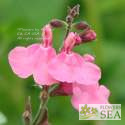
(Scorching Pink Mountain Sage) Compact and small, this Mountain Sage is another fine groundcover for Southern California, the Southwest and Texas. Similar to Salvia microphylla 'Heatwave Glimmer', it not only survives but thrives in extreme heat.
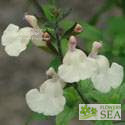
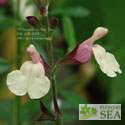
(Glimmering White Mountain Sage) Heatwave Glimmer isn't a mirage. It is a Salvia microphylla that tolerates extremely hot climates as well as cooler regions. It doesn't just survive; it thrives in the heat of Southern California, the Southwest and Texas.
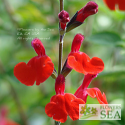
(Royal Bumble Mountain Sage) Almost black, the stems and calyxes of this UK hybrid form a pleasing contrast with its medium-size scarlet flowers and glossy green leaves. Bloom time is spring to fall. This Mountain Sage suckers freely and forms a dense clump.
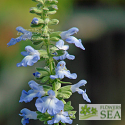
(Big Pitcher Sage) As its scientific name indicates, this sage has very large flowers. They are almost two-tone, changing from deep violet to a light blue or white at their base where they are cupped by dusky purple calyxes.
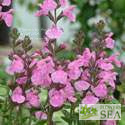
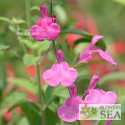
(Trinity Mountain Sage) Heat and drought tolerant, this Salvia microphylla is native to Northeastern Mexico where summers are dry and temperatures can rise to more than 100 degrees F. It can survive winter temperatures down to 0 degrees.
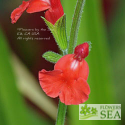
(Big Orange Mountain Sage) When temperatures are cooler in spring and fall, the persimmon-orange flowers of this large Mountain Sage darken. Gray-green foliage, bright green calyxes and reddish-green stems add to the plant's fascinating look, which mixes well with yellows and blues.
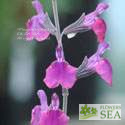
(Diane's Autumn Sage) Chip Schumacher of Hill Country Gardens in Texas selected this lovely Autumn Sage hybrid, which has handsome foliage and abundant two-tone dark purple flowers. This fine variety is often the first Salvia greggii to bloom in spring.
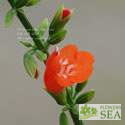
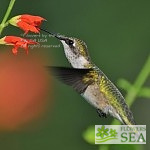
(Giant Brazilian Sage) Yes, this one is gigantic. The first season we grew this heat-tolerant sage, it reached 8 feet tall by July! Masses of small, red-orange, trumpet-shaped flowers attract hummingbirds and honeybees to long, upward curving flower spikes towering over heart-shaped foliage.
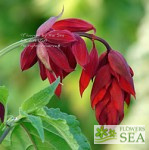
(Burgundy Scarlet Sage) Blood red to burgundy, the drooping blossoms of this sturdy, long flowering Salvia are the first that anyone comments on in a mixed planting. Use it singly as a dramatic garden accent or container plant; mass it for a stunning effect.
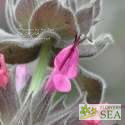
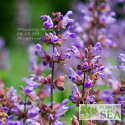
(Wand Sage) Whorls of deep violet blossoms are cupped by dark bracts on the flower spikes of this mid-height herbaceous sage from Turkey. Its foliage is thick, corrugated and fragrant. This plant is lovely and hardy, so it is surprising that it wasn’t introduced to commercial cultivation until 2007.
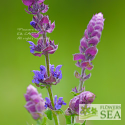
(Stem Clasping Violet Sage) Like a candelabra lit up with whorls of violet blossoms, the erect, branching flower spikes of Salvia amplexicaulis make this native of Southeastern Europe shine. On the Grecian island of Thassos, it brightens areas near the beach.
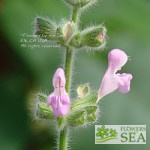
(Turkish Cliff Sage) Spring into early summer, Turkish Cliff Sage produces erect, branching flower spikes 24 to 36 inches long that rise from basal foliage. They’re covered with whorls of pale pink blossoms with delicate white markings.
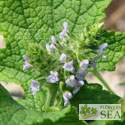
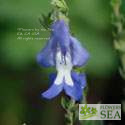
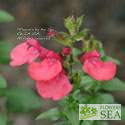
(People's Park Mountain Sage) Sometimes nature can be rebellious. This is one the Mountain Sages known as the Turbulent Sixties Series developed from an outlaw cultivar of the Southwestern native Salvia microphylla. Monterey Bay Nursery (MBN) named their accidental hybrid ‘Berzerkeley.’
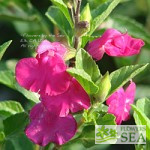
(Telegraph Avenue Dwarf Mountain Sage) Here’s another member of the Turbulent Sixties Series of Southwestern Mountain Sages (Salvia microphylla), which developed from one of nature’s rebels – an accidental hybrid that Monterey Bay Nursery (MBN) named ‘Berzerkeley’ after finding it taking a stand in the nursery’s gravel paving.
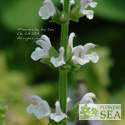
(Iranian Sage) Mixed in with short perennials that bloom over a wide range of seasons, Salvia staminea makes an attractive contribution to short borders during its summer bloom time. Our strain has dark bracts surrounding pastel white-to-blue-to-lavender flowers. The dark green, branching foliage has oblong to oval-shaped leaves.
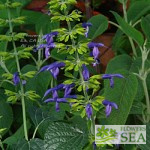
(Russell's Mexican Sage) Expect rapid, tall growth from this Salvia Mexicana . In the ground, Russell’s Mexican Sage can reach up to 10 feet tall and 5 feet wide, providing an effective screen of dark green, heart-shaped foliage. By late autumn it’s bursting with flowers.
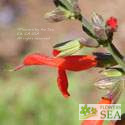
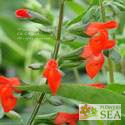
(Eyelash Sage) All Salvia blepharophylla varieties are native to Mexico, but this one was hybridized in Germany by plant breeder Christiaan Unger. Hairs on the edge of the sageâs dark green leaves give it the appearance of having eyelashes. It is a compact, slightly mounding Salvia that spreads gradually by underground stolons.
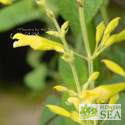
(Cabrillo Giant Yellow Sage) Large apricot-yellow flowers are an attraction of this cross between two Mexican species -- Salvia madrensis (Forsythia Sage) and the volcanic sage Salvia gesneriiflora (Mexican Scarlet Sage).
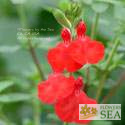
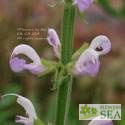
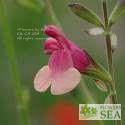
(Shell Dancer Sage) So many sages combine resilience and loveliness. This includes Salvia 'Shell Dancer', which withstands heat and drought yet has delicate looking blossoms and lush green foliage.
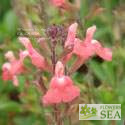
(Salmon Autumn Sage) Creamy salmon-colored flowers with white throats make this elegant Autumn Sage perfect for a pastel garden or as a cooling color in a mixed sage border. Bloom time is spring into fall for this petite Salvia greggii native to the American Southwest and Mexico.
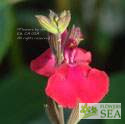
(Heatwave Red Mountain Sage) Compact and small, this Mountain Sage is another fine groundcover for Southern California, the Southwest and Texas. Similar to Salvia microphylla 'Heatwave Glimmer', it not only survives but thrives in extreme heat.
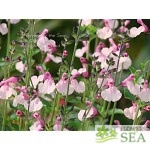
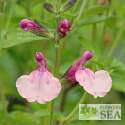
(Dancing Dolls Sage) Sages can be such tough plants. Many, such as Salvia 'Dancing Dolls', withstand heat and drought yet have delicate looking blossoms. Dancing Dolls features cream and rose bicolor flowers.
Results for regular from the blog
| Ask Mr. Sage |
| 1. Ask Mr. Sage: How to Control Snails |
| Ask Mr. Sage is a Q&A feature from Flowers by the Sea. This one talks about how to ward off snails and slugs safely through simple organic methods, including barriers and handpicking, as well as through careful use of iron-phosphate pesticides. It also talks about how to nurse damaged Salvias back to health. |
| 2. Ask Mr. Sage: How to Water Desert Plants |
| Overwatering harms desert plants more than underwatering. When growing them, you need to consider the quantity, duration and timing of watering. Excellent soil drainage is also essential. This article talks about how to identify overwatering and establish an effective watering schedule. Ask Mr. Sage is a Q&A feature based on topics raised in calls and emails to FBTS. |
| 3. Ask Mr. Sage: Best Time to Plant Drought Resistant CA Natives |
| Drought resistant California native sages thrive when planted in fall. It's easier for roots to become established when soil is warm, air temperatures are cooler and precipitation is increasing. Ask Mr. Sage is a regular feature of the Everything Salvias Blog and is based on calls and emails from customers. |
| 4. Ask Mr. Sage: What Sages Grow in Clay Soils? |
| Ask Mr. Sage answers questions based on calls and emails that Flowers by the Sea receives, such as concerns about what Salvias will grow in clay soils. This article talks about specific plants for dry and wet clay conditions, how to improve soil drainage and planting on slopes in wet areas. |
| Hummingbirds in the Garden |
| 5. Hummingbirds in the Garden: Attracting Hummingbirds to Your Garden |
| Planting a hummingbird garden filled with nectar-rich, long-blooming Salvias aids preservation of hummingbird species that migrate each year throughout North America. It also gives you a front-row seat to a fascinating aerobatics show. Backyard islands of colorful sages are like gas stations for hummingbirds' long-distance journeys. Salvias can keep your garden whirring with the helicopter-like flight of hummingbirds from spring through autumn and -- in warm climates -- into winter. |
| Ask Mr. Sage |
| 6. Ask Mr. Sage: What Salvias Grow Well in Containers? |
| What kinds of Salvias are good choices for potting? Ask Mr. Sage, a regular feature of our Everything Salvias Blog, says the answer is many. In this post, Mr. Sage suggests some surprising combinations for potting and explains how to navigate the Flowers by the Sea Online Nursery catalog to find Salvias and companion plants appropriate for container gardening. |
| 7. Battles in the Salvia Garden: Controlling Spider Mites - Part II |
| Pollinators lose important food sources when Salvias and other nectar-rich flowers are destroyed by spider mites. This is Part 2 of a two-part series about understanding and overcoming these dangerous pests. Along with the non-chemical interventions described in Part 1 of this series, gardeners sometimes need the help of predatory insects and mites, insecticidal soaps and horticultural oils. Pesticides called miticides may also eventually be necessary, but should be the last resort. |
| 8. Blazing Red Sages for Sun and Partial Shade |
| Warm colors tend to take center stage in a landscape as well as brightening the shade. Yet warm colors generally aren't associated with shady sage (Salvia) gardens, because there are far more shade-tolerant sages in the blue to purple range. So we decided to poke around our catalog and pull together some hot choices that thrive in partial shade. To make landscaping even easier, you may want to limit your choice of plants to one color. Massing is dramatic. |
| Book Reviews |
| 9. Book Review: Stop. . .and Smell the Mints |
| Randy Collins was surprised when he got hooked on horticulture following retirement. But after a move to South Carolina, he was even more surprised at how deer destroyed his gardens until he began growing lots of mint family ( Lamiaceae ) plants like Salvias. It inspired him to write Stop...and Smell the Mints . |
| Celebrity Salvias |
| 10. Celebrity Salvias: Fuzzy, Fancy Salvia Oxyphora |
| A bright, cherry-licorice red, the large, fuzzy blossoms of Salvia oxyphora would make anyone stop and pay attention. Commonly known as Fuzzy Bolivian Sage or Bolivian Spearhead Sage, S. oxyphora has equally unusual foliage that fools the eye. At a distance, the plant’s lance-shaped leaves appear to be a smooth, glassy green. However, they are covered with tiny clear-to-white hairs. They’re also large -- growing up to 5 inches long and 2 inches wide at maturity -- and taper to long, sharp points. It was first collected near Cochabamba, Bolivia, by German botanist Otto Kunst in 1892 |
| Xeric Choices |
| 11. Colorful Salvias Break Myth of Dry Garden Drabness |
| Dry gardens are flowerbeds or entire landscapes based on ornamental perennials that require little to no watering once well rooted. Many Salvias are excellent, drought-resistant choices for these gardens. Flowers by the Sea Farm and Online Nursery talks about dry garden myths as well as low-water plants. |
| Cultivating Color |
| 12. Composing a Symphony of Pastel Salvias Including Elk Rainbow Sages |
| If you want to orchestrate a peaceful symphony in a flowerbed, planting a profusion of pastels is one way to do it. Pastels are lighter hues of bright primary and secondary colors. Although gardeners often visualize bright colors when thinking of Salvias, there are a number of pastels in the genus such as among the Jame Sage Hybrids (Salvia x jamensis spp.), including many in the new Flowers by the Sea Elk Rainbow Series. |
Common terms in this search: scorching pink mountain sage compact small another fine groundcover southern california southwest texas similar microphylla 'heatwave glimmer' not only survives but thrives extreme heat hot flowers contrast prettily sage's well-branched dense green foliage leaves heavily veined aromatic feet tall wide also just right container edging pathway looks lovely short shrub border ideal dry native gardens species semi-arid lands american mexico