
Advanced Search
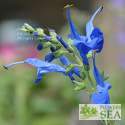
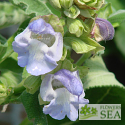
(Big Swing Sage) With its large, cobalt blue flowers displayed on strong, wiry, branched stems, this eye-catching sage wins the FBTS "best of class" designation for being our top Salvia macrophylla.
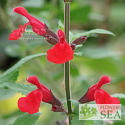
(John Whittlesey Sage) Hardy, vigorous and long blooming, John Whittlesey Sage is a hybrid of D'Arcy's Sage (Salvia darcyi) -- a native of Mexico -- and Mountain Sage (S. microphylla), which is native to the American Southwest and Mexico.
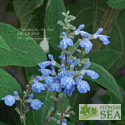
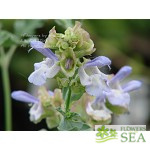
(Pale Sage) Powder blue flowers are cupped by lavender calyxes on this lovely yet little-used sage native to moist meadows in Argentina. It is a tall, narrow plant with delightful oval-shaped leaves with scalloped margins.
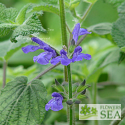
(Blue Bush Sage) Furry, large and heavily textured, the mid-green leaves of Salvia urica contrast attractively with its violet-blue flowers that bloom spring into summer.
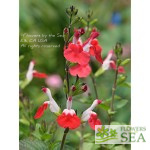
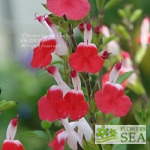
(Hot Lips Sage) What a winner for fascinating flowers! Salvia microphylla ‘Hot Lips’ is a native of Mexico that produces a combination of solid red, solid white, and bicolor red and white blossoms all on the same plant and sometimes at the same time.
(Phyllis' Fancy Sage) The parentage of this lavender-flowered hybrid sage is unknown. However, it may be a cross between Mexican Bush Sage (Salvia leucantha) and Chiapas Sage (S. chiapensis).
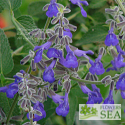
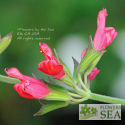
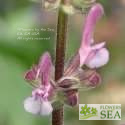
(Jerusalem Sage) This lovely herbaceous perennial is native to Cyprus, Israel, Jordan, Lebanon, Syria, and the West Bank. Its clear pink flowers change at times to a pink highlighted with violet lines and dots. Prominent glandular hairs on the buds, bracts and floral stems exude a fragrance that is delightful on a warm day.
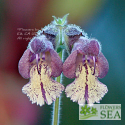
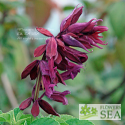
(Sao Borja Scarlet Sage) Three-inch-long, smokey purple blossoms that bloom from spring to fall are a major clue that this heat-tolerant perennial is not your grandmother's Scarlet Sage.
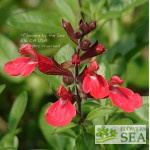
(Lipstick Autumn Sage) Similar to a little bit of lipstick on a pretty face, the rosy flowers of this hardy, heat-tolerant sage add a finishing touch to a perennial Salvia border. The creamy pinkish-red blossoms have a contrasting white throat and are cupped by rosy brown calexes on long spikes.
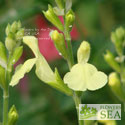
(Elk Lemon Light Jame Sage) We are proud to offer this luminescent, pure yellow Salvia x jamensis -- a color breakthrough from our own breeding program. The bright, light blossoms cool the landscape similar to white flowers, but with colorful impact. The glossy green leaves are quite small - a very attractive and distinctive characteristic.
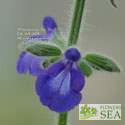
(Double Saw Tooth Sage) Vivid deep violet flowers bloom from summer into fall and contrast prettily with the bright green, rumply foliage of this tall sage from southeastern Mexico. Belgian botanist and orchid lover Jean Jules Linden was the first to record its discovery in 1838, according to records on file at Britain’s Royal Botanic Gardens, Kew.
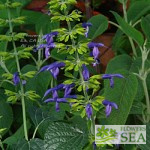
(Russell's Mexican Sage) Expect rapid, tall growth from this Salvia Mexicana . In the ground, Russell’s Mexican Sage can reach up to 10 feet tall and 5 feet wide, providing an effective screen of dark green, heart-shaped foliage. By late autumn it’s bursting with flowers.
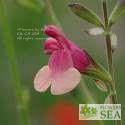
(Shell Dancer Sage) So many sages combine resilience and loveliness. This includes Salvia 'Shell Dancer', which withstands heat and drought yet has delicate looking blossoms and lush green foliage.
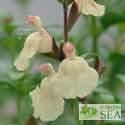
(Elk Buttercup Jame Sage) Red flower buds unfurl into the surprisingly buttery yellow blossoms of Elk Buttercup. Subtly bicolored, the flowers have touches of light pink including fine hairs on the upper lip.
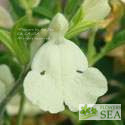
(Elk Butter Light Jame Sage) "Clear" is how we describe the translucent quality of Elk Butter Light's creamy yellow blossoms, which are supported by bright green calyxes. Unlike the green-tinged flowers of Elk Lemon Light Jame Sage, these blossoms are paler and one pure color.
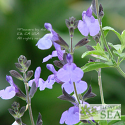
(Elk Blue Moon II Jame Sage) The phrase "blue moon" signifies a rare event. Elk Blue Moon Jame Sage is an unusual combination for a Salvia x jamensis hybrid -- dusky violet flowers with pale-blue throats, dark blue calyxes and mid-green foliage.
Note: This is a new (2014) cultivar that we chose to replace the original 'Elk Blue Moon'. It is a superior grower, and otherwise very similar.
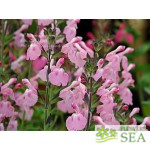
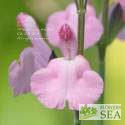
(Elk Cotton Candy Jame Sage) Rosy hairs on the upper lip and pale white throats highlight the translucent, blush pink blossoms of Elk Cotton Candy Jame Sage. Dark, deeply contrasting calyxes support the medium-size flowers.
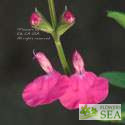
(Wild Watermelon Mountain Sage) Large, watermelon-pink flowers and the fruity fragrance of this long-blooming sage's mid-green, veined leaves make this Mountain Sage a treat to grow.
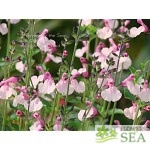
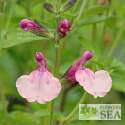
(Dancing Dolls Sage) Sages can be such tough plants. Many, such as Salvia 'Dancing Dolls', withstand heat and drought yet have delicate looking blossoms. Dancing Dolls features cream and rose bicolor flowers.
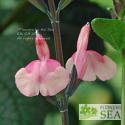
(Fancy Dancer Sage) Sages can be such tough plants withstanding heat and drought. Yet so many, including Salvia 'Fancy Dancer' have delicate looking blossoms. This one has bicolor flowers combining light and hot pink tones.
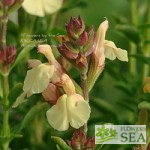
(Golden Girl Sage) Sages can be such tough plants. Many, such as Salvia 'Golden Girl', withstand heat and drought yet have delicate looking blossoms. Golden Girl features yellow flowers with a hint of rosy pink along with dark rose calyxes.
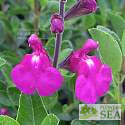
(Orchid Glow Sage) Sages can be such tough plants withstanding heat and drought. Yet so many, including Salvia 'Orchid Glow' have delicate looking blossoms. This one has large, bright magenta flowers with white beelines.
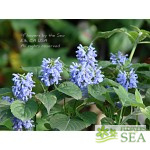
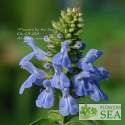
(Smith College Mystery Sage) This mysterious species came to us via Smith College in Northampton, Massachusetts. We refer to it as "Mystery Sage" as the origins of this fine plant are unclear.
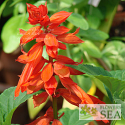
(Giant Red Scarlet Sage) Looking to fill in large shady area? This may be your best bet. This variety is largest that we know of, growing to 6 feet - 7 feet - or even more in a sheltered shady spot.
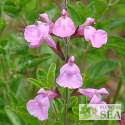
(Glittering Pink Mountain Sage) Mountain Sage (Salvia microphylla) handles hot climates as well as cooler coastal regions. It withstands the high temperatures of Southern California, the Southwest and Texas.
The following terms were added to your search to help improve the result. Click here to exclude these extra terms from the search.
- sea, season
Results for seasons from the blog
| Sacred Sages |
| 1. Sacred Sage: Giant Bolivian Sage |
| Of all the mint family's more than 6,500 species worldwide, Giant Bolivian Sage (Salvia dombeyi) has the longest blossoms and tallest growth. Each tubular crimson flower grows up to 5 inches long and has a burgundy calyx at its base.The plant's bright green, heart-shaped leaves are equally long. In South America, the flowers are pollinated by hummingbirds with extremely long beaks. However, Giant Bolivian Sage don't need pollination to flower beautifully for many seasons if growing conditions are right. |
| New at FBTS |
| 2. Grow a Riot of Color with New Salvia Cottage Garden Collections |
| Cottage gardens make humble homes look spectacular with their densely packed color and foliage. FBTS Cottage Garden Collections are designed to brighten your yard with a riot of Salvias and companion plants. |
| Portraits in Gardening |
| 3. Portraits in Gardening: Ward Dasey |
| Portraits in Gardening is a blog series from Flowers by the Sea that profiles customers who are passionate about the Salvia genus. This article focuses on wildlife gardener, birder and dedicated volunteer Ward W. Dasey III, who grows Salvias at New Jersey's Palmyra Cove Nature Park. Dasey and nature-loving friends proposed the park to make bird watching easier on the Delaware River. |
| Sage Experts |
| 4. Sage Experts: Nancy L. Newfield's Hummingbird Journey |
| Renowned hummingbird bander Nancy Newfield of southern Louisiana shares her journey from 1970s stay-at-home mom to citizen scientist and one of the nation's leading hummingbird researchers. This is the first article in a three-part series about Newfield's work and gardens, which abound with Salvias to feed hungry hummingbirds that overwinter in her suburban yard near New Orleans. It includes plant lists and the Louisiana Winter Hummingbird Project tally of banded hummingbirds from 1979 to 2015. |
| Salvia Small Talk |
| 5. Salvia Small Talk: Sage-Crusted Tofu Patties |
| Sage-crusted tofu patties are a good vegetarian main course for the Holidays. |
| Salvias Down South |
| 6. Salvias Down South: How Salvias Behave in Florida |
| Salvias that grow well in Florida may behave differently from one region of the state to another. This may mystify gardeners who have just moved to Florida or have moved to a different area in the state. Based primarily on seasonal variations in temperature, the four main regions are North, Central, South and Tropical Florida. |
| Bees in the Garden |
| 7. The Not-So-Secret Lives of Honeybees |
| It's no secret that Honeybees are American immigrants. Yet along with native bees, they descended from meat-eating wasps. All bees make food and flowers possible through pollination. This is the first article in a four-part Bees in the Garden series in the Everything Salvias blog of Flowers by the Sea. The series focuses on identifying and understanding bees, becoming aware of threats to their survival and noting ways gardeners can protect these tiny wildlife. |
| Book Reviews |
| 8. Book Reviews: Three Top Reads for Dry Gardening |
| Don’t think “drab” when you hear the phrase “dry garden.” With guidance from good books and a willingness to experiment, you can create colorful flowerbeds and landscapes that require little to no supplemental watering. Here is a quick overview of three books that are excellent resources about sustainable dry gardening. |
| 9. Using Salvias in Flower Arrangements |
| You don’t have to be a florist to create eye-catching designs with dramatic Salvias. By planting the right Salvias and complementary flowers in your garden as well as gaining a little knowledge about color combinations, well-balanced compositions, simple tools and cut-flower preservation, you are on your way. |
Common terms in this search: big swing sage its large cobalt blue flowers displayed strong wiry branched stems eye-catching wins fbts best class designation being our top leaf macrophylla garden writer betsy clebsch developed which cross between arrowleaf sagitata flower spikes rise well above handsome foliage furry arrowhead-shaped leaves look almost tropical use heat-tolerant plant bring lush damp corner mixed patio containers give rich well-drained