
Advanced Search
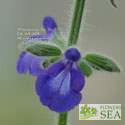
(Double Saw Tooth Sage) Vivid deep violet flowers bloom from summer into fall and contrast prettily with the bright green, rumply foliage of this tall sage from southeastern Mexico. Belgian botanist and orchid lover Jean Jules Linden was the first to record its discovery in 1838, according to records on file at Britain’s Royal Botanic Gardens, Kew.
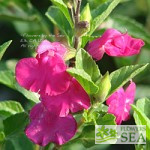
(Telegraph Avenue Dwarf Mountain Sage) Here’s another member of the Turbulent Sixties Series of Southwestern Mountain Sages (Salvia microphylla), which developed from one of nature’s rebels – an accidental hybrid that Monterey Bay Nursery (MBN) named ‘Berzerkeley’ after finding it taking a stand in the nursery’s gravel paving.
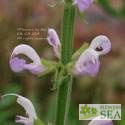
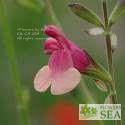
(Shell Dancer Sage) So many sages combine resilience and loveliness. This includes Salvia 'Shell Dancer', which withstands heat and drought yet has delicate looking blossoms and lush green foliage.
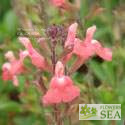
(Salmon Autumn Sage) Creamy salmon-colored flowers with white throats make this elegant Autumn Sage perfect for a pastel garden or as a cooling color in a mixed sage border. Bloom time is spring into fall for this petite Salvia greggii native to the American Southwest and Mexico.
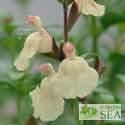
(Elk Buttercup Jame Sage) Red flower buds unfurl into the surprisingly buttery yellow blossoms of Elk Buttercup. Subtly bicolored, the flowers have touches of light pink including fine hairs on the upper lip.
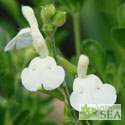
(VIBE® Ignition White Sage) Never before have we seen such a pure white among the species to which Jame Sages are related. We love this purity as well as the bright green calyxes supporting the large flowers of Elk White Ice and giving it an overall crisp look.
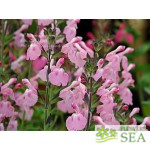
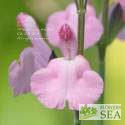
(Elk Cotton Candy Jame Sage) Rosy hairs on the upper lip and pale white throats highlight the translucent, blush pink blossoms of Elk Cotton Candy Jame Sage. Dark, deeply contrasting calyxes support the medium-size flowers.
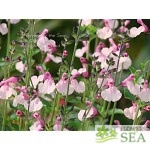
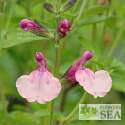
(Dancing Dolls Sage) Sages can be such tough plants. Many, such as Salvia 'Dancing Dolls', withstand heat and drought yet have delicate looking blossoms. Dancing Dolls features cream and rose bicolor flowers.
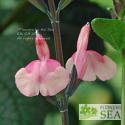
(Fancy Dancer Sage) Sages can be such tough plants withstanding heat and drought. Yet so many, including Salvia 'Fancy Dancer' have delicate looking blossoms. This one has bicolor flowers combining light and hot pink tones.
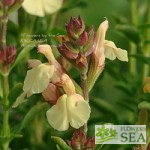
(Golden Girl Sage) Sages can be such tough plants. Many, such as Salvia 'Golden Girl', withstand heat and drought yet have delicate looking blossoms. Golden Girl features yellow flowers with a hint of rosy pink along with dark rose calyxes.
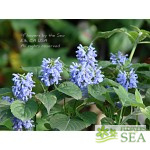
(Smith College Mystery Sage) This mysterious species came to us via Smith College in Northampton, Massachusetts. We refer to it as "Mystery Sage" as the origins of this fine plant are unclear.
(Snow Nymph White Tropical Sage) Butterflies, hummingbirds and honeybees enjoy this award winner, which is an outstanding choice for pure white color from June to autumn. This type of Tropical Sage is generally the first to flower for us.
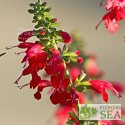
(Lady in Red Tropical Sage) Lady in Red is a variety of Salvia coccinea Juss. ex Murray, which is often called Texas Sage. It is the best red-flowering Tropical Sage that we grow.
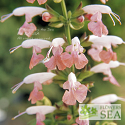
(Summer Jewel Pink Tropical Sage) Butterflies, hummingbirds and honeybees enjoy this Fleuroselect Gold Medal winner, which is an outstanding choice for bright pink & white color from June to autumn. This type of Tropical Sage is generally the first to flower for us.
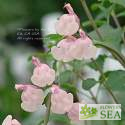
(Stormy Pink Autumn Sage) The dramatic name of this floriferous Autumn Sage is due to the calyxes cupping its smoky apricot-pink blossoms. Some gardeners report gray calyxes and others say dark plum. But for whatever reason, the Stormy Pink that we grow on our Northern California coastal farm has green calyxes with dark stripes.
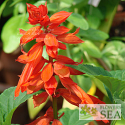
(Giant Red Scarlet Sage) Looking to fill in large shady area? This may be your best bet. This variety is largest that we know of, growing to 6 feet - 7 feet - or even more in a sheltered shady spot.
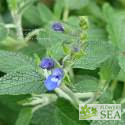
(Furry Colombian Sage) The leaves of this rare shrub are a glossy mid-green on top and fuzzy with hairs underneath, which is why it's commonly called Furry Colombian Sage.
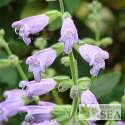
(Mystery Yunnan Sage) Sometimes we come across a beauty that has no name. This lovely species from China's Yunnan province is an excellent example. Aside from lacking scientific and common names, it arrived here as an imported seed with little information about how the plant was discovered.
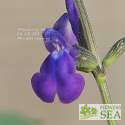
(Nuevo Leon Hybrid Sage) Imagine tiny, smooth, green leaves and deeper lavender-blue flowers than those of Salvia lycioides x greggii 'San Isidro'. With its midnight purple flowers, Nuevo Leon is a dramatic Salvia greggii hybrid.
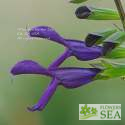
(Betsy's Choice Sage) Life and botany have their beautiful mysteries. Betsy's Choice Sage is one of them. We aren't certain of the parentage or history of this tall, attractive, fast-growing sage. However, we are certain that we love its long, royal purple flowers. Hummingbirds do as well.
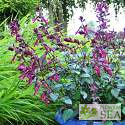
(Love and Wishes Sage) Deep purple calyxes support the magenta-purple, tubular blossoms of Salvia x 'Love and Wishes'. They contrast handsomely with dark stems and mid-green foliage.
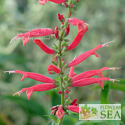
(Frieda Dixon Pineapple Sage) Most varieties of Salvia elegans have bright red flowers. But Frieda Dixon Pineapple Sage, which blooms abundantly beginning in late fall, has softer salmon-pink blossoms set against mid-green, lance-shaped leaves.
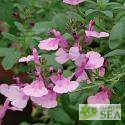
(Elk Bella Rosa Jame Sage) The large, creamy pink and burgundy flowers of this sage are stately in contrast with its deep green, veined, ovate foliage that is pleasantly fragrant. Elk Bella Rosa is as elegant as its name implies. It's also long blooming.
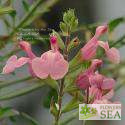
(Elk Twilight's Rosy Glow Jame Sage) Rosy red hairs accentuate the upper lip of each dusky, salmon-pink blossom of this cheery Jame Sage. The flowers are tiny but abundant and are supported by bright green calyxes.
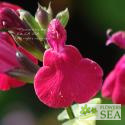
(Killer Cranberry Mountain Sage) Masses of magenta flowers on tall spikes lure honeybees and hummingbirds to the rich nectar of Salvia microphylla 'Killer Cranberry'. Its prolific flowers are a killer attraction for people too.
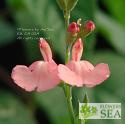
(Dyson's Orangy Pink Hybrid Jame Sage) Many Salvia x jamensis hybrids remind gardeners of sunrise, such as Dyson's Orangy Pink. Light green calyxes faintly striped with red cup its luminous pale salmon pink blossoms with creamy throats.
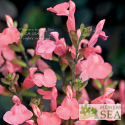
(Blast Pink Mountain Sage) Long blooming Salvia microphylla 'Heatwave Blast' produces prolific quantities of large, dusky salmon-pink blossoms and dense, mid-green foliage.
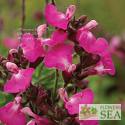
(Sparkle Pink Mountain Sage) Long blooming Salvia microphylla 'Heatwave Sparkle' produces prolific quantities of deep mauve-pink blossoms with white throats and dense, mid-green foliage.
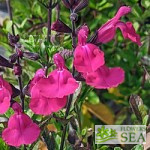
(Brilliance Pink Mountain Sage) Long blooming Salvia microphylla 'Heatwave Brilliance' produces prolific quantities of deep reddish-pink, or cerise, blossoms along with dense, mid-green foliage.
The following terms were added to your search to help improve the result. Click here to exclude these extra terms from the search.
- allen
Results for all from the blog
| Ask Mr. Sage |
| 1. Ask Mr. Sage: How FBTS Chooses New Salvias |
| Some Salvia collectors want to obtain a broad range of sages including all the new introductions on the market. But Flowers by the Sea can't and doesn't want to grow all the new cultivars available, partly because there is a growing abundance of Salvia introductions. Instead, FBTS focuses on selecting the most superior new plants even when introducing its own hybrids in its series of Rainbow Jame Sages. Ask Mr. Sage is a regular feature based on calls and emails received by FBTS. |
| 2. Ask Mr. Sage: How Should I Prune my Salvias? |
| Flowers by the Sea Online Nursery specializes in Salvias and often receives questions about how to prune them. Although getting good at pruning takes practice, Salvias rebound quickly if you make mistakes. A key to successful pruning is understanding the varying needs of four main categories of sages. Ask Mr. Sage is a regular feature of the FBTS Everything Salvias Blog. |
| Hummingbirds in the Garden |
| 3. 5 Big Orange Bedding Plant Beauties for Hummingbirds |
| You'll hear a lot about red when planting annuals for wildlife gardens, because hummingbirds garden love red, tubular, nectar-rich flowers. But orange is another hummingbird favorite not to be neglected. Flowers by the Sea suggests five long blooming species for your landscape that begin shouting "Orange, orange, orange" in spring when hummingbirds are big-time hungry now, now, now as they head north for the nesting season. |
| Cultivating Color |
| 4. Cultivating Color: New FBTS Tools Aid Garden Design |
| Have we got tools for you! No, we aren't selling Ginzu clippers, rust-free shovels, a miraculous compost-in-minutes machine or anything requiring payments. We're talking about a set of color tools for accurately visualizing and comparing the floral and foliage colors of Salvias. As you wander through the riot of hues in our online catalog at Flowers by the Sea, these tools aid plant selection and landscape planning. Beginning in fall 2014, we began identifying the colors of all FBTS plants based on the internationally standardized color system published by the U.K.'s Royal Horticultural Society. This improves descriptions of plant colors and makes color comparisons of plants easier for garden design. |
| Xeric Choices |
| 5. Drought Praise: Hot Pink and Purple Autumn Bloomers |
| Late summer is a good time to plant at the coolest times of day. Settling in Autumn Sage ( Salvia greggii ) and Mountain Sage ( S. microphylla ) before Indian summer will give their roots a chance for strong growth so they can withstand winter's chill and leaf out again next spring. These drought-resistant species are closely related and hybridize freely when they meet. They also cross with other sages they encounter. FBTS details seven pink and purple varieties that bloom off and on spring to fall. |
| Getting Started with Salvias |
| 6. Getting Started: Salvias for Zone 8 |
| Rainfall often is heavy in USDA Plant Hardiness Zone 8. It swings in a deep, broad arc from the West Coast to the Gulf Coast and back up the East Coast to the northeast edge of Virginia. What all its diverse areas have in common climatically is an average low winter temperature of 10 degrees F. Flowers by the Sea Online Nursery discusses growing conditions and how to select Salvias for your part of Zone 8 whether wet or dry. |
| 7. Getting Started: Types of Salvias for Zone 6 |
| To bloom yearly, Salvia perennials and shrubs in USDA Hardiness Zone 6 need to tolerate chilly winters with average low temperatures of -10 degrees F. The success of Zone 6 sages also depends on local growing conditions. Learn more at Flowers by the Sea, an online, mail-order Salvia nursery. |
| 8. How to Defend Homes Against Wildfires & Firescape with Salvias |
| Home improvement, including landscaping, involves lots of decisions. This is especially true when modifying your property to protect against wildfires. Flammability is usually the last thought on a gardener's mind when planning what to purchase. But if you live in wildfire country and are a Salvia lover, you may have noticed sages on lists of fire-resistant plants. Read more about wildfire preparedness at FBTS. |
| Hummingbirds in the Garden |
| 9. Hummingbird Falls Sage: Answers to Your Questions |
| Hummingbirds are vital pollinators that need lots of rich nectar to survive and keep gardens blooming. Salvia BODACIOUS 'Hummingbird Falls' is a unique hanging basket plant that is a natural replacement for plastic nectar feeders. |
| New at FBTS |
| 10. New at FBTS: Suncrest Salvias |
| Drought-resistant, heat-tolerant, vibrantly colored Suncrest Salvias (sages) have arrived at Flowers by the Sea and will be available for shipping in April. Suncrest Salvias are floriferous hybrids of species native to the American Southwest and Mexico, including Mountain Sage (Salvia microphylla), Autumn Sage (Salvia greggii), Jame Sage (Salvia x jamensis) and Royal Purple Autumn Sage (Salvia muelleri). |
| Business Buzz |
| 11. New Shipping Method Combines Orders Easily & Saves You Money |
| All of us love retail services that make our lives easier, especially if they save us money. That’s the case with the new Combined Shipping Option for plant orders at Flowers by the Sea Online Nursery. |
| 12. Plant Safari Salvia in the South African Fynbos -- Part 2 |
| Flowers by the Sea is a home away from home for a number of South African Salvias that enjoy our moderate, Mediterranean climate. None are endangered species, but all face the threat of land development in the Western Cape's Fynbos Biome -- unparalleled for its variety of medicinal and ornamental native plants found nowhere else in the world. Preservationists are working to balance changes in land use and to maintain biodiversity in the CFR. Brutal poaching of rhinoceroses is one of the toughest problems they face. |
Common terms in this search: vivid deep violet flowers bloom from summer into fall contrast prettily bright green rumply foliage tall sage southeastern mexico belgian botanist orchid lover jean-jules linden first record its discovery according records file britains royal botanic gardens kew shares credit two peers who also were researching botanical treasures botanists henri guillaume galeotti france martin martens belgium website mexconnect notes part scientific