
Advanced Search
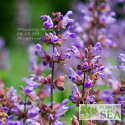
(Wand Sage) Whorls of deep violet blossoms are cupped by dark bracts on the flower spikes of this mid-height herbaceous sage from Turkey. Its foliage is thick, corrugated and fragrant. This plant is lovely and hardy, so it is surprising that it wasn’t introduced to commercial cultivation until 2007.
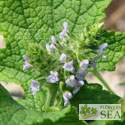
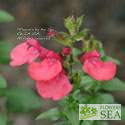
(People's Park Mountain Sage) Sometimes nature can be rebellious. This is one the Mountain Sages known as the Turbulent Sixties Series developed from an outlaw cultivar of the Southwestern native Salvia microphylla. Monterey Bay Nursery (MBN) named their accidental hybrid ‘Berzerkeley.’
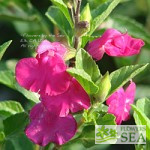
(Telegraph Avenue Dwarf Mountain Sage) Here’s another member of the Turbulent Sixties Series of Southwestern Mountain Sages (Salvia microphylla), which developed from one of nature’s rebels – an accidental hybrid that Monterey Bay Nursery (MBN) named ‘Berzerkeley’ after finding it taking a stand in the nursery’s gravel paving.
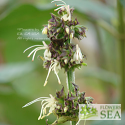
(Tree Sage)Whether you call it a shrub or a tree, Salvia arborsecens rises up to an impressive 12 feet tall and 5 feet wide. Commonly known as Sage Tree, this Salvia grows well in full sun, but prefers partial shade.
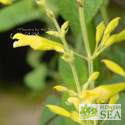
(Cabrillo Giant Yellow Sage) Large apricot-yellow flowers are an attraction of this cross between two Mexican species -- Salvia madrensis (Forsythia Sage) and the volcanic sage Salvia gesneriiflora (Mexican Scarlet Sage).
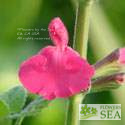
(Recurved Sage) At home in the shady, high-altitude cloud forests of Southern Mexico and Guatemala, this large, lush sage requires a warm, moist climate. In cool climates, it can handle full sun. However, partial shade is a better choice in most gardens.
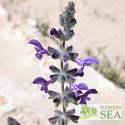
(Wooly Arabian Sage) "Radiant" is the word that garden writer and Salvia specialist Betsy Clebsch uses to describe the halo of white hairs covering the foliage and calyxes of Salvia lanigera.
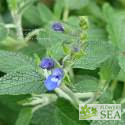
(Furry Colombian Sage) The leaves of this rare shrub are a glossy mid-green on top and fuzzy with hairs underneath, which is why it's commonly called Furry Colombian Sage.
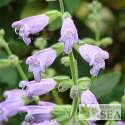
(Mystery Yunnan Sage) Sometimes we come across a beauty that has no name. This lovely species from China's Yunnan province is an excellent example. Aside from lacking scientific and common names, it arrived here as an imported seed with little information about how the plant was discovered.
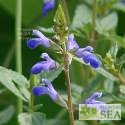
(Arizona Deep Blue Sage) In contrast to the lavender-blue flowers of Arizona Blue Sage (Salvia arizonica), the blossoms of Arizona Deep Blue are nearly purple. They are the kind of deep lavender that you might see in a southwestern sunset.
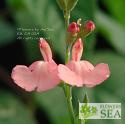
(Dyson's Orangy Pink Hybrid Jame Sage) Many Salvia x jamensis hybrids remind gardeners of sunrise, such as Dyson's Orangy Pink. Light green calyxes faintly striped with red cup its luminous pale salmon pink blossoms with creamy throats.
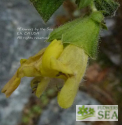
(Campanula Leaf Sage) The deep yellow flowers of Campanulata Leaf Sages are scarce among Salvias. Salvia campanulata CC#7706 is a sunny Himalayan beauty.
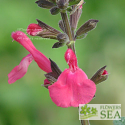
(Light Pink Joy Sage) Salvia x 'Alegra Light Pink' is one of the most vigorous new plants at Flowers by the Sea. It is a South American introduction from Roland Uria, an agronomy professor and plant researcher from Buenos Aires, Argentina. This select clone is a soft light pink shade.
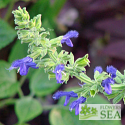
('Blue Seniorita' Mexican Sage) Smallish rich cobalt blue flowers come in large clusters on this unusually strong growing shrub. From late summer through fall you and the hummingbirds will be delighted with this rare variety.
(Campanula Leaf Sage) The deep yellow flowers of Campanula Leaf Sages are scarce among Salvias. If British plant explorer Chris Chadwell is correct, what he has identified as Salvia aff. campanulata 'CC#7713' should be a sunny Himalayan beauty.
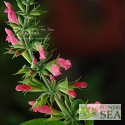
(Giant Karwinski's Sage) San Francisco arborist and gardener extraordinaire Ted Kipping developed this tower of creamy pinkalicious power that hummingbirds love. It's lush with bright green leaves that are large, pebbly and hairy on the underside.

(Dwarf Bog Sage) Intense sky blue flowers with white beelines are set against mid-green foliage in this dwarf Bog Sage that is about half as tall and wide as its parent species when in bloom.
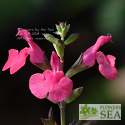
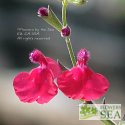
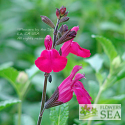
(Dark Pink Joy Sage) Salvia x 'AlegrÃa Dark Pink' is one of the most vigorous new plants at Flowers by the Sea. It is a South American introduction from Roland Uria, an agronomy professor and plant researcher from the University of Buenos Aires in Argentina. This select clone is a deep burgundy pink shade.
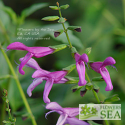
(Jean's Jewel Sage) An entirely new color in the Salvia guaranitica group, this chance hybrid with violet-pink blossoms was discovered by Kathleen Navarez at Cabrillo College in Aptos, California. It is compact, freely flowering and spreads gently via rhizomes.
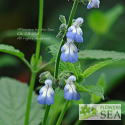
(River Sage) Native to partially shaded streamsides in Argentina and Bolivia, this is one of the few Salvia species that can tolerate wet soil. It makes a fine filler plant in a group of other partial shade growers, its wirey thin stems sending up floral displays here and there, much to the gardener's delight.
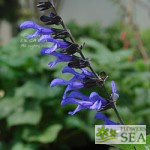
(Rhythm and Blues Anise-Scented Sage) The large, deep bluish-purple flowers of Salvia BODACIOUS ‘Rhythm and Blues’ are shaped like parrot beaks and supported by black calyxes. It's foliage smells sweet with a hint of licorice. It's superior to the old standby Salvia guaranitica 'Black and Blue'.
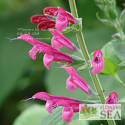
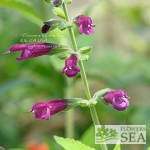
(Envy Hybrid Sage) A natural hybrid found in Peru and Bolivia, the parentage of this special variety is at this point unknown. The uniquely colored flowers are abundant all season long, and the hummingbirds love it.
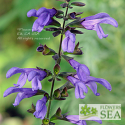
(Purple Haze Sage) The very best purple Anise Scented Sage, period - the result of years of careful breeding aimed at developing a reliable, free flowering and easy to grow variety suitable for growing countrywide.
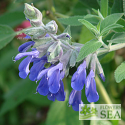
(Bolivian Lace Leaf Sage) A large decidious woody shrub, this is a distinctive and somewhat unique Salvia species. The large clusters of deep blue flowers appear in the spring and again in the fall. A native from a tropical savanna climate in Bolivia, this species grows best in climates with year-round warmth.
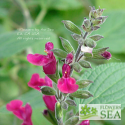
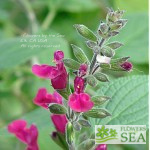
(Elk Red-Violet Hybrid Sage) A very special new hybrid Sage, featuring small but very numerous deep red-violet flowers on a vigorous, easy to grow plant. Loved by bees, butterflies and hummingbirds. A FBTS introduction.
Results for more from the blog
| Ask Mr. Sage |
| 1. Ask Mr. Sage: What Tropical Sage Should I Select? |
| Selecting the right types of Tropical Sage ( Salvia coccinea ) can be confusing when viewing them in a catalog and seeing similar flower colors. Yet they may differ in cultivation needs, foliage, heat tolerance, and size. Mr. Sage offers ideas for comparing differences and similarities. Ask Mr. Sage is a regular feature of the FBTS Everything Salvias Blog , which responds to questions from customers. |
| 2. Ask Mr. Sage: How Should I Space Salvias When Planting |
| By spacing Salvias properly when planting, you avoid problems caused either by overcrowding or leaving too much space around individual plants. Most Salvias are healthier with good air circulation. Crowding leads to the spread of fungal diseases and pests, such as spider mites. Too wide of spacing may cause branches to break in high winds. By paying attention to plant measurements before planting, you can create a good spacing plan. Ask Mr. Sage is a Q&A feature based on topics raised in calls and emails to FBTS. |
| 3. August in the Salvia Garden |
| August is a time when many sages grow rapidly and feed a frenzy of pollinators in need of rich nectar and pollen. It's hot, so you have to be careful not to let plants or yourself wilt. Here are some tips for tasks from watering to planning when tending your garden this month. |
| Getting Started with Salvias |
| 4. Getting Started: Salvias for the Coastal Southeast |
| True sages are members of the Salvia genus and number in the hundreds. They are native to a wide variety of environments worldwide, which is why some are ideal for the dry gardens of California and others can handle the abundant moisture of the American Southeast. Flowers by the Sea raises many sages that grow well in the Southeast, including some that are either native to the region or have jumped fences from gardens into the wild. |
| 5. Getting Started: Salvias for Zone 5 |
| To bloom yearly, Salvia perennials and shrubs in USDA Hardiness Zone 5 need to tolerate deep freeze winters with average low temperatures of -20 degrees F. The success of Zone 5 sages also depends on local growing conditions. Learn more at Flowers by the Sea, an online, mail-order Salvia nursery. |
| 6. Getting Started: What Is Drought and Xeriscaping |
| Drought is a shortage of precipitation over a season or more as in California where four years of drastic declines in rainfall and snowpack have created severe watering cutbacks. Drought is also defined by what and whom it affects from agriculture to homeowners. Flowers by the Sea Farm and Online Nursery explains drought and xeriscape, a water-conserving form of landscaping that is effective for gardening during drought and in dry climates. This article is part of the FBTS Getting Started series for gardeners becoming acquainted with Salvias (true sages). It includes a brief list of drought-resistant sages. |
| Sacred Sages |
| 7. Sacred Sage: Giant Bolivian Sage |
| Of all the mint family's more than 6,500 species worldwide, Giant Bolivian Sage (Salvia dombeyi) has the longest blossoms and tallest growth. Each tubular crimson flower grows up to 5 inches long and has a burgundy calyx at its base.The plant's bright green, heart-shaped leaves are equally long. In South America, the flowers are pollinated by hummingbirds with extremely long beaks. However, Giant Bolivian Sage don't need pollination to flower beautifully for many seasons if growing conditions are right. |
| Cultivating Color |
| 8. Pantone Pageant: Emerald Designer Salvias |
| Emerald and other cool shades of green are among the hot colors for 2013, according to Pantone, a design-industry leader. Flowers by the Sea doesn't generally think of greens or of any colors in nature as being in or out. However, we think it is fun and fresh to consider garden design from a different perspective. Emerald is Pantone's top color for the year. This article about emerald-colored Salvias begins a pageant of sorts down the runway of our blog, showing how the Pantone color matching system can be used to shape landscaping decisions. |
| 9. Paperless Catalog Conserves Resources and Lowers Prices |
| Don't expect a catalog in your mailbox from Flowers by the Sea, because we have never printed one and refuse to do so. Print catalogs are tree-munching dinosaurs on their way to extinction due to the rapidly changing world of digital technology. Online catalogs are environmentally friendly and save our customers money, because we can keep our plant prices low. |
| 10. Plant Safari Salvia in the South African Fynbos -- Part 1 |
| Twenty-six species of Salvia are native to South Africa and of these, 10 grow nowhere else in the world. Salvias play an important role in providing habitat and food for wildlife as well as brightening the semi-arid landscape in the Western Cape province of South Africa. Some are used in cooking or provide material for herbal remedies used in the alternative medicines taken by many South Africans. Flowers by the Sea grows a number of tough yet lovely South African Salvias. |
| Portraits in Gardening |
| 11. Portraits in Gardening: Ward Dasey |
| Portraits in Gardening is a blog series from Flowers by the Sea that profiles customers who are passionate about the Salvia genus. This article focuses on wildlife gardener, birder and dedicated volunteer Ward W. Dasey III, who grows Salvias at New Jersey's Palmyra Cove Nature Park. Dasey and nature-loving friends proposed the park to make bird watching easier on the Delaware River. |
| Quick Digs |
| 12. Quick Digs: Overwintering Salvias in Containers Outdoors |
| In chilly climates, such as USDA Cold Hardiness Zones with winter temperatures lower than those of Zone 8, it is difficult for potted plants to survive outdoors when the mercury dips. Soil in containers freezes harder and thaws more rapidly than the ground. This third article in our Quick Digs series on preparation for winter in the Salvia garden discusses how to improve chances of survival when overwintering sages in containers outdoors. |
Common terms in this search: whorls deep violet blossoms cupped dark bracts flower spikes mid-height herbaceous sage from turkey its bright green foliage thick corrugated fragrant plant lovely hardy surprising wasnt introduced commercial cultivation until cadmica adaptable heat-tolerant perennial grows well partial shade full sun blooms late spring through early summer does usda zones either dry conditions regular watering due ability tolerate drought homeland thrives