
Advanced Search
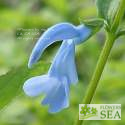
(Cambridge Blue Gentian Sage) Cambridge Blue is one of the most famous varieties of Salvia patens, which was discovered in Central Mexico in 1838. Its powder blue flowers are delightful and cooling in the landscape.
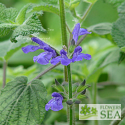
(Blue Bush Sage) Furry, large and heavily textured, the mid-green leaves of Salvia urica contrast attractively with its violet-blue flowers that bloom spring into summer.
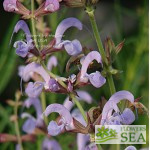
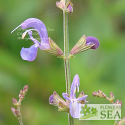
(Blue Turkish Sage) Large velvety gray-green to white leaves in loose rosettes give this sage a distinctive look as does the celestial violet-blue of its flowers. The blossoms seem much too large for this short sage and its thin, candelabra-branched flower spikes.
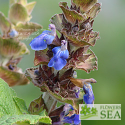
(Michoacan Blue Sage) This unusual and distinctive Mexican sage grows from tuberous roots. It is compact and decidedly vertical with strong, square, winged stems that rocket upward and are topped with clusters of rich blue flowers in large rosy bracts come autumn.
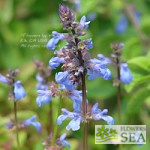
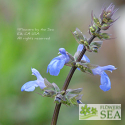
(Ground Ivy Sage) Native to Central Mexico's highlands, this creeping perennial grows at a altitudes of more than 10,000 feet and can handle some chill. Its common name comes from its scalloped yellow-green leaves, which resemble Ground Ivy or Glechoma.
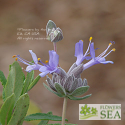
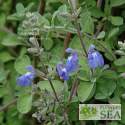
(Snowflake Sage) Wiry, trailing stems of small white leaves make this plant look like fresh snowfall. Numerous, small, sky blue flowers with prominent bee lines further add to the cooling look. This dry-garden plant is native to the mountains of the Chihuahuan desert of North Central Mexico.
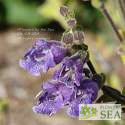
(Dan-shen Gansu) Growing into a large basal rosette of leaves measuring up to 3 feet across, Salvia przewalskii var. mandarinorum is known for its handsome foliage.
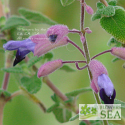
(Pine Mountain Sage) Small but numerous, violet and deep purple flowers surrounded by pink bracts are sprinkled throughout this well-branched,shrubby sage like confections. This is one of the showiest Salvias we grow.

(Autumn Purple Sage) Small but numerous, the flowers of this sage are a variable shade of light purple that is unlike any other we grow. Native to Southern Mexico and Guatemala, this shrub regularly grows up to 5 feet tall (or taller) and 4 feet wide.
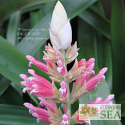
(Pink & White Wagner's Sage) Instead of pink, leaf-life bracts, this variety of Wagner's Sage has white bracts surrounding the hot pink flowers. It blooms from November to March on our coastal Northern California farm where it feeds Anna's hummingbirds all winter long.
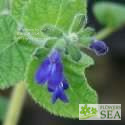
(Mexican Many Flowered Sage) Blooming from late summer into winter, this Mexican cloud-forest native has so many flowers that they are difficult to count. The deep violet blossoms develop distinct, white beelines after opening.
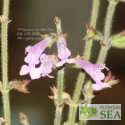
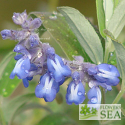
(Blue Ecuadorian Sage) A densely branched shrub with silvery leaves and dusky blue flowers, this rare species was once thought to be Salvia cruickshanksii. In the nursery trade, it sometimes is called Salvia 'Equador'.
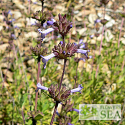
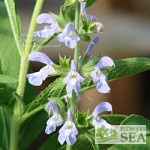
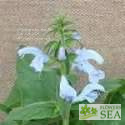
(Patio Sky Blue Gentian Sage) Patio Sky Blue is a handsome, dwarf variety of Salvia patens from Holland. It loves partial shade and is perfect for containers. The sky-blue flowers are larger than those of other Gentian Sages.
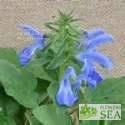
(Patio Deep Blue Gentian Sage) Patio Deep Blue is a handsome, dwarf variety of Salvia patens from Holland. It loves partial shade and has dusky, deep blue flowers that are larger than those of other Gentian Sages.
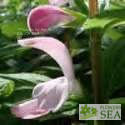
(Patio Rose Gentian Sage) Patio Rose is a lovely, dwarf variety of Salvia patens from Holland. It needs partial shade and is perfect for containers. The rose-colored flowers are larger than those of other Gentian Sages.
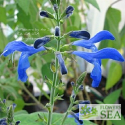
(Grape Leaf Sage) Tall spikes of intensely blue flowers bloom summer to fall and emerge in profusion from handsome, furry foliage. The leaves are grape green on top and purplish on the bottom. This water-loving sage grows rapidly into a spreading mound.
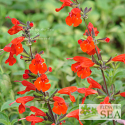
(Summer Jewel Red Tropical Sage) Butterflies, hummingbirds and honeybees enjoy this Fleuroselect Gold Medal winner, which is an outstanding choice for bright red color from June to autumn. This type of Tropical Sage is generally the first to flower for us.
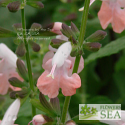
(Coral Nymph Tropical Sage) What a cutie! This award-winning cultivar of Tropical Sage is short and compact yet has a multitude of pastel salmon flowers larger than those of its bigger cousins. It is perfect for annual flower beds or patio containers.
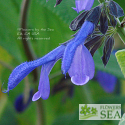
(Ocampo Mexican Sage) Growing from 7 to 10 feet tall each year, this is the largest of our Mexican Sages. Yet due to its erect form, this sage only spreads 36 inches. It has large, deep violet flowers with almost black calyxes that rise up on tall spikes and dark green, heavily veined foliage.
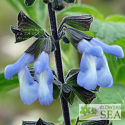
(Confused Argentine Sage) Similar in many ways to the indispensable garden favorites of the Anise Scented Sage (Salvia guaranitica spp.) group, this plant is a perfect companion for its better known cousin.
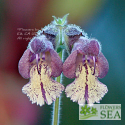
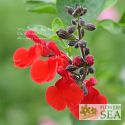
(Red Velvet Mountain Sage) This is one of the most intense red-flowering variety of Mountain Sage we grow. Medium-sized flowers are profuse on this large, vigorous plant -- particularly in spring and fall. Dark stems and calyxes intensify the plant's drama along with glossy green foliage.
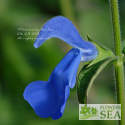
(Oxford Blue Gentian Sage) Only Salvia patens 'Blue Angel' comes close to the hard-to-believe, rich gentian blue of this sage from Mexico. Oxford Blue also grows taller and spreads wider than Blue Angel.
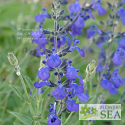
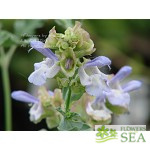
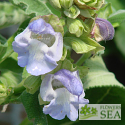
(Kellerman's Sage) Rare in the United States, this wooly leafed, upright shrub comes from Southern Mexico and Guatemala. Mid-size, powder-blue flowers bloom on its long, airy stems from summer through winter in mild climates. It's lovely in mixed, drought-resistant plantings.
The following terms were added to your search to help improve the result. Click here to exclude these extra terms from the search.
- zones
Results for zone from the blog
| Ask Mr. Sage |
| 1. Ask Mr. Sage: Why Didn't My Fall Blooming Salvia Flower? |
| When growing Salvias that begin blooming in fall, Mr. Sage says it's important to know when first frost likely will occur in your area. Ask Mr. Sage is a regular feature of the FBTS Everything Salvias Blog. |
| 2. Ask Mr. Sage: How to Choose Plants for Microclimates |
| Even in a small yard, you can have more than one climate. These variations are called microclimates. This article talks about how airflow may create microclimates in the yard, such as chilly areas near fences. It suggests ways to troubleshoot these problem areas and to make the best planting choices for them. Ask Mr. Sage answers questions based on calls and emails that Flowers by the Sea receives from customers. |
| 3. Ask Mr. Sage: When Is It Too Late for Autumn Planting? |
| Learn how to determine the best start and stop times for fall planting. Ask Mr. Sage is a Q&A feature based on topics raised in calls and emails to Flowers by the Sea. This post concerns fall planting and provides tools for making decisions based on local frost dates and temperatures. |
| New at FBTS |
| 4. New Product Filtering Tool Helps You with Decision Making |
| Flowers by the Sea now offers a powerful, do-it-yourself, product-filtering tool that makes plant selection easier and faster. It sets up a matrix of choices to help customers sort possible selections for their gardens based on USDA cold hardiness zones, sun exposure, mature height and spread of plants, soil type and water needs. This article explains how the tool works and provides examples of how to use it. |
| Quick Digs |
| 5. Quick Digs: Putting Salvias to Bed with Winter Mulch |
| During spring, a heavy coat of fall leaves or wood mulch isn't good for Salvias, because it can cause fungal problems that attack crown and roots. But in winter, organic mulches are ideal for blanketing the foliage and root area of sages. Mulch is particularly useful in protecting protect plant roots against injury from freeze-and-thaw cycles, especially for new fall plantings.This is the second article in our Quick Digs series on preparation for winter in the Salvia garden. |
| Xeric Choices |
| 6. Xeric Choices: 5 Must-Have Native Salvias for Southern California |
| Native plants are the best ones for local conditions. But sometimes boundaries designating what is native may be artificial. Here are five outstanding Xeric Salvias for Southern California, including one, not far over the Baja border, that offers intense drought resistance and violet-blue flowers. |
| 7. Cleanup in the Garden: Healthy Pruning and Mulching of Salvia |
| Sometimes it’s wise not to get too tidy in the garden. When preparing Salvias for Winter dormancy, moderation is the rule. Regional climate affects how much trimming and mulching are necessary in late autumn. |
| Shade Gardening |
| 8. Made for Shade: Japanese Woodland Salvias |
| Sturdy, shade-loving Japanese Salvias are lovely additions to woodland gardens with their lush, large-leafed foliage and delicate-looking flowers in colors including pinks, purples and yellows. They're ideal for bordering shady paths where they invite visitors to pause for close-up views. Flowers by the Sea suggests Japanese species for woodland gardens and organizes them according to their cold hardiness. |
| New at FBTS |
| 9. New at FBTS: Salvia x 'Ultra Violet' Defies Heat and Cold |
| In the Rocky Mountain West, conditions can swing from hellishly hot, dry summers to freezing cold winters. Many Southwestern Salvias are ideal for the sunbaked summers but have trouble surviving chilly Zone 5 winters. So we appreciate the cold hardiness as well as the drought resistance of one of our newest hybrid cultivars, Ultra Violet Hybrid Sage ( Salvia lycioides x greggii ‘Ultra Violet’). |
| 10. New at FBTS: Vermilion Bluffs ® Mexican Sage |
| A 'mass of scarlet awesomeness' is one way that Denver Botanic Gardens Senior Curator Panayoti Kelaidis describes Vermilion Bluffs® Mexican Sage (Salvia darcyi 'Pscarl') at his Prairie Break website. Unlike so many Southwestern sages, Vermilion Bluffs is surprisingly cold hardy as well as being drought tolerant. Its common name is taken from the spectacular red bluffs of the Vermillion Basin Wilderness in Northwestern Colorado, an area redolent with the scent of sage on hot days. But the plant is native to the Nuevo Leon area of Mexico's eastern Sierra Madre Occidental mountains. The story of how its parent plant arrived at Denver Botanic Gardens (DBG) and, eventually, at Flowers by the Sea is one of diaspora. |
| 11. Plant Safari Salvia in the South African Fynbos -- Part 2 |
| Flowers by the Sea is a home away from home for a number of South African Salvias that enjoy our moderate, Mediterranean climate. None are endangered species, but all face the threat of land development in the Western Cape's Fynbos Biome -- unparalleled for its variety of medicinal and ornamental native plants found nowhere else in the world. Preservationists are working to balance changes in land use and to maintain biodiversity in the CFR. Brutal poaching of rhinoceroses is one of the toughest problems they face. |
| Quick Digs |
| 12. Quick Digs: Treating Salvias as Bedding Plants |
| As autumn days become shorter, so does time for protecting all your tender perennial sages (Salvia spp.) that nature designed for warmer winter conditions. This is the fifth and final article in our Quick Digs series on preparation for winter in the Salvia garden. This post acknowledges that sometimes it's better to replant favorites as annuals in spring. |
Common terms in this search: cambridge blue gentian sage one most famous varieties patens which discovered central mexico its powder flowers delightful cooling landscape variety grows well full sun partial shade branched compact has inch bloom from summer into fall similar other sages reliable perennial returning year after zones however all species lovely they worth growing bedding plants colder british horticulturist graham stuart thomas called