
Advanced Search
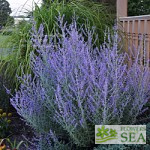
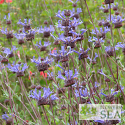
(Rocketman Russian Sage) A cloud of cool, lavender-blue flowers shoot upward from the fine-leafed, gray-green foliage of Salvia yangii ‘Rocketman’. This is a shorter, more upright form of Russian Sage, which was known botanically as Perovskia atriplicifolia until 2019 when the species was reclassified as a Salvia.
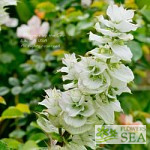
(Vatican White Clary Sage) Clary Sages are well known for their use in folk remedies, aromatherapy and cosmetics. Large white bracts frame the spectacular white blooms of this cultivar on 5-foot-tall spikes. It is a delight for honeybees and butterflies.
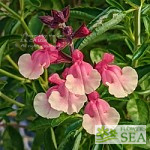
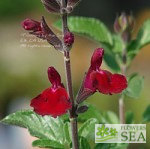
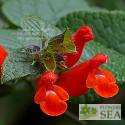
(Southern Mexican Sage) With its graceful, shrubby habit, purplish green leaves and intense tomato-red blooms, this herbaceous perennial makes a delightful display in your garden. It begins blooming in October and continues sporadically through the winter and into spring in frost-free areas.
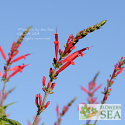
(Pineapple Sage) An indispensable fall-blooming addition to the garden, this tender perennial is, perhaps, the best of all hummingbird plants. When in bloom, it is covered in 3-inch-long red flowers.
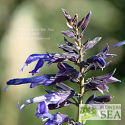
(Van Remsen's Anise-Scented Sage) Big and beautiful, this Anise-Scented Sage grows up to 7 feet tall in rich soil and has lavender-to-purple flowers. In our garden, it blossoms from late spring to fall, attracting both honeybees and hummingbirds.
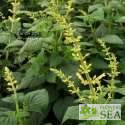
(Red Stem Forsythia Sage) The thick, square, red stems of this variety of Forsythia Sage make it conspicuously different from the species and from everything else in your garden. Its jointed stalks look a little like rhubarb gone mad!
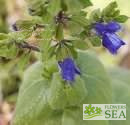
(Little Mexican Sage) This low-growing sage is a shrub in its warmest zones and a perennial in the cooler ones. It's just right for small spaces or tiny gardens. Short and compact, its flowers are similar to but smaller than those of S. mexicana 'Limelight'.
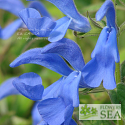
(Blue Angel Gentian Sage) Since the 1838 discovery of this herbaceous species from Central Mexico, Salvia patens has been a mainstay of the perennial garden. Blue Angel is one of the smallest of the full-sized varieties.
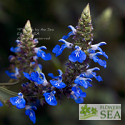
(Bog Sage) Highly adaptable, Salvia uliginosa is ideal for the beginning sage gardener. It isn't fussy about soil type, sun exposure, drainage or frequency of watering.
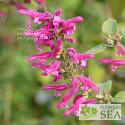
(Scandent Mexican Sage) Here's another winter-blooming hummingbird magnet for gardens in mild climates. This one is scandent, which means it is a climber and needs support. Its abundant, purple-to-magenta flowers are velvety and 6 inches long.
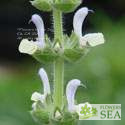
(Sardinian Sage) This is another must-have Salvia for mild, Mediterranean climate gardens. It has elegant foliage and lovely, bright rose-to-lavender flowers. Sardinian Sage spreads non-invasively as an herbaceous perennial and almost never stops blooming for us on the coast of Northern California.
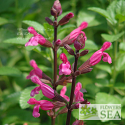
(Mulberry Jam Roseleaf Sage) Magenta flower buds burst into fuzzy, hot pink blossoms in this hybrid sage from the gardens of Betsy Clebsch, author of The New Book of Salvias.
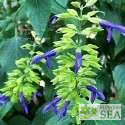
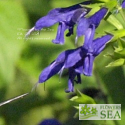
(Sapphire Blue Anise-Scented Sage) The large, sapphire blue flowers of this Anise-Scented Sage glow in the full-sun or partial-shade garden from summer into fall. Similar to Salvia guaranitica 'Blue Ensign', this is a somewhat taller variety of the water-loving species.
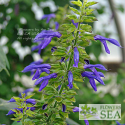
(Byron's Mexican Sage) One of our favorite Mexican Sages, this large variety is reputed to be a hybrid between Salvia mexicana and S. hispanica -- a species of Chia Sage.
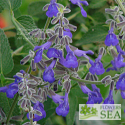
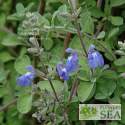
(Snowflake Sage) Wiry, trailing stems of small white leaves make this plant look like fresh snowfall. Numerous, small, sky blue flowers with prominent bee lines further add to the cooling look. This dry-garden plant is native to the mountains of the Chihuahuan desert of North Central Mexico.
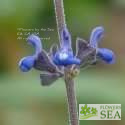
(Chilean Mountain Sage) Formerly known as S. gillesii, this delicate-looking sage with dramatically deep blue flowers is robust in the garden. Its branches are draped with wooly grey foliage featuring rounded, toothed leaves that are pleasantly scented.
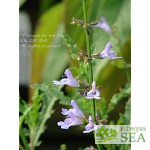
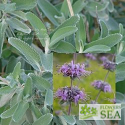
(California Purple Sage or California Gray Sage) This California native is commonly known as Purple Sage for its flowers or Gray Sage for its silvery, velvety foliage. Due also to its hardiness, drought tolerance and ability to attract small wildlife, it is a joy in the dry garden.
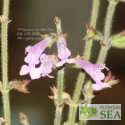
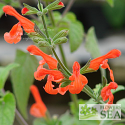
(Elk Super Scarlet Rooster Sage) From the mountains of Mexico we have this stunning Sage, which seems never to be out of bloom. A superior hummingbird plant, the warm orange flowers that cover this shrubby perennial make it a standout in the garden.
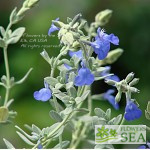
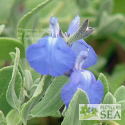
(Silver Germander Sage) With its compact habit, brilliant silver-white leaves and large, sky blue flowers, this is an outstanding heat-tolerant choice for dry, sunny gardens. We consider this to be one of the finest short ground covers for these conditions.
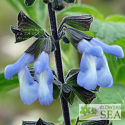
(Confused Argentine Sage) Similar in many ways to the indispensable garden favorites of the Anise Scented Sage (Salvia guaranitica spp.) group, this plant is a perfect companion for its better known cousin.
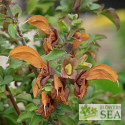
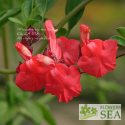
(Big Orange Autumn Sage) Standout color is the big draw for this large growing Autumn Sage. Collected in the mountains of Northern Mexico, it grows well in a wide range of climates, including the hot dry Southwest and the cool moist Pacific Northwest. A difficult color to capture in a photo, it is well described as a warm orange with a scarlet overlay.
The following terms were added to your search to help improve the result. Click here to exclude these extra terms from the search.
- garden, gardener
Results for gardens from the blog
| Book Reviews |
| 1. Book Review: The Plant Lover's Guide to Salvias |
| The Plant Lover's Guide to Salvias by John Whittlesey not only is a lavishly photographed, well-organized resource about the Salvia genus but also a lovely coffee table book that may inspire anyone who opens its pages to spend time in the garden. Whittlesey says his Canyon Creek Nursery in rural Northern California has an "extreme" Mediterranean climate with little rainfall from summer through early autumn when temperatures can reach up to 108 degrees F. |
| Container Gardening |
| 2. Container Gardening Basics: Selecting and Arranging Pots |
| Assembling a new planter with fresh potting soil and young plants is a feel-good activity similar to moving into a new home. Each pot and property is full of promise. Placing a single plant or a grouping in the right size of pot is like selecting a starter home for it that will encourage healthy growth. The type of material a pot is made from also affects development. Flowers by the Sea Online Salvia Nursery explains how to choose correct pot sizes as well as pot styles, sizes, colors and arrangements. Don't miss The Flowerpot Men music video! |
| 3. Fall Planting: 8 Sages for Fragrance by Your Front Door |
| Colorful plantings make entryways attractive. Even better are pretty plantings that are fragrant and provide a sensory lift before you journey indoors. Scent wakes up memories and makes us see in a different way. Here are eight sensible suggestions for adding lovely scents to your landscape. |
| Getting Started with Salvias |
| 4. Getting Started: Salvias for the Coastal Southeast |
| True sages are members of the Salvia genus and number in the hundreds. They are native to a wide variety of environments worldwide, which is why some are ideal for the dry gardens of California and others can handle the abundant moisture of the American Southeast. Flowers by the Sea raises many sages that grow well in the Southeast, including some that are either native to the region or have jumped fences from gardens into the wild. |
| 5. July in the Salvia Garden |
| July is a time of lush plant growth and pollinator activity in Salvia gardens. Aside from weeding and taking breaks to watch bees, hummingbirds and other small wildlife, there are many tasks to attend to in the sage garden during July. Flowers by the Sea Farm and Online Nursery offers a list of midsummer tasks to keep your garden buzzing and blooming. |
| 6. The Power of Scent |
| While it's true that not all Salvias smell, well, pleasant, many varieties are grown specifically for the aromatic or even sweet aromas that they release into the air. These ten Salvias are our top picks for the best-smelling varieties in the garden. |
| Xeric Choices |
| 7. Xeric Choices: How Xeriscape Won the West |
| How Xeriscape Won the West: Feast or famine: that’s the water situation out West. Unexpected torrential rains, flash floods and long periods of drought are acts of God that people can partially control through water diversion and storage as well as strategic conservation. Low-water landscaping -- coined as "xeriscape" by a Denver environmental planner -- has become popular in the West in the last 30 years. |
| Hummingbirds in the Garden |
| 8. Guide to Fuchsia Cultivation & History |
| Like tiny dancers dressed in fancy skirts, Fuchsia flowers dangle from upright shrubs in long blooming hedges and from trailing branches in hanging baskets. Fuchsias are hummingbird favorites that come in many rosy colors. Read about them in the FBTS Guide to Fuchsia Cultivation & History . |
| Container Gardening |
| 9. A Guide to Successful Potting Soils for Salvias |
| One of the decisions that Salvia gardeners face in spring is what kind of potting mix to use for outdoor container plants. Find answers in FBTS Farm & Online Nursery's guide to successful potting soils for Salvias. |
| Celebrity Salvias |
| 10. Celebrity Salvias: Hot Heatwave Hybrids from Australia |
| Waterwise landscapes don't have to be cactus gardens if you grow leafy, colorful drought-resistant Salvias, such as Australian Heatwave™ Mountain Sages, which are crosses of Salvia microphylla and S. greggii . Hybridizers Howard Bentley and Steve Eggleton of Plant Growers Australia used these tough American and Mexican native plants to create their series. One goal was to aid water conservation during their nation's hot, dry summers. |
| Cultivating Color |
| 11. Cultivating Color: Pastel Perennial Sages for Xeriscape |
| Not everyone who lives in a dry climate wants a cactus garden. And not all cottage gardens are filled with pansies and peonies. Flowers by the Sea highlights ten tough perennial Salvias in pastels for low-water cottage gardens. The palette of drought-resistant choices includes sages with blue, lavender, peach, pink and yellow flowers for a soothing touch in your landscape. |
| Getting Started with Salvias |
| 12. Getting Started: Salvias for the Midwest |
| Severe winter chill and summer heat coupled with extreme humidity are challenges that gardeners face in the Midwest. Many Salvias are excellent choices as long-blooming annuals in the region while others -- ones that can withstand cold winters -- are reliable perennials. Flowers by the Sea Online Plant Nursery explains the confusing Midwest boundaries from Ohio west to Kansas and North Dakota south to Missouri. It talks about the range of USDA Plant Hardiness Zones in the region and the kinds of sages that grow best there. |
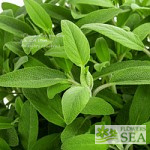
Common terms in this search: officinalis 'growers friend' flavorful fragrant modern european culinary sage known great flavor easy growing rarely flowers making perfect addition home herb garden leaves tasty meat poultry fish pastas stuffings vegetable dishes well baked goods circular pan sunny yellow cornbread looks particularly pretty when topped spoke-like pattern perennial needs full sun little watering average soil containing enough organic matter drain aside