
Advanced Search
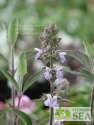
(Kellerman's Sage) Rare in the United States, this wooly leafed, upright shrub comes from Southern Mexico and Guatemala. Mid-size, powder-blue flowers bloom on its long, airy stems from summer through winter in mild climates. It's lovely in mixed, drought-resistant plantings.
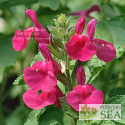
(St. Charles Day Mountain Sage) Especially in spring and fall, masses of red-violet flowers bloom amid the silvery green foliage of Salvia microphylla 'San Carlos Festival'. Put this one into the "must have" column.
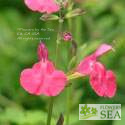
(Pink Preference Autumn Sage) Two-tone, hot pink flowers and contrasting bracts make this Autumn Sage stand out. This drought tolerant Autumn Sage from Central Texas is also compact, rugged, heat tolerant and capable of handling Zone 6 chill.
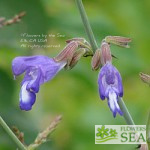
(Mount Olympus Sage) The deep violet and white flowers of Salvia ringens are eyecatching. Their wiry, branched spikes rise up to 5 feet tall from a dark green basal rosette.
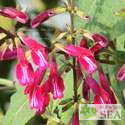
(Violet Calyx Sage) Here's another abundantly blooming sage from the cloud forest slopes of Chiapas, Mexico. Violet beelines mark the lower lip of the crimson blossoms, which are so numerous that it can be difficult to see the foliage at times.
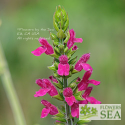
(Shaggy Chiapas Sage) This is a sweetheart! Glowing magenta flowers lure the eye as well as hummingbirds to this heat-tolerant sage. It begins blooming in late summer where weather is warm and in fall where it is cooler.
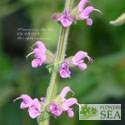
(Royal Crimson Distinction Woodland Sage) Grown for hundreds of years in cottage gardens throughout the world, Salvia nemorosa was described by Carl Linneaus in 1762. This variety's large flower spikes bloom a dark violet-crimson, then age to a softer pink.
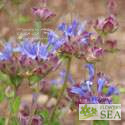
(Celestial Blue Sage) Fast growing and adaptable, this sage is a chance hybrid between Cleveland Sage (Salvia clevelandii) -- also called California Blue Sage -- and California Rose Sage (Salvia pachyphylla). It may also be related to California Purple Sage (Salvia leucophylla).
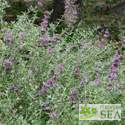
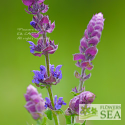
(Stem Clasping Violet Sage) Like a candelabra lit up with whorls of violet blossoms, the erect, branching flower spikes of Salvia amplexicaulis make this native of Southeastern Europe shine. On the Grecian island of Thassos, it brightens areas near the beach.
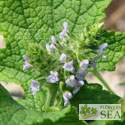
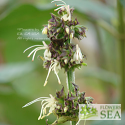
(Tree Sage)Whether you call it a shrub or a tree, Salvia arborsecens rises up to an impressive 12 feet tall and 5 feet wide. Commonly known as Sage Tree, this Salvia grows well in full sun, but prefers partial shade.
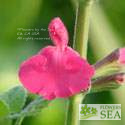
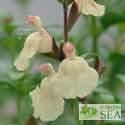
(Elk Buttercup Jame Sage) Red flower buds unfurl into the surprisingly buttery yellow blossoms of Elk Buttercup. Subtly bicolored, the flowers have touches of light pink including fine hairs on the upper lip.
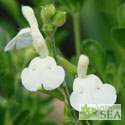
(VIBE® Ignition White Sage) Never before have we seen such a pure white among the species to which Jame Sages are related. We love this purity as well as the bright green calyxes supporting the large flowers of Elk White Ice and giving it an overall crisp look.
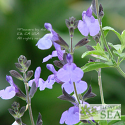
(Elk Blue Moon II Jame Sage) The phrase "blue moon" signifies a rare event. Elk Blue Moon Jame Sage is an unusual combination for a Salvia x jamensis hybrid -- dusky violet flowers with pale-blue throats, dark blue calyxes and mid-green foliage.
Note: This is a new (2014) cultivar that we chose to replace the original 'Elk Blue Moon'. It is a superior grower, and otherwise very similar.
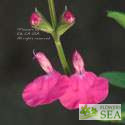
(Wild Watermelon Mountain Sage) Large, watermelon-pink flowers and the fruity fragrance of this long-blooming sage's mid-green, veined leaves make this Mountain Sage a treat to grow.
(Recurved Sage) At home in the shady, high-altitude cloud forests of Southern Mexico and Guatemala, this large, lush sage requires a warm, moist climate. In cool climates, it can handle full sun. However, partial shade is a better choice in most gardens.
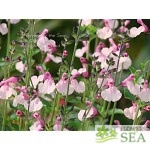
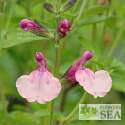
(Dancing Dolls Sage) Sages can be such tough plants. Many, such as Salvia 'Dancing Dolls', withstand heat and drought yet have delicate looking blossoms. Dancing Dolls features cream and rose bicolor flowers.
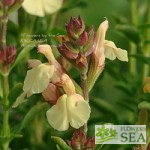
(Golden Girl Sage) Sages can be such tough plants. Many, such as Salvia 'Golden Girl', withstand heat and drought yet have delicate looking blossoms. Golden Girl features yellow flowers with a hint of rosy pink along with dark rose calyxes.
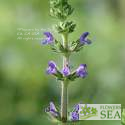
(Wild Sage) Toothed and attractively wrinkled, the gray-green, basal foliage of Wild Sage contrasts prettily with deep lavender-to-purple flowers supported by grassy green bracts. This cold-hardy sage is native to northern Africa and parts of Asia and Europe.
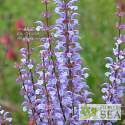
(Red Veined Sage) In 1827, John Wilkes referred to Salvia haematodes as "Bloody Sage" in his Encyclopaedia Londinensis, Volume 22. This might seem mysterious when first viewing the sage's upright yet somewhat relaxed spikes of whorled, violet-colored flowers.
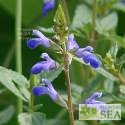
(Arizona Deep Blue Sage) In contrast to the lavender-blue flowers of Arizona Blue Sage (Salvia arizonica), the blossoms of Arizona Deep Blue are nearly purple. They are the kind of deep lavender that you might see in a southwestern sunset.
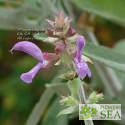
(Wooly Canary Island Sage) The pale magenta, parrot-beak flowers of this sage, supported by deeper magenta bracts, heat up the landscape. But when you get close, it may be the velvety texture of the foliage that makes you sigh.
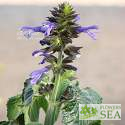
(Lolly's Mexican Sage) Our variety of Salvia mexicana 'Lolly' is the tall kind growing up to about shoulder height. A shorter form is often called "Lollie Jackson" or "Lolly Jackson." Who or what the mysterious Lolly is remains unclear.
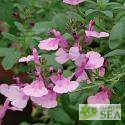
(Elk Bella Rosa Jame Sage) The large, creamy pink and burgundy flowers of this sage are stately in contrast with its deep green, veined, ovate foliage that is pleasantly fragrant. Elk Bella Rosa is as elegant as its name implies. It's also long blooming.
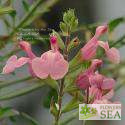
(Elk Twilight's Rosy Glow Jame Sage) Rosy red hairs accentuate the upper lip of each dusky, salmon-pink blossom of this cheery Jame Sage. The flowers are tiny but abundant and are supported by bright green calyxes.
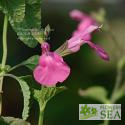
(Rosie O'Grady Mountain Sage) Honeybees and hummingbirds love the large, bright pink flowers of Salvia microphylla 'Rosie O'Grady', a drought-resistant sage. Dense and fragrant, it's large, glossy green leaves are veined and have finely serrated edges. This is a lush choice for dry gardens.
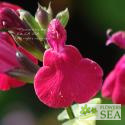
(Killer Cranberry Mountain Sage) Masses of magenta flowers on tall spikes lure honeybees and hummingbirds to the rich nectar of Salvia microphylla 'Killer Cranberry'. Its prolific flowers are a killer attraction for people too.
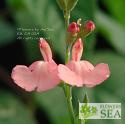
(Dyson's Orangy Pink Hybrid Jame Sage) Many Salvia x jamensis hybrids remind gardeners of sunrise, such as Dyson's Orangy Pink. Light green calyxes faintly striped with red cup its luminous pale salmon pink blossoms with creamy throats.
The following terms were added to your search to help improve the result. Click here to exclude these extra terms from the search.
- had
Results for has from the blog
| Book Reviews |
| 1. Book Review: The New Sunset Western Garden Book |
| On a day when it's too cold or hot to be outside, a gardening guide, such as The New Sunset Western Garden Book , is a useful and entertaining companion. At 768 pages long, it isn't lightweight reading. Be prepared to prop the book up on pillows in your lap as you page through it while kicking back on the couch. |
| Business Buzz |
| 2. Buying Salvias Online from FBTS: How to Order & What to Expect - Updated |
| When you purchase plants online, it's understandable to feel a bit nervous. After all, a tender green life is being sent to you in a box. Will it survive the journey in healthy condition? Also, how secure will your credit card information and other data be? Furthermore, how do you sort through all those plants in the online catalog? Flowers by the Sea provides answers. |
| Celebrity Salvias |
| 3. Celebrity Salvias: Mexican Bush Sage Beauties |
| Mexican Bush Sage (Salvia leucantha) is a garden star, but not a demanding diva. That is why Texas A&M University selected Mexican Bush Sage (Salvia leucantha) as one of its 50 “Texas Superstar” plants, all of which are highly recommended for flourishing in unpredictable weather and drought. The many varieties of Mexican Bush Sage are garden beauties that need little pampering. Native to hot, dry areas of Mexico and Central America, they are accustomed to tough conditions. Flowers by the Sea carries a number of striking varieties. |
| Sage Words About Wildlife |
| 4. Sage Words About Wildlife: Climate Change Alters Hummingbird Migration |
| Nature doesn't come to a sudden, overall halt, when the timing of its ecosystems slip, including ones involving hummingbirds. Instead, change occurs gradually. Plants and the animals that pollinate them have coevolved to meet each other's needs. You can help by planting hummingbird habitat in your home garden. Learn more in the Everything Salvias Blog at FBTS Online Nursery. |
| Container Gardening |
| 5. Container Gardening Basics: Watering Potted Plants |
| Container plantings are welcome islands of color and fragrance whether in small or large yards. Their emergence signals the pleasures of summer, including icy glasses of lemonade. Potted plants have a mighty thirst, as well. Container garden plans for Salvias and companion plants need to factor in greater frequency of watering than the plants would receive in-ground. |
| New at FBTS |
| 6. Upcoming at FBTS: Hummingbirds Love Cute Cupheas |
| Bright orange, tube-shaped blossoms cover Cuphea x 'David Verity' like tiny windsocks blowing in a breeze and beckoning hummingbirds. Similar to Salvias, Cupheas are rich sources of nectar that fuel hummingbird migration. At Flowers by the Sea, we are always interested in expanding choices for creating wildlife habitat. So we are growing a wide variety of Cupheas for sale this coming spring, including David Verity. |
| Xeric Choices |
| 7. Drought Praise: 3 Low-Water Plants for a Fragrant Walkway |
| Fragrant Salvias and companion plants are excellent choices for entryways. Drought-tolerant plants from naturally dry climates, such as the three featured here, often have a pleasant, resinous fragrance that lingers in memory. Flowers by the Sea promotes water conservation by posting "drought praise" for favorite xeric (low water) plants. Here we suggest three pleasingly fragrant choices for a border making the entry to your home soothing and welcoming. |
| Getting Started with Salvias |
| 8. Getting Started: Salvias for the Coastal Southeast |
| True sages are members of the Salvia genus and number in the hundreds. They are native to a wide variety of environments worldwide, which is why some are ideal for the dry gardens of California and others can handle the abundant moisture of the American Southeast. Flowers by the Sea raises many sages that grow well in the Southeast, including some that are either native to the region or have jumped fences from gardens into the wild. |
| 9. Getting Started: Salvias for Zone 8 |
| Rainfall often is heavy in USDA Plant Hardiness Zone 8. It swings in a deep, broad arc from the West Coast to the Gulf Coast and back up the East Coast to the northeast edge of Virginia. What all its diverse areas have in common climatically is an average low winter temperature of 10 degrees F. Flowers by the Sea Online Nursery discusses growing conditions and how to select Salvias for your part of Zone 8 whether wet or dry. |
| 10. Getting Started: Salvias for Zone 5 |
| To bloom yearly, Salvia perennials and shrubs in USDA Hardiness Zone 5 need to tolerate deep freeze winters with average low temperatures of -20 degrees F. The success of Zone 5 sages also depends on local growing conditions. Learn more at Flowers by the Sea, an online, mail-order Salvia nursery. |
| 11. Leonotis: Mint Family Members that Roar in the Landscape |
| Orange is an aggressive color in the garden. It doesn't purr. The fuzzy, shaggy, hot orange flowers of Lion's Ear ( Leonotis ) growl for attention. Their stems are so tall that they may reach up to 6 feet, towering over the foliage like gawky Dr. Seuss blossoms. You'll find them at Flowers by the Sea Online Nursery. |
| New at FBTS |
| 12. New at FBTS: Ember's Wish & Love and Wishes Salvias |
| Plants contribute to our lives in many ways -- as sources of beauty, building materials, clothing, food, fragrance, medicine and oxygen. Add hope and fulfillment to the list, because that is what three abundantly blooming Salvias from Australia add to the lives of seriously ill children. These plants form the Wish Collection -- Wendy's Wish Sage, Ember's Wish Sage, and Love and Wishes Sage. Flowers by the Sea is one of the first online nurseries in America to sell all three. Although we have grown and sold Wendy's Wish for a number of years, Ember's Wish and Love and Wishes are new at FBTS. |
Common terms in this search: kellerman's sage rare united states wooly leafed upright shrub comes from southern mexico guatemala mid-size powder-blue flowers bloom its long airy stems summer through winter mild climates it's lovely mixed drought-resistant plantings named american botanist william kellerman who began exploring shrubby medium-height stands well heat may more cold hardy than zone has been confused collinsii which much taller less white