
Advanced Search
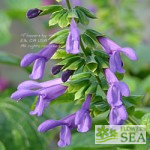
(COOL Lavender Mist Anise Scented Sage) Bright green bracts and rich lavender blossoms sing in Salvia COOL Lavender Mist. Hummingbirds keep this bountiful bloomer buzzing.
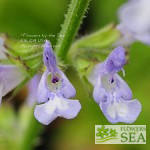
(Cut Leaf African Blue Sage) In botanical names, aurita means “ear shaped.” It’s the ear-like lobes of this sage’s leaves that give the species part of its name Salvia aurita ssp. galpinii. The cut leaf foliage is heavily lobed, mint green and lightly hairy.
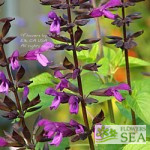
(Smokey Jazz Anise-Scented Sage) The dusky black calyxes of Salvia BODACIOUS® ‘Smokey Jazz’ support large flowers shaped like parrot beaks the unique color of boysenberries — a hue between red and purple.
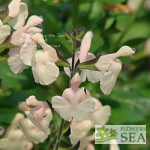
(Elk Morning Sun Jame Sage) Kelly green and black calyxes support the long blooming, creamy white and pale pink flowers of Salvia x ‘Elk Morning Sun’. A waterwise sage, it likes average watering but resists drought.
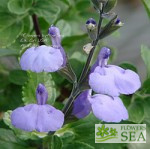
(Elk Blue Moon III Jame Sage) Dark calyxes cup dusky blue flowers that age to lavender and rise up from the veined, mid-green foliage of Salvia x ‘Elk Blue Moon III’.
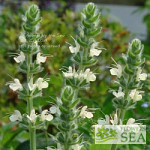
(Austrian Sage) Tall spikes of large, pale yellow flowers rise up from Salvia austriaca’s basal rosette of impressively large leaves. Deeply lobed, like the edges of a lacy collar, the leaves are broader and longer than those of any Salvia we have ever grown.
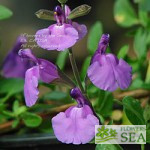
(Elk Grape Ape Jame Sage) Bountiful flowers that are larger than normal for Jame Sage cover Salvia x ‘Elk Grape Ape’ in a cloud of purple that is sort of amethyst to pinot gris in color.
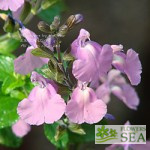
(Elk Smokey Grape Jame Sage) We think the dusky lavender flowers of Salvia x ‘Elk Smokey Grape’ look like the dusty, pale reddish-blue of Malbec grapes. This is a floriferous beauty.
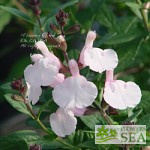
(Elk Pink Cloud Jame Sage II) Abounding with clusters of large, soft pink flowers on spreading branches, Salvia x ‘Elk Pink Cloud II’ looks like a fluffy, cumulonimbus cloud.
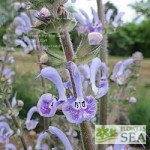
(Shangri-la Sage) Take a close look at Salvia moorcroftiana x indica ‘Shangri-la’ and you’ll notice that its lavender flowers have lighter lower lips with deep purple freckles.
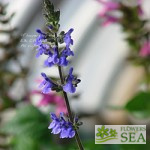
(Paula Flynn Sage) Floral spikes with whorls of bluish-purple flowers rise up amid the slightly relaxed, upright foliage of the mystery plant Salvia ‘Paula Flynn’. It features pebbly, deep green leaves with white, fuzzy undersides.
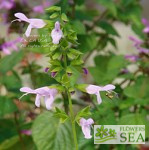
(COOL Pink Lace Anise Scented Sage) Cheerful Kelly-green bracts surround magenta buds that bloom into the soft pink yet magenta-tinged flowers of Salvia COOL Pink Lace. Its bright green leaves have a licorice-like fragrance.
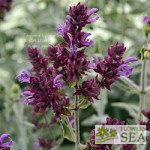
(Lancelot Wooly Canary Island Sage) Salvia canariensis ‘Lancelot’ has lavender flowers shaped like parrot beaks that are surrounded by deep rosy-lavender bracts.
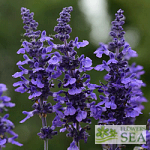
(Mysty Sage) Salvia x ‘Mysty’ is a dwarf version of Mystic Spires Sage and is a dramatic border plant with dark green, corrugated leaves and long blooming flower spikes abundant with deep, violet-blue blossoms.
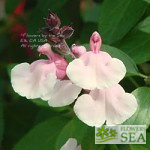
(Elk Crème Anglaise Jame Sage) Framed by minty green foliage, the blossoms of Salvia x ‘Elk Crème Anglaise’ transition from dreamy pale pink throats to white skirts. They look delectable.
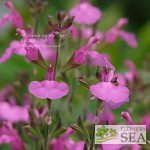
(Elk Xanadu Jame Sage) Like the magical, fictional land of Xanadu, there’s something heavenly about this sage. The flowers of Salvia x ‘Elk Xanadu’ look ethereal due to the bluish cast of their magenta-pink blossoms supported by deep magenta and green calyxes. It's a powerful attraction for pollinators, including hummingbirds.
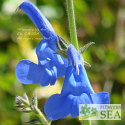
(Guanajuato Giant Gentian Sage) At 3 inches long, the flowers of this Gentian Sage are the largest of any we grow. Guanajuato Giant is also unique for its tall, upright growth and heavily textured foliage. This is our own tested seed strain of this rare plant.
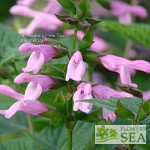
(COOL Shocking Pink Anise-Scented Sage) Dusky green bracts support the pastel magenta blossoms of Salvia COOL Shocking Pink. It’s a hummingbird favorite with bright green, fragrant foliage that may remind you of licorice.
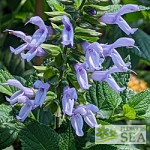
(COOL Periwinkle Anise-Scented Sage) Dusky green bracts cup the lavender-blue blossoms of Salvia COOL Periwinkle that attract hummingbirds. The fragrance of its bright green leaves may remind you of licorice.
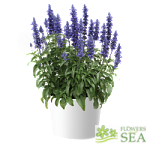
(SALLYFUN™ Blue Lagoon Sage) You can expect early and long bloom from SALLYFUN™ ‘Blue Lagoon', a dwarf border sage with dense, aromatic foliage. Its spikes of deep violet-blue flowers attract bees, butterflies, and hummingbirds.
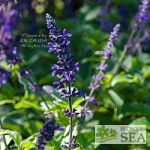
(Indigo Spires Sage) Salvia ‘Indigo Spires’ gains its name from long spikes of rich, deep purple-blue flowers that stand tall and also arch and twist gracefully. It is a chance hybrid discovered growing amid Salvia farinacea and Salvia longispicata at Southern California's Huntington Gardens.

(Vermilion Bluffs® Mexican Sage) The brilliant red flowers of Vermilion Bluffs bloom abundantly from August to October. This variety of the Mexican native Salvia darcyi is cold hardy to Zone 5b at altitudes up to 5,500 feet.
The following terms were added to your search to help improve the result. Click here to exclude these extra terms from the search.
- perennials
Results for perennial from the blog
| Hummingbirds in the Garden |
| 1. Seeing Red and Loving It: Hummingbirds and Salvia microphylla |
| As with so many aspects of life, the hummingbird-Salvia relationship is circular. It is difficult to have one without the other. Unfortunately, many species of hummingbirds are threatened or endangered. By planting Mountain Sage ( Salvia microphylla ) you invite hummingbirds into your garden, expand their habitat and ensure pollination for abundant blossoming. |
| Salvia Small Talk |
| 2. Salvia Small Talk: Raised Beds for Sage |
| Raised bed gardening can help Salvias winter over in cold climates. |
| Celebrity Salvias |
| 3. The Roseleaf Sage Group: Who's Who & What's What |
| Differentiating between the plants in a closely related group can feel similar to being an outsider attending a large family reunion. Identifying who's who and how they are connected is a challenge. That's the way it is with Mexico's Roseleaf Sage ( Salvia involucrata ) Group, which is well loved by hummingbirds. FBTS Online Plant Nursery grows a number of species from this winter-blooming group. |
| Salvia Small Talk |
| 4. Salvia Small Talk: How to Determine Soil Moisture Level |
| Basic tools for estimating soil moisture include your hands and simple tools, such as a trowel, screwdriver and long metal rod, according to Colorado State University. The first method, which uses the metal tools, might be called the 'poke technique.' The second is the 'feel method.' |
| Book Reviews |
| 5. Book Reviews: Three Top Reads for Dry Gardening |
| Don’t think “drab” when you hear the phrase “dry garden.” With guidance from good books and a willingness to experiment, you can create colorful flowerbeds and landscapes that require little to no supplemental watering. Here is a quick overview of three books that are excellent resources about sustainable dry gardening. |
| Cultivating Color |
| 6. True Blue Salvias You Can Rely On for Garden Serenity |
| Forget all the mournful music telling you that blue is the color of sadness. In a Salvia garden filled with hot colors, true blue is a peacemaker -- a reliable harmonizer that commands peace in the garden. This article talks a tiny bit about football, Madonna and the chemistry of true blue flowers. Then it offers a lot of true blue sages for gardens coast to coast from our Flowers by the Sea Online Nursery catalog. |
| Salvia Small Talk |
| 7. Salvia Small Talk: Zones & Climate Change |
| Have you double checked your USDA plant hardiness zone. You may be able to grow plants you weren’t possible in your area. |
| Sacred Sages |
| 8. White Sage |
| Bees and hummingbirds love the perennial subshrub Sacred White Sage (Salvia apiana) with its soaring spikes of white-to-lavender flowers that visually cool the landscape along with its large rosettes of lance-shaped, greenish-white foliage. Sacred White Sage is far more than a pretty native plant of California. Historically, it provided food and medicine for a number of Native American tribes along the Pacific Coast. Today, bundles of Sacred White Sage leaves are still tied together to create torch-like wands called smudge sticks for fragrant purification ceremonies far beyond the Native American community. |
| Salvia Small Talk |
| 9. Salvia Small Talk: What Is an Inch of Water? |
| Instuctions for waterwise gardening often suggest deep watering once a week and applying no more than 1 inch of water, including rainfall. For Salvia , this amounts to what we would call regular or average watering for in-ground plants. But what constitutes an inch of water? |
| 10. 15 Select Salvias for Dry, Partial-Shade Gardening |
| Learning how to garden in dry shade requires mediation of the needs of all the plants involved. Dry shade is particularly abundant under trees, because they consume lots of water. Fortunately, numerous drought-resistant Salvias can handle life in dry, partial shade. Flowers by the Sea details basic considerations of dry shade gardening and identifies 15 sages for it. |
| Hummingbirds in the Garden |
| 11. Guide to Fuchsia Cultivation & History |
| Like tiny dancers dressed in fancy skirts, Fuchsia flowers dangle from upright shrubs in long blooming hedges and from trailing branches in hanging baskets. Fuchsias are hummingbird favorites that come in many rosy colors. Read about them in the FBTS Guide to Fuchsia Cultivation & History . |
| Container Gardening |
| 12. A Guide to Successful Potting Soils for Salvias |
| One of the decisions that Salvia gardeners face in spring is what kind of potting mix to use for outdoor container plants. Find answers in FBTS Farm & Online Nursery's guide to successful potting soils for Salvias. |
Common terms in this search: cool lavender mist anise scented sage bright green bracts rich blossoms sing hummingbirds keep bountiful bloomer buzzing its sweet-smelling foliage reminiscent licorice product our plant development program part fbts collection guaranitica hybrids unlike deep saturated blue purple flowers most sages series features surprising pastels native argentina brazil paraguay uruguay wild grows edge streams forest clearings similar other adaptable from full