
Advanced Search
Advanced Search
1 to 1 of 1
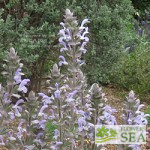
(Kashmir Sage) This native to Pakistan and Nepal is common in the wild, but rare in cultivation. The handsome rosette of wooly leaves give way in the late spring to tall flower scapes featuring delicately colored lilac-blue flowers with bright green hairy bracts.
1 to 1 of 1
Results for scapes from the blog
| Hummingbirds in the Garden |
| 1. A Gardeners Guide to Hummingbird Sage |
| Among the hummers' favorites: Salvia spathacea, commonly known as Hummingbird Sage. As it name suggests, this California native produces the hummingbirds' flower of choice, blooming from late winter through summer -- and sometimes again in Fall -- with rose-pink to magenta blossoms. Available in six varieties, this robust perennial not only attracts hummers with its abundant nectar, it's easy to grow and enhances any landscape with its aromatic blooms and fragrant evergreen foliage. |
| 2. Guide to Fuchsia Cultivation & History |
| Like tiny dancers dressed in fancy skirts, Fuchsia flowers dangle from upright shrubs in long blooming hedges and from trailing branches in hanging baskets. Fuchsias are hummingbird favorites that come in many rosy colors. Read about them in the FBTS Guide to Fuchsia Cultivation & History . |
| 3. Bat-Faced Beauty: Gardeners & Hummingbirds Love Cuphea schumannii |
| Most bat faces only look beautiful to their mothers. However bat-faced Cuphea schumannii seems pretty as punch to hummingbirds in search of a sweet drink of nectar. If you take a close look at the ragged, open end of each flower, you'll see two, tiny, lavender petals standing straight up like bat or mouse ears. So, despite its common name, Orange Cigar Plant, this species is known as a bat-faced Cuphea. Aside from being excellent for attracting pollinators, Cupheas are becoming important agricultural crops that reduce pesticide use. |
| Book Reviews |
| 4. Book Review: Lawn Gone! Low-Maintenance, Sustainable, Attractive Alternatives for Your Yard |
| Lawn Gone by Texas landscaper and garden writer Pam Penick concerns replacement or minimization of lawns through xeriscape, the art of planting attractive waterwise landscapes. Penick redefines suburban yards through designs including perennial groundcovers and small shrubs -- such as Autumn Sages ( Salvia greggii spp.) -- as well as ornamental grasses, sedges and hardscape, including water features. Flowers by the Sea specializes in Salvias and other xeriscapic plants. |
| 5. Book Review: The Plant Lover's Guide to Salvias |
| The Plant Lover's Guide to Salvias by John Whittlesey not only is a lavishly photographed, well-organized resource about the Salvia genus but also a lovely coffee table book that may inspire anyone who opens its pages to spend time in the garden. Whittlesey says his Canyon Creek Nursery in rural Northern California has an "extreme" Mediterranean climate with little rainfall from summer through early autumn when temperatures can reach up to 108 degrees F. |
| Celebrity Salvias |
| 6. Celebrity Salvias: Hot Heatwave Hybrids from Australia |
| Waterwise landscapes don't have to be cactus gardens if you grow leafy, colorful drought-resistant Salvias, such as Australian Heatwave™ Mountain Sages, which are crosses of Salvia microphylla and S. greggii . Hybridizers Howard Bentley and Steve Eggleton of Plant Growers Australia used these tough American and Mexican native plants to create their series. One goal was to aid water conservation during their nation's hot, dry summers. |
| Xeric Choices |
| 7. Colorful Salvias Break Myth of Dry Garden Drabness |
| Dry gardens are flowerbeds or entire landscapes based on ornamental perennials that require little to no watering once well rooted. Many Salvias are excellent, drought-resistant choices for these gardens. Flowers by the Sea Farm and Online Nursery talks about dry garden myths as well as low-water plants. |
| Cultivating Color |
| 8. Cultivating Color: Pastel Perennial Sages for Xeriscape |
| Not everyone who lives in a dry climate wants a cactus garden. And not all cottage gardens are filled with pansies and peonies. Flowers by the Sea highlights ten tough perennial Salvias in pastels for low-water cottage gardens. The palette of drought-resistant choices includes sages with blue, lavender, peach, pink and yellow flowers for a soothing touch in your landscape. |
| Getting Started with Salvias |
| 9. Getting Started: Salvias for the Coastal Southeast |
| True sages are members of the Salvia genus and number in the hundreds. They are native to a wide variety of environments worldwide, which is why some are ideal for the dry gardens of California and others can handle the abundant moisture of the American Southeast. Flowers by the Sea raises many sages that grow well in the Southeast, including some that are either native to the region or have jumped fences from gardens into the wild. |
| 10. Getting Started: Salvias for the Rocky Mountain West |
| High altitude, distance from large bodies of water and powerful chinook winds make the Rocky Mountain West a dry gardening environment even in years of higher than average rain and snow. The region's steep mountains have a major impact on where and how precipitation falls. Instead of a single mountain chain, the Rocky Mountains are made up of 100 separate ranges. Similarly, the Salvia genus contains a broad range of sages, many of which thrive in the climactic extremes of the Mountain West. |
| New at FBTS |
| 11. Grow a Riot of Color with New Salvia Cottage Garden Collections |
| Cottage gardens make humble homes look spectacular with their densely packed color and foliage. FBTS Cottage Garden Collections are designed to brighten your yard with a riot of Salvias and companion plants. |
| Xeric Choices |
| 12. Drought Praise: Around the World with Sunny Groundcovers |
| Bring on the sun. Bring on the heat. Bring on the drought-resistant Salvia groundcovers.Flowers by the Sea offers a short list of top groundcovers from around the world for fighting drought. They come from Asia, California, Mexico and Morocco in lavender, purple and pink to do battle against the boring brown caused by water shortage. Similar to gravel, bark chip or pine needle mulch, these groundcovers discourage weeds, cool soil, conserve moisture and add color to gardens. They are living mulch. |
Recent Searches
Common terms in this search: kashmir sage native pakistan nepal common wild but rare cultivation handsome rosette wooly leaves give way late spring tall flower scapes featuring delicately colored lilac-blue flowers bright green hairy bracts found elevations feet stranger stressful conditions does best rich well drained soil ample water will survive far less than ideal displayed branching inflorescence quite long lasting wonderful addition mixed border