
Advanced Search
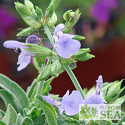
(Greek Sage) Most of the dried culinary sage sold in the United States is Greek Sage. Frescoes on the island of Crete dated to 1400 BC depict this plant, which was used by the Phoenicians and Greeks for cooking and medicine. It is an ancient and beloved friend of mankind.
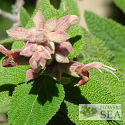
(Wooly Multicolor Sage) In Greek, "lasiantha" means "wooly flower." The flowers of Salvia lasiantha are surrounded by wooly bracts, but are even more notable for transforming from apricot-orange in the morning to reddish-purple later in the day.
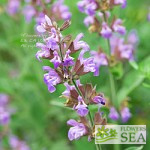
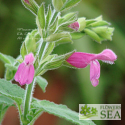
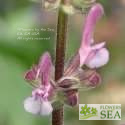
(Jerusalem Sage) This lovely herbaceous perennial is native to Cyprus, Israel, Jordan, Lebanon, Syria, and the West Bank. Its clear pink flowers change at times to a pink highlighted with violet lines and dots. Prominent glandular hairs on the buds, bracts and floral stems exude a fragrance that is delightful on a warm day.
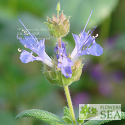
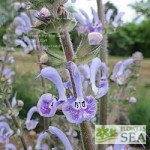
(Shangri-la Sage) Take a close look at Salvia moorcroftiana x indica ‘Shangri-la’ and you’ll notice that its lavender flowers have lighter lower lips with deep purple freckles.
Results for Greek from the blog
| Cultivating Color |
| 1. Pantone Pageant: A Chorus Line of Grayed Jade Designer Salvias |
| Sage is the common name for the uncommonly beautiful Salvia genus. But when designers describe a product as being sage-colored, they mean a shade of gray-green that they say is soothing and that harmonizes with a multitude of colors, including soft pastels, hot oranges and deep purples. A version of sage called "Grayed Jade 14-6011" is one of the Pantone color-matching system's top shades for the design industry this year. This post identifies some Grayed Jade plants in the Flowers by the Sea collection. They are fine peacemakers amid a Salvia garden based on a mixture of Pantone's top greens for 2013, which you can read about in previous articles from our Pantone Pageant series of designer colors in the landscape. |
| Ask Mr. Sage |
| 2. Ask Mr. Sage: How Should I Space Salvias When Planting |
| By spacing Salvias properly when planting, you avoid problems caused either by overcrowding or leaving too much space around individual plants. Most Salvias are healthier with good air circulation. Crowding leads to the spread of fungal diseases and pests, such as spider mites. Too wide of spacing may cause branches to break in high winds. By paying attention to plant measurements before planting, you can create a good spacing plan. Ask Mr. Sage is a Q&A feature based on topics raised in calls and emails to FBTS. |
| Xeric Choices |
| 3. Drought Praise: 3 Low-Water Plants for a Fragrant Walkway |
| Fragrant Salvias and companion plants are excellent choices for entryways. Drought-tolerant plants from naturally dry climates, such as the three featured here, often have a pleasant, resinous fragrance that lingers in memory. Flowers by the Sea promotes water conservation by posting "drought praise" for favorite xeric (low water) plants. Here we suggest three pleasingly fragrant choices for a border making the entry to your home soothing and welcoming. |
| Sacred Sages |
| 4. Sacred Sage: Menorah-Shaped Salvia hierosolymitana Bridges Cultures |
| Heading into the season of long, dark nights and candlelit holiday dinners, it is pleasant to think of the candelabra-shaped Jerusalem Sage (Salvia hierosolymitana) lit up with raspberry and pale pink flowers in spring. It's structure was likely an inspiration during Biblical times for design of the Jewish menorah. Jerusalem Sage grows well in moderate climates and has tasty leaves used in cooking. Historically and in culinary use, it bridges the Arab and Israeli cultures. |
| Hummingbirds in the Garden |
| 5. 6 Indispensable Hummingbird Flowers for Long, Easy Bloom |
| Hummingbirds are like tiny combat jets dive bombing each other when staking claim to the nectar-rich flowers they need for survival. Fights over nectar habitat can reduce hummingbird gardens to single occupancy. FBTS Farm and Online Nursery details and tells stories about its top six hummingbird flowers. Plant lots of them to accommodate a village of hungry hummers. |
| Ask Mr. Sage |
| 6. Ask Mr. Sage: What Kinds of Salvias Are Edible? |
| Ask Mr. Sage answers questions based on calls and emails that Flowers by the Sea receives. This post concerns Salvias that are edible and tasty. Although we are unaware of any Salvia species (true sages) that contain poisonous parts, we are cautious about which ones to recommend for culinary use. A link to our culinary species is included along with links to our blog posts about cooking with sages. |
| Xeric Choices |
| 7. Colorful Salvias Break Myth of Dry Garden Drabness |
| Dry gardens are flowerbeds or entire landscapes based on ornamental perennials that require little to no watering once well rooted. Many Salvias are excellent, drought-resistant choices for these gardens. Flowers by the Sea Farm and Online Nursery talks about dry garden myths as well as low-water plants. |
| Salvia Small Talk |
| 8. Salvia Small Talk: Making Sage Pesto |
| Fresh Sage gives a simple pesto recipe new zing. |
| 9. Salvia Small Talk: Sage & Potato Soup |
| Potato-vegetable soup containing lots of fresh Sage is a good cold-weather meal. |
| 10. Salvia Small Talk: Sage Remedies in 1814 |
| In 1814, physician and herbalist Nicholas Culpeper wrote about ancient remedies made from Sage. |
| 11. The Power of Scent |
| While it's true that not all Salvias smell, well, pleasant, many varieties are grown specifically for the aromatic or even sweet aromas that they release into the air. These ten Salvias are our top picks for the best-smelling varieties in the garden. |
| Xeric Choices |
| 12. Xeric Choices: How Xeriscape Won the West |
| How Xeriscape Won the West: Feast or famine: that’s the water situation out West. Unexpected torrential rains, flash floods and long periods of drought are acts of God that people can partially control through water diversion and storage as well as strategic conservation. Low-water landscaping -- coined as "xeriscape" by a Denver environmental planner -- has become popular in the West in the last 30 years. |
Common terms in this search: greek sage most dried culinary sold united states frescoes island crete dating depict plant used phoenicians greeks cooking medicine ancient beloved friend mankind garden provides pleasant lavender fragrance especially warm days has spikes pink-to-lavender flowers similar sages loves full sun well-drained soil however tolerates moist ground compact which grows inches tall wide good choice fragrant borders patio containers well kitchen