
Advanced Search

(Variegated Mexican Sage) Although its deep violet flowers are compelling, it is the foliage of this sage that is its greatest attraction. Kelsi is full of surprises, including asymmetrical leaves that make this variety easy to identify.
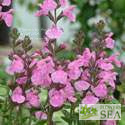
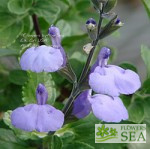
(Elk Blue Moon III Jame Sage) Dark calyxes cup dusky blue flowers that age to lavender and rise up from the veined, mid-green foliage of Salvia x ‘Elk Blue Moon III’.
Results for branch from the blog
| Sage Experts |
| 1. Sage Experts: Richard & Bracey Tiede Nurture Salvias & Community |
| Love of gardening is partly about love of nurturance. Some gardeners nurture far more than their home landscapes; that's the case with Silicon Valley retirees Richard and Bracey Tiede. Through avid volunteerism in organizations such as the Master Gardeners of Santa Clara County, Western Horticultural Society and Pacific Horticulture Society, they are helping to popularize drought-tolerant Salvias and shape sustainable gardening practices in the West -- a part of the country constantly facing drought. |
| Salvia Small Talk |
| 2. Salvia Small Talk: Learning Leaf Talk |
| Salvias are appealing for their foliage as well as their flowers. However, not everyone has time to learn botanical terminology. Flowers by the Sea tries to make scientific classification easier for those who don't talk the language of leaves. |
| 3. Winter Blooming Salvias (Part III) |
| Small Flowered Pink & Purple Species Part I of this series took up some of the early Winter bloomers, Part II the blue and dark purple flowered varieties. Here we look at four of the small flowered, purple to violet varieties. |
| Hummingbirds in the Garden |
| 4. 6 Indispensable Hummingbird Flowers for Long, Easy Bloom |
| Hummingbirds are like tiny combat jets dive bombing each other when staking claim to the nectar-rich flowers they need for survival. Fights over nectar habitat can reduce hummingbird gardens to single occupancy. FBTS Farm and Online Nursery details and tells stories about its top six hummingbird flowers. Plant lots of them to accommodate a village of hungry hummers. |
| 5. Guide to Fuchsia Cultivation & History |
| Like tiny dancers dressed in fancy skirts, Fuchsia flowers dangle from upright shrubs in long blooming hedges and from trailing branches in hanging baskets. Fuchsias are hummingbird favorites that come in many rosy colors. Read about them in the FBTS Guide to Fuchsia Cultivation & History . |
| Ask Mr. Sage |
| 6. Ask Mr. Sage: First-Aid for Salvia Frost Damage |
| Harsh winter weather in areas that normally have mild conditions can bring unwelcome surprises, including the death of favorite plants. This article talks about how and when to remediate frost damage to favorite Salvias in warmer USDA Cold Hardiness Zones. It concludes with a sidebar about a harmful cold snap in California's Bay Area that killed plants as well as birds in 1972 and which changed planting choices at the University of California Botanical Garden at Berkeley. Ask Mr. Sage is a regular feature that is based on topics raised in calls and emails we receive at Flowers by the Sea. |
| 7. Ask Mr. Sage: How Should I Space Salvias When Planting |
| By spacing Salvias properly when planting, you avoid problems caused either by overcrowding or leaving too much space around individual plants. Most Salvias are healthier with good air circulation. Crowding leads to the spread of fungal diseases and pests, such as spider mites. Too wide of spacing may cause branches to break in high winds. By paying attention to plant measurements before planting, you can create a good spacing plan. Ask Mr. Sage is a Q&A feature based on topics raised in calls and emails to FBTS. |
| 8. Ask Mr. Sage: How to Control Snails |
| Ask Mr. Sage is a Q&A feature from Flowers by the Sea. This one talks about how to ward off snails and slugs safely through simple organic methods, including barriers and handpicking, as well as through careful use of iron-phosphate pesticides. It also talks about how to nurse damaged Salvias back to health. |
| Hummingbirds in the Garden |
| 9. Bat-Faced Beauty: Gardeners & Hummingbirds Love Cuphea schumannii |
| Most bat faces only look beautiful to their mothers. However bat-faced Cuphea schumannii seems pretty as punch to hummingbirds in search of a sweet drink of nectar. If you take a close look at the ragged, open end of each flower, you'll see two, tiny, lavender petals standing straight up like bat or mouse ears. So, despite its common name, Orange Cigar Plant, this species is known as a bat-faced Cuphea. Aside from being excellent for attracting pollinators, Cupheas are becoming important agricultural crops that reduce pesticide use. |
| Celebrity Salvias |
| 10. Celebrity Salvias: Fuzzy, Fancy Salvia Oxyphora |
| A bright, cherry-licorice red, the large, fuzzy blossoms of Salvia oxyphora would make anyone stop and pay attention. Commonly known as Fuzzy Bolivian Sage or Bolivian Spearhead Sage, S. oxyphora has equally unusual foliage that fools the eye. At a distance, the plant’s lance-shaped leaves appear to be a smooth, glassy green. However, they are covered with tiny clear-to-white hairs. They’re also large -- growing up to 5 inches long and 2 inches wide at maturity -- and taper to long, sharp points. It was first collected near Cochabamba, Bolivia, by German botanist Otto Kunst in 1892 |
| 11. Cleanup in the Garden: Healthy Pruning and Mulching of Salvia |
| Sometimes it’s wise not to get too tidy in the garden. When preparing Salvias for Winter dormancy, moderation is the rule. Regional climate affects how much trimming and mulching are necessary in late autumn. |
| 12. Fall Cleanup: Plant Placement and Pesky Problems |
| You don’t usually have to fuss over Salvias to give them what they need. Yet the end of fall and other growing seasons are good times to seek solutions to problems that affect plant vigor. It is a time for a call to attention as well as a cleanup call to action. |
Common terms in this search: variegated mexican sage although its deep violet flowers compelling foliage greatest attraction kelsi full surprises including asymmetrical leaves make variety easy identify best mexicana variegations wander from solid white almost green sometimes change mid-branch quality can improved removing any branches lose their variegation altogether needs partial shade slow grow difficult propagate but fascinating addition hummingbird garden good choice containers middle