
Advanced Search
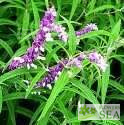
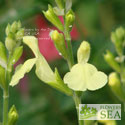
(Elk Lemon Light Jame Sage) We are proud to offer this luminescent, pure yellow Salvia x jamensis -- a color breakthrough from our own breeding program. The bright, light blossoms cool the landscape similar to white flowers, but with colorful impact. The glossy green leaves are quite small - a very attractive and distinctive characteristic.
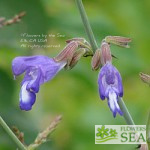
(Mount Olympus Sage) The deep violet and white flowers of Salvia ringens are eyecatching. Their wiry, branched spikes rise up to 5 feet tall from a dark green basal rosette.

(Elk Buttercup Jame Sage) Red flower buds unfurl into the surprisingly buttery yellow blossoms of Elk Buttercup. Subtly bicolored, the flowers have touches of light pink including fine hairs on the upper lip.
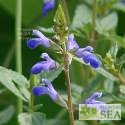
(Arizona Deep Blue Sage) In contrast to the lavender-blue flowers of Arizona Blue Sage (Salvia arizonica), the blossoms of Arizona Deep Blue are nearly purple. They are the kind of deep lavender that you might see in a southwestern sunset.
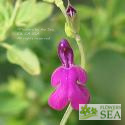
(Navajo Autumn Sage) Even a hint of blue is unusual among Autumn Sage flowers. Salvia greggii 'Navajo Purple' is a rarity due to its magenta-purple blossoms, which hint at natural hybridization including a mystery parent in the blue range, such as Salvia lycioides.
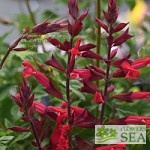
(Roman Red Sage) This handsome, long blooming hybrid sage features a dramatic combination of scarlet flowers and deep rust-to-merlot calyxes. Deadheading spent blossoms prolongs bloom time.
Results for characteristic from the blog
| Sage Words About Wildlife |
| 1. Sage Words About Wildlife: Hummingbirds Love Lobelias |
| Top-10 lists of hummingbird favorites almost always contain Salvia and Lobelia, because each genus is nectar rich and offers many species in bright reds, oranges and pinks. Hummingbirds have a weak sense of smell, but bright colors, such as those of Lobelias, lure them to flowerbeds. They are particularly devoted to the types grown at Flowers by the Sea. |
| 2. The Power of Scent |
| While it's true that not all Salvias smell, well, pleasant, many varieties are grown specifically for the aromatic or even sweet aromas that they release into the air. These ten Salvias are our top picks for the best-smelling varieties in the garden. |
| Ask Mr. Sage |
| 3. Ask Mr Sage: What Kind of Plant Is a Clone? |
| It's helpful to understand botanical terminology such as clone, variety, and cultivar. Mr. Sage explains what the three words mean and how the processes of cloning and plant development work. Ask Mr. Sage is a regular feature of the FBTS Everything Salvias Blog and is based on questions from customers. |
| 4. Ask Mr. Sage: Where Can You Grow Agastache? |
| Hummingbirds love Agastache. Mr. Sage explains that just because one kind of Agastache is wrong for your climate, it doesn't mean they all are and that the genus is native to most of the United States. Ask Mr. Sage is a regular feature in our Everything Salvias Blog that answers customer questions. |
| 5. Ask Mr. Sage: What Is Average Watering? |
| Confusion about watering of plants is understandable, because moisture needs vary so much from one species to another. It also varies based on your local growing conditions. Ask Mr. Sage, a regular feature of the Everything Salvias blog at Flowers by the Sea Online Plant Nursery, explains the differences between the labels drought resistant, average water and water loving classifications for estimating water needs. Some FBTS average water plants also grow well in dry or damp settings. |
| 6. Battles in the Salvia Garden: Controlling Spider Mites - Part II |
| Pollinators lose important food sources when Salvias and other nectar-rich flowers are destroyed by spider mites. This is Part 2 of a two-part series about understanding and overcoming these dangerous pests. Along with the non-chemical interventions described in Part 1 of this series, gardeners sometimes need the help of predatory insects and mites, insecticidal soaps and horticultural oils. Pesticides called miticides may also eventually be necessary, but should be the last resort. |
| New at FBTS |
| 7. Dig Deep & Fast for Salvias in Expanded Quick Look Galleries |
| Speedy access to well-illustrated, well-organized information is important. To help you dig deep and fast into the Flowers by the Sea online nursery catalog of Salvias and companion plants, FBTS has expanded its Quick Look Picture Galleries and information. |
| Xeric Choices |
| 8. Drought Praise: Hot Pink and Purple Autumn Bloomers |
| Late summer is a good time to plant at the coolest times of day. Settling in Autumn Sage ( Salvia greggii ) and Mountain Sage ( S. microphylla ) before Indian summer will give their roots a chance for strong growth so they can withstand winter's chill and leaf out again next spring. These drought-resistant species are closely related and hybridize freely when they meet. They also cross with other sages they encounter. FBTS details seven pink and purple varieties that bloom off and on spring to fall. |
| New at FBTS |
| 9. Upcoming at FBTS: Hummingbirds Love Cute Cupheas |
| Bright orange, tube-shaped blossoms cover Cuphea x 'David Verity' like tiny windsocks blowing in a breeze and beckoning hummingbirds. Similar to Salvias, Cupheas are rich sources of nectar that fuel hummingbird migration. At Flowers by the Sea, we are always interested in expanding choices for creating wildlife habitat. So we are growing a wide variety of Cupheas for sale this coming spring, including David Verity. |
| Getting Started with Salvias |
| 10. Getting Started: Salvias for Zone 9 |
| California's small, Mohave Desert city of Barstow averages about 5 inches of rain annually. Across the continent, Pensacola, Florida, has more than double Barstow's population and more than 12 times its amount of rainfall. Yet both cities are part of the U.S. Department of Agriculture's Plant Hardiness Zone 9 where you can plant perennials and shrubs that survive winter lows ranging from 20 to 30 degrees F. Flowers by the Sea takes readers on a triple coast road trip of Zone 9 and suggests plantings for varied growing conditions along the way. |
| Cultivating Color |
| 11. Gray and Silver Foliage Lights Up the Landscape Day and Night |
| It isn't easy describing green in the garden. Foliage can span greens so pale they are almost white to blue-greens so deep they murmur the forest primeval. Amid this range, you'll find shimmering silver- and gray-leaf species. To locate these types of Salvias and companion plants in the Flowers by the Sea catalog, please visit our " Gray and Silver Leaf Plants" category in the FBTS catalog menu. This article includes a small sampler of our selection. |
| 12. Guide to Understanding & Using Fertilizer |
| Identifying the kind of fertilizer your flowers need can be a trial-and-error experience. This is especially true if you are growing plants that don’t thrive in fertile soils like loam. Flowers by the Sea Online Nursery hopes to clear up some of the confusion in this Guide to Understanding and Using Fertilizer . |
Common terms in this search: mexican bush sage velvet variety has purple white flowers bloom from summer into fall fuzzy leaves stems calyxes characteristic its species native mexico central america also called staple california landscaping tough compact came chance seedling even when selling more rare salvias local farmers' markets one most popular it's favorite butterflies honeybees hummingbirds but not deer plant heat-tolerant drought-resistant shrubby borders