
Advanced Search
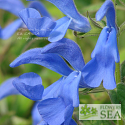
(Blue Angel Gentian Sage) Since the 1838 discovery of this herbaceous species from Central Mexico, Salvia patens has been a mainstay of the perennial garden. Blue Angel is one of the smallest of the full-sized varieties.
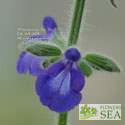
(Double Saw Tooth Sage) Vivid deep violet flowers bloom from summer into fall and contrast prettily with the bright green, rumply foliage of this tall sage from southeastern Mexico. Belgian botanist and orchid lover Jean Jules Linden was the first to record its discovery in 1838, according to records on file at Britain’s Royal Botanic Gardens, Kew.
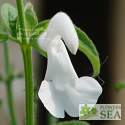
(White Trophy Gentian Sage) White Trophy loves partial shade and is the finest white Salvia patens available, with very large flowers that age to pale blue.
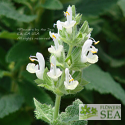
(Mauretania Tingitana Sage) Native to Northern Africa and Saudi Arabia, this sage gets by on little water. and has a long history of cultivation going back 400 years. It wove throughout various countries in the Middle East and North Africa before arriving in Europe in the 1700s and was first described scientifically in 1777.
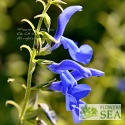
(Giant Gentian Sage) What makes Salvia patens 'De Flores Gigantes' truly giant is the size of its true blue flowers. However, this variety from Argentina is tall as well.
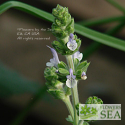
(Strong Spanish Sage) Fuzzy green stems and bracts mature to burgundy on this lovely, lavender flowered sage that roughly doubles in height when blooming. Salvia valentina is a variety of the European native S. nemorosa, a Meadow Sage.
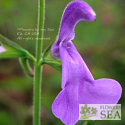
(Dorset Lavender Gentian Sage) Large, deep lavender flowers shaped like parrot beaks make Salvia patens 'Chilcombe' distinctive in the Gentian Sage group, which is dominated by true blues.
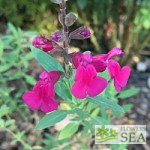
(Windwalker® Desert Rose Sage) Hot pink flowers top glossy, mid-green foliage top Windwalker® Desert Rose Salvia. Due to drought resistance, Salvia x 'Desert Rose' is a great choice for dry gardens. However, this petite beauty also grows well with moderate watering.
Results for discovery from the blog
| Sage Words About Wildlife |
| 1. Sage Words About Wildlife: Climate Change Alters Hummingbird Migration |
| Nature doesn't come to a sudden, overall halt, when the timing of its ecosystems slip, including ones involving hummingbirds. Instead, change occurs gradually. Plants and the animals that pollinate them have coevolved to meet each other's needs. You can help by planting hummingbird habitat in your home garden. Learn more in the Everything Salvias Blog at FBTS Online Nursery. |
| Cultivating Color |
| 2. Cultivating Color: New FBTS Tools Aid Garden Design |
| Have we got tools for you! No, we aren't selling Ginzu clippers, rust-free shovels, a miraculous compost-in-minutes machine or anything requiring payments. We're talking about a set of color tools for accurately visualizing and comparing the floral and foliage colors of Salvias. As you wander through the riot of hues in our online catalog at Flowers by the Sea, these tools aid plant selection and landscape planning. Beginning in fall 2014, we began identifying the colors of all FBTS plants based on the internationally standardized color system published by the U.K.'s Royal Horticultural Society. This improves descriptions of plant colors and makes color comparisons of plants easier for garden design. |
| 3. Cultivating Color: Tracking the Elusive History of Autumn & Mountain Sage Warm Pastel Hybrids -- Part I |
| Whether planned or accidental, hybrids happen. This is especially true among the closely related Southwestern and Mexican species of Autumn Sage (Salvia greggii) and Mountain Sage (S. microphylla). They are native to different areas of the Southwest and Mexico, but cross freely when they meet. This story is the first installment in a two-part series initiating our Cultivating Color series. It involves the late Dr. Richard F. Dufresne, a Salvia specialist who helped us track the history of warm-colored S. x jamensis hybrids. |
| Hummingbirds in the Garden |
| 4. How David Verity Cuphea Became a Famous Hummingbird Flower |
| When massed in borders or standing out as a main attraction in a container planting, Cuphea x ‘David Verity’ is a visual feast for people as well as an actual feast for small wildlife. Rich in nectar, the plant’s dainty, cigar-shaped, orange-red flowers nestle amid a cloud of mid-green leaves shaped like tiny garden trowels. |
| 5. 6 Indispensable Hummingbird Flowers for Long, Easy Bloom |
| Hummingbirds are like tiny combat jets dive bombing each other when staking claim to the nectar-rich flowers they need for survival. Fights over nectar habitat can reduce hummingbird gardens to single occupancy. FBTS Farm and Online Nursery details and tells stories about its top six hummingbird flowers. Plant lots of them to accommodate a village of hungry hummers. |
| 6. Guide to Fuchsia Cultivation & History |
| Like tiny dancers dressed in fancy skirts, Fuchsia flowers dangle from upright shrubs in long blooming hedges and from trailing branches in hanging baskets. Fuchsias are hummingbird favorites that come in many rosy colors. Read about them in the FBTS Guide to Fuchsia Cultivation & History . |
| Book Reviews |
| 7. Book Review: Stop. . .and Smell the Mints |
| Randy Collins was surprised when he got hooked on horticulture following retirement. But after a move to South Carolina, he was even more surprised at how deer destroyed his gardens until he began growing lots of mint family ( Lamiaceae ) plants like Salvias. It inspired him to write Stop...and Smell the Mints . |
| Xeric Choices |
| 8. Drought Praise: Hot Pink and Purple Autumn Bloomers |
| Late summer is a good time to plant at the coolest times of day. Settling in Autumn Sage ( Salvia greggii ) and Mountain Sage ( S. microphylla ) before Indian summer will give their roots a chance for strong growth so they can withstand winter's chill and leaf out again next spring. These drought-resistant species are closely related and hybridize freely when they meet. They also cross with other sages they encounter. FBTS details seven pink and purple varieties that bloom off and on spring to fall. |
| 9. Drought-Resistant Beauties: A Guide to the Salvia greggii and S. microphylla Group |
| It can be a long journey from discovery to popularity for a plant. Currently, the most widely sought group of Salvias is the one encompassing S. greggii , and S. microphylla , which are commonly known as Autumn Sage and Mountain Sage. They caught the eye of naturalists traveling the American Southwest and Mexico's Sierra Madre mountains in the mid-to-late 1800s. However, they didn't take root in garden catalogs for well over 100 years. |
| 10. Guide to Understanding & Using Fertilizer |
| Identifying the kind of fertilizer your flowers need can be a trial-and-error experience. This is especially true if you are growing plants that don’t thrive in fertile soils like loam. Flowers by the Sea Online Nursery hopes to clear up some of the confusion in this Guide to Understanding and Using Fertilizer . |
| New at FBTS |
| 11. Himalayan Sage Is the Salvia Collector's Holy Grail: Part 2 |
| Plants don’t have voices but they have stories to tell, including tales of discovery. It’s easy to see why the early 18th century plant explorer Victor Jacquemont would have paused to collect the rare Salvia hians while traversing broad expanses of northwestern India. This second half of our article about the alluring species digs into its history. |
| 12. New at FBTS: Salvia greggii 'Cold Hardy Pink' |
| Salvia greggii 'Cold Hardy Pink', a variety of Autumn Sage, is made for Zone 5 winters. It tolerates conditions swinging from hot, dry summers to sub-zero winter temperatures. Pair it with Ultra Violet Sage ( Salvia x 'Ultra Violet') for a tough yet lovely border. |
Common terms in this search: blue angel gentian sage since discovery herbaceous species from central mexico patens has been mainstay perennial garden one smallest full-sized varieties well branched compact variety inch flowers deep royal bloom summer into fall reliable returning year after zones however lovely worth growing bedding plant colder likes regular watering rich well-drained soil grows full sun partial shade can handle moist corners