
Advanced Search
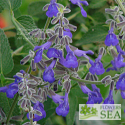

(Anatolian Cushion Sage) Rising up only 6 to 8 inches, this is a pixie-sized sage that loves gritty soils. It is perfect for dry gardens with gritty soils in USDA Zones 5 to 9. In fact, it seems to love the colder zones best. We think it is particularly fond of frozen ground in winter, because that helps keep its roots from getting too damp.
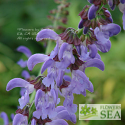
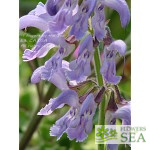
(Red Sage, Chinese Sage, Dan-shen) The bright red, finger-like roots of Salvia miltiorrhiza have a long history in traditional Chinese herbal medicine.
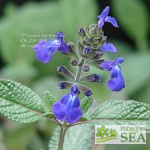
(Elk Blue Little Sage) if it were up to us, we would never have named this plant Little Sage. Although it is dainty, it is also one of the most fascinating species we grow. We particularly love its pebbly, oval leaves that are a shiny purple/green on top and a furry white below.
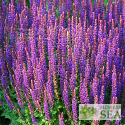
(Burgundy Candles Meadow Sage) When the burgundy buds of Salvia nemorosa 'Burgundy Candles' open, deep violet-blue flowers emerge. They are supported by burgundy and green bracts on purple stems.
Results for rising from the blog
| Ask Mr. Sage |
| 1. Ask Mr. Sage: Can I Plant Salvias in Summer? |
| Watch out for sayings that warn against planting in summer. It's a good time to transplant Salvias if you give them some extra care. Ask Mr. Sage is a regular feature of Our Everything Salvias Blog and is based on customer questions. |
| 2. Ask Mr. Sage: How to Select Plants for Garden Triumph |
| Planning for Salvia garden success requires following the rule of selecting the right plant for the right place. Desert sages aren't appropriate for the damp Southeast. Moisture-loving ones aren't right for desert climates where they need lots of watering to survive. Flowers by the Sea Farm and Online Nursery offers tips for selecting plants based on local climate. Ask Mr. Sage is a regular feature of the FBTS Everything Salvias Blog. |
| Getting Started with Salvias |
| 3. Getting Started: Salvias for the Southwest |
| Ask anyone to describe the American Southwest, and they're likely to sum it up in three letters : "D-R-Y." Yet precipitation can vary a lot here state by state and even within different parts of the individual states. One thing that is consistent about the story of water throughout the Southwest, is that rain and snow can rapidly swing from famine to feast to misfortune. |
| 4. Getting Started: Annual, Perennial and Shrub Sages |
| For beautiful floral display and refreshing greenery, every yard needs a combination of annual bedding plants, perennials and shrubs. Salvias provide a feast of landscaping possibilities. Flowers by the Sea explains all the different types of Salvias, including subshrubs, biennials and tree-like Salvias |
| 5. Getting Started: Salvias for the Coastal Southeast |
| True sages are members of the Salvia genus and number in the hundreds. They are native to a wide variety of environments worldwide, which is why some are ideal for the dry gardens of California and others can handle the abundant moisture of the American Southeast. Flowers by the Sea raises many sages that grow well in the Southeast, including some that are either native to the region or have jumped fences from gardens into the wild. |
| Cultivating Color |
| 6. Pantone Pageant: A Chorus Line of Grayed Jade Designer Salvias |
| Sage is the common name for the uncommonly beautiful Salvia genus. But when designers describe a product as being sage-colored, they mean a shade of gray-green that they say is soothing and that harmonizes with a multitude of colors, including soft pastels, hot oranges and deep purples. A version of sage called "Grayed Jade 14-6011" is one of the Pantone color-matching system's top shades for the design industry this year. This post identifies some Grayed Jade plants in the Flowers by the Sea collection. They are fine peacemakers amid a Salvia garden based on a mixture of Pantone's top greens for 2013, which you can read about in previous articles from our Pantone Pageant series of designer colors in the landscape. |
| 7. Pantone Pageant: Emerald Designer Salvias |
| Emerald and other cool shades of green are among the hot colors for 2013, according to Pantone, a design-industry leader. Flowers by the Sea doesn't generally think of greens or of any colors in nature as being in or out. However, we think it is fun and fresh to consider garden design from a different perspective. Emerald is Pantone's top color for the year. This article about emerald-colored Salvias begins a pageant of sorts down the runway of our blog, showing how the Pantone color matching system can be used to shape landscaping decisions. |
| 8. Pantone Pageant: "Tender Shoots Green" Designer Salvias |
| Lime is the kind of bright, cheerful color that practically shouts, “Hey, look at me!” Limelight Mexican Sage (Salvia Mexicana ‘Limelight’) is the kind of plant that makes you say, “Hey, look at that! Let’s plant it.” It brightens the landscape with its startling contrast of chartreuse-lime foliage and deep violet-blue flowers. Limelight is a poster plant for “Tender Shoots 14-0446” by Pantone color corporation. |
| 9. Cultivating Color: Tracking the Elusive History of Autumn & Mountain Sage Warm Pastel Hybrids -- Part II |
| Luminous Salvia x jamensis pastel flowers began warming up nursery catalogs in the late 1990s. Their journey from steep Mexican mountains to American and European gardens began in the mid-19th century with the discovery of Autumn Sage (Salvia greggii). This is the second post in a two-part article about these Jame Sage hybrids of Autumn and Mountain Sage (S. microphylla). It includes descriptions of ten favorite Jame Sages. |
| Ask Mr. Sage |
| 10. Ask Mr. Sage: What Tropical Sage Should I Select? |
| Selecting the right types of Tropical Sage ( Salvia coccinea ) can be confusing when viewing them in a catalog and seeing similar flower colors. Yet they may differ in cultivation needs, foliage, heat tolerance, and size. Mr. Sage offers ideas for comparing differences and similarities. Ask Mr. Sage is a regular feature of the FBTS Everything Salvias Blog , which responds to questions from customers. |
| 11. Ask Mr. Sage: Why Didn't My Fall Blooming Salvia Flower? |
| When growing Salvias that begin blooming in fall, Mr. Sage says it's important to know when first frost likely will occur in your area. Ask Mr. Sage is a regular feature of the FBTS Everything Salvias Blog. |
| 12. Ask Mr. Sage: First-Aid for Salvia Frost Damage |
| Harsh winter weather in areas that normally have mild conditions can bring unwelcome surprises, including the death of favorite plants. This article talks about how and when to remediate frost damage to favorite Salvias in warmer USDA Cold Hardiness Zones. It concludes with a sidebar about a harmful cold snap in California's Bay Area that killed plants as well as birds in 1972 and which changed planting choices at the University of California Botanical Garden at Berkeley. Ask Mr. Sage is a regular feature that is based on topics raised in calls and emails we receive at Flowers by the Sea. |
Common terms in this search: tamaulipas sage deep purple flowers strong stems attractively textured gray-green foliage make useful drought-resistant garden rising feet tall spreading wide fine backdrop although from northeast mexico botanical appellation pennellii indicates named after botanist francis whittier pennell who specialized snapdragon family also conducted field work new york south america heat-resistant sub-shrub acts like shrub areas where winter temperatures seldom sink past