
Advanced Search
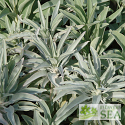
(Sacred White Sage) Bees, hummingbirds and spiritual blessings are all connected to Salvia apiana, an elegant shrubby sage that is an important herb to indigenous Californians. It deserves a place in salvia gardens that can meet its demands. Stiff and almost fleshy, its leaves are tight rosettes of brilliant, silvery green that is almost white.
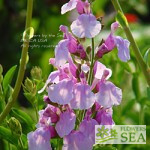
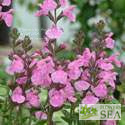
(Pink Beach Autumn Sage) When it blooms from spring into fall, this heat- and chill-tolerant sage is covered with large, two-tone pink flowers that attract butterflies, honeybees and hummingbirds. This compact, drought-tolerant beauty also features small, shiny, bright green leaves.
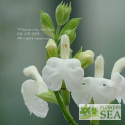
(Texas Wedding White Autumn Sage) This is our best white-flowered Autumn Sage. It is compact, hardy and blooms abundantly. We love it as a contrast to the generally bright colors of its group. Texas Wedding seems to always be blooming, with massive displays in spring and fall.
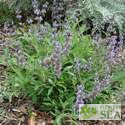
(Dry Earth Black Sage) Black Sage Salvia mellifera is one of the most common and fragrant native shrubs in the California Coast Ranges and is ideal for dry gardens. At 12 inches tall by 5 feet wide, this variety is an excellent groundcover.
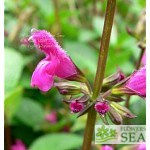
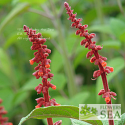
(Red Velvet Sage) Reaching up to 18 inches tall, the floral spikes of this exotic looking Salvia are crowded with small, velvety, orange-red blossoms from mid-summer to late autumn. Its large, dark green, pebbly leaves are beautiful in their own right, making this one of our favorite sages.
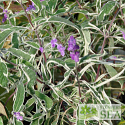
(Variegated Mexican Bush Sage) Although slow growing and somewhat finicky, this sage is a must-have for lovers of unique foliage. It has small purple flowers and highly variegated leaves with stems that are slightly twisted. The overall look is compact and dense.
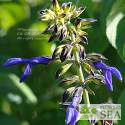
(La Placita Mexican Sage) Large and deep violet, the flowers of this tidy shrub bloom from late summer through fall. La Placita (the public square or small plaza) was collected in the mountains of Hidalgo, Mexico.
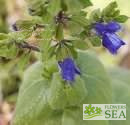
(Little Mexican Sage) This low-growing sage is a shrub in its warmest zones and a perennial in the cooler ones. It's just right for small spaces or tiny gardens. Short and compact, its flowers are similar to but smaller than those of S. mexicana 'Limelight'.
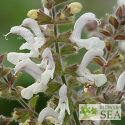
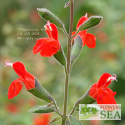
(Diablo Eyelash Sage) Small, eyelash-like hairs on the edge of its leaves give this Mexican native part of its name. It earns "Diablo," which means "devil" in Spanish, from the two yellow stamens that stand up out of each flower like horns.
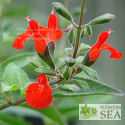
(Painted Lady Eyelash Sage) Small, eyelash-like hairs on the edge of its leaves give this Mexican native part of its name. A compact, gently mounding Salvia, it spreads gradually by underground stolons.

(Cayman Island Sage) Compact and intensely fragrant, this shrubby sage is excellent for containers or the edge of a pathway. Small blue and white flowers mass about its densely branched foliage. It loves rich, moist soil and warm weather.
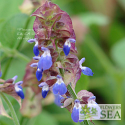
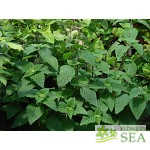
(Rosy Bract Sage) Sub-shrub salvias have both woody and soft, herbaceous growth. Rosy Bract Sage is a tidy, small leafed sub-shrub smothered with large clusters of 1/2-inch, violet-blue flowers and rosy red bracts. Its bracts deepen in color as the season proceeds.
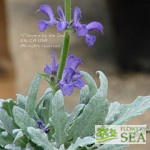
(Caucasus Sage) This hardy ground cover sage grows 4 to 12 inches tall and 12 inches wide. The velvety white fur of its foliage aids moisture retention. Its soft, royal purple flowers make it stand out. We think this Salvia deserves to spread far and wide.
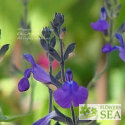
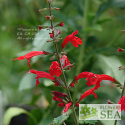
(Cedar Sage) Scarlet flowers abound on this small, mounding, woodland sage that is native to Texas, Arizona and Northern Mexico. Grow it as a small scale groundcover or mix it with other shade-loving sages in a perennial border or along a path.
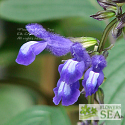
(Blue Sky Mexican Sage) The small flowers of this plant from Neuevo Leon and Tamaulipas, Mexico, are an attractive combination of amethyst-purple and white. The spectacular leaves, which are large and lightly textured, appear blue-green on top and purple-green underneath.
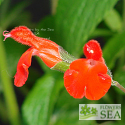
(Eyelash Sage) Small, eyelash-like hairs on the edge of its leaves give this Mexican native part of its name. A compact, gently mounding Salvia, it spreads gradually by underground stolons.
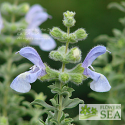
(Blue African Sage or Blousalie) A handsome, densely branched shrub with small, gray leaves, this Salvia puts on a show when in full bloom. The pale blue flowers bloom on foot-long spikes that cover the plant. Each flower has a large, trumpet-shaped, green-and-red bract at its base.
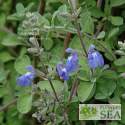
(Snowflake Sage) Wiry, trailing stems of small white leaves make this plant look like fresh snowfall. Numerous, small, sky blue flowers with prominent bee lines further add to the cooling look. This dry-garden plant is native to the mountains of the Chihuahuan desert of North Central Mexico.
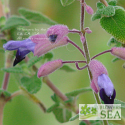
(Pine Mountain Sage) Small but numerous, violet and deep purple flowers surrounded by pink bracts are sprinkled throughout this well-branched,shrubby sage like confections. This is one of the showiest Salvias we grow.

(Autumn Purple Sage) Small but numerous, the flowers of this sage are a variable shade of light purple that is unlike any other we grow. Native to Southern Mexico and Guatemala, this shrub regularly grows up to 5 feet tall (or taller) and 4 feet wide.
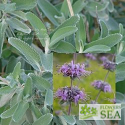
(California Purple Sage or California Gray Sage) This California native is commonly known as Purple Sage for its flowers or Gray Sage for its silvery, velvety foliage. Due also to its hardiness, drought tolerance and ability to attract small wildlife, it is a joy in the dry garden.
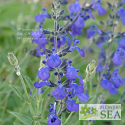
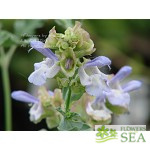
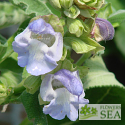
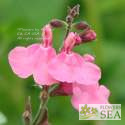
(Scorching Pink Mountain Sage) Compact and small, this Mountain Sage is another fine groundcover for Southern California, the Southwest and Texas. Similar to Salvia microphylla 'Heatwave Glimmer', it not only survives but thrives in extreme heat.
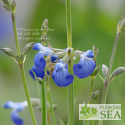
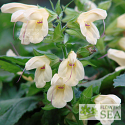
(Kyushu Woodland Sage) We are in love with this short forest sage from Kyushu, Japan. Its clusters of large creamy flowers pale as fresh-churned butter begin blooming in September. Even when not blooming, its foliage is showy in a shady garden.
Results for small from the blog
| Salvia Small Talk |
| 1. Salvia Small Talk: Deadheading Herbaceous Rosette-Growing Salvias |
| Deadheading flowers is usually a light form of pruning in late spring and summer. But some rosette-forming herbaceous Salvias like meadow sages need heavier pruning during the growing season to look tidy and bloom more than once. |
| 2. Salvia Small Talk: A Sage-Seed Cafeteria for Birds |
| Deadheading spent Salvia flowers helps to prolong bloom time. However, if you enjoy the company of songbirds and game birds in your garden, let some of the flower spikes go to seed, especially at the end of the plant's flowering season. |
| 3. Salvia Small Talk: Botanical Plant Names II |
| The conclusion of this series on plant names. |
| 4. Salvia Small Talk: Deadheading Evergreen, Woody Salvias |
| Deadheading withered blossoms from evergreen, woody Salvia, such as Sacred White Sage, makes them tidy and repeats bloom. You can deadhead them throughout the growing season. |
| 5. Salvia Small Talk: How to Determine Soil Moisture Level |
| Basic tools for estimating soil moisture include your hands and simple tools, such as a trowel, screwdriver and long metal rod, according to Colorado State University. The first method, which uses the metal tools, might be called the 'poke technique.' The second is the 'feel method.' |
| 6. Salvia Small Talk: Slugs & Snails |
| Cleaning up leaf litter, weeds and mulch around Salvias can greatly reduce snail and slug attacks. |
| Container Gardening |
| 7. A Guide to Successful Potting Soils for Salvias |
| One of the decisions that Salvia gardeners face in spring is what kind of potting mix to use for outdoor container plants. Find answers in FBTS Farm & Online Nursery's guide to successful potting soils for Salvias. |
| Salvia Small Talk |
| 8. Salvia Small Talk: The Gardens and Sages of Alcatraz |
| Alcatraz Island in San Francisco Bay once housed prisoners, many of whom helped beautify "The Rock" by working in prison gardens. Nowadays, volunteer gardeners keep the island flowering with the help of long-blooming, drought-tolerant Salvias |
| 9. Salvia Small Talk: A Bodacious Butterfly Name |
| You may have better luck finding the Two-tailed Tiger Swallowtail among your Salvias than pronouncing its many long names. |
| 10. Salvia Small Talk: Accenting Floral Arrangements with Salvias |
| Southern California urban homesteader Kate Richards offers good advice for incorporating Salvias into country-style bouquets. Richards gained her flower-arranging experience while working in the floral industry, but you don't have to be a florist to design beautiful bouquets. |
| 11. Salvia Small Talk: Annual, Biennial, Perennial |
| FBTS quickly explains the differences between annual, biennial and perennial Salvias |
| 12. Salvia Small Talk: Atmospheric Rivers & Bog Sage |
| Bog Sage is a terrific plant for damp soil and stormy weather, such as powerful "pineapple express" events. |
Common terms in this search: sacred white sage bees hummingbirds spiritual blessings all connected apiana elegant shrubby important herb indigenous californians deserves place insalvia gardens can meet its demands stiff almost fleshy leaves tight rosettes brilliant silvery green flower spikes soar above foliage hundreds small white-to-lavender flowers one most sources pollen nectar pollinators along southern california's coast mountains valleys also source native american smudge sticks