
Advanced Search
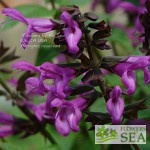
(COOL Fandango Anise Scented Sage) A combination of dark, rosy bracts and magenta blossoms make Salvia COOL Fandango dance. It’s vivid, floriferous, and a hummingbird favorite.
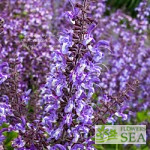
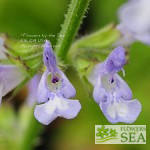
(Cut Leaf African Blue Sage) In botanical names, aurita means “ear shaped.” It’s the ear-like lobes of this sage’s leaves that give the species part of its name Salvia aurita ssp. galpinii. The cut leaf foliage is heavily lobed, mint green and lightly hairy.
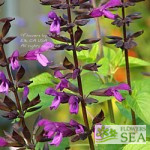
(Smokey Jazz Anise-Scented Sage) The dusky black calyxes of Salvia BODACIOUS® ‘Smokey Jazz’ support large flowers shaped like parrot beaks the unique color of boysenberries — a hue between red and purple.
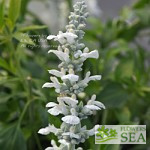
(White Flame Sage) Like bright white candle flames, the short vigorously upright flower spikes of petite Salvia x ‘White Flame’ light up flowerbeds.
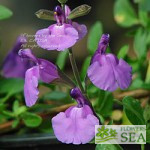
(Elk Grape Ape Jame Sage) Bountiful flowers that are larger than normal for Jame Sage cover Salvia x ‘Elk Grape Ape’ in a cloud of purple that is sort of amethyst to pinot gris in color.
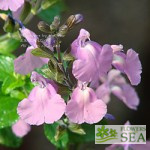
(Elk Smokey Grape Jame Sage) We think the dusky lavender flowers of Salvia x ‘Elk Smokey Grape’ look like the dusty, pale reddish-blue of Malbec grapes. This is a floriferous beauty.
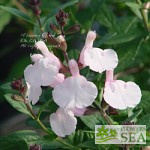
(Elk Pink Cloud Jame Sage II) Abounding with clusters of large, soft pink flowers on spreading branches, Salvia x ‘Elk Pink Cloud II’ looks like a fluffy, cumulonimbus cloud.
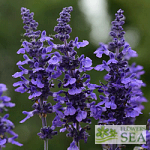
(Mysty Sage) Salvia x ‘Mysty’ is a dwarf version of Mystic Spires Sage and is a dramatic border plant with dark green, corrugated leaves and long blooming flower spikes abundant with deep, violet-blue blossoms.
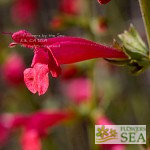
(Crimson Sage) Abundant and long blooming, the bright pink to red tubular flowers of Salvia henryi attract hummingbirds and form a pretty contrast with fuzzy, silvery foliage. This is a long blooming sage that is made for gritty soils, such as sandy loam.
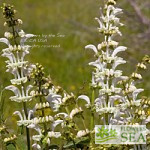
(Woolly White Sage) Salvia candidissima has tidy, upright stems covered with whorls of creamy white blossoms shaped like tiny parrot beaks. They rise from a mid-green rosette of leaves that become fuzzier and whiter as summer heat increases.
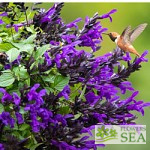
(Hummingbird Falls Anise-Scented Sage) Salvia BODACIOUS® ‘Hummingbird Falls’ is the world’s first hanging basket sage and a plant that hummingbirds battle over. It’s a natural alternative to plastic and glass nectar feeders that require frequent cleaning and refilling.
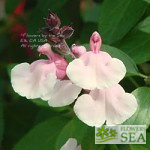
(Elk Crème Anglaise Jame Sage) Framed by minty green foliage, the blossoms of Salvia x ‘Elk Crème Anglaise’ transition from dreamy pale pink throats to white skirts. They look delectable.
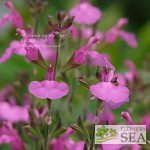
(Elk Xanadu Jame Sage) Like the magical, fictional land of Xanadu, there’s something heavenly about this sage. The flowers of Salvia x ‘Elk Xanadu’ look ethereal due to the bluish cast of their magenta-pink blossoms supported by deep magenta and green calyxes. It's a powerful attraction for pollinators, including hummingbirds.
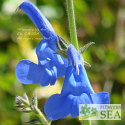
(Guanajuato Giant Gentian Sage) At 3 inches long, the flowers of this Gentian Sage are the largest of any we grow. Guanajuato Giant is also unique for its tall, upright growth and heavily textured foliage. This is our own tested seed strain of this rare plant.
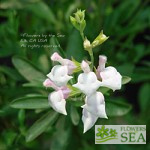
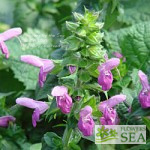
(Autumn Enchanter Japanese Woodland Sage) Salvia glabrescens ‘Autumn Enchanter’ has bicolored orchid pink flowers that are larger and bloom earlier than those of S. glabrescens ‘Shi Ho’. Autumn Enchanter is also more floriferous, blooms longer, and grows more rapidly with greater vigor.
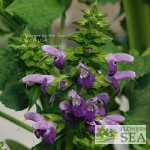
(Autumn Equinox Japanese Woodland Sage) Although similar to the Japanese native Shi Ho Woodland Sage, Salvia glabrescens 'Autumn Equinox' has much larger flowers that are bicolored purple and bloom earlier. Autumn Equinox is also more floriferous, blooms longer, and grows more rapidly with greater vigor.
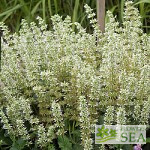
(White Lilac Sage) Dense whorls of white, instead of lavender, blossoms cover tall flower spikes of this long-blooming perennial that tolerates both heat and cold. They rise up from fragrant, mint-green foliage.

(Vermilion Bluffs® Mexican Sage) The brilliant red flowers of Vermilion Bluffs bloom abundantly from August to October. This variety of the Mexican native Salvia darcyi is cold hardy to Zone 5b at altitudes up to 5,500 feet.
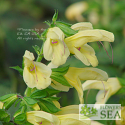
(Shinano-akigiri) Japan's largest island, Honshu, is home to Salvia koyamae, a shade- and moisture-loving herbaceous perennial that is perfect for woodland gardens or shady borders. It is notable for yellow flowers, which bloom from late summer into fall, as well as arrow-shaped foliage.
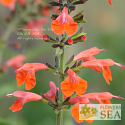
(Vermilion Tropical Sage) Tall and full of large, orange flowers, Salvia coccinea 'Vermilion' is a strain from the Louisiana gardens of hummingbird guru Nancy Newfield.
The following terms were added to your search to help improve the result. Click here to exclude these extra terms from the search.
- garden, gardener
Results for gardens from the blog
| New at FBTS |
| 1. New at FBTS: Ember's Wish & Love and Wishes Salvias |
| Plants contribute to our lives in many ways -- as sources of beauty, building materials, clothing, food, fragrance, medicine and oxygen. Add hope and fulfillment to the list, because that is what three abundantly blooming Salvias from Australia add to the lives of seriously ill children. These plants form the Wish Collection -- Wendy's Wish Sage, Ember's Wish Sage, and Love and Wishes Sage. Flowers by the Sea is one of the first online nurseries in America to sell all three. Although we have grown and sold Wendy's Wish for a number of years, Ember's Wish and Love and Wishes are new at FBTS. |
| 2. New at FBTS: Hummingbirds Thrive on Margie Griffith Sage |
| A love of birds can grow into a passion for gardening. The reverse is also true. Sometimes these passions result in the development of excellent plants, such as Salvia x 'Margie Griffith' -- a 2017 introduction at Flowers by the Sea Online Nursery. Margie Griffith Sage grows up to 96 inches tall and wide in bloom. In some parts of its USDA Plant Hardiness Zones 8 to 11 it feeds hummingbirds nearly year round. |
| 3. New at FBTS: Salvia x jamensis 'California Sunset' |
| Viewing the creamy peach-pink and yellow of California Sunset Autumn Sage (Salvia x jamenis 'California Sunset') may remind you of a Georgia O'Keefe painting. Anyone who has viewed sunset dipping into the mountains of New Mexico knows that soft pastels are common to Southwestern sunsets. Similarly, subtle bicolored combinations of pastels are common characteristics of many S. x jamensis species, which are crosses between various Autumn Sages (Salvia greggii spp.) and Mountain Sages (Salvia microphylla spp.). |
| 4. New at FBTS: Salvia x 'Ultra Violet' Defies Heat and Cold |
| In the Rocky Mountain West, conditions can swing from hellishly hot, dry summers to freezing cold winters. Many Southwestern Salvias are ideal for the sunbaked summers but have trouble surviving chilly Zone 5 winters. So we appreciate the cold hardiness as well as the drought resistance of one of our newest hybrid cultivars, Ultra Violet Hybrid Sage ( Salvia lycioides x greggii ‘Ultra Violet’). |
| Cultivating Color |
| 5. Pantone Pageant Cheerful Lemon Zest and Nectarine Designer Salvias |
| Let there be light; let there be brightness. Yellows and oranges are cheerful colors to combine in a grouping of perennials. Pantone's spring 2013 designer colors -- golden yellow Lemon Zest 13-0756 and its hot orange Nectarine 16-1360 -- are fun colors to match to sages ( Salvia spp.) that can turn up the light in a garden whether sunny or shady. Two groupings for sunny or shady gardens are offered |
| Quick Digs |
| 6. Quick Digs: Inventorying Salvias and Tools for Spring Gardening |
| This is the first article in our new Quick Digs series about preparing for spring in Salvia gardens. As spring approaches and daylight grows longer, first steps for preparing Salvia gardening include recording sages already planted before planning new purchases, repotting cuttings and seedlings, inventorying garden tools and turning the compost heap. When the first new growth arrives, you'll be prepared to remove weeds before they choke sages and other perennials that are re-emerging. |
| Sage Experts |
| 7. Sage Experts: Meet Salvia Researcher Jesús Guadalupe González-Gallegos |
| The FBTS Sage Experts series focuses on Salvia specialists -- both amateurs and professionals -- in settings ranging from botanic gardens to universities. This article focuses on Jesús Guadalupe González-Gallegos of the University of Guadalajara, an expert in the taxonomy of Salvias native to Western Mexico. He discusses the megadiversity of Mexican flora and problems involving incorrect identification of sage species. |
| Sage Words About Wildlife |
| 8. Sage Words about Wildlife: 4 Seasons of Hummingbird Salvias |
| Regional differences in seasonal temperature and humidity affect the choice of Salvias to plant in hummingbird gardens. The varying seasons in which particular sages bloom and the part of the world where they originated also determine whether they attract hummingbirds. Flowers by the Sea Online Nursery offers suggestions based on regions and seasons. |
| 9. Sage Words About Wildlife: Threats to Monarch Butterfly Migration |
| Declining numbers of Monarch butterflies is an ongoing problem. Due to research by organizations such as Monarch Watch and the Xerces Society as well as tracking efforts by the Mexican government, we now know about the dramatic ups and downs the species has experienced in the past 20 years. At Flowers by the Sea Online Nursery, we grow butterfly favorites to help you plant gardens supporting the migration of Monarchs and other butterflies. |
| Salvia Small Talk |
| 10. Salvia Small Talk: Accenting Floral Arrangements with Salvias |
| Southern California urban homesteader Kate Richards offers good advice for incorporating Salvias into country-style bouquets. Richards gained her flower-arranging experience while working in the floral industry, but you don't have to be a florist to design beautiful bouquets. |
| 11. Salvia Small Talk: Backyard Wildlife Habitat |
| Gardeners interested in developing wildlife habitat on balconies or in backyards can acquire certification |
| 12. Salvia Small Talk: Garden Diary |
| Keeping track of plantings from one season to the next can help you improve choices and repeat successes. One way of doing this is to keep a casual garden diary. No, I don't believe Samuel Pepys kept one. |
Common terms in this search: cool fandango anise scented sage combination dark rosy bracts magenta blossoms make dance its vivid floriferous hummingbird favorite foliage has sweet fragrance similar licorice developed fbts sherbet-colored beauty part collection guaranitica hybrids diverge dramatically from typical deep saturated blues purples species which native argentina brazil paraguay uruguay wild grows edge streams forest clearings like other sages adaptable full sun partial