
Advanced Search
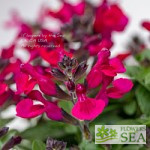
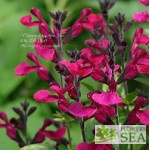
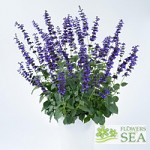
(Magic Wand Sage) Salvia x ‘Magic Wand’ is perky with vertical spikes of long blooming, rich purple flowers and dense, mid-green foliage. Overall, it reminds us of Salvia x ‘Big Blue’, but has smaller flowers and usually doesn’t grow as tall.
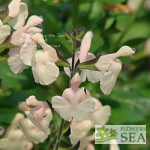
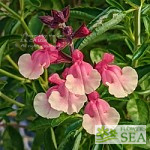
(Elk Morning Sun Jame Sage) Kelly green and black calyxes support the long blooming, creamy white and pale pink flowers of Salvia x ‘Elk Morning Sun’. A waterwise sage, it likes average watering but resists drought.
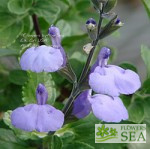
(Elk Blue Moon III Jame Sage) Dark calyxes cup dusky blue flowers that age to lavender and rise up from the veined, mid-green foliage of Salvia x ‘Elk Blue Moon III’.
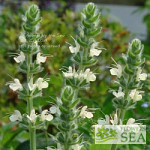
(Austrian Sage) Tall spikes of large, pale yellow flowers rise up from Salvia austriaca’s basal rosette of impressively large leaves. Deeply lobed, like the edges of a lacy collar, the leaves are broader and longer than those of any Salvia we have ever grown.
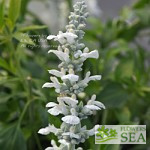
(White Flame Sage) Like bright white candle flames, the short vigorously upright flower spikes of petite Salvia x ‘White Flame’ light up flowerbeds.
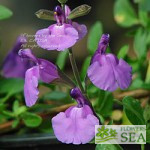
(Elk Grape Ape Jame Sage) Bountiful flowers that are larger than normal for Jame Sage cover Salvia x ‘Elk Grape Ape’ in a cloud of purple that is sort of amethyst to pinot gris in color.
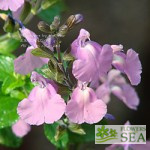
(Elk Smokey Grape Jame Sage) We think the dusky lavender flowers of Salvia x ‘Elk Smokey Grape’ look like the dusty, pale reddish-blue of Malbec grapes. This is a floriferous beauty.
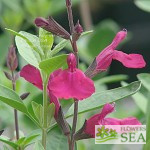
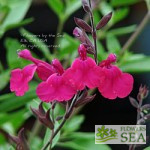
(Raspberry Autumn Sage) Dark calyxes and stems contrast intensely with the bright berry-colored flowers of Salvia greggii ‘Raspberry’. It's one of our fastest growing, earliest blooming Autumn Sages and has fragrant foliage.
The following terms were added to your search to help improve the result. Click here to exclude these extra terms from the search.
- expected
Results for expect from the blog
| Hummingbirds in the Garden |
| 1. 5 Big Orange Bedding Plant Beauties for Hummingbirds |
| You'll hear a lot about red when planting annuals for wildlife gardens, because hummingbirds garden love red, tubular, nectar-rich flowers. But orange is another hummingbird favorite not to be neglected. Flowers by the Sea suggests five long blooming species for your landscape that begin shouting "Orange, orange, orange" in spring when hummingbirds are big-time hungry now, now, now as they head north for the nesting season. |
| Ask Mr. Sage |
| 2. Ask Mr. Sage: How Should I Prune my Salvias? |
| Flowers by the Sea Online Nursery specializes in Salvias and often receives questions about how to prune them. Although getting good at pruning takes practice, Salvias rebound quickly if you make mistakes. A key to successful pruning is understanding the varying needs of four main categories of sages. Ask Mr. Sage is a regular feature of the FBTS Everything Salvias Blog. |
| Celebrity Salvias |
| 3. Celebrity Salvias: Mexican Bush Sage Beauties |
| Mexican Bush Sage (Salvia leucantha) is a garden star, but not a demanding diva. That is why Texas A&M University selected Mexican Bush Sage (Salvia leucantha) as one of its 50 “Texas Superstar” plants, all of which are highly recommended for flourishing in unpredictable weather and drought. The many varieties of Mexican Bush Sage are garden beauties that need little pampering. Native to hot, dry areas of Mexico and Central America, they are accustomed to tough conditions. Flowers by the Sea carries a number of striking varieties. |
| 4. Channel Island Sages |
| Flowers by the Sea grows a number of native California sages, including threatened species such as the woody perennial shrubs Santa Rosa Island Sage ( Salvia brandegeei ) and Island Pitcher Sage ( Lepechinia fragrans ). Elusive is one adjective to attach to both plants, because they are rare in their native Channel Islands homelands off the coast of Southern California where they are endangered. |
| Cultivating Color |
| 5. Cultivating Color: Pastel Perennial Sages for Xeriscape |
| Not everyone who lives in a dry climate wants a cactus garden. And not all cottage gardens are filled with pansies and peonies. Flowers by the Sea highlights ten tough perennial Salvias in pastels for low-water cottage gardens. The palette of drought-resistant choices includes sages with blue, lavender, peach, pink and yellow flowers for a soothing touch in your landscape. |
| Getting Started with Salvias |
| 6. Getting Started: Salvias for the Mid-Atlantic |
| Outside of its cities, the Mid-Atlantic can be described as an overwhelmingly green place. If you love the Mid-Atlantic, you revel in its verdant landscape. However, if you aren't reveling in the predictable planting choices you see in neighbor's yards, it may be time to expand your horizons by exploring the Salvia genus. Flowers by the Sea discusses the boundaries, USDA Plant Hardiness Zones and Salvia choices for the region. |
| 7. Getting Started: Salvias for Zone 9 |
| California's small, Mohave Desert city of Barstow averages about 5 inches of rain annually. Across the continent, Pensacola, Florida, has more than double Barstow's population and more than 12 times its amount of rainfall. Yet both cities are part of the U.S. Department of Agriculture's Plant Hardiness Zone 9 where you can plant perennials and shrubs that survive winter lows ranging from 20 to 30 degrees F. Flowers by the Sea takes readers on a triple coast road trip of Zone 9 and suggests plantings for varied growing conditions along the way. |
| Sacred Sages |
| 8. Sacred Sage: Giant Bolivian Sage |
| Of all the mint family's more than 6,500 species worldwide, Giant Bolivian Sage (Salvia dombeyi) has the longest blossoms and tallest growth. Each tubular crimson flower grows up to 5 inches long and has a burgundy calyx at its base.The plant's bright green, heart-shaped leaves are equally long. In South America, the flowers are pollinated by hummingbirds with extremely long beaks. However, Giant Bolivian Sage don't need pollination to flower beautifully for many seasons if growing conditions are right. |
| 9. A Guide to Growing and Respecting Sacred White Sage |
| White Sage (Salvia apiana) is a sacred plant for Native Americans, especially tribes in its Southern California native lands. It's a challenging plant to grow. Flowers by the Sea Farm and Nursery talks about the history and religious use of Salvia apiana as well as providing a guide to growing it. |
| 10. Happy Hybrid Surprises from Salvia greggii and microphylla |
| Sometimes surprises occur in the garden, especially if you plant Salvias. Sages in the Salvia greggii and Salvia microphylla Group are particularly inclined to hybridize naturally. |
| Cultivating Color |
| 11. Cultivating Color: Tracking the Elusive History of Autumn & Mountain Sage Warm Pastel Hybrids -- Part I |
| Whether planned or accidental, hybrids happen. This is especially true among the closely related Southwestern and Mexican species of Autumn Sage (Salvia greggii) and Mountain Sage (S. microphylla). They are native to different areas of the Southwest and Mexico, but cross freely when they meet. This story is the first installment in a two-part series initiating our Cultivating Color series. It involves the late Dr. Richard F. Dufresne, a Salvia specialist who helped us track the history of warm-colored S. x jamensis hybrids. |
| 12. In the Native Garden: Colorful California Salvias Plus a Cousin |
| Native plants, including California's many indigenous sages, are like the boys or girls next door who were overlooked until outsiders discovered their good looks and other fine attributes. Flowers by the Sea grows hardy, drought-resistant California Salvias that are native to a broad swath of the West Coast ranging from Northern Baja to Southern Oregon. Many tolerate heat. They are well suited to waterwise landscapes, including dry gardens. |
Common terms in this search: vibe ignition fuchsiasage perfect companion our best breed 'ignition purple' fuschia has velvety deep pink flowers rare jame sage hybrid they bloom spring fall enjoyment petite cold hardy usda zone use edging along sunny walkway mixed container planting tends spread forms lovely groundcover brand new itis part series jamensis hybrids called elk rainbow sages compact grower make plant striking mass