
Advanced Search
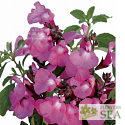
(Radiance Bright Pink Mountain Sage) Long blooming Salvia microphylla 'Heatwave Radiance' produces prolific quantities of hot pink blossoms along with dense, mid-green foliage.
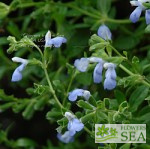
(Running Peruvian Sage) Petite is a good description for the pale blue flowers and light green, veined, elliptical leaves of Salvia sarmentosa. It’s an attractive groundcover in warm winter areas as well as a graceful, spilling container plant.
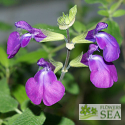
(Christine Yeo Sage) A chance hybrid of two Mexican sages --Salvia microphylla and S. chamaedryoides -- Christine Yeo Sage is long blooming and features deep purple flowers with white eyes.
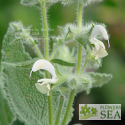
(Dominican Sage) Native to Israel, Jordan, Lebanon and Syria, this candelabra-shaped, perennial sage may have inspired the design of the menorah, (Exodus 37:17). It is a tough, drought-resistant plant with silver-haired foliage and bright white flowers that seem to blaze.
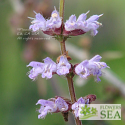
(Japanese Woodland Sage or Shu Wei Cao) This short, lavender-flowered, ornamental sage has purple-to-green foliage. In Asia, this woodland plant has long been an important medicinal herb, used in the treatment of conditions such as diabetes.
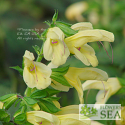
(Shinano-akigiri) Japan's largest island, Honshu, is home to Salvia koyamae, a shade- and moisture-loving herbaceous perennial that is perfect for woodland gardens or shady borders. It is notable for yellow flowers, which bloom from late summer into fall, as well as arrow-shaped foliage.
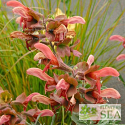
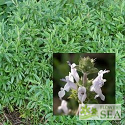
(Black Sage or Honey Sage) One of the most common and fragrant native shrubs in Central California's Coast Ranges, Black Sage is ideal for dry gardens. Admirably adaptable, it tolerates soils ranging from the most marginal to ones that are loamy and provide excellent drainage. It is a survivor.
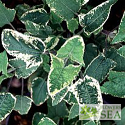
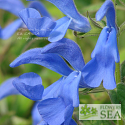
(Blue Angel Gentian Sage) Since the 1838 discovery of this herbaceous species from Central Mexico, Salvia patens has been a mainstay of the perennial garden. Blue Angel is one of the smallest of the full-sized varieties.
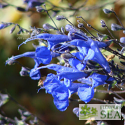
(Arrowleaf Sage) Brilliant royal blue flowers and unusual foliage attract the eye to Arrowleaf Sage. This large herbaceous perennial is found at elevations up to 10,500 feet in the Cordillera de los Andes of Chile, Ecuador and Peru.
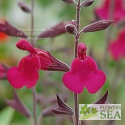
(Raspberry Delight Sage) Dark raspberry-red flowers, burgundy stems and calyxes and deep green foliage make this one of our most attention-grabbing varieties.
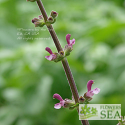
(Mid-East Sage) Native to the mountains shared by Israel and Lebanon, this tidy sage is drought resistant, heat tolerant and long blooming. Its basal foliage rises up and spreads only about 18 inches, but it has long flower spikes.
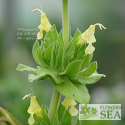
(Yellow Hummingbird Sage or Yellow Pitcher Sage) The Santa Barbara Botanic Garden introduced this rare yellow variety of fragrant Hummingbird Sage. Similar to other varieties of this species, Avis Keedy is alluring to butterflies, honeybees and hummingbirds.
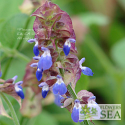
(Rosy Bract Sage) Sub-shrub salvias have both woody and soft, herbaceous growth. Rosy Bract Sage is a tidy, small leafed sub-shrub smothered with large clusters of 1/2-inch, violet-blue flowers and rosy red bracts. Its bracts deepen in color as the season proceeds.
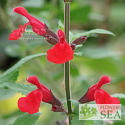
(John Whittlesey Sage) Hardy, vigorous and long blooming, John Whittlesey Sage is a hybrid of D'Arcy's Sage (Salvia darcyi) -- a native of Mexico -- and Mountain Sage (S. microphylla), which is native to the American Southwest and Mexico.
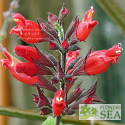
(Winter Mexican Sage) Call it the Snow Queen! From fall through spring, this graceful, colorful sage blooms through 20 degree F weather despite snow and ice. It has lovely, small, dark green leaves and profuse clusters of tubular, cinnabar-red flowers that puff out in the center.
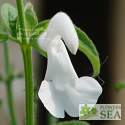
(White Trophy Gentian Sage) White Trophy loves partial shade and is the finest white Salvia patens available, with very large flowers that age to pale blue.
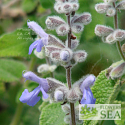
(Big Grape Sage) This lavender-flowered native of Northern Mexico resembles Salvia melissodora (Grape Scented Sage), but is bigger and also has larger leaves and flowers. It's a great companion plant for its little brother, which shares the same cultural needs and affinity for Zones 8 to 10. Both bloom from summer into fall.
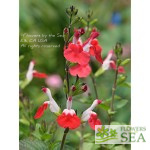
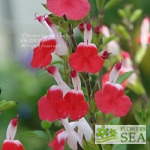
(Hot Lips Sage) What a winner for fascinating flowers! Salvia microphylla ‘Hot Lips’ is a native of Mexico that produces a combination of solid red, solid white, and bicolor red and white blossoms all on the same plant and sometimes at the same time.
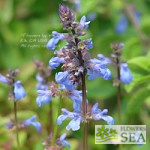
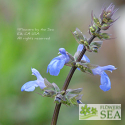
(Ground Ivy Sage) Native to Central Mexico's highlands, this creeping perennial grows at a altitudes of more than 10,000 feet and can handle some chill. Its common name comes from its scalloped yellow-green leaves, which resemble Ground Ivy or Glechoma.
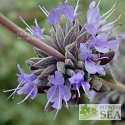
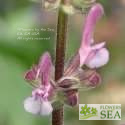
(Jerusalem Sage) This lovely herbaceous perennial is native to Cyprus, Israel, Jordan, Lebanon, Syria, and the West Bank. Its clear pink flowers change at times to a pink highlighted with violet lines and dots. Prominent glandular hairs on the buds, bracts and floral stems exude a fragrance that is delightful on a warm day.
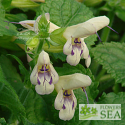
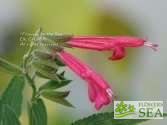
(Hybrid Bolivian Sage) This naturally occurring hybrid is a Bolivian native related to S. orbignaei and S. haenkei. Prettier than its parents, it has large, profuse, long-blooming flowers that are dark pink.
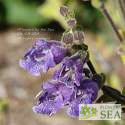
(Dan-shen Gansu) Growing into a large basal rosette of leaves measuring up to 3 feet across, Salvia przewalskii var. mandarinorum is known for its handsome foliage.
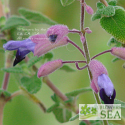
(Pine Mountain Sage) Small but numerous, violet and deep purple flowers surrounded by pink bracts are sprinkled throughout this well-branched,shrubby sage like confections. This is one of the showiest Salvias we grow.
The following terms were added to your search to help improve the result. Click here to exclude these extra terms from the search.
- groundcovers
Results for groundcover from the blog
| 1. Happy Hybrid Surprises from Salvia greggii and microphylla |
| Sometimes surprises occur in the garden, especially if you plant Salvias. Sages in the Salvia greggii and Salvia microphylla Group are particularly inclined to hybridize naturally. |
| New at FBTS |
| 2. New Product Filtering Tool Helps You with Decision Making |
| Flowers by the Sea now offers a powerful, do-it-yourself, product-filtering tool that makes plant selection easier and faster. It sets up a matrix of choices to help customers sort possible selections for their gardens based on USDA cold hardiness zones, sun exposure, mature height and spread of plants, soil type and water needs. This article explains how the tool works and provides examples of how to use it. |
| 3. Plant Safari Salvia in the South African Fynbos -- Part 2 |
| Flowers by the Sea is a home away from home for a number of South African Salvias that enjoy our moderate, Mediterranean climate. None are endangered species, but all face the threat of land development in the Western Cape's Fynbos Biome -- unparalleled for its variety of medicinal and ornamental native plants found nowhere else in the world. Preservationists are working to balance changes in land use and to maintain biodiversity in the CFR. Brutal poaching of rhinoceroses is one of the toughest problems they face. |
| Sacred Sages |
| 4. Sacred Sage: Pineapple Sage |
| Many kinds of Sage were considered sacred in ancient times due to their soothing, medicinal qualities. Pineapple Sage (Salvia elegans), which is native to Mexico and Guatemala, is still a highly regarded folk remedy for relieving anxiety, depression and high blood pressure. It is also one of America's most popular culinary sages and is a highlight of the USDA's National Herb Garden. |
| Quick Digs |
| 5. Quick Digs: Zone 5 - 9 Weedbuster Gardens for Average Moisture |
| Quick Digs is a serial containing short posts focused on a central issue of Salvia gardening. The topic for the first series is Salvia groundcovers for weed control, and this is the second article. Baby, it can be cold outside in Zone 5 during the winter! But the roots of all of the tough Salvias listed here survive sustained frost and snow, then rise up again in spring. To minimize weed growth, the best defense is the good offense of dominating a flowerbed with sages, especially mat-forming groundcovers. |
| Salvias Down South |
| 6. Salvias Down South: 8 Must-Have Salvias for the Southwest |
| You don’t have to be a fine artist to create a work of beauty in the garden. By selecting hardy, vibrantly colored native Salvias that can withstand Southwestern weather ranging from sullen heat and drought to raging rainstorms, you become a landscape painter. FBTS Online Nursery carries many choices for your palette. |
| 7. The Power of Scent |
| While it's true that not all Salvias smell, well, pleasant, many varieties are grown specifically for the aromatic or even sweet aromas that they release into the air. These ten Salvias are our top picks for the best-smelling varieties in the garden. |
| Cultivating Color |
| 8. Add Pale Dreamy Sages to Your List of Moon Garden Plants |
| Moon gardens contain plants with pale flowers -- especially whites -- and silvery or variegated foliage that shine in moonlight. Some gardeners plant them to glow from afar when peering into the dark through a window. Others design these gardens for nighttime rambles. A number of white-flowered sages would be excellent additions to the dreamy design of a moon garden. |
| Ask Mr. Sage |
| 9. Ask Mr. Sage: How Should I Space Salvias When Planting |
| By spacing Salvias properly when planting, you avoid problems caused either by overcrowding or leaving too much space around individual plants. Most Salvias are healthier with good air circulation. Crowding leads to the spread of fungal diseases and pests, such as spider mites. Too wide of spacing may cause branches to break in high winds. By paying attention to plant measurements before planting, you can create a good spacing plan. Ask Mr. Sage is a Q&A feature based on topics raised in calls and emails to FBTS. |
| 10. Ask Mr. Sage: How to Water Desert Plants |
| Overwatering harms desert plants more than underwatering. When growing them, you need to consider the quantity, duration and timing of watering. Excellent soil drainage is also essential. This article talks about how to identify overwatering and establish an effective watering schedule. Ask Mr. Sage is a Q&A feature based on topics raised in calls and emails to FBTS. |
| 11. Blazing Red Sages for Sun and Partial Shade |
| Warm colors tend to take center stage in a landscape as well as brightening the shade. Yet warm colors generally aren't associated with shady sage (Salvia) gardens, because there are far more shade-tolerant sages in the blue to purple range. So we decided to poke around our catalog and pull together some hot choices that thrive in partial shade. To make landscaping even easier, you may want to limit your choice of plants to one color. Massing is dramatic. |
| Celebrity Salvias |
| 12. Celebrity Salvias: Mexican Bush Sage Beauties |
| Mexican Bush Sage (Salvia leucantha) is a garden star, but not a demanding diva. That is why Texas A&M University selected Mexican Bush Sage (Salvia leucantha) as one of its 50 “Texas Superstar” plants, all of which are highly recommended for flourishing in unpredictable weather and drought. The many varieties of Mexican Bush Sage are garden beauties that need little pampering. Native to hot, dry areas of Mexico and Central America, they are accustomed to tough conditions. Flowers by the Sea carries a number of striking varieties. |
Common terms in this search: radiance bright pink mountain sage long blooming microphylla heatwave produces prolific quantities hot blossoms along dense mid-green foliage tough plant cross southwestern texas native autumn greggii flowers sea grows ten varieties which melbourne-based growers australia team howard bentley steve eggleton hybridized dry conditions throughout their nation similar parent species salvias adaptable cooler coastal regions they grow particularly well mediterranean summer