
Advanced Search
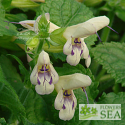
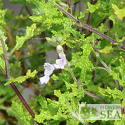
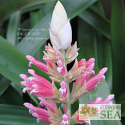
(Pink & White Wagner's Sage) Instead of pink, leaf-life bracts, this variety of Wagner's Sage has white bracts surrounding the hot pink flowers. It blooms from November to March on our coastal Northern California farm where it feeds Anna's hummingbirds all winter long.
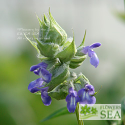
(Purple Stem Sage) Deep purple stems and cobalt blue flowers with pronounced white beelines and dusky gray calyxes cause this sage to command attention.
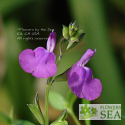
(Royal Purple Autumn Sage) Salvia muelleri is related both to Autumn Sage (S. greggii) and Mountain Sage (S. microphylla), which are closely related species.
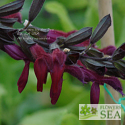
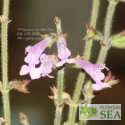
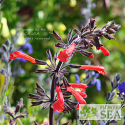
(Venezuelan Red Sage) Purple stems and calyxes so dark that they almost look black contrast dramatically with the deep red-orange flowers of this South American beauty. This tall, spectacular sage has been in cultivation for decades but is still rare in gardens. We'd like to see that change.
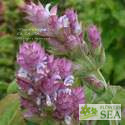
(Italian Clary Sage) Clary Sages are well known for their use in folk remedies, aromatherapy and cosmetics. Glowing purple bracts frame the spectacular white blooms of this cultivar on 5-foot-tall spikes. It is a delight for honeybees, hummingbirds and butterflies.
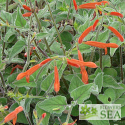
(Oaxaca Orange Wooly Sage) Tall, eye-catching spikes of dusky red-orange flowers that bloom from summer into fall make this one of our most impressive Salvias. Plus it's cold hardy into Zone 7.
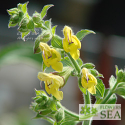
(Campanula Leaf Sage) Spectacular yellow-flowering Salvias are rare, so this one stands out. Its large, almost round leaves form a basal clump that is attractive and tough. Bright yellow flowers arise from the clump on stems up to 48 inches tall.
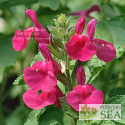
(St. Charles Day Mountain Sage) Especially in spring and fall, masses of red-violet flowers bloom amid the silvery green foliage of Salvia microphylla 'San Carlos Festival'. Put this one into the "must have" column.
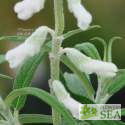
(White Mischief Mexican Bush Sage) Profuse white blossoms and true white velvety bracts make the flowers of this South African hybrid a lovely choice for a wedding. In our experience, many of the plants sold as White Mischief are not the real thing. This tough, compact, long blooming sage is.
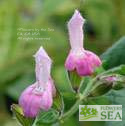
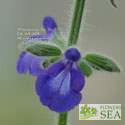
(Double Saw Tooth Sage) Vivid deep violet flowers bloom from summer into fall and contrast prettily with the bright green, rumply foliage of this tall sage from southeastern Mexico. Belgian botanist and orchid lover Jean Jules Linden was the first to record its discovery in 1838, according to records on file at Britain’s Royal Botanic Gardens, Kew.
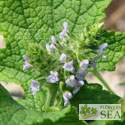
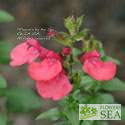
(People's Park Mountain Sage) Sometimes nature can be rebellious. This is one the Mountain Sages known as the Turbulent Sixties Series developed from an outlaw cultivar of the Southwestern native Salvia microphylla. Monterey Bay Nursery (MBN) named their accidental hybrid ‘Berzerkeley.’
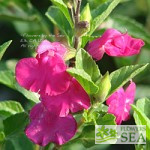
(Telegraph Avenue Dwarf Mountain Sage) Here’s another member of the Turbulent Sixties Series of Southwestern Mountain Sages (Salvia microphylla), which developed from one of nature’s rebels – an accidental hybrid that Monterey Bay Nursery (MBN) named ‘Berzerkeley’ after finding it taking a stand in the nursery’s gravel paving.
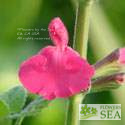

(Elk Buttercup Jame Sage) Red flower buds unfurl into the surprisingly buttery yellow blossoms of Elk Buttercup. Subtly bicolored, the flowers have touches of light pink including fine hairs on the upper lip.
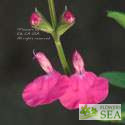
(Wild Watermelon Mountain Sage) Large, watermelon-pink flowers and the fruity fragrance of this long-blooming sage's mid-green, veined leaves make this Mountain Sage a treat to grow.
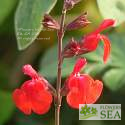
(Flame Autumn Sage) Crimson flowers contrast brightly against deep purple calyxes and stems in Flame Autumn Sage. The leaves -- tiny ellipses without veins -- are soft and shiver in the breeze.
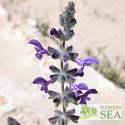
(Wooly Arabian Sage) "Radiant" is the word that garden writer and Salvia specialist Betsy Clebsch uses to describe the halo of white hairs covering the foliage and calyxes of Salvia lanigera.
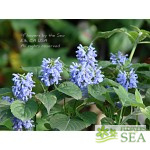
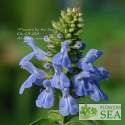
(Smith College Mystery Sage) This mysterious species came to us via Smith College in Northampton, Massachusetts. We refer to it as "Mystery Sage" as the origins of this fine plant are unclear.
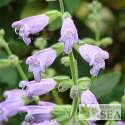
(Mystery Yunnan Sage) Sometimes we come across a beauty that has no name. This lovely species from China's Yunnan province is an excellent example. Aside from lacking scientific and common names, it arrived here as an imported seed with little information about how the plant was discovered.
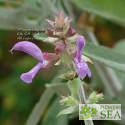
(Wooly Canary Island Sage) The pale magenta, parrot-beak flowers of this sage, supported by deeper magenta bracts, heat up the landscape. But when you get close, it may be the velvety texture of the foliage that makes you sigh.
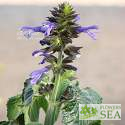
(Lolly's Mexican Sage) Our variety of Salvia mexicana 'Lolly' is the tall kind growing up to about shoulder height. A shorter form is often called "Lollie Jackson" or "Lolly Jackson." Who or what the mysterious Lolly is remains unclear.
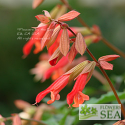
(Ember's Wish Sage) Bright coral-colored, tubular blossoms contrast handsomely with the deep maroon stems, rusty rose calyxes and mid-green foliage of Ember's Wish Sage.
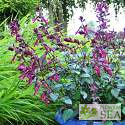
(Love and Wishes Sage) Deep purple calyxes support the magenta-purple, tubular blossoms of Salvia x 'Love and Wishes'. They contrast handsomely with dark stems and mid-green foliage.
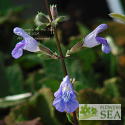
(Turkish Tea Sage) Sometimes an attractive plant is also medically powerful. That's true of the lavender flowered Salvia aucheri, which has strong white beelines. This Turkish native is consumed as an ingredient in teas used as folk remedies for many problems, including abdominal bloating and infections.
Results for herbaceous from the blog
| 1. Cleanup in the Garden: Healthy Pruning and Mulching of Salvia |
| Sometimes it’s wise not to get too tidy in the garden. When preparing Salvias for Winter dormancy, moderation is the rule. Regional climate affects how much trimming and mulching are necessary in late autumn. |
| Quick Digs |
| 2. Quick Digs: Inventorying Salvias and Tools for Spring Gardening |
| This is the first article in our new Quick Digs series about preparing for spring in Salvia gardens. As spring approaches and daylight grows longer, first steps for preparing Salvia gardening include recording sages already planted before planning new purchases, repotting cuttings and seedlings, inventorying garden tools and turning the compost heap. When the first new growth arrives, you'll be prepared to remove weeds before they choke sages and other perennials that are re-emerging. |
| Salvia Small Talk |
| 3. Salvia Small Talk: Annual, Biennial, Perennial |
| FBTS quickly explains the differences between annual, biennial and perennial Salvias |
| 4. Salvia Small Talk: Deadheading Deciduous, Woody Stem Sages |
| Deadheading withered blossoms from deciduous woody stem Salvias like Autumn Sage makes them look tidy and repeat bloom during the growing season. A woody stem sage is a subshrub with partially woody growth. |
| 5. Salvia Small Talk: Deadheading Versus Pruning Sages |
| Deadheading refers to light pruning — or trimming — of withered flowers during the growing season. It makes ornamentals, like Salvias, look tidy and encourages repeat bloom. In contrast, pruning is a heavier shearing that usually occurs at the beginning and end of the growing season. |
| 6. Winter Blooming Salvias (Part III) |
| Small Flowered Pink & Purple Species Part I of this series took up some of the early Winter bloomers, Part II the blue and dark purple flowered varieties. Here we look at four of the small flowered, purple to violet varieties. |
| Hummingbirds in the Garden |
| 7. 6 Indispensable Hummingbird Flowers for Long, Easy Bloom |
| Hummingbirds are like tiny combat jets dive bombing each other when staking claim to the nectar-rich flowers they need for survival. Fights over nectar habitat can reduce hummingbird gardens to single occupancy. FBTS Farm and Online Nursery details and tells stories about its top six hummingbird flowers. Plant lots of them to accommodate a village of hungry hummers. |
| Ask Mr. Sage |
| 8. Ask Mr. Sage: How to Water Desert Plants |
| Overwatering harms desert plants more than underwatering. When growing them, you need to consider the quantity, duration and timing of watering. Excellent soil drainage is also essential. This article talks about how to identify overwatering and establish an effective watering schedule. Ask Mr. Sage is a Q&A feature based on topics raised in calls and emails to FBTS. |
| Book Reviews |
| 9. Book Review: Waterwise Plants for Sustainable Gardens |
| "font-style: italic;"> Lauren Springer Ogden and Scott Ogden are garden designers and writers who split their time between Texas and Colorado, but their suggestions for low water, xeriscapic landscaping can benefit gardeners far from the American West, Southwest and Deep South. The authors agree with their Dutch contemporary, Piet Oudolf, that a naturalistic landscape design based on local climate -- including water limitations -- is the most sustainable choice. |
| Celebrity Salvias |
| 10. Celebrity Salvias: Hot Heatwave Hybrids from Australia |
| Waterwise landscapes don't have to be cactus gardens if you grow leafy, colorful drought-resistant Salvias, such as Australian Heatwave™ Mountain Sages, which are crosses of Salvia microphylla and S. greggii . Hybridizers Howard Bentley and Steve Eggleton of Plant Growers Australia used these tough American and Mexican native plants to create their series. One goal was to aid water conservation during their nation's hot, dry summers. |
| 11. Celebrity Salvias: Mexican Bush Sage Beauties |
| Mexican Bush Sage (Salvia leucantha) is a garden star, but not a demanding diva. That is why Texas A&M University selected Mexican Bush Sage (Salvia leucantha) as one of its 50 “Texas Superstar” plants, all of which are highly recommended for flourishing in unpredictable weather and drought. The many varieties of Mexican Bush Sage are garden beauties that need little pampering. Native to hot, dry areas of Mexico and Central America, they are accustomed to tough conditions. Flowers by the Sea carries a number of striking varieties. |
| Sage Words About Wildlife |
| 12. Sage Words About Wildlife: Do Deer Devour Salvia? |
| Salvias are not a favorite food for deer. However, they will eat some when plants they consider tasty are in short supply. There is no such thing as deer-proof plants, but you can limit deer damage to your landscaping and vegetable garden by planting lots of sages and other plants that aren't among deer favorites. |
Common terms in this search: makino unusual flower color short mounding growth clone glabrascens woodland japanese native make distinctive blossoms nearly clear yellow striking purple beelines good choice moist shady garden spots but can take bit morning sun cultivars hardy long they receive plenty shade water soil rich well-drained autumn spikes rise out compact basal foliage creating gracefully proportioned look herbaceous sage should seen close