
Advanced Search
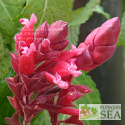
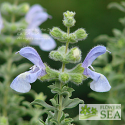
(Blue African Sage or Blousalie) A handsome, densely branched shrub with small, gray leaves, this Salvia puts on a show when in full bloom. The pale blue flowers bloom on foot-long spikes that cover the plant. Each flower has a large, trumpet-shaped, green-and-red bract at its base.
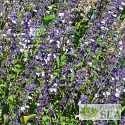
(Phyllis' Fancy Sage) The parentage of this lavender-flowered hybrid sage is unknown. However, it may be a cross between Mexican Bush Sage (Salvia leucantha) and Chiapas Sage (S. chiapensis).
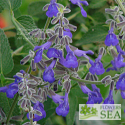
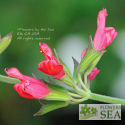
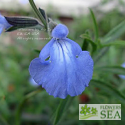
(Prairie Sage) Native to a large part of the central United States, this perennial Salvia is a beloved wildflower, delighting us with large cerulean blue flowers. Hummingbirds and butterflies love it as well.
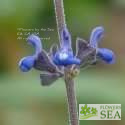
(Chilean Mountain Sage) Formerly known as S. gillesii, this delicate-looking sage with dramatically deep blue flowers is robust in the garden. Its branches are draped with wooly grey foliage featuring rounded, toothed leaves that are pleasantly scented.
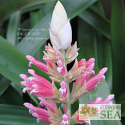
(Pink & White Wagner's Sage) Instead of pink, leaf-life bracts, this variety of Wagner's Sage has white bracts surrounding the hot pink flowers. It blooms from November to March on our coastal Northern California farm where it feeds Anna's hummingbirds all winter long.
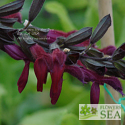
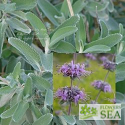
(California Purple Sage or California Gray Sage) This California native is commonly known as Purple Sage for its flowers or Gray Sage for its silvery, velvety foliage. Due also to its hardiness, drought tolerance and ability to attract small wildlife, it is a joy in the dry garden.
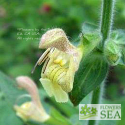
(Himalayan Cloud Sage) Nepal's Muktinath Valley -- a sacred site for Hindus and Buddhists -- is the place to go to see this majestically tall shade perennial in the wild. It grows at altitudes up to 14,000 feet and often emerges while the ground is still snowy.
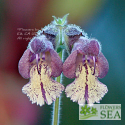
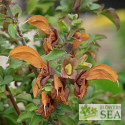
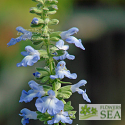
(Big Pitcher Sage) As its scientific name indicates, this sage has very large flowers. They are almost two-tone, changing from deep violet to a light blue or white at their base where they are cupped by dusky purple calyxes.
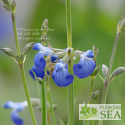
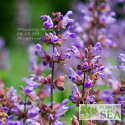
(Wand Sage) Whorls of deep violet blossoms are cupped by dark bracts on the flower spikes of this mid-height herbaceous sage from Turkey. Its foliage is thick, corrugated and fragrant. This plant is lovely and hardy, so it is surprising that it wasn’t introduced to commercial cultivation until 2007.
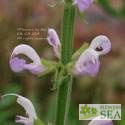
(Recurved Sage) At home in the shady, high-altitude cloud forests of Southern Mexico and Guatemala, this large, lush sage requires a warm, moist climate. In cool climates, it can handle full sun. However, partial shade is a better choice in most gardens.
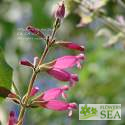
(Nuevo Leon Downy Sage) From the high mountains of Nuevo Leon, Mexico. This unusual variety has very large flowers in loose clusters. Early to bloom and more cold tolerant than other Downy Sage varieties, it is ideal for gardens on the edge of it's climatic adaptability.
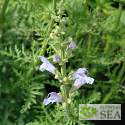
(Xobo Valley Sage) Although petite, the rare Xobo Valley Sage is eyecatching due to its lacy, bright green foliage and powder blue flowers. It's even possible that this long-blooming sage may have caught Nelson Mandela's eye as he grew up in the Wild Coast area of South Africa's Eastern Cape.
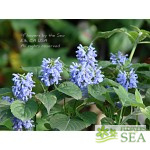
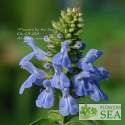
(Smith College Mystery Sage) This mysterious species came to us via Smith College in Northampton, Massachusetts. We refer to it as "Mystery Sage" as the origins of this fine plant are unclear.
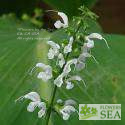
(White Meadow Sage) Whorls of pure white flowers shaped like parrot beaks rise on tall spikes from the wrinkly, basal foliage of Salvia pratensis 'Swan Lake'. The large, mid-green leaves have attractively serrated edges.
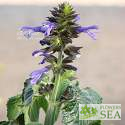
(Lolly's Mexican Sage) Our variety of Salvia mexicana 'Lolly' is the tall kind growing up to about shoulder height. A shorter form is often called "Lollie Jackson" or "Lolly Jackson." Who or what the mysterious Lolly is remains unclear.
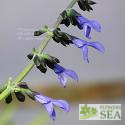
(Huntington Garden Mexican Sage) In areas with mild end-of-year weather, this sage is a tower of nectar for hummingbirds. Large blue-to-purple flowers shaped like open parrot beaks reach out from dark calyxes. Their spikes stretch out horizontally and gently curve upward from the plant's mid-green foliage.
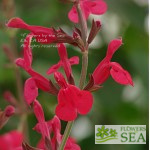
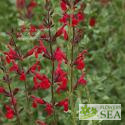
(Windwalker® Royal Red Salvia) Salvia darcyi x S. microphylla 'PWIN03S' is one of the top 2015 plants for USDA Cold Hardiness Zone 5 selected by Colorado's Plant Select®, a nonprofit organization that focuses on promoting plants for low-water gardens.
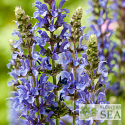
(Blau Hügel Meadow Sage) When in bloom, petite Salvia nemorosa 'Blue Hill' more than doubles in height. Its tall, spike-like racemes of violet-blue flowers are so dense and compact that this woodland sage is sometimes called "Blue Mound."
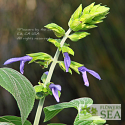
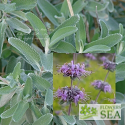
(Spreading California Purple Sage or Spreading California Gray Sage) Songbirds love this California native as do honeybees and hummingbirds. This Salvia leucophylla clone was collected in 1982 by Dr. Dale Smith of University of California Santa Barbara (UCSB #82152) at Point Sal near Santa Barbara.
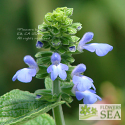
(Elk Blue Hard Leaf Sage) Soft baby blue & white flowers in abundance coupled with strong growth make this an ideal new variety for hummingbird gardeners. the specific epitaph, durifolia, means hard leaf. We don't find the leaf exactly hard but it is lovely and durable.
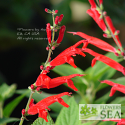
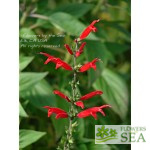
(Elk Sonoran Red Pineapple Sage) A new Pineapple Sage variety that has the traditional fruity fragrance but blooms much earlier in the season than the traditionally grown clone. Short and compact, it resembles the varieties 'Honey Melon' and 'Tangerine' size wise, but has the unmistakable aroma of ripe pineapples.
The following terms were added to your search to help improve the result. Click here to exclude these extra terms from the search.
- la
Results for late from the blog
| Hummingbirds in the Garden |
| 1. A Gardeners Guide to Hummingbird Sage |
| Among the hummers' favorites: Salvia spathacea, commonly known as Hummingbird Sage. As it name suggests, this California native produces the hummingbirds' flower of choice, blooming from late winter through summer -- and sometimes again in Fall -- with rose-pink to magenta blossoms. Available in six varieties, this robust perennial not only attracts hummers with its abundant nectar, it's easy to grow and enhances any landscape with its aromatic blooms and fragrant evergreen foliage. |
| 2. Guide to Fuchsia Cultivation & History |
| Like tiny dancers dressed in fancy skirts, Fuchsia flowers dangle from upright shrubs in long blooming hedges and from trailing branches in hanging baskets. Fuchsias are hummingbird favorites that come in many rosy colors. Read about them in the FBTS Guide to Fuchsia Cultivation & History . |
| Ask Mr. Sage |
| 3. Ask Mr. Sage: Why Didn't My Fall Blooming Salvia Flower? |
| When growing Salvias that begin blooming in fall, Mr. Sage says it's important to know when first frost likely will occur in your area. Ask Mr. Sage is a regular feature of the FBTS Everything Salvias Blog. |
| 4. Ask Mr. Sage: How to Select Plants for Garden Triumph |
| Planning for Salvia garden success requires following the rule of selecting the right plant for the right place. Desert sages aren't appropriate for the damp Southeast. Moisture-loving ones aren't right for desert climates where they need lots of watering to survive. Flowers by the Sea Farm and Online Nursery offers tips for selecting plants based on local climate. Ask Mr. Sage is a regular feature of the FBTS Everything Salvias Blog. |
| 5. Ask Mr. Sage: How to Water Desert Plants |
| Overwatering harms desert plants more than underwatering. When growing them, you need to consider the quantity, duration and timing of watering. Excellent soil drainage is also essential. This article talks about how to identify overwatering and establish an effective watering schedule. Ask Mr. Sage is a Q&A feature based on topics raised in calls and emails to FBTS. |
| Celebrity Salvias |
| 6. Celebrity Salvias: Mexican Bush Sage Beauties |
| Mexican Bush Sage (Salvia leucantha) is a garden star, but not a demanding diva. That is why Texas A&M University selected Mexican Bush Sage (Salvia leucantha) as one of its 50 “Texas Superstar” plants, all of which are highly recommended for flourishing in unpredictable weather and drought. The many varieties of Mexican Bush Sage are garden beauties that need little pampering. Native to hot, dry areas of Mexico and Central America, they are accustomed to tough conditions. Flowers by the Sea carries a number of striking varieties. |
| 7. Fall Planting: Tips for Salvia Success |
| For people and for plants, cool fall weather is comfortable for working in the garden. As gardeners dig, amend soil, weed and water, newly planted perennials focus their efforts on growing strong root systems before the chill of winter. Most perennial sages ( Salvia spp.) thrive if planted in fall. As temperatures decline, the soil remains warm. These conditions cause plants to decrease their growth above ground and focus on root expansion. Here are some tips about why and how you can succeed in the Salvia garden by planting during autumn. |
| Getting Started with Salvias |
| 8. Getting Started: Salvias for the Rocky Mountain West |
| High altitude, distance from large bodies of water and powerful chinook winds make the Rocky Mountain West a dry gardening environment even in years of higher than average rain and snow. The region's steep mountains have a major impact on where and how precipitation falls. Instead of a single mountain chain, the Rocky Mountains are made up of 100 separate ranges. Similarly, the Salvia genus contains a broad range of sages, many of which thrive in the climactic extremes of the Mountain West. |
| Sacred Sages |
| 9. Sacred Sage: Giant Bolivian Sage |
| Of all the mint family's more than 6,500 species worldwide, Giant Bolivian Sage (Salvia dombeyi) has the longest blossoms and tallest growth. Each tubular crimson flower grows up to 5 inches long and has a burgundy calyx at its base.The plant's bright green, heart-shaped leaves are equally long. In South America, the flowers are pollinated by hummingbirds with extremely long beaks. However, Giant Bolivian Sage don't need pollination to flower beautifully for many seasons if growing conditions are right. |
| 10. July in the Salvia Garden - 2023 Update |
| Ah, its almost July! This year, many regions are experiencing a warmer than usual summer, with some areas facing extreme heatwaves. It's essential to adapt your gardening practices to ensure that your Salvia garden thrives despite the challenging weather conditions. |
| Cultivating Color |
| 11. Pantone Pageant Cheerful Lemon Zest and Nectarine Designer Salvias |
| Let there be light; let there be brightness. Yellows and oranges are cheerful colors to combine in a grouping of perennials. Pantone's spring 2013 designer colors -- golden yellow Lemon Zest 13-0756 and its hot orange Nectarine 16-1360 -- are fun colors to match to sages ( Salvia spp.) that can turn up the light in a garden whether sunny or shady. Two groupings for sunny or shady gardens are offered |
| Quick Digs |
| 12. Quick Digs: Inventorying Salvias and Tools for Spring Gardening |
| This is the first article in our new Quick Digs series about preparing for spring in Salvia gardens. As spring approaches and daylight grows longer, first steps for preparing Salvia gardening include recording sages already planted before planning new purchases, repotting cuttings and seedlings, inventorying garden tools and turning the compost heap. When the first new growth arrives, you'll be prepared to remove weeds before they choke sages and other perennials that are re-emerging. |
Common terms in this search: wagner's sage from november march produces lavish hot pink flowers bracts our northern california coastal farm superb source food anna's hummingbirds live here during winter tall sub-shrub which means has both woody soft herbaceous perennial growth comes cloud forests southern mexico central america tropical beauty spectacular historically been one few native plants cultivated home gardens people its lands large plant