Advanced Search
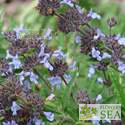
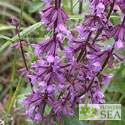
(Judean Sage) Native to the mountains of Judea in Israel, this dark violet flowered, perennial sage is unique among the Palestinian Salvias - as a woodland native it grows well in partial shade. It is a tough, drought-resistant plant with deeply cut & hairy foliage which forms impressive mounds of color in the spring and early summer.
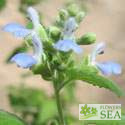
(Mejorana) In Spanish, Mejorana means ‘marjoram.” Similar to oregano-type Marjoram – another Mint family member -- this sage is used to flavor meat dishes. Our cultivar, which is native to Texas and Mexico, has lovely bluish-purple flowers that bloom summer to fall amid fragrant, fine, furry green foliage.
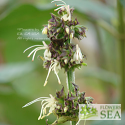
(Tree Sage)Whether you call it a shrub or a tree, Salvia arborsecens rises up to an impressive 12 feet tall and 5 feet wide. Commonly known as Sage Tree, this Salvia grows well in full sun, but prefers partial shade.
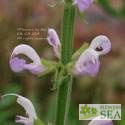
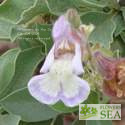
(Pilgram's Rest Pink Sage) Spring into summer, this heat-tolerant sage from South Africa produces lilac and white blossoms with profuse, fragrant, gray foliage. It's the burgundy calyxes, which turn a rusty pink after the flowers blossom, that give this sage part of its common name.
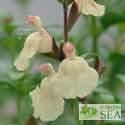
(Elk Buttercup Jame Sage) Red flower buds unfurl into the surprisingly buttery yellow blossoms of Elk Buttercup. Subtly bicolored, the flowers have touches of light pink including fine hairs on the upper lip.
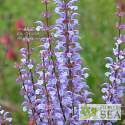
(Red Veined Sage) In 1827, John Wilkes referred to Salvia haematodes as "Bloody Sage" in his Encyclopaedia Londinensis, Volume 22. This might seem mysterious when first viewing the sage's upright yet somewhat relaxed spikes of whorled, violet-colored flowers.
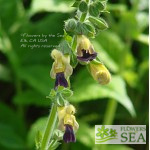
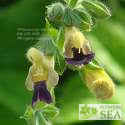
(Purple & Yellow Yunnan Sage or ji ye shu wei cao) Confusion about this plant's scientific name cause it to appear in some sources as Salvia flava var. megalantha. Whatever you call it, this Chinese species from Yunnan Province has enchanting yellow and purple flowers that attract viewers as well as honeybees.
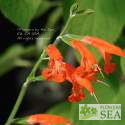
(Mystery Peruvian Sage) Airy spikes of fuzzy, bright orange-red flowers and grassy green calyxes mark this Peruvian sage as a mystery worth pursuing. Little is certain about its parentage.
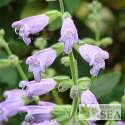
(Mystery Yunnan Sage) Sometimes we come across a beauty that has no name. This lovely species from China's Yunnan province is an excellent example. Aside from lacking scientific and common names, it arrived here as an imported seed with little information about how the plant was discovered.
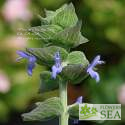
(Dark Flowered Bolivian Sage) Here is a water-loving beauty with dusky blue flowers --a native of the moist Yungas piedmont forests of Northwestern Argentina and Bolivia. Salvia atrocyanea is well adapted to both full sun and partial shade.
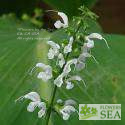
(White Meadow Sage) Whorls of pure white flowers shaped like parrot beaks rise on tall spikes from the wrinkly, basal foliage of Salvia pratensis 'Swan Lake'. The large, mid-green leaves have attractively serrated edges.
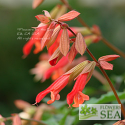
(Ember's Wish Sage) Bright coral-colored, tubular blossoms contrast handsomely with the deep maroon stems, rusty rose calyxes and mid-green foliage of Ember's Wish Sage.
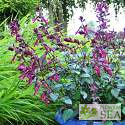
(Love and Wishes Sage) Deep purple calyxes support the magenta-purple, tubular blossoms of Salvia x 'Love and Wishes'. They contrast handsomely with dark stems and mid-green foliage.
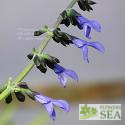
(Huntington Garden Mexican Sage) In areas with mild end-of-year weather, this sage is a tower of nectar for hummingbirds. Large blue-to-purple flowers shaped like open parrot beaks reach out from dark calyxes. Their spikes stretch out horizontally and gently curve upward from the plant's mid-green foliage.
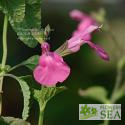
(Rosie O'Grady Mountain Sage) Honeybees and hummingbirds love the large, bright pink flowers of Salvia microphylla 'Rosie O'Grady', a drought-resistant sage. Dense and fragrant, it's large, glossy green leaves are veined and have finely serrated edges. This is a lush choice for dry gardens.
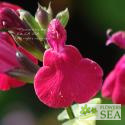
(Killer Cranberry Mountain Sage) Masses of magenta flowers on tall spikes lure honeybees and hummingbirds to the rich nectar of Salvia microphylla 'Killer Cranberry'. Its prolific flowers are a killer attraction for people too.
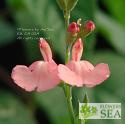
(Dyson's Orangy Pink Hybrid Jame Sage) Many Salvia x jamensis hybrids remind gardeners of sunrise, such as Dyson's Orangy Pink. Light green calyxes faintly striped with red cup its luminous pale salmon pink blossoms with creamy throats.
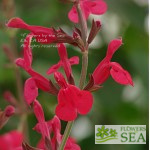
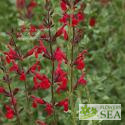
(Windwalker® Royal Red Salvia) Salvia darcyi x S. microphylla 'PWIN03S' is one of the top 2015 plants for USDA Cold Hardiness Zone 5 selected by Colorado's Plant Select®, a nonprofit organization that focuses on promoting plants for low-water gardens.
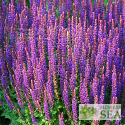
(Burgundy Candles Meadow Sage) When the burgundy buds of Salvia nemorosa 'Burgundy Candles' open, deep violet-blue flowers emerge. They are supported by burgundy and green bracts on purple stems.
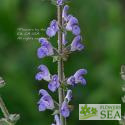
(Iranian Oil Sage) Butterflies and honeybees are drawn to the long blooming, dusky violet-blue flowers of Salvia atropatana. However, deer say no to its charms, due to its essential oils being less than tasty.
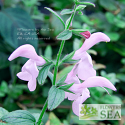
(Pink Ice Gentian Sage) Most Gentian Sages come in shades of startling blue. But this dwarf variety is startling because its flower color is a rarity. Salvia patens 'Pink Ice' has mulberry buds that open into chilly, pale pink blossoms shaped like parrot beaks.
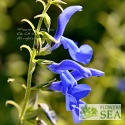
(Giant Gentian Sage) What makes Salvia patens 'De Flores Gigantes' truly giant is the size of its true blue flowers. However, this variety from Argentina is tall as well.
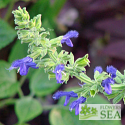
('Blue Seniorita' Mexican Sage) Smallish rich cobalt blue flowers come in large clusters on this unusually strong growing shrub. From late summer through fall you and the hummingbirds will be delighted with this rare variety.
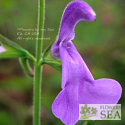
(Dorset Lavender Gentian Sage) Large, deep lavender flowers shaped like parrot beaks make Salvia patens 'Chilcombe' distinctive in the Gentian Sage group, which is dominated by true blues.
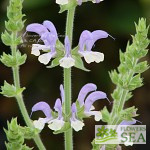
(Golden Leaf Sage) A tinge of gold in its fuzzy, pebbled foliage gives Salvia chrysophylla its common name. Abundant lavender flowers with pale cream lower lips make it stand out in the landscape.
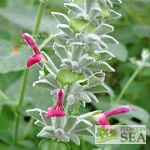
(White Headed Sage) One of the most visually stunning members of the genus, this large growing, tender, winter blooming species from the mountains of Ecuador will turn every head with its furry white calyxes and brilliant magenta red flowers.
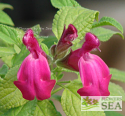
(Alice's Sage) We have John Fisher of Australia to thank for this fascinating intraspecific cross, which he named after his daughter. It really looks to be intermediate between the parents, and the fragrance of the leaves is divine.
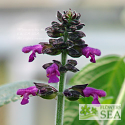
(Columbian Mountain Sage) Deep purple bracts support the small, lighter purple flowers of Salvia cuatrecasana, which is a rare Colombian sage. White beelines mark the flowers of this long-blooming shrub, which is a hummingbird favorite.
The following terms were added to your search to help improve the result. Click here to exclude these extra terms from the search.
- note, no, not, noted, notes
Results for Note from the blog
| New at FBTS |
| 1. New Product Filtering Tool Helps You with Decision Making |
| Flowers by the Sea now offers a powerful, do-it-yourself, product-filtering tool that makes plant selection easier and faster. It sets up a matrix of choices to help customers sort possible selections for their gardens based on USDA cold hardiness zones, sun exposure, mature height and spread of plants, soil type and water needs. This article explains how the tool works and provides examples of how to use it. |
| 2. One-Pot Herb Garden Brings Sage and Summer Memories Indoors |
| Growing a one-pot herb garden indoors is a fragrant reminder of summer. While some herbs need plenty of water, others - such as Culinary Sage (Salvia officinalis spp.) - need little. Aside from controlling soil moisture, keys to success include plant selection, pot size and drainage, appropriate potting mix, sufficient sunlight and indoor pruning to control growth. |
| New at FBTS |
| 3. New at FBTS: Vermilion Bluffs ® Mexican Sage |
| A 'mass of scarlet awesomeness' is one way that Denver Botanic Gardens Senior Curator Panayoti Kelaidis describes Vermilion Bluffs® Mexican Sage (Salvia darcyi 'Pscarl') at his Prairie Break website. Unlike so many Southwestern sages, Vermilion Bluffs is surprisingly cold hardy as well as being drought tolerant. Its common name is taken from the spectacular red bluffs of the Vermillion Basin Wilderness in Northwestern Colorado, an area redolent with the scent of sage on hot days. But the plant is native to the Nuevo Leon area of Mexico's eastern Sierra Madre Occidental mountains. The story of how its parent plant arrived at Denver Botanic Gardens (DBG) and, eventually, at Flowers by the Sea is one of diaspora. |
| Cultivating Color |
| 4. Pantone Pageant: A Chorus Line of Grayed Jade Designer Salvias |
| Sage is the common name for the uncommonly beautiful Salvia genus. But when designers describe a product as being sage-colored, they mean a shade of gray-green that they say is soothing and that harmonizes with a multitude of colors, including soft pastels, hot oranges and deep purples. A version of sage called "Grayed Jade 14-6011" is one of the Pantone color-matching system's top shades for the design industry this year. This post identifies some Grayed Jade plants in the Flowers by the Sea collection. They are fine peacemakers amid a Salvia garden based on a mixture of Pantone's top greens for 2013, which you can read about in previous articles from our Pantone Pageant series of designer colors in the landscape. |
| 5. Pantone Pageant: Shady Salvias on a Mixed Blue Designer Patio |
| Got shade? Go ahead and get blue about it in the garden. We'll hold your hand, listen to your concerns and help you pick just the right shady salvias in hues to match the 2013 designer colors Dusk Blue and Monaco Blue from Pantone. |
| 6. Paperless Catalog Conserves Resources and Lowers Prices |
| Don't expect a catalog in your mailbox from Flowers by the Sea, because we have never printed one and refuse to do so. Print catalogs are tree-munching dinosaurs on their way to extinction due to the rapidly changing world of digital technology. Online catalogs are environmentally friendly and save our customers money, because we can keep our plant prices low. |
| 7. Plant Safari Salvia in the South African Fynbos -- Part 2 |
| Flowers by the Sea is a home away from home for a number of South African Salvias that enjoy our moderate, Mediterranean climate. None are endangered species, but all face the threat of land development in the Western Cape's Fynbos Biome -- unparalleled for its variety of medicinal and ornamental native plants found nowhere else in the world. Preservationists are working to balance changes in land use and to maintain biodiversity in the CFR. Brutal poaching of rhinoceroses is one of the toughest problems they face. |
| 8. Rapid Navigation of the FBTS Everything Salvias Blog |
| To make it easier for you to access articles in our rapidly growing Everything Salvias blog, we have expanded our index of special topics. You'll discover choices including categories for butterfly and hummingbird gardening, how-to videos, shade gardening and xeriscape. |
| Quick Digs |
| 9. Quick Digs: Putting Salvias to Bed with Winter Mulch |
| During spring, a heavy coat of fall leaves or wood mulch isn't good for Salvias, because it can cause fungal problems that attack crown and roots. But in winter, organic mulches are ideal for blanketing the foliage and root area of sages. Mulch is particularly useful in protecting protect plant roots against injury from freeze-and-thaw cycles, especially for new fall plantings.This is the second article in our Quick Digs series on preparation for winter in the Salvia garden. |
| Sage Words About Wildlife |
| 10. Sage Words about Wildlife: 4 Seasons of Hummingbird Salvias |
| Regional differences in seasonal temperature and humidity affect the choice of Salvias to plant in hummingbird gardens. The varying seasons in which particular sages bloom and the part of the world where they originated also determine whether they attract hummingbirds. Flowers by the Sea Online Nursery offers suggestions based on regions and seasons. |
| Sacred Sages |
| 11. Sacred Sage: Salvia mellifera -- the Easiest California Native |
| Long before the West Coast was colonized, California Indians used Black Sage ( Salvia mellifera Greene) for food and medicinal purposes. Today, it often is bundled in smudge sticks used like incense during purification rituals. Another reason to consider Black Sage sacred is that, among the state’s native plants, it is one of the most important sources of nectar for pollinators. Nineteenth century botanist and clergyman Edward Lee Greene made the plant’s botanical name official in 1892 when he was the first person to publish it in a scientific journal. Among California's native Salvias, it is the easiest to grow in home gardens. |
| 12. Salvia Summit II: An International Gathering of Sage Thought, March 7 to 10 |
| Salvias thrive in many different climates and parts of the world. Consequently, those who love the genus are an international tribe stretching from Alaska to Argentina and from South Africa to Southern California. Members of the tribe, from Salvia experts to home gardeners, will gather March 7 to 9 at Huntington Botanical Gardens in San Marino, California, for Salvia Summit II. Speakers will include academics, horticulturists, researchers and a forensic scientist specializing in Salvia chemistry. This event follows up on Salvia Summit I, which was held in 2008 on California's Central Coast at Cabrillo College. |
Common terms in this search: dara's choice creeping sage california native hybrid produces rich blue flowers spring early summer widely considered best groundcover slopes sunny neglected areas problem spots love its texture dusky calexes much use mixed borders drought-resistant plants adaptable hummingbird- honeybee- friendly plant asks only sun limited water according santa barbara botanic garden sbbg originated open-pollinated selection horticulturist dara emery developed from seed