
Advanced Search
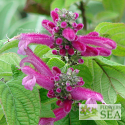
(Big Leaf Scandent Mexican Sage) Bigger leaves, larger, looser flowers and pink petioles -- the tiny stemlets connecting leaves to stems -- differentiate this this clone from its parent plant Salvia iodantha. A winter-blooming perennial, it's covered with velvety, 8-inch-long, magenta blossoms from fall into winter.
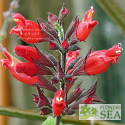
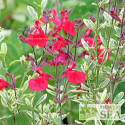
(Winter Mexican Sage) Call it the Snow Queen! From fall through spring, this graceful, colorful sage blooms through 20 degree F weather despite snow and ice. It has lovely, small, dark green leaves and profuse clusters of tubular, cinnabar-red flowers that puff out in the center.
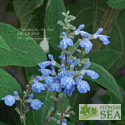
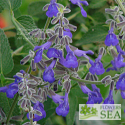
(Pale Sage) Powder blue flowers are cupped by lavender calyxes on this lovely yet little-used sage native to moist meadows in Argentina. It is a tall, narrow plant with delightful oval-shaped leaves with scalloped margins.
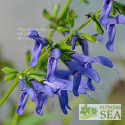
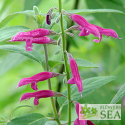
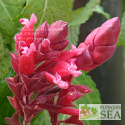
(Pink Tehuacan Sage) Large clusters of big, fuzzy, hot magenta-pink flowers top the elegant foliage of this Mexican sage. It is long blooming beginning in late spring and does well in full sun or partial shade. We want to help spread this rare sage that deserves to be widely planted.
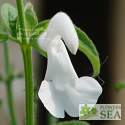
(White Trophy Gentian Sage) White Trophy loves partial shade and is the finest white Salvia patens available, with very large flowers that age to pale blue.
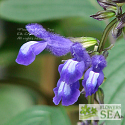
(Blue Sky Mexican Sage) The small flowers of this plant from Neuevo Leon and Tamaulipas, Mexico, are an attractive combination of amethyst-purple and white. The spectacular leaves, which are large and lightly textured, appear blue-green on top and purple-green underneath.

(Variegated Mexican Sage) Although its deep violet flowers are compelling, it is the foliage of this sage that is its greatest attraction. Kelsi is full of surprises, including asymmetrical leaves that make this variety easy to identify.
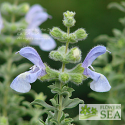
(Blue African Sage or Blousalie) A handsome, densely branched shrub with small, gray leaves, this Salvia puts on a show when in full bloom. The pale blue flowers bloom on foot-long spikes that cover the plant. Each flower has a large, trumpet-shaped, green-and-red bract at its base.
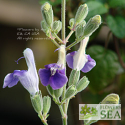
(Candelabra Spanish Sage) Tall, well-branched spikes display large two-tone blue flowers above a compact shrubby mass of attractive, furry white leaves. When in bloom, this drought-resistant native of Spain will awe every visitor to your garden.
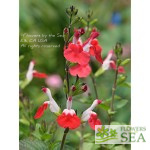
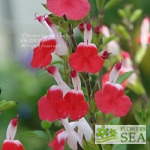
(Hot Lips Sage) What a winner for fascinating flowers! Salvia microphylla ‘Hot Lips’ is a native of Mexico that produces a combination of solid red, solid white, and bicolor red and white blossoms all on the same plant and sometimes at the same time.
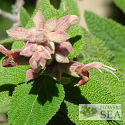
(Wooly Multicolor Sage) In Greek, "lasiantha" means "wooly flower." The flowers of Salvia lasiantha are surrounded by wooly bracts, but are even more notable for transforming from apricot-orange in the morning to reddish-purple later in the day.
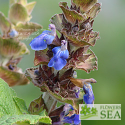
(Michoacan Blue Sage) This unusual and distinctive Mexican sage grows from tuberous roots. It is compact and decidedly vertical with strong, square, winged stems that rocket upward and are topped with clusters of rich blue flowers in large rosy bracts come autumn.
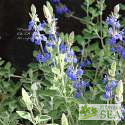
(Marine Blue Sage) The name and origin of this fine cultivar has long been in dispute. It may be a clone or hybrid of the Mexican plant Salvia chamaedryoides var.isochroma. It is one of the prettiest, strongest sages we grow.
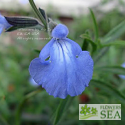
(Prairie Sage) Native to a large part of the central United States, this perennial Salvia is a beloved wildflower, delighting us with large cerulean blue flowers. Hummingbirds and butterflies love it as well.
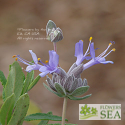
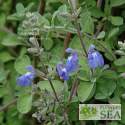
(Snowflake Sage) Wiry, trailing stems of small white leaves make this plant look like fresh snowfall. Numerous, small, sky blue flowers with prominent bee lines further add to the cooling look. This dry-garden plant is native to the mountains of the Chihuahuan desert of North Central Mexico.
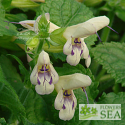
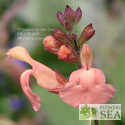
(Yellow Pink Hybrid Jame Sage) Dusty pink with pale yellow throats, the bicolor pastels of this Salvia x jamensis are especially charming up close. 'Yellow Pink' is a compact sage with tiny, smooth foliage.
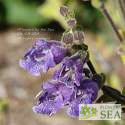
(Dan-shen Gansu) Growing into a large basal rosette of leaves measuring up to 3 feet across, Salvia przewalskii var. mandarinorum is known for its handsome foliage.
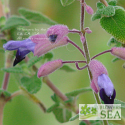
(Pine Mountain Sage) Small but numerous, violet and deep purple flowers surrounded by pink bracts are sprinkled throughout this well-branched,shrubby sage like confections. This is one of the showiest Salvias we grow.
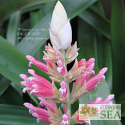
(Pink & White Wagner's Sage) Instead of pink, leaf-life bracts, this variety of Wagner's Sage has white bracts surrounding the hot pink flowers. It blooms from November to March on our coastal Northern California farm where it feeds Anna's hummingbirds all winter long.
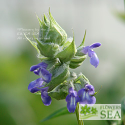
(Purple Stem Sage) Deep purple stems and cobalt blue flowers with pronounced white beelines and dusky gray calyxes cause this sage to command attention.
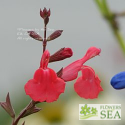
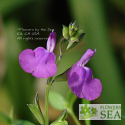
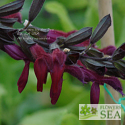
(Royal Purple Autumn Sage) Salvia muelleri is related both to Autumn Sage (S. greggii) and Mountain Sage (S. microphylla), which are closely related species.
The following terms were added to your search to help improve the result. Click here to exclude these extra terms from the search.
- c, cane, canes
Results for can from the blog
| 1. In the Native Garden: Colorful California Salvias Plus a Cousin |
| Native plants, including California's many indigenous sages, are like the boys or girls next door who were overlooked until outsiders discovered their good looks and other fine attributes. Flowers by the Sea grows hardy, drought-resistant California Salvias that are native to a broad swath of the West Coast ranging from Northern Baja to Southern Oregon. Many tolerate heat. They are well suited to waterwise landscapes, including dry gardens. |
| Cultivating Color |
| 2. Pantone Pageant: Emerald Designer Salvias |
| Emerald and other cool shades of green are among the hot colors for 2013, according to Pantone, a design-industry leader. Flowers by the Sea doesn't generally think of greens or of any colors in nature as being in or out. However, we think it is fun and fresh to consider garden design from a different perspective. Emerald is Pantone's top color for the year. This article about emerald-colored Salvias begins a pageant of sorts down the runway of our blog, showing how the Pantone color matching system can be used to shape landscaping decisions. |
| Quick Digs |
| 3. Quick Digs: Improving Soil for Spring in Salvia Gardens |
| This is the fifth article in our Quick Digs series about getting ready for spring in Salvia gardens. The previous post talked about weed control. Now we dig into soil and amendments, which aren't just additions to legal documents. The word also refers to materials added to soil to improve its structure and chemistry. These include organic matter, such as compost, as well as chemical fertilizers and minerals (lime and crushed rock are examples). Choices depend on the plants you want to grow and the current make-up of your garden soil. |
| 4. Quick Digs: Overwintering Salvias in Containers Outdoors |
| In chilly climates, such as USDA Cold Hardiness Zones with winter temperatures lower than those of Zone 8, it is difficult for potted plants to survive outdoors when the mercury dips. Soil in containers freezes harder and thaws more rapidly than the ground. This third article in our Quick Digs series on preparation for winter in the Salvia garden discusses how to improve chances of survival when overwintering sages in containers outdoors. |
| Salvias Down South |
| 5. Salvias Down South: Salvia Success in Florida |
| Florida is one of the wettest states in the nation, yet it is a fine place to grow Salvias if you select shade-tolerant, moisture-loving species and ones native to Florida. Gardeners who are accustomed to growing Salvias in a dry climate face a variety of surprises in Florida gardens. These include recurrent periods of drought, many cloudy days and soil that is so poor it has to be amended for Salvias. |
| 6. Salvias Down South: Tough Texans that Look Hot |
| A little bit of a hot color warms the garden landscape; a lot sizzles. Salvias that are red, orange, salmon and intensely pink make eyes snap to attention when grown en masse or as highlights complementing cool-colored perennials. Texas is home to a number of tough, drought-resistant species that can make a garden look hot. In this article, Flowers by the Sea focuses on varieties to light up southern landscapes. |
| Bees in the Garden |
| 7. Types of Bees Working in Your Garden |
| America buzzes with bee diversity, including 4,000 native species and many types of nonnative honeybees. Flowers by the Sea details the variety and value of our imperiled bees. This is the second article in a two-part series focused on identifying and understanding bees, becoming aware of threats to their survival and noting ways gardeners can protect these tiny wildlife. It includes tips on how to avoid bee stings. |
| Quick Digs |
| 8. Quick Digs: Using the FBTS Wish List Gift Registry |
| This third article in our Quick Digs series about preparing Salvia gardens for spring concerns the Flowers by the Sea Wish List for maintaining lists of plants you want and for use as a gift registry. Our Wish List removes the guesswork from gift giving while allowing givers to surprise recipients. |
| Xeric Choices |
| 9. Xeric Choices: Xeriscape Basics & Ancient Ideas |
| To create a successful xeriscape garden, planning and design are essential. Planning helps you make better choices, which saves time, money and effort as well as water. A little bit of wisdom from ancient Native American practices doesn’t hurt either. While soil improvement is always helpful, it should be moderate for xeric Salvias, such as Autumn Sage and Mealy Cup Sage. Finally, pruning and thinning, strategic groupings of plants for frugal watering and mulching for protection against severe heat or winter chill all were key to ancient Southwestern agriculture as well as modern xeriscaping. |
| Hummingbirds in the Garden |
| 10. Guide to Fuchsia Cultivation & History |
| Like tiny dancers dressed in fancy skirts, Fuchsia flowers dangle from upright shrubs in long blooming hedges and from trailing branches in hanging baskets. Fuchsias are hummingbird favorites that come in many rosy colors. Read about them in the FBTS Guide to Fuchsia Cultivation & History . |
| Container Gardening |
| 11. A Guide to Successful Potting Soils for Salvias |
| One of the decisions that Salvia gardeners face in spring is what kind of potting mix to use for outdoor container plants. Find answers in FBTS Farm & Online Nursery's guide to successful potting soils for Salvias. |
| Hummingbirds in the Garden |
| 12. Annual Salvias that Hummingbirds Adore |
| If a hummingbird could talk, he or she would tell you it's hard work packing for a long journey. Consuming mightily from dawn to dusk, day after day, hummingbirds double their weight before migration. They can't afford to run out of fuel before their next meal. To help hummingbirds, particularly on their northward journey, home gardeners can celebrate the arrival of spring by planting gardens filled with early blooming Salvias and companion plants that are excellent annuals in areas where winters are too chilly for survival as perennials. |
Common terms in this search: big leaf scandent mexican sage bigger leaves larger looser flowers pink petioles tiny stemlets connecting stems differentiate clone which may possibly hybrid from species iodantha also winter-blooming perennial its covered velvety -inch-long magenta blossoms fall into winter peak bloom period louis saso during mild sunny weather either december january although can survive temperature degrees blooming inhibited when temperatures below days