
Advanced Search
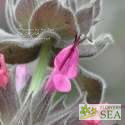
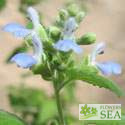
(Mejorana) In Spanish, Mejorana means ‘marjoram.” Similar to oregano-type Marjoram – another Mint family member -- this sage is used to flavor meat dishes. Our cultivar, which is native to Texas and Mexico, has lovely bluish-purple flowers that bloom summer to fall amid fragrant, fine, furry green foliage.
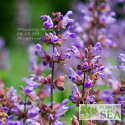
(Wand Sage) Whorls of deep violet blossoms are cupped by dark bracts on the flower spikes of this mid-height herbaceous sage from Turkey. Its foliage is thick, corrugated and fragrant. This plant is lovely and hardy, so it is surprising that it wasn’t introduced to commercial cultivation until 2007.
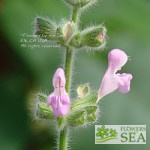
(Turkish Cliff Sage) Spring into early summer, Turkish Cliff Sage produces erect, branching flower spikes 24 to 36 inches long that rise from basal foliage. They’re covered with whorls of pale pink blossoms with delicate white markings.
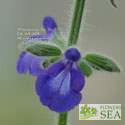
(Double Saw Tooth Sage) Vivid deep violet flowers bloom from summer into fall and contrast prettily with the bright green, rumply foliage of this tall sage from southeastern Mexico. Belgian botanist and orchid lover Jean Jules Linden was the first to record its discovery in 1838, according to records on file at Britain’s Royal Botanic Gardens, Kew.

(Russell's Mexican Sage) Expect rapid, tall growth from this Salvia Mexicana . In the ground, Russell’s Mexican Sage can reach up to 10 feet tall and 5 feet wide, providing an effective screen of dark green, heart-shaped foliage. By late autumn it’s bursting with flowers.
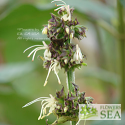
(Tree Sage)Whether you call it a shrub or a tree, Salvia arborsecens rises up to an impressive 12 feet tall and 5 feet wide. Commonly known as Sage Tree, this Salvia grows well in full sun, but prefers partial shade.
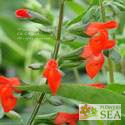
(Eyelash Sage) All Salvia blepharophylla varieties are native to Mexico, but this one was hybridized in Germany by plant breeder Christiaan Unger. Hairs on the edge of the sageâs dark green leaves give it the appearance of having eyelashes. It is a compact, slightly mounding Salvia that spreads gradually by underground stolons.
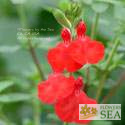
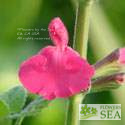
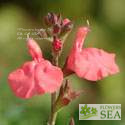
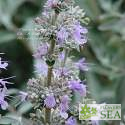
(Gayle Nielson Hybrid Sage) Whorl-like clusters of violet-blue flowers on slender stems as well as its height and width indicate that Gayle Nielson Hybrid Sage is related to some form of Salvia clevelandii.
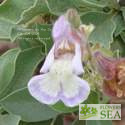
(Pilgram's Rest Pink Sage) Spring into summer, this heat-tolerant sage from South Africa produces lilac and white blossoms with profuse, fragrant, gray foliage. It's the burgundy calyxes, which turn a rusty pink after the flowers blossom, that give this sage part of its common name.
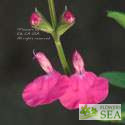
(Wild Watermelon Mountain Sage) Large, watermelon-pink flowers and the fruity fragrance of this long-blooming sage's mid-green, veined leaves make this Mountain Sage a treat to grow.
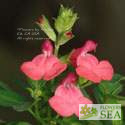
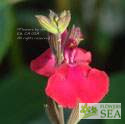
(Heatwave Red Mountain Sage) Compact and small, this Mountain Sage is another fine groundcover for Southern California, the Southwest and Texas. Similar to Salvia microphylla 'Heatwave Glimmer', it not only survives but thrives in extreme heat.
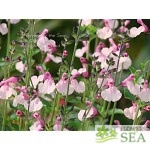
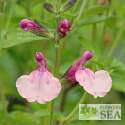
(Dancing Dolls Sage) Sages can be such tough plants. Many, such as Salvia 'Dancing Dolls', withstand heat and drought yet have delicate looking blossoms. Dancing Dolls features cream and rose bicolor flowers.
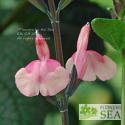
(Fancy Dancer Sage) Sages can be such tough plants withstanding heat and drought. Yet so many, including Salvia 'Fancy Dancer' have delicate looking blossoms. This one has bicolor flowers combining light and hot pink tones.
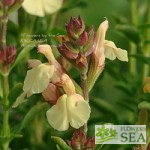
(Golden Girl Sage) Sages can be such tough plants. Many, such as Salvia 'Golden Girl', withstand heat and drought yet have delicate looking blossoms. Golden Girl features yellow flowers with a hint of rosy pink along with dark rose calyxes.
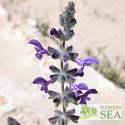
(Wooly Arabian Sage) "Radiant" is the word that garden writer and Salvia specialist Betsy Clebsch uses to describe the halo of white hairs covering the foliage and calyxes of Salvia lanigera.
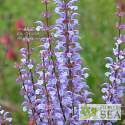
(Red Veined Sage) In 1827, John Wilkes referred to Salvia haematodes as "Bloody Sage" in his Encyclopaedia Londinensis, Volume 22. This might seem mysterious when first viewing the sage's upright yet somewhat relaxed spikes of whorled, violet-colored flowers.
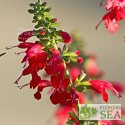
(Lady in Red Tropical Sage) Lady in Red is a variety of Salvia coccinea Juss. ex Murray, which is often called Texas Sage. It is the best red-flowering Tropical Sage that we grow.
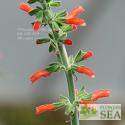
(Cundinamarca Sage) This Colombian Salvia is difficult to obtain outside of its home country. As far as we know, Flowers by the Sea is the first nursery to offer it in the United States.
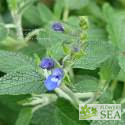
(Furry Colombian Sage) The leaves of this rare shrub are a glossy mid-green on top and fuzzy with hairs underneath, which is why it's commonly called Furry Colombian Sage.
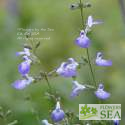
(Summer Skies West Texas Grass Sage) Butterflies and honeybees particularly favor this West Texas mountain native. In contrast to the true blue flowers of regular Salvia reptans, this cultivar has purple blossoms with cloud-like, lavender-to-white throats.
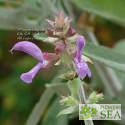
(Wooly Canary Island Sage) The pale magenta, parrot-beak flowers of this sage, supported by deeper magenta bracts, heat up the landscape. But when you get close, it may be the velvety texture of the foliage that makes you sigh.
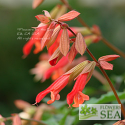
(Ember's Wish Sage) Bright coral-colored, tubular blossoms contrast handsomely with the deep maroon stems, rusty rose calyxes and mid-green foliage of Ember's Wish Sage.
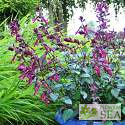
(Love and Wishes Sage) Deep purple calyxes support the magenta-purple, tubular blossoms of Salvia x 'Love and Wishes'. They contrast handsomely with dark stems and mid-green foliage.
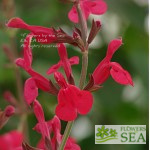
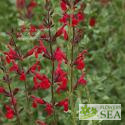
(Windwalker® Royal Red Salvia) Salvia darcyi x S. microphylla 'PWIN03S' is one of the top 2015 plants for USDA Cold Hardiness Zone 5 selected by Colorado's Plant Select®, a nonprofit organization that focuses on promoting plants for low-water gardens.
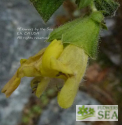
(Campanula Leaf Sage) The deep yellow flowers of Campanulata Leaf Sages are scarce among Salvias. Salvia campanulata CC#7706 is a sunny Himalayan beauty.
Results for however from the blog
| 1. Battles in the Salvia Garden: Pretty Southern Pink Moth |
| Southern Pink Moth (Pyrausta inornatalis) is diminutive and pretty, but it’s a powerful pest in Salvia gardens. As the common name indicates, it is primarily found in the South. Yet it is flitting into gardens further north. Read more to learn how to identify and control this pest. |
| Butterflies in the Garden |
| 2. Creating a Butterfly Garden with Delectable Salvias and Milkweeds |
| Creating a butterfly garden is like creating a teen-friendly home. You need to offer tasty snacks, healthy beverages, and comfortable accommodations that aren't too tidy. Like the teens that fill your basement and backyard, butterflies will keep coming back if you give them what they need. The variety of plants in your yard is the main reason why butterflies do or don’t visit. Salvias are among the popular plants for adult butterflies that love nectar. |
| New at FBTS |
| 3. Upcoming at FBTS: Hummingbirds Love Cute Cupheas |
| Bright orange, tube-shaped blossoms cover Cuphea x 'David Verity' like tiny windsocks blowing in a breeze and beckoning hummingbirds. Similar to Salvias, Cupheas are rich sources of nectar that fuel hummingbird migration. At Flowers by the Sea, we are always interested in expanding choices for creating wildlife habitat. So we are growing a wide variety of Cupheas for sale this coming spring, including David Verity. |
| Xeric Choices |
| 4. Drought Praise: 5 Blue-Tag Beauties for Dry Gardens |
| If you live in a semi-arid climate where rain is a vague memory and the soil is crunchy with gravel, you may find yourself praising the color and resilience of blue-tag plants from Flowers by the Sea. Not all of our drought tolerant plants fall into the blue-tag category. Yet ones that do are extremely capable at surviving with little water. FBTS explains plant care and offers five favorite drought-resistant species. |
| Getting Started with Salvias |
| 5. Getting Started: Annual, Perennial and Shrub Sages |
| For beautiful floral display and refreshing greenery, every yard needs a combination of annual bedding plants, perennials and shrubs. Salvias provide a feast of landscaping possibilities. Flowers by the Sea explains all the different types of Salvias, including subshrubs, biennials and tree-like Salvias |
| 6. Getting Started: Salvias for Zone 5 |
| To bloom yearly, Salvia perennials and shrubs in USDA Hardiness Zone 5 need to tolerate deep freeze winters with average low temperatures of -20 degrees F. The success of Zone 5 sages also depends on local growing conditions. Learn more at Flowers by the Sea, an online, mail-order Salvia nursery. |
| 7. Guide to Understanding & Using Fertilizer |
| Identifying the kind of fertilizer your flowers need can be a trial-and-error experience. This is especially true if you are growing plants that don’t thrive in fertile soils like loam. Flowers by the Sea Online Nursery hopes to clear up some of the confusion in this Guide to Understanding and Using Fertilizer . |
| Cultivating Color |
| 8. Cultivating Color: Tracking the Elusive History of Autumn & Mountain Sage Warm Pastel Hybrids -- Part I |
| Whether planned or accidental, hybrids happen. This is especially true among the closely related Southwestern and Mexican species of Autumn Sage (Salvia greggii) and Mountain Sage (S. microphylla). They are native to different areas of the Southwest and Mexico, but cross freely when they meet. This story is the first installment in a two-part series initiating our Cultivating Color series. It involves the late Dr. Richard F. Dufresne, a Salvia specialist who helped us track the history of warm-colored S. x jamensis hybrids. |
| New at FBTS |
| 9. New at FBTS: Elegant Salvia valentina |
| Flowers by the Sea Online Salvia Nursery has fallen hard for the delicate look but rugged constitution of wildflower sages from Valencia on Spain's Mediterranean coast, especially Strong Spanish Sage (Salvia valentina). S. valentina has upright form and looks elegant dressed up in tall spikes of deep lavender, double-lipped flowers from spring into summer. It's a meadow sage with fuzzy bracts and stems that mature from green to rich Pantone Marsala. |
| 10. New at FBTS: Vermilion Bluffs ® Mexican Sage |
| A 'mass of scarlet awesomeness' is one way that Denver Botanic Gardens Senior Curator Panayoti Kelaidis describes Vermilion Bluffs® Mexican Sage (Salvia darcyi 'Pscarl') at his Prairie Break website. Unlike so many Southwestern sages, Vermilion Bluffs is surprisingly cold hardy as well as being drought tolerant. Its common name is taken from the spectacular red bluffs of the Vermillion Basin Wilderness in Northwestern Colorado, an area redolent with the scent of sage on hot days. But the plant is native to the Nuevo Leon area of Mexico's eastern Sierra Madre Occidental mountains. The story of how its parent plant arrived at Denver Botanic Gardens (DBG) and, eventually, at Flowers by the Sea is one of diaspora. |
| Cultivating Color |
| 11. Pantone Pageant: "Tender Shoots Green" Designer Salvias |
| Lime is the kind of bright, cheerful color that practically shouts, “Hey, look at me!” Limelight Mexican Sage (Salvia Mexicana ‘Limelight’) is the kind of plant that makes you say, “Hey, look at that! Let’s plant it.” It brightens the landscape with its startling contrast of chartreuse-lime foliage and deep violet-blue flowers. Limelight is a poster plant for “Tender Shoots 14-0446” by Pantone color corporation. |
| Portraits in Gardening |
| 12. Portraits in Gardening: Michael and Kathi Rock's Hummingbird Journey |
| A wedding gift led to Kathi Johnson Rock and Michael Rock's passion for hummingbirds. These Wisconsin birders offer tips and plant suggestions for hummingbird gardeners at FBTS. Although now known as Madison's "Hummingbird People," the Rocks aren't ornithologists or biologists. They are home gardeners and customers of Flowers by the Sea. This article includes a list of favorite hummingbird plants found in the Rocks' gardens. |
Common terms in this search: elk rose hummingbird sage dusky pastel rose-toned flowers burgundy stamens surrounded silvery velvety bracts unusual variety native california species spathacea fbts cultivar developed through several generations breeding setting morning sun afternoon shade optimal sages including which our most sun-tolerant can handle conditions ranging from full light partial salvias mostly don't bloom during summer however winter one best plants growing other