
Advanced Search
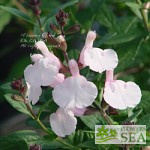
(Elk Pink Cloud Jame Sage II) Abounding with clusters of large, soft pink flowers on spreading branches, Salvia x ‘Elk Pink Cloud II’ looks like a fluffy, cumulonimbus cloud.
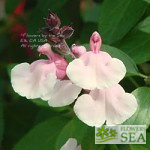
(Elk Crème Anglaise Jame Sage) Framed by minty green foliage, the blossoms of Salvia x ‘Elk Crème Anglaise’ transition from dreamy pale pink throats to white skirts. They look delectable.
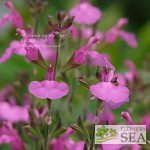
(Elk Xanadu Jame Sage) Like the magical, fictional land of Xanadu, there’s something heavenly about this sage. The flowers of Salvia x ‘Elk Xanadu’ look ethereal due to the bluish cast of their magenta-pink blossoms supported by deep magenta and green calyxes. It's a powerful attraction for pollinators, including hummingbirds.
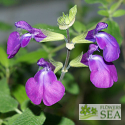
(Christine Yeo Sage) A chance hybrid of two Mexican sages --Salvia microphylla and S. chamaedryoides -- Christine Yeo Sage is long blooming and features deep purple flowers with white eyes.
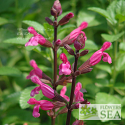
(Mulberry Jam Roseleaf Sage) Magenta flower buds burst into fuzzy, hot pink blossoms in this hybrid sage from the gardens of Betsy Clebsch, author of The New Book of Salvias.
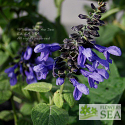
(Costa Rica Blue Sage) Although this handsome plant is often listed as an Anise Leaf Sage (Salvia guaranitica), we think it is a hybrid based on differences in its growth pattern and flowering season.
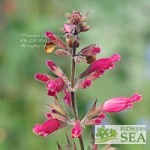
(Gray Roseleaf Sage) The University of California at Berkeley developed this hybrid from Karwinskii's Sage (Salvia karwinskii) and a variety of Roseleaf Sage (Salvia involucrata v. puberula) collected in Mexico by North Carolina nurseryman Richard Dufresne.
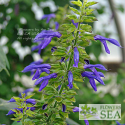
(Byron's Mexican Sage) One of our favorite Mexican Sages, this large variety is reputed to be a hybrid between Salvia mexicana and S. hispanica -- a species of Chia Sage.
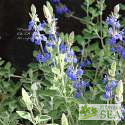
(Marine Blue Sage) The name and origin of this fine cultivar has long been in dispute. It may be a clone or hybrid of the Mexican plant Salvia chamaedryoides var.isochroma. It is one of the prettiest, strongest sages we grow.
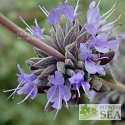
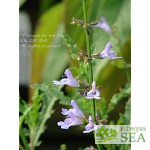
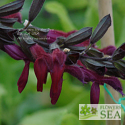
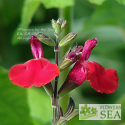
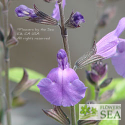
(Azure Hybrid Sage) Despite its name, the flowers of this tiny hybrid aren't really blue. They are a light purple. Due to its size, long bloom time, heat tolerance and drought resistance, Salvia x 'Mesa Azure' is a fine groundcover for areas where summers are hot and dry.
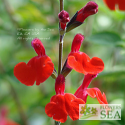
(Royal Bumble Mountain Sage) Almost black, the stems and calyxes of this UK hybrid form a pleasing contrast with its medium-size scarlet flowers and glossy green leaves. Bloom time is spring to fall. This Mountain Sage suckers freely and forms a dense clump.
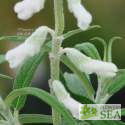
(White Mischief Mexican Bush Sage) Profuse white blossoms and true white velvety bracts make the flowers of this South African hybrid a lovely choice for a wedding. In our experience, many of the plants sold as White Mischief are not the real thing. This tough, compact, long blooming sage is.
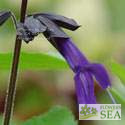
(Friendship Sage) Thank you Rolando Uria of the University of Buenos Aries for this very fine plant. Discovered in 2005 at a plant show in Argentina, this truly unique hybrid sage has generated a great deal of excitement in the Salvia world.
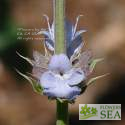
(Starlight Sage) Add sparkle to your dry garden with the pale pastel flowers of this hybrid of two Southern California native plants often seen growing together in the wild — Black Sage (Salvia mellifera) and White Sage (Salvia apiana). Salvia x 'Starlight' is a shrub that blooms early and long, attracting honeybees but not deer.
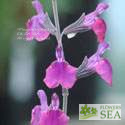
(Diane's Autumn Sage) Chip Schumacher of Hill Country Gardens in Texas selected this lovely Autumn Sage hybrid, which has handsome foliage and abundant two-tone dark purple flowers. This fine variety is often the first Salvia greggii to bloom in spring.
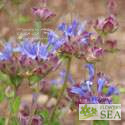
(Celestial Blue Sage) Fast growing and adaptable, this sage is a chance hybrid between Cleveland Sage (Salvia clevelandii) -- also called California Blue Sage -- and California Rose Sage (Salvia pachyphylla). It may also be related to California Purple Sage (Salvia leucophylla).
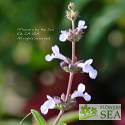
(Pacific Blue Sage) Whorls of deep lavender-blue flowers contrast brightly against the dark maroon stems of this likely hybrid of Salvia brandegeei and Salvia munzii.
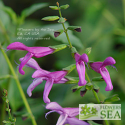
(Jean's Jewel Sage) An entirely new color in the Salvia guaranitica group, this chance hybrid with violet-pink blossoms was discovered by Kathleen Navarez at Cabrillo College in Aptos, California. It is compact, freely flowering and spreads gently via rhizomes.
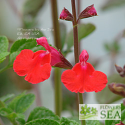
(Majestic Pink Sage) Very large richly colored hot pink blossoms and broad, glossy, intricately textured leaves are part of what makes Salvia x 'Majestic Pink' a standout. This is a complex hybrid involving several Salvia species from the ongoing breeding program at FBTS.
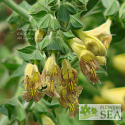
(Mellow Yellow Sage) Yellow-flowering Salvias always command attention in the garden. An intentional hybrid between the very rare and difficult to grow Salvia bulleyana and the energetic Salvia campanulata, this plant embodies the best characteristics of each parent.
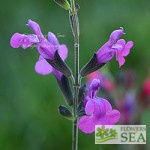
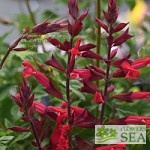
(Roman Red Sage) This handsome, long blooming hybrid sage features a dramatic combination of scarlet flowers and deep rust-to-merlot calyxes. Deadheading spent blossoms prolongs bloom time.
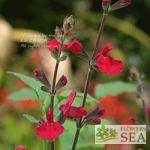
(Elk Crimson Spires Sage) Dark, dusky red stems and calyxes add to the drama of large scarlet flowers and lively green foliage in our FBTS hybrid, Salvia x ‘Elk Crimson Spires’.
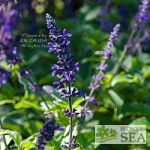
(Indigo Spires Sage) Salvia ‘Indigo Spires’ gains its name from long spikes of rich, deep purple-blue flowers that stand tall and also arch and twist gracefully. It is a chance hybrid discovered growing amid Salvia farinacea and Salvia longispicata at Southern California's Huntington Gardens.
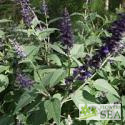
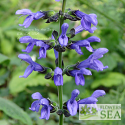
(Anthony Parker Bush Sage) Floriferous spikes of dark blue to purple flowers bloom midsummer to fall on this tidy, mid-height subshrub that grows as wide as it is tall.
The following terms were added to your search to help improve the result. Click here to exclude these extra terms from the search.
- hybrid, hybridist
Results for hybrids from the blog
| Sage Experts |
| 1. Sage Experts: How Robin Middleton's Gardens Bloomed |
| Sage Experts focuses on Salvia specialists -- both amateurs and professionals -- in settings ranging from home gardens to university laboratories. This article concerns Robin Middleton of Surrey, England, and his popular Robins Salvias website. The longtime horticulturist grows more than 100 Salvia species and cultivars in his garden and greenhouses. |
| Sage Words About Wildlife |
| 2. Sage Words About Wildlife: Hummingbirds Love Lobelias |
| Top-10 lists of hummingbird favorites almost always contain Salvia and Lobelia, because each genus is nectar rich and offers many species in bright reds, oranges and pinks. Hummingbirds have a weak sense of smell, but bright colors, such as those of Lobelias, lure them to flowerbeds. They are particularly devoted to the types grown at Flowers by the Sea. |
| 3. Salvia greggii: Discovering a Riot of Color |
| It would be inaccurate to refer to the woody perennial Autumn Sage, or Salvia greggii, as coming in a rainbow of colors, because there is no true blue in the bunch. However, S. greggii cultivars form a riot of lipstick-intense reds, pinks, corals, apricots, oranges, lavenders and purples. Whites, pale yellows and bicolors also are members of the vivid species discovered in the dry, rocky landscapes of Texas and Northern Mexico by 19th century frontiersman, doctor, trader, writer and amateur botanist Josiah Gregg . |
| Salvia Small Talk |
| 4. Salvia Small Talk: Planting a Therapy Garden |
| Salvias are good additions to sensory gardens, because of their fragrance, texture and visual appeal. Plants with sensory appeal stir memory. |
| Butterflies in the Garden |
| 5. Salvias Down South: Southern California Butterfly Favorites |
| Wildscaping a butterfly-friendly garden in Southern California is an act of kindness, especially toward imperiled species. Gardeners from Santa Barbara southward may want to group coastal sage and chaparral plants in their butterfly gardens, because those are among favorite sources of nectar for adult butterflies and host plants for caterpillars. Sages are popular nectar choices. Plants, such as Milkweeds and Impatiens, that work well both as nectar providers and caterpillar hosts are important additions. |
| Hummingbirds in the Garden |
| 6. Seeing Red and Loving It: Hummingbirds and Salvia microphylla |
| As with so many aspects of life, the hummingbird-Salvia relationship is circular. It is difficult to have one without the other. Unfortunately, many species of hummingbirds are threatened or endangered. By planting Mountain Sage ( Salvia microphylla ) you invite hummingbirds into your garden, expand their habitat and ensure pollination for abundant blossoming. |
| 7. The Power of Scent |
| While it's true that not all Salvias smell, well, pleasant, many varieties are grown specifically for the aromatic or even sweet aromas that they release into the air. These ten Salvias are our top picks for the best-smelling varieties in the garden. |
| Book Reviews |
| 8. Book Reviews: Three Top Reads for Dry Gardening |
| Don’t think “drab” when you hear the phrase “dry garden.” With guidance from good books and a willingness to experiment, you can create colorful flowerbeds and landscapes that require little to no supplemental watering. Here is a quick overview of three books that are excellent resources about sustainable dry gardening. |
| 9. Winter Blooming Salvias (Part I) |
| Some of the most dramatic Salvias bloom in the Winter. Most of these are from Southern Mexico, and are very well adapted to grow in Zone 9 gardens. |
Common terms in this search: elk pink cloud jame sage abounding clusters large soft flowers spreading branches 'elk ii' looks like fluffy cumulonimbus it's lovely spilling over edges hanging basket growing groundcover mixed other pastel sages along walkway second iteration stronger longer blooming more floriferous subshrub combining perennial foliage woody growth most sun lover appreciates bit partial shade during severe heat also thrives average watering