
Advanced Search
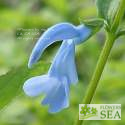
(Cambridge Blue Gentian Sage) Cambridge Blue is one of the most famous varieties of Salvia patens, which was discovered in Central Mexico in 1838. Its powder blue flowers are delightful and cooling in the landscape.
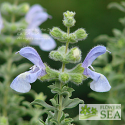
(Blue African Sage or Blousalie) A handsome, densely branched shrub with small, gray leaves, this Salvia puts on a show when in full bloom. The pale blue flowers bloom on foot-long spikes that cover the plant. Each flower has a large, trumpet-shaped, green-and-red bract at its base.
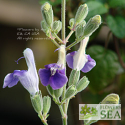
(Candelabra Spanish Sage) Tall, well-branched spikes display large two-tone blue flowers above a compact shrubby mass of attractive, furry white leaves. When in bloom, this drought-resistant native of Spain will awe every visitor to your garden.
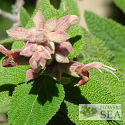
(Wooly Multicolor Sage) In Greek, "lasiantha" means "wooly flower." The flowers of Salvia lasiantha are surrounded by wooly bracts, but are even more notable for transforming from apricot-orange in the morning to reddish-purple later in the day.
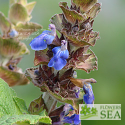
(Michoacan Blue Sage) This unusual and distinctive Mexican sage grows from tuberous roots. It is compact and decidedly vertical with strong, square, winged stems that rocket upward and are topped with clusters of rich blue flowers in large rosy bracts come autumn.
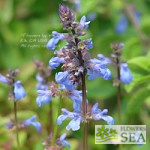
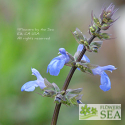
(Ground Ivy Sage) Native to Central Mexico's highlands, this creeping perennial grows at a altitudes of more than 10,000 feet and can handle some chill. Its common name comes from its scalloped yellow-green leaves, which resemble Ground Ivy or Glechoma.
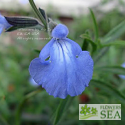
(Prairie Sage) Native to a large part of the central United States, this perennial Salvia is a beloved wildflower, delighting us with large cerulean blue flowers. Hummingbirds and butterflies love it as well.
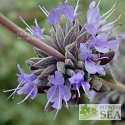
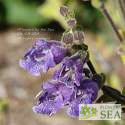
(Dan-shen Gansu) Growing into a large basal rosette of leaves measuring up to 3 feet across, Salvia przewalskii var. mandarinorum is known for its handsome foliage.
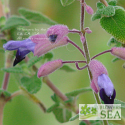
(Pine Mountain Sage) Small but numerous, violet and deep purple flowers surrounded by pink bracts are sprinkled throughout this well-branched,shrubby sage like confections. This is one of the showiest Salvias we grow.

(Autumn Purple Sage) Small but numerous, the flowers of this sage are a variable shade of light purple that is unlike any other we grow. Native to Southern Mexico and Guatemala, this shrub regularly grows up to 5 feet tall (or taller) and 4 feet wide.
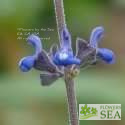
(Chilean Mountain Sage) Formerly known as S. gillesii, this delicate-looking sage with dramatically deep blue flowers is robust in the garden. Its branches are draped with wooly grey foliage featuring rounded, toothed leaves that are pleasantly scented.
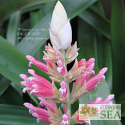
(Pink & White Wagner's Sage) Instead of pink, leaf-life bracts, this variety of Wagner's Sage has white bracts surrounding the hot pink flowers. It blooms from November to March on our coastal Northern California farm where it feeds Anna's hummingbirds all winter long.
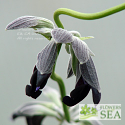
(Purple Bract Peruvian Sage or Concolor Sage) Similar to its wild relative, Peruvian Sage, which is also known as Concolor Sage, this cultivar has foliage that is smooth, apple green on top and fuzzy with silver hairs on the bottom. Major differences appear in the dramatic bracts.
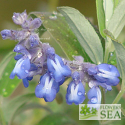
(Blue Ecuadorian Sage) A densely branched shrub with silvery leaves and dusky blue flowers, this rare species was once thought to be Salvia cruickshanksii. In the nursery trade, it sometimes is called Salvia 'Equador'.
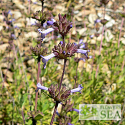
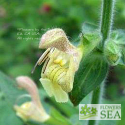
(Himalayan Cloud Sage) Nepal's Muktinath Valley -- a sacred site for Hindus and Buddhists -- is the place to go to see this majestically tall shade perennial in the wild. It grows at altitudes up to 14,000 feet and often emerges while the ground is still snowy.
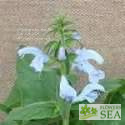
(Patio Sky Blue Gentian Sage) Patio Sky Blue is a handsome, dwarf variety of Salvia patens from Holland. It loves partial shade and is perfect for containers. The sky-blue flowers are larger than those of other Gentian Sages.
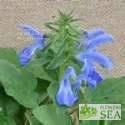
(Patio Deep Blue Gentian Sage) Patio Deep Blue is a handsome, dwarf variety of Salvia patens from Holland. It loves partial shade and has dusky, deep blue flowers that are larger than those of other Gentian Sages.
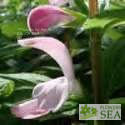
(Patio Rose Gentian Sage) Patio Rose is a lovely, dwarf variety of Salvia patens from Holland. It needs partial shade and is perfect for containers. The rose-colored flowers are larger than those of other Gentian Sages.
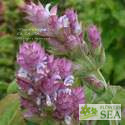
(Italian Clary Sage) Clary Sages are well known for their use in folk remedies, aromatherapy and cosmetics. Glowing purple bracts frame the spectacular white blooms of this cultivar on 5-foot-tall spikes. It is a delight for honeybees, hummingbirds and butterflies.
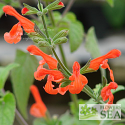
(Elk Super Scarlet Rooster Sage) From the mountains of Mexico we have this stunning Sage, which seems never to be out of bloom. A superior hummingbird plant, the warm orange flowers that cover this shrubby perennial make it a standout in the garden.
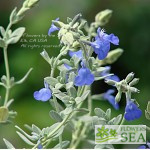
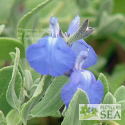
(Silver Germander Sage) With its compact habit, brilliant silver-white leaves and large, sky blue flowers, this is an outstanding heat-tolerant choice for dry, sunny gardens. We consider this to be one of the finest short ground covers for these conditions.
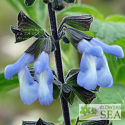
(Confused Argentine Sage) Similar in many ways to the indispensable garden favorites of the Anise Scented Sage (Salvia guaranitica spp.) group, this plant is a perfect companion for its better known cousin.
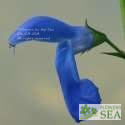
(Giant Gentian Sage) "Wow!" is what most people say when they see this large Gentian Sage from Central Mexico. Growing to 4 feet tall, it has long, graceful spikes of 3-inch deep, royal blue flowers that are highly visible and easily accessible to hummingbirds.
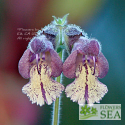
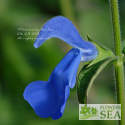
(Oxford Blue Gentian Sage) Only Salvia patens 'Blue Angel' comes close to the hard-to-believe, rich gentian blue of this sage from Mexico. Oxford Blue also grows taller and spreads wider than Blue Angel.
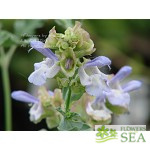
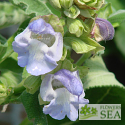
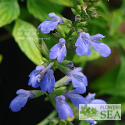
(Arizona Blue Sage) We are so impressed with this top-performing, drought-resistant ground cover that we have rated it best of class. Arizona Blue Sage is adaptable to a variety of shady conditions and blossoms so abundantly that it seems to have as many rich blue flowers as it has leaves. It is native to dry, shaded areas in mountain canyons in Arizona, New Mexico and Texas.
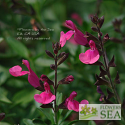
(Black Cherry Autumn Sage) Ripe Bing cherries come to mind when viewing the rich purple flowers of this full-sun sage that is adaptable to partial shade. Butterflies, honeybees and hummingbirds are drawn to its blossoms from spring into fall.
The following terms were added to your search to help improve the result. Click here to exclude these extra terms from the search.
- summers
Results for summer from the blog
| Xeric Choices |
| 1. Four Top Drought-Resistant Perennials for Dry Shade |
| Searching for shade-tolerant plants is difficult. Finding ones that grow well in dry conditions, especially as groundcovers, is even more challenging. Flowers by the Sea talks about different types of shade and four drought-resistant perennials for these varying levels of sun exposure. It also explains how to search the company's extensive product menu. |
| Getting Started with Salvias |
| 2. Getting Started: How Much Water Salvias Need |
| Salvias may need little or lots of water depending on species and local growing conditions. Many are drought resistant, getting by on less than an inch a week. Learn about the many kinds of Salvias, also called sages, at Flowers by the Sea. We're an online, mail-order nursery specializing in sages. |
| 3. Getting Started: Salvias for the Southwest |
| Ask anyone to describe the American Southwest, and they're likely to sum it up in three letters : "D-R-Y." Yet precipitation can vary a lot here state by state and even within different parts of the individual states. One thing that is consistent about the story of water throughout the Southwest, is that rain and snow can rapidly swing from famine to feast to misfortune. |
| Cultivating Color |
| 4. Gray and Silver Foliage Lights Up the Landscape Day and Night |
| It isn't easy describing green in the garden. Foliage can span greens so pale they are almost white to blue-greens so deep they murmur the forest primeval. Amid this range, you'll find shimmering silver- and gray-leaf species. To locate these types of Salvias and companion plants in the Flowers by the Sea catalog, please visit our " Gray and Silver Leaf Plants" category in the FBTS catalog menu. This article includes a small sampler of our selection. |
| Sage Experts |
| 5. Sage Experts: Nancy Newfield, Hummingbird Gardener, Part II |
| Salvias are among the best hummingbird flowers and red is tops. That's what hummingbird researcher, Nancy L. Newfield began discovering more than 40 years ago. She found that flower nectar was more attractive than nectar feeders. This is the second article in a 3-part series on Newfield and hummingbird gardening. It includes an excerpt from her book Hummingbird Gardens and an FBTS list of red hummingbird favorites. Bud Hensley photographed the hummingbird pictured here enjoying Salvia subrotunda. |
| Sage Words About Wildlife |
| 6. Sage Words About Wildlife: Hummingbirds Love Lobelias |
| Top-10 lists of hummingbird favorites almost always contain Salvia and Lobelia, because each genus is nectar rich and offers many species in bright reds, oranges and pinks. Hummingbirds have a weak sense of smell, but bright colors, such as those of Lobelias, lure them to flowerbeds. They are particularly devoted to the types grown at Flowers by the Sea. |
| Salvias Down South |
| 7. Salvias Down South: 15 Sages to Pink Up Landscapes |
| Winter is a good time for warm thoughts about rosy colors pinking up the landscape. Not only is pink pleasant, but it is soothing. As psychologists discovered in the late 20th century, it's also the color of calm and is used in serenity gardens. Flowers by the Sea details a variety of pink sages here, some of which bloom in winter. |
| 8. Salvias Down South: How Salvias Behave in Florida |
| Salvias that grow well in Florida may behave differently from one region of the state to another. This may mystify gardeners who have just moved to Florida or have moved to a different area in the state. Based primarily on seasonal variations in temperature, the four main regions are North, Central, South and Tropical Florida. |
| Celebrity Salvias |
| 9. The Roseleaf Sage Group: Who's Who & What's What |
| Differentiating between the plants in a closely related group can feel similar to being an outsider attending a large family reunion. Identifying who's who and how they are connected is a challenge. That's the way it is with Mexico's Roseleaf Sage ( Salvia involucrata ) Group, which is well loved by hummingbirds. FBTS Online Plant Nursery grows a number of species from this winter-blooming group. |
| Hummingbirds in the Garden |
| 10. Annual Salvias that Hummingbirds Adore |
| If a hummingbird could talk, he or she would tell you it's hard work packing for a long journey. Consuming mightily from dawn to dusk, day after day, hummingbirds double their weight before migration. They can't afford to run out of fuel before their next meal. To help hummingbirds, particularly on their northward journey, home gardeners can celebrate the arrival of spring by planting gardens filled with early blooming Salvias and companion plants that are excellent annuals in areas where winters are too chilly for survival as perennials. |
| Ask Mr. Sage |
| 11. Ask Mr. Sage: Why Didn't My Fall Blooming Salvia Flower? |
| When growing Salvias that begin blooming in fall, Mr. Sage says it's important to know when first frost likely will occur in your area. Ask Mr. Sage is a regular feature of the FBTS Everything Salvias Blog. |
| Celebrity Salvias |
| 12. Celebrity Salvias: Hot Heatwave Hybrids from Australia |
| Waterwise landscapes don't have to be cactus gardens if you grow leafy, colorful drought-resistant Salvias, such as Australian Heatwave™ Mountain Sages, which are crosses of Salvia microphylla and S. greggii . Hybridizers Howard Bentley and Steve Eggleton of Plant Growers Australia used these tough American and Mexican native plants to create their series. One goal was to aid water conservation during their nation's hot, dry summers. |
Common terms in this search: cambridge blue gentian sage one most famous varieties patens which discovered central mexico its powder flowers delightful cooling landscape variety grows well full sun partial shade branched compact has inch bloom from summer into fall similar other sages reliable perennial returning year after zones however all species lovely they worth growing bedding plants colder british horticulturist graham stuart thomas called