
Advanced Search
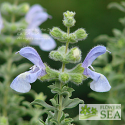
(Blue African Sage or Blousalie) A handsome, densely branched shrub with small, gray leaves, this Salvia puts on a show when in full bloom. The pale blue flowers bloom on foot-long spikes that cover the plant. Each flower has a large, trumpet-shaped, green-and-red bract at its base.
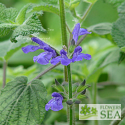
(Blue Bush Sage) Furry, large and heavily textured, the mid-green leaves of Salvia urica contrast attractively with its violet-blue flowers that bloom spring into summer.
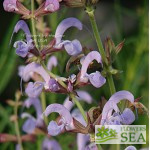
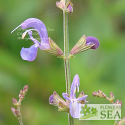
(Blue Turkish Sage) Large velvety gray-green to white leaves in loose rosettes give this sage a distinctive look as does the celestial violet-blue of its flowers. The blossoms seem much too large for this short sage and its thin, candelabra-branched flower spikes.
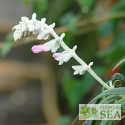
(Pink Mexican Bush Sage) Although native to Mexico and Central America, this elegant variety of Salvia leucantha was hybridized in South Africa. It is compact, long blooming and profusely covered by soft pink flowers surrounded by velvety white bracts.
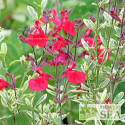
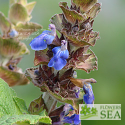
(Michoacan Blue Sage) This unusual and distinctive Mexican sage grows from tuberous roots. It is compact and decidedly vertical with strong, square, winged stems that rocket upward and are topped with clusters of rich blue flowers in large rosy bracts come autumn.
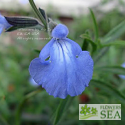
(Prairie Sage) Native to a large part of the central United States, this perennial Salvia is a beloved wildflower, delighting us with large cerulean blue flowers. Hummingbirds and butterflies love it as well.
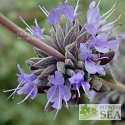
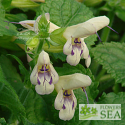
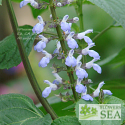
(Silly Mexican Sage) Also known as Salvia roscida, this close relative of Blue Sky Mexican Sage (Salvia caudata 'El Cielo Blue') has thousands of deep violet-blue flowers with prominent white bee lines.
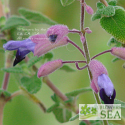
(Pine Mountain Sage) Small but numerous, violet and deep purple flowers surrounded by pink bracts are sprinkled throughout this well-branched,shrubby sage like confections. This is one of the showiest Salvias we grow.
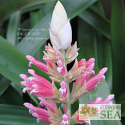
(Pink & White Wagner's Sage) Instead of pink, leaf-life bracts, this variety of Wagner's Sage has white bracts surrounding the hot pink flowers. It blooms from November to March on our coastal Northern California farm where it feeds Anna's hummingbirds all winter long.
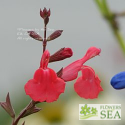
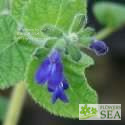
(Mexican Many Flowered Sage) Blooming from late summer into winter, this Mexican cloud-forest native has so many flowers that they are difficult to count. The deep violet blossoms develop distinct, white beelines after opening.
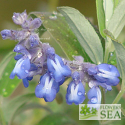
(Blue Ecuadorian Sage) A densely branched shrub with silvery leaves and dusky blue flowers, this rare species was once thought to be Salvia cruickshanksii. In the nursery trade, it sometimes is called Salvia 'Equador'.
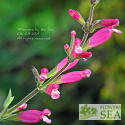
(Hadspen Roseleaf Sage) If you plant this sage in a mild-climate area where hummingbirds overwinter, you'll likely find hummers zinging back and forth among its magenta pink blossoms from fall through spring.
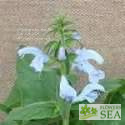
(Patio Sky Blue Gentian Sage) Patio Sky Blue is a handsome, dwarf variety of Salvia patens from Holland. It loves partial shade and is perfect for containers. The sky-blue flowers are larger than those of other Gentian Sages.
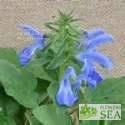
(Patio Deep Blue Gentian Sage) Patio Deep Blue is a handsome, dwarf variety of Salvia patens from Holland. It loves partial shade and has dusky, deep blue flowers that are larger than those of other Gentian Sages.
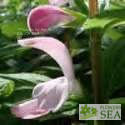
(Patio Rose Gentian Sage) Patio Rose is a lovely, dwarf variety of Salvia patens from Holland. It needs partial shade and is perfect for containers. The rose-colored flowers are larger than those of other Gentian Sages.
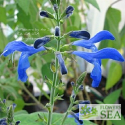
(Grape Leaf Sage) Tall spikes of intensely blue flowers bloom summer to fall and emerge in profusion from handsome, furry foliage. The leaves are grape green on top and purplish on the bottom. This water-loving sage grows rapidly into a spreading mound.
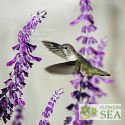
(Mexican Bush Sage or Velvet Sage) Large purple and white flowers bloom abundantly on this compact dwarf plant. If you love the rich colors and velvety foliage of Mexican Bush Sage but have limited space or need a container variety, this one is is for you.
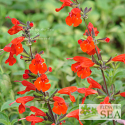
(Summer Jewel Red Tropical Sage) Butterflies, hummingbirds and honeybees enjoy this Fleuroselect Gold Medal winner, which is an outstanding choice for bright red color from June to autumn. This type of Tropical Sage is generally the first to flower for us.
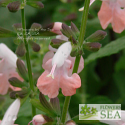
(Coral Nymph Tropical Sage) What a cutie! This award-winning cultivar of Tropical Sage is short and compact yet has a multitude of pastel salmon flowers larger than those of its bigger cousins. It is perfect for annual flower beds or patio containers.
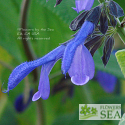
(Ocampo Mexican Sage) Growing from 7 to 10 feet tall each year, this is the largest of our Mexican Sages. Yet due to its erect form, this sage only spreads 36 inches. It has large, deep violet flowers with almost black calyxes that rise up on tall spikes and dark green, heavily veined foliage.
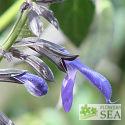
(Door of the Fox Mexican Sage) Purplish foliage contrasts attractively with the violet-to-purple flowers of this big sage, which grows 6 feet tall and 4 feet wide. Bloom time is autumn. This darkly dramatic Mexican Sage makes a particularly attractive entryway accent.
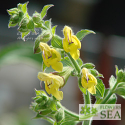
(Campanula Leaf Sage) Spectacular yellow-flowering Salvias are rare, so this one stands out. Its large, almost round leaves form a basal clump that is attractive and tough. Bright yellow flowers arise from the clump on stems up to 48 inches tall.
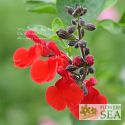
(Red Velvet Mountain Sage) This is one of the most intense red-flowering variety of Mountain Sage we grow. Medium-sized flowers are profuse on this large, vigorous plant -- particularly in spring and fall. Dark stems and calyxes intensify the plant's drama along with glossy green foliage.
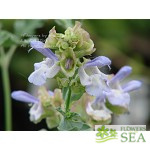
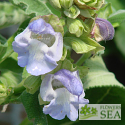
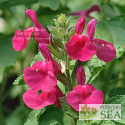
(St. Charles Day Mountain Sage) Especially in spring and fall, masses of red-violet flowers bloom amid the silvery green foliage of Salvia microphylla 'San Carlos Festival'. Put this one into the "must have" column.
The following terms were added to your search to help improve the result. Click here to exclude these extra terms from the search.
- gardener, gardens
Results for garden from the blog
| Portraits in Gardening |
| 1. Portraits in Gardening: Dave and Eleanor Holland |
| Portraits in Gardening is a new ongoing feature in the Everything Salvias blog of Flowers by the Sea. This first post focuses on Dave and Eleanor Holland's Northern California garden, which beckons bees, butterflies and hummingbirds due to its abundance of sages. |
| 2. Portraits in Gardening: Michael Kampf |
| Portraits in Gardening is a new blog series from Flowers by the Sea that profiles customers who are passionate about the Salvia genus. This post features Illinois gardener Michael Kampf who has succeeded in growing many kinds of Salvias despite the frigid winters and fiercely hot summers of the Chicago area. He began gardening when 6 years old with encouragement from his mother and fell in love with Salvias at age 12. |
| Xeric Choices |
| 3. Praise for Top 10 Lesser-Known Drought-Resistant Salvias |
| Eco-vigilantes. That's what some newspapers call smartphone users who post photos and videos tagged droughtshaming on Twitter and other social media documenting careless water use by celebrities, everyday homeowners and businesses, especially in Southern California. |
| Hummingbirds in the Garden |
| 4. Red Birds in a Tree: How a Rare Wildflower Became a Hummingbird Garden Star |
| Red Birds in a Tree, known botanically as Scrophularia macrantha , is a rare, cold-hardy, Wild West perennial with cheery red flowers hummingbirds love. Southwest New Mexico botanist O.B. Metcalfe collected it in 1904. |
| Salvia Small Talk |
| 5. Salvia Small Talk: Excel in the Garden |
| An Excel spreadsheet can be helpful in tracking Salvia plantings. |
| 6. Salvia Small Talk: Salvia Summit II Set for 2013 |
| Salvia Summit II, a not-for-profit conference designed for Salvia experts and enthusiasts, will be held March 7 to 10, 2013 at Southern California's Huntington Botanical Gardens. |
| Ask Mr. Sage |
| 7. Ask Mr. Sage: How to Control Snails |
| Ask Mr. Sage is a Q&A feature from Flowers by the Sea. This one talks about how to ward off snails and slugs safely through simple organic methods, including barriers and handpicking, as well as through careful use of iron-phosphate pesticides. It also talks about how to nurse damaged Salvias back to health. |
| 8. Ask Mr. Sage: What Is Withering My Native Salvia? |
| A California native sage that looks like it is suffering from drought may actually have root disease caused by a water mold called Phytophthora. Natives are affected by types of this pathogen that strike when soil is moist and temperatures are hot. Ask Mr. Sage is a regular feature of the Everything Salvias Blog and is based on calls and emails from customers. |
| Book Reviews |
| 9. Book Review: Lawn Gone! Low-Maintenance, Sustainable, Attractive Alternatives for Your Yard |
| Lawn Gone by Texas landscaper and garden writer Pam Penick concerns replacement or minimization of lawns through xeriscape, the art of planting attractive waterwise landscapes. Penick redefines suburban yards through designs including perennial groundcovers and small shrubs -- such as Autumn Sages ( Salvia greggii spp.) -- as well as ornamental grasses, sedges and hardscape, including water features. Flowers by the Sea specializes in Salvias and other xeriscapic plants. |
| Celebrity Salvias |
| 10. Celebrity Salvias: Mexican Bush Sage Beauties |
| Mexican Bush Sage (Salvia leucantha) is a garden star, but not a demanding diva. That is why Texas A&M University selected Mexican Bush Sage (Salvia leucantha) as one of its 50 “Texas Superstar” plants, all of which are highly recommended for flourishing in unpredictable weather and drought. The many varieties of Mexican Bush Sage are garden beauties that need little pampering. Native to hot, dry areas of Mexico and Central America, they are accustomed to tough conditions. Flowers by the Sea carries a number of striking varieties. |
| Sage Words About Wildlife |
| 11. Sage Words About Wildlife: Do Deer Devour Salvia? |
| Salvias are not a favorite food for deer. However, they will eat some when plants they consider tasty are in short supply. There is no such thing as deer-proof plants, but you can limit deer damage to your landscaping and vegetable garden by planting lots of sages and other plants that aren't among deer favorites. |
| Getting Started with Salvias |
| 12. Getting Started: Salvias for New England |
| Some people think you only find sage and coyotes out West. But Canis latrans, the Eastern Coyote, slipped into New England in the 1930s, and who knows when all the sages arrived? The New England Wild Flower Society notes that Lyreleaf Sage ( Salvia lyrata ) is the region's only native sage. It's one among many Salvia species grown in the Botanic Garden of Smith College in Massachusetts, which has one of the largest collections of sage in the region. Flowers by the Sea Online Plant Nursery raises hundreds of sages, including many northeastern favorites. |
Common terms in this search: blue african sage blousalie handsome densely branched shrub small gray leaves puts show when full bloom pale flowers foot-long spikes cover plant each flower has large trumpet-shaped green-and-red bract its base widespread coastal hills adjacent rocky south cape where loves sun used both culinary medicinal herb native peoples area adopted dutch colonials century hardy drought-resistant can foundation planting garden unusual