
Advanced Search
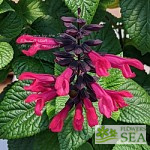
(Jammin Jazz Anise-Scented Sage) Deep chocolate calyxes and stems support the large, hot pink flowers of Salvia BODACIOUS® ‘Jammin’ Jazz’. This new cultivar of Salvia guaranitica has heavily veined, bright green foliage that smells a bit like licorice.
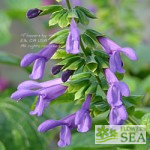
(COOL Lavender Mist Anise Scented Sage) Bright green bracts and rich lavender blossoms sing in Salvia COOL Lavender Mist. Hummingbirds keep this bountiful bloomer buzzing.
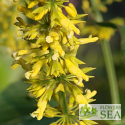
(Forysthia Sage) This statuesque perennial grows up to 10 feet tall, but spreads only 3 feet wide. It is a late bloomer from Mexico's Sierra Madre Oriental mountains where it grows at altitudes of 4,000 to 5,000 feet and tolerates temperatures down to 20 degrees F.
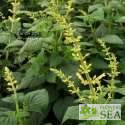
(Red Stem Forsythia Sage) The thick, square, red stems of this variety of Forsythia Sage make it conspicuously different from the species and from everything else in your garden. Its jointed stalks look a little like rhubarb gone mad!
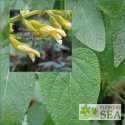
(Silver Leaf Forysthia Sage) It's the foliage of this clone that makes it so different from its parent plant. The leaves are a lovely silver and smaller than the green leaves of the species. However, they both have buttery yellow, Forsythia-like blossoms.
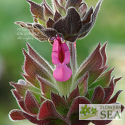
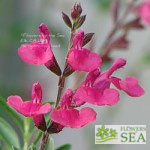
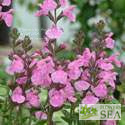
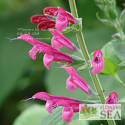
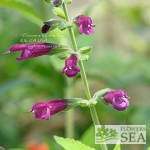
(Envy Hybrid Sage) A natural hybrid found in Peru and Bolivia, the parentage of this special variety is at this point unknown. The uniquely colored flowers are abundant all season long, and the hummingbirds love it.
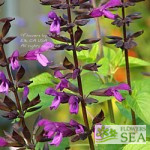
(Smokey Jazz Anise-Scented Sage) The dusky black calyxes of Salvia BODACIOUS® ‘Smokey Jazz’ support large flowers shaped like parrot beaks the unique color of boysenberries — a hue between red and purple.
The following terms were added to your search to help improve the result. Click here to exclude these extra terms from the search.
- sing, singles
Results for single from the blog
| Ask Mr. Sage |
| 1. Ask Mr Sage: What Kind of Plant Is a Clone? |
| It's helpful to understand botanical terminology such as clone, variety, and cultivar. Mr. Sage explains what the three words mean and how the processes of cloning and plant development work. Ask Mr. Sage is a regular feature of the FBTS Everything Salvias Blog and is based on questions from customers. |
| 2. Ask Mr. Sage: What Tropical Sage Should I Select? |
| Selecting the right types of Tropical Sage ( Salvia coccinea ) can be confusing when viewing them in a catalog and seeing similar flower colors. Yet they may differ in cultivation needs, foliage, heat tolerance, and size. Mr. Sage offers ideas for comparing differences and similarities. Ask Mr. Sage is a regular feature of the FBTS Everything Salvias Blog , which responds to questions from customers. |
| 3. Blazing Red Sages for Sun and Partial Shade |
| Warm colors tend to take center stage in a landscape as well as brightening the shade. Yet warm colors generally aren't associated with shady sage (Salvia) gardens, because there are far more shade-tolerant sages in the blue to purple range. So we decided to poke around our catalog and pull together some hot choices that thrive in partial shade. To make landscaping even easier, you may want to limit your choice of plants to one color. Massing is dramatic. |
| Container Gardening |
| 4. Container Gardening Basics: Selecting and Arranging Pots |
| Assembling a new planter with fresh potting soil and young plants is a feel-good activity similar to moving into a new home. Each pot and property is full of promise. Placing a single plant or a grouping in the right size of pot is like selecting a starter home for it that will encourage healthy growth. The type of material a pot is made from also affects development. Flowers by the Sea Online Salvia Nursery explains how to choose correct pot sizes as well as pot styles, sizes, colors and arrangements. Don't miss The Flowerpot Men music video! |
| 5. Paperless Catalog Conserves Resources and Lowers Prices |
| Don't expect a catalog in your mailbox from Flowers by the Sea, because we have never printed one and refuse to do so. Print catalogs are tree-munching dinosaurs on their way to extinction due to the rapidly changing world of digital technology. Online catalogs are environmentally friendly and save our customers money, because we can keep our plant prices low. |
| Cultivating Color |
| 6. Cultivating Color: Tracking the Elusive History of Autumn & Mountain Sage Warm Pastel Hybrids -- Part II |
| Luminous Salvia x jamensis pastel flowers began warming up nursery catalogs in the late 1990s. Their journey from steep Mexican mountains to American and European gardens began in the mid-19th century with the discovery of Autumn Sage (Salvia greggii). This is the second post in a two-part article about these Jame Sage hybrids of Autumn and Mountain Sage (S. microphylla). It includes descriptions of ten favorite Jame Sages. |
| Hummingbirds in the Garden |
| 7. 6 Indispensable Hummingbird Flowers for Long, Easy Bloom |
| Hummingbirds are like tiny combat jets dive bombing each other when staking claim to the nectar-rich flowers they need for survival. Fights over nectar habitat can reduce hummingbird gardens to single occupancy. FBTS Farm and Online Nursery details and tells stories about its top six hummingbird flowers. Plant lots of them to accommodate a village of hungry hummers. |
| 8. Guide to Fuchsia Cultivation & History |
| Like tiny dancers dressed in fancy skirts, Fuchsia flowers dangle from upright shrubs in long blooming hedges and from trailing branches in hanging baskets. Fuchsias are hummingbird favorites that come in many rosy colors. Read about them in the FBTS Guide to Fuchsia Cultivation & History . |
| Ask Mr. Sage |
| 9. Ask Mr. Sage: Can I Plant Salvias in Summer? |
| Watch out for sayings that warn against planting in summer. It's a good time to transplant Salvias if you give them some extra care. Ask Mr. Sage is a regular feature of Our Everything Salvias Blog and is based on customer questions. |
| 10. Ask Mr. Sage: How FBTS Chooses New Salvias |
| Some Salvia collectors want to obtain a broad range of sages including all the new introductions on the market. But Flowers by the Sea can't and doesn't want to grow all the new cultivars available, partly because there is a growing abundance of Salvia introductions. Instead, FBTS focuses on selecting the most superior new plants even when introducing its own hybrids in its series of Rainbow Jame Sages. Ask Mr. Sage is a regular feature based on calls and emails received by FBTS. |
| 11. Ask Mr. Sage: How to Prevent Root Disease in Plants for Dry Gardens |
| Learn how to prevent root rot and keep dry-garden Salvias healthy by providing optimum growing conditions and avoiding overwatering. Ask Mr. Sage is a Q&A feature based on topics raised in calls and emails to Flowers by the Sea. This one, which concerns a Salvia species that is drought resistant and native to a dry climate, considers how to identify and prevent rot caused by a complex of soil pathogens that attack when roots. |
| 12. Battles in the Salvia Garden: Controlling Spider Mites - Part II |
| Pollinators lose important food sources when Salvias and other nectar-rich flowers are destroyed by spider mites. This is Part 2 of a two-part series about understanding and overcoming these dangerous pests. Along with the non-chemical interventions described in Part 1 of this series, gardeners sometimes need the help of predatory insects and mites, insecticidal soaps and horticultural oils. Pesticides called miticides may also eventually be necessary, but should be the last resort. |
Common terms in this search: jammin jazz anise-scented sage deep chocolate calyxes stems support large hot pink flowers bodacious 'jammin' jazz' thisnew cultivar guaranitica has heavily veined bright green foliage smells bit like licorice sages which generally have varying shades blue purple native brazil northern argentina paraguay uruguay jammin' perennial combines both soft woody growth but due rapid long bloom time excellent annual where winter