
Advanced Search
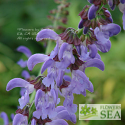
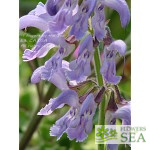
(Red Sage, Chinese Sage, Dan-shen) The bright red, finger-like roots of Salvia miltiorrhiza have a long history in traditional Chinese herbal medicine.
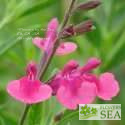
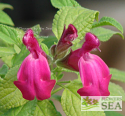
(Alice's Sage) We have John Fisher of Australia to thank for this fascinating intraspecific cross, which he named after his daughter. It really looks to be intermediate between the parents, and the fragrance of the leaves is divine.
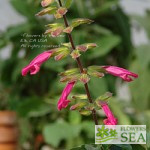
(Fashion Cherry Sage) Pendulous cherry-red blossoms and dark bracts make Salvia Fashion Cherry™ an eyecatcher. Although it looks like an Australian Wish Sage, it’s a cross between North and South American species.
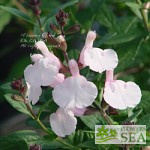
(Elk Pink Cloud Jame Sage II) Abounding with clusters of large, soft pink flowers on spreading branches, Salvia x ‘Elk Pink Cloud II’ looks like a fluffy, cumulonimbus cloud.
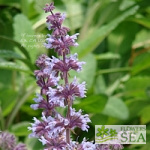
(Lilac Sage) We try not to brag too much, but this is our own variety of Salvia verticillata from home-grown seed, and we think it is spectacular. Butterflies and honeybees also are in love with this long-blooming perennial beauty.
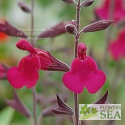
(Raspberry Delight Sage) Dark raspberry-red flowers, burgundy stems and calyxes and deep green foliage make this one of our most attention-grabbing varieties.
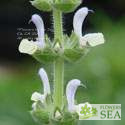
(Sardinian Sage) This is another must-have Salvia for mild, Mediterranean climate gardens. It has elegant foliage and lovely, bright rose-to-lavender flowers. Sardinian Sage spreads non-invasively as an herbaceous perennial and almost never stops blooming for us on the coast of Northern California.
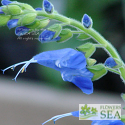
(Creeping Big Leaf Sage) Cobalt blue flowers float in airy clusters above the giant, velvety, green leaves of this South American native. Short and spreading by woody rhizomes, this is an ideal groundcover. As a bold statement in a container, it has no equal.
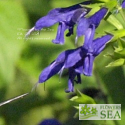
(Sapphire Blue Anise-Scented Sage) The large, sapphire blue flowers of this Anise-Scented Sage glow in the full-sun or partial-shade garden from summer into fall. Similar to Salvia guaranitica 'Blue Ensign', this is a somewhat taller variety of the water-loving species.
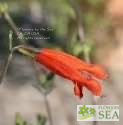
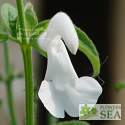
(White Trophy Gentian Sage) White Trophy loves partial shade and is the finest white Salvia patens available, with very large flowers that age to pale blue.
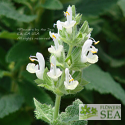
(Mauretania Tingitana Sage) Native to Northern Africa and Saudi Arabia, this sage gets by on little water. and has a long history of cultivation going back 400 years. It wove throughout various countries in the Middle East and North Africa before arriving in Europe in the 1700s and was first described scientifically in 1777.
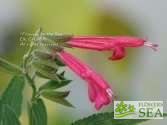
(Hybrid Bolivian Sage) This naturally occurring hybrid is a Bolivian native related to S. orbignaei and S. haenkei. Prettier than its parents, it has large, profuse, long-blooming flowers that are dark pink.

(Autumn Purple Sage) Small but numerous, the flowers of this sage are a variable shade of light purple that is unlike any other we grow. Native to Southern Mexico and Guatemala, this shrub regularly grows up to 5 feet tall (or taller) and 4 feet wide.
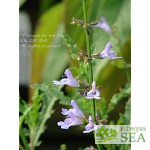
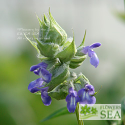
(Purple Stem Sage) Deep purple stems and cobalt blue flowers with pronounced white beelines and dusky gray calyxes cause this sage to command attention.
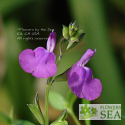
(Royal Purple Autumn Sage) Salvia muelleri is related both to Autumn Sage (S. greggii) and Mountain Sage (S. microphylla), which are closely related species.
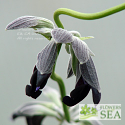
(Purple Bract Peruvian Sage or Concolor Sage) Similar to its wild relative, Peruvian Sage, which is also known as Concolor Sage, this cultivar has foliage that is smooth, apple green on top and fuzzy with silver hairs on the bottom. Major differences appear in the dramatic bracts.
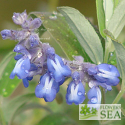
(Blue Ecuadorian Sage) A densely branched shrub with silvery leaves and dusky blue flowers, this rare species was once thought to be Salvia cruickshanksii. In the nursery trade, it sometimes is called Salvia 'Equador'.
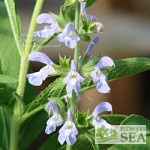
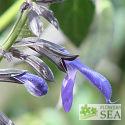
(Door of the Fox Mexican Sage) Purplish foliage contrasts attractively with the violet-to-purple flowers of this big sage, which grows 6 feet tall and 4 feet wide. Bloom time is autumn. This darkly dramatic Mexican Sage makes a particularly attractive entryway accent.
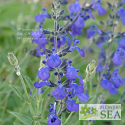
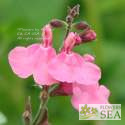
(Scorching Pink Mountain Sage) Compact and small, this Mountain Sage is another fine groundcover for Southern California, the Southwest and Texas. Similar to Salvia microphylla 'Heatwave Glimmer', it not only survives but thrives in extreme heat.
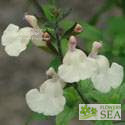
(Glimmering White Mountain Sage) Heatwave Glimmer isn't a mirage. It is a Salvia microphylla that tolerates extremely hot climates as well as cooler regions. It doesn't just survive; it thrives in the heat of Southern California, the Southwest and Texas.
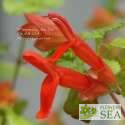
(Orange Mountain Sage) This is the reddest of the Salvia regla species and the most floriferous. Side by side with the other varieties, this one is a bit taller and has darker flowers.
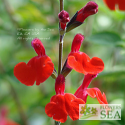
(Royal Bumble Mountain Sage) Almost black, the stems and calyxes of this UK hybrid form a pleasing contrast with its medium-size scarlet flowers and glossy green leaves. Bloom time is spring to fall. This Mountain Sage suckers freely and forms a dense clump.
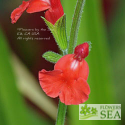
(Big Orange Mountain Sage) When temperatures are cooler in spring and fall, the persimmon-orange flowers of this large Mountain Sage darken. Gray-green foliage, bright green calyxes and reddish-green stems add to the plant's fascinating look, which mixes well with yellows and blues.
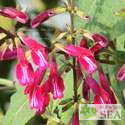
(Violet Calyx Sage) Here's another abundantly blooming sage from the cloud forest slopes of Chiapas, Mexico. Violet beelines mark the lower lip of the crimson blossoms, which are so numerous that it can be difficult to see the foliage at times.
Results for looks from the blog
| Hummingbirds in the Garden |
| 1. Annual Salvias that Hummingbirds Adore |
| If a hummingbird could talk, he or she would tell you it's hard work packing for a long journey. Consuming mightily from dawn to dusk, day after day, hummingbirds double their weight before migration. They can't afford to run out of fuel before their next meal. To help hummingbirds, particularly on their northward journey, home gardeners can celebrate the arrival of spring by planting gardens filled with early blooming Salvias and companion plants that are excellent annuals in areas where winters are too chilly for survival as perennials. |
| Book Reviews |
| 2. Book Review: Waterwise Plants for Sustainable Gardens |
| "font-style: italic;"> Lauren Springer Ogden and Scott Ogden are garden designers and writers who split their time between Texas and Colorado, but their suggestions for low water, xeriscapic landscaping can benefit gardeners far from the American West, Southwest and Deep South. The authors agree with their Dutch contemporary, Piet Oudolf, that a naturalistic landscape design based on local climate -- including water limitations -- is the most sustainable choice. |
| 3. In the Native Garden: Colorful California Salvias Plus a Cousin |
| Native plants, including California's many indigenous sages, are like the boys or girls next door who were overlooked until outsiders discovered their good looks and other fine attributes. Flowers by the Sea grows hardy, drought-resistant California Salvias that are native to a broad swath of the West Coast ranging from Northern Baja to Southern Oregon. Many tolerate heat. They are well suited to waterwise landscapes, including dry gardens. |
| New at FBTS |
| 4. New at FBTS: Elegant Salvia valentina |
| Flowers by the Sea Online Salvia Nursery has fallen hard for the delicate look but rugged constitution of wildflower sages from Valencia on Spain's Mediterranean coast, especially Strong Spanish Sage (Salvia valentina). S. valentina has upright form and looks elegant dressed up in tall spikes of deep lavender, double-lipped flowers from spring into summer. It's a meadow sage with fuzzy bracts and stems that mature from green to rich Pantone Marsala. |
| 5. 6 Salvias for Shade |
| Most gardeners associate plants in the genus Salvia with full sun, rocky soil, drought and semi-arid native lands. Although a number of sages fit this picture, far more appreciate loamy, fertile garden soil. Some require lots of water. Also, a large number of sages thrive in partial shade, and some tolerate full shade. Here are six of the many shade lovers that Flowers by the Sea grows. |
| Ask Mr. Sage |
| 6. Ask Mr. Sage: Where Can You Grow Agastache? |
| Hummingbirds love Agastache. Mr. Sage explains that just because one kind of Agastache is wrong for your climate, it doesn't mean they all are and that the genus is native to most of the United States. Ask Mr. Sage is a regular feature in our Everything Salvias Blog that answers customer questions. |
| 7. Ask Mr. Sage: What Is Withering My Native Salvia? |
| A California native sage that looks like it is suffering from drought may actually have root disease caused by a water mold called Phytophthora. Natives are affected by types of this pathogen that strike when soil is moist and temperatures are hot. Ask Mr. Sage is a regular feature of the Everything Salvias Blog and is based on calls and emails from customers. |
| 8. Ask Mr. Sage: How Light and Growing Conditions Affect Flower Color |
| Ask Mr. Sage answers questions based on calls and emails that Flowers by the Sea receives. This one explains the many factors that can cause the color of a plant's flowers to vary from one location to another. The blossom color of Flowers by the Sea plants in your garden may not always exactly match the colors in our photographs. |
| Sacred Sages |
| 9. A Guide to Growing and Respecting Sacred White Sage |
| White Sage (Salvia apiana) is a sacred plant for Native Americans, especially tribes in its Southern California native lands. It's a challenging plant to grow. Flowers by the Sea Farm and Nursery talks about the history and religious use of Salvia apiana as well as providing a guide to growing it. |
| 10. Happy Hybrid Surprises from Salvia greggii and microphylla |
| Sometimes surprises occur in the garden, especially if you plant Salvias. Sages in the Salvia greggii and Salvia microphylla Group are particularly inclined to hybridize naturally. |
| New at FBTS |
| 11. Himalayan Sage Is the Salvia Collector's Holy Grail: Part 2 |
| Plants don’t have voices but they have stories to tell, including tales of discovery. It’s easy to see why the early 18th century plant explorer Victor Jacquemont would have paused to collect the rare Salvia hians while traversing broad expanses of northwestern India. This second half of our article about the alluring species digs into its history. |
| Celebrity Salvias |
| 12. Celebrity Salvias: Mexican Bush Sage Beauties |
| Mexican Bush Sage (Salvia leucantha) is a garden star, but not a demanding diva. That is why Texas A&M University selected Mexican Bush Sage (Salvia leucantha) as one of its 50 “Texas Superstar” plants, all of which are highly recommended for flourishing in unpredictable weather and drought. The many varieties of Mexican Bush Sage are garden beauties that need little pampering. Native to hot, dry areas of Mexico and Central America, they are accustomed to tough conditions. Flowers by the Sea carries a number of striking varieties. |
Common terms in this search: red sage chinese dan-shen bright finger-like roots miltiorrhiza have long history traditional herbal medicine webmd reports danshen used asia treat number cardiovascular problems appears thin blood preventing platelet clotting subject ongoing medical research has fragrant lavender flowers bloom summer seem glow shade woodland plant grows well partial prefers rich well-drained soil can handle ample moisture native including areas experience winter