
Advanced Search
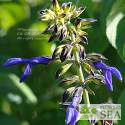
(La Placita Mexican Sage) Large and deep violet, the flowers of this tidy shrub bloom from late summer through fall. La Placita (the public square or small plaza) was collected in the mountains of Hidalgo, Mexico.
Results for public from the blog
| Sage Experts |
| 1. Sage Experts: Richard & Bracey Tiede Nurture Salvias & Community |
| Love of gardening is partly about love of nurturance. Some gardeners nurture far more than their home landscapes; that's the case with Silicon Valley retirees Richard and Bracey Tiede. Through avid volunteerism in organizations such as the Master Gardeners of Santa Clara County, Western Horticultural Society and Pacific Horticulture Society, they are helping to popularize drought-tolerant Salvias and shape sustainable gardening practices in the West -- a part of the country constantly facing drought. |
| 2. Sage Experts: How Robin Middleton's Gardens Bloomed |
| Sage Experts focuses on Salvia specialists -- both amateurs and professionals -- in settings ranging from home gardens to university laboratories. This article concerns Robin Middleton of Surrey, England, and his popular Robins Salvias website. The longtime horticulturist grows more than 100 Salvia species and cultivars in his garden and greenhouses. |
| Container Gardening |
| 3. A Guide to Successful Potting Soils for Salvias |
| One of the decisions that Salvia gardeners face in spring is what kind of potting mix to use for outdoor container plants. Find answers in FBTS Farm & Online Nursery's guide to successful potting soils for Salvias. |
| Getting Started with Salvias |
| 4. Getting Started: Salvias for New England |
| Some people think you only find sage and coyotes out West. But Canis latrans, the Eastern Coyote, slipped into New England in the 1930s, and who knows when all the sages arrived? The New England Wild Flower Society notes that Lyreleaf Sage ( Salvia lyrata ) is the region's only native sage. It's one among many Salvia species grown in the Botanic Garden of Smith College in Massachusetts, which has one of the largest collections of sage in the region. Flowers by the Sea Online Plant Nursery raises hundreds of sages, including many northeastern favorites. |
| Sage Experts |
| 5. Sage Experts: Meet Huntington Gardens Curator Kathy Musial |
| The Sage Experts series focuses on Salvia specialists — both amateurs and professionals -- in settings ranging from botanic gardens to universities. Kathy Musial, curator of live collections at Southern California's Huntington Gardens, is the subject of this profile. If you imagine a great dinner party involving lots of garden talk, Kathy Musial would be an ideal guest who could share her experiences plant trekking in Australia and Chile or co-managing some 14,000 varieties of plants at Huntington. |
| 6. Sage Experts: Nancy Newfield, Hummingbird Gardener, Part III |
| It is ironic that one of the least social types of birds inspires so much sociability in human beings. We refer to hummingbirds, which are the object of festivals and the communal effort of bird banding research nationwide. This is the third and final article in a series about renowned hummingbird expert Nancy L. Newfield, who grows many Salvias in her hummingbird gardens. We recount a visit to Louisiana to observe Newfield and her team banding hummingbirds in winter. You'll also find a rainbow of top hummingbird Salvias listed here. (Photo credit: John Owens) |
| Salvia Small Talk |
| 7. Salvia Small Talk: What Is an Inch of Water? |
| Instuctions for waterwise gardening often suggest deep watering once a week and applying no more than 1 inch of water, including rainfall. For Salvia , this amounts to what we would call regular or average watering for in-ground plants. But what constitutes an inch of water? |
| Book Reviews |
| 8. Book Review: Stop. . .and Smell the Mints |
| Randy Collins was surprised when he got hooked on horticulture following retirement. But after a move to South Carolina, he was even more surprised at how deer destroyed his gardens until he began growing lots of mint family ( Lamiaceae ) plants like Salvias. It inspired him to write Stop...and Smell the Mints . |
| Container Gardening |
| 9. Creating Oases in Dry Yards With FBTS Container Gardens |
| Container gardening likely began in ancient Egypt with Pharaoh Ramesses III who created garden cities lined with potted trees and papyrus plants. Ramesses didn't have a mail-order plant nursery like Flowers by the Sea to help him determine what to grow and how to do it. He also didn't have three-day mail delivery. But you don't have minions to help you plan and plant your landscape. So FBTS has designed discounted container kits for a variety of growing conditions, including drought. |
| 10. Fall Planting: Commemorating the HMS Salvia |
| Not long ago, we stumbled on an article about a World War II British naval warship named the HMS Salvia. The name made strange sense to us due to the toughness of the genus. Many Salvias survive, and even thrive, in heat, cold, drought and other difficult conditions. This article ponders how the ship got its name. It is also a commemorative of sorts to those who lose their lives serving their countries. |
| Getting Started with Salvias |
| 11. Getting Started: Salvias for the Mid-Atlantic |
| Outside of its cities, the Mid-Atlantic can be described as an overwhelmingly green place. If you love the Mid-Atlantic, you revel in its verdant landscape. However, if you aren't reveling in the predictable planting choices you see in neighbor's yards, it may be time to expand your horizons by exploring the Salvia genus. Flowers by the Sea discusses the boundaries, USDA Plant Hardiness Zones and Salvia choices for the region. |
| 12. Getting Started: Salvias for Zone 9 |
| California's small, Mohave Desert city of Barstow averages about 5 inches of rain annually. Across the continent, Pensacola, Florida, has more than double Barstow's population and more than 12 times its amount of rainfall. Yet both cities are part of the U.S. Department of Agriculture's Plant Hardiness Zone 9 where you can plant perennials and shrubs that survive winter lows ranging from 20 to 30 degrees F. Flowers by the Sea takes readers on a triple coast road trip of Zone 9 and suggests plantings for varied growing conditions along the way. |
Common terms in this search: placita mexican sage large deep violet flowers tidy shrub bloom from late summer through fall public square small plaza collected mountains hidalgo mexico one our favorite varieties because its dark paired almost black calyxes effect eye-catching plant variety such way other plants don't upstage dramatic likes dappled shade particularly afternoon grows feet tall which means good size understory dry can