
Advanced Search
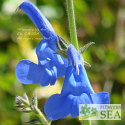
(Guanajuato Giant Gentian Sage) At 3 inches long, the flowers of this Gentian Sage are the largest of any we grow. Guanajuato Giant is also unique for its tall, upright growth and heavily textured foliage. This is our own tested seed strain of this rare plant.
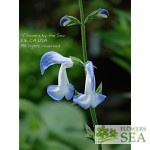
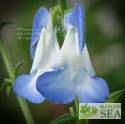
(Dot's Delight Bicolor Gentian Sage) This sage turns heads, because its large, white and blue bicolored flowers make it a unique variety of Gentian Sage. Developed in the UK, Dot's Delight is less vigorous and less sun tolerant than other varieties of the species. This is our own tested seed strain of this rare plant.
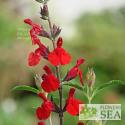
(Radio Red Autumn Sage) Dark calyxes support true red blossoms in Salvia greggii 'Radio Red', a 2015 introduction from the Darwin Perennials division of Ball Seed. Its tiny, smooth, elliptical leaves form a light, airy backdrop for the dramatic flowers.
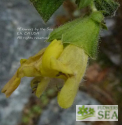
(Campanula Leaf Sage) The deep yellow flowers of Campanulata Leaf Sages are scarce among Salvias. Salvia campanulata CC#7706 is a sunny Himalayan beauty.
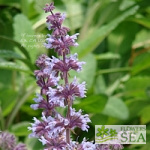
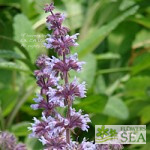
(Lilac Sage) We try not to brag too much, but this is our own variety of Salvia verticillata from home-grown seed, and we think it is spectacular. Butterflies and honeybees also are in love with this long-blooming perennial beauty.
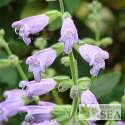
(Mystery Yunnan Sage) Sometimes we come across a beauty that has no name. This lovely species from China's Yunnan province is an excellent example. Aside from lacking scientific and common names, it arrived here as an imported seed with little information about how the plant was discovered.
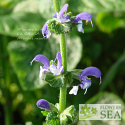
(Bi-Color Meadow Sage or Meadow Clary Sage) Exceptionally cold tolerant, Salvia pratensis 'Proud Mary' is our own seed-grown strain of a plant identical to the patented S. pratensis 'Madeline'.
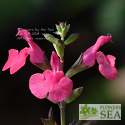
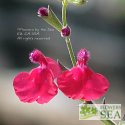
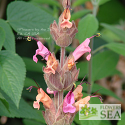
(Apricot Rose Hummingbird Sage) Large clusters of warm, apricot colored blossoms that age to a warm pink top the tall, thick flower spikes of this sage. This variety was selected from our warm apricot to peach seed strain and has truly unique coloration.
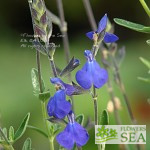
(Elk Blue Note Sage) In Europe and Australia there is a popular and widely used seed grown Salvia variety called 'Blue Note'. Our offering, 'Elk Blue Note', is the result of several generations of careful breeding and selection.
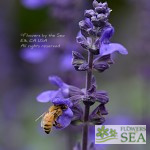
(Big Blue Sage) This new seed-grown strain can best be described as a much improved Indigo Spires Sage. It has deep blue-green, corrugated leaves and lots of deep blue flower spikes that bloom from summer till the end of the growing season.
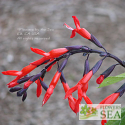
(Big Mexican Scarlet Sage) This heavily blooming Salvia from Mexico has heart-shaped leaves and spectacular flower spikes up to 18 inches long from winter through spring. The blooms are bright red-orange with rich purple-black calyxes.
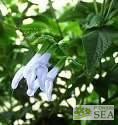
(Argentina Skies Anise-Scented Sage) PLEASE NOTE: A superior variety, 'Elk Argentina Skies' is now available.
The licorice-like fragrance of its foliage and the big whorls of large, sky blue flowers make this a stand-out sage. Tall and wide, it forms a tidy, long blooming background, screen or border.
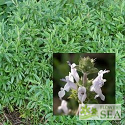
(Black Sage or Honey Sage) One of the most common and fragrant native shrubs in Central California's Coast Ranges, Black Sage is ideal for dry gardens. Admirably adaptable, it tolerates soils ranging from the most marginal to ones that are loamy and provide excellent drainage. It is a survivor.
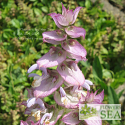
(Clary or Clear Eye Sage or Eyebright) Pink-purple bracts and violet-purple flowers form a pastel cloud over the large, rumpled leaves of Clary Sage in summer. It is a towering beauty growing up to 5 feet tall. Sacred to some due to age-old use in herbal remedies, it is heavenly to look at.
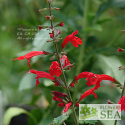
(Cedar Sage) Scarlet flowers abound on this small, mounding, woodland sage that is native to Texas, Arizona and Northern Mexico. Grow it as a small scale groundcover or mix it with other shade-loving sages in a perennial border or along a path.
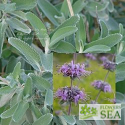
(California Purple Sage or California Gray Sage) This California native is commonly known as Purple Sage for its flowers or Gray Sage for its silvery, velvety foliage. Due also to its hardiness, drought tolerance and ability to attract small wildlife, it is a joy in the dry garden.
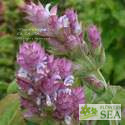
(Italian Clary Sage) Clary Sages are well known for their use in folk remedies, aromatherapy and cosmetics. Glowing purple bracts frame the spectacular white blooms of this cultivar on 5-foot-tall spikes. It is a delight for honeybees, hummingbirds and butterflies.
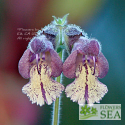
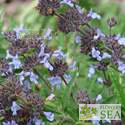
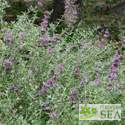
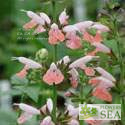
(Brenthurst Tropical Sage)Tropical Sage is popular as an annual throughout America and as a perennial in warm zones. It is particularly beloved in the Deep South where it withstands heat, wind, heavy rains and excessive humidity to bloom prolifically season after season. Brenthurst is a coral-flowered cultivar with dramatic, dark bracts and bright green, heart-shaped leaves.
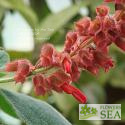
(Giant Colombian Red Mountain Sage) In 1898, physician and medical plant researcher Henry Hurd Rusby (1855-1940) found this towering sage with large, deep red flowers in the Sierra Nevada de Santa Marta mountains of Colombia.
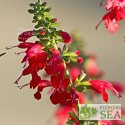
(Lady in Red Tropical Sage) Lady in Red is a variety of Salvia coccinea Juss. ex Murray, which is often called Texas Sage. It is the best red-flowering Tropical Sage that we grow.
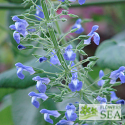
(Amethyst Sage) Growing up to 12 inches long, the triangular basal leaves of Salvia amethystina subsp. ampelophylla are the largest we know among sages. They have long silky hairs on their undersides and are fragrant when bruised.
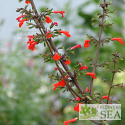
(Tall Red Colombian Sage) Salvia rubescens subsp. dolichothrix may tower over your head when in full bloom with its creamy red trumpet blossoms and dark calyxes. Its leaves are large and attractively textured.
(Campanula Leaf Sage) The deep yellow flowers of Campanula Leaf Sages are scarce among Salvias. If British plant explorer Chris Chadwell is correct, what he has identified as Salvia aff. campanulata 'CC#7713' should be a sunny Himalayan beauty.
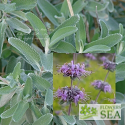
(Spreading California Purple Sage or Spreading California Gray Sage) Songbirds love this California native as do honeybees and hummingbirds. This Salvia leucophylla clone was collected in 1982 by Dr. Dale Smith of University of California Santa Barbara (UCSB #82152) at Point Sal near Santa Barbara.
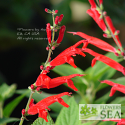
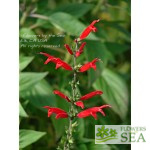
(Elk Sonoran Red Pineapple Sage) A new Pineapple Sage variety that has the traditional fruity fragrance but blooms much earlier in the season than the traditionally grown clone. Short and compact, it resembles the varieties 'Honey Melon' and 'Tangerine' size wise, but has the unmistakable aroma of ripe pineapples.
Results for seed from the blog
| Salvia Small Talk |
| 1. Salvia Small Talk: A Sage-Seed Cafeteria for Birds |
| Deadheading spent Salvia flowers helps to prolong bloom time. However, if you enjoy the company of songbirds and game birds in your garden, let some of the flower spikes go to seed, especially at the end of the plant's flowering season. |
| New at FBTS |
| 2. Himalayan Sage Is the Salvia Collector’s Holy Grail: Part 1 |
| For plant collectors, a mystique surrounds rare species like Salvia hians (Himalayan or Kashmir Sage). This is especially true when there is uncertainty about what the plant should look like. Perhaps the most famous image of S. hians is a 2012 photograph of UK plant collector Chris Chadwell next to an abundantly blooming stand of large violet-blue flowers with white lower lips. Why doesn’t the Flowers by the See variety of this rare species look exactly like the plant Chadwell found — a plant that seems to be the Holy Grail of Salvia collectors? We’ll do our best to explain. |
| Views from the Garden |
| 3. Growing Salvia from Seed at FBTS |
| In this video, Flowers by the Sea horticulturist and co-owner Kermit Carter explains a simple method for starting Salvias from seed. First, he mixes a pinch each of two powdered inoculants into enough potting soil for a plant. Carter explains that the inoculants combat bacterial diseases, strengthen roots and aid transfer of nutrients from the potting soil, which is a soilless mix containing peat, perlite and biofungicides. He places the soil in a short, 3 1/2-inch container and tamps it down gently so the pot is about half full. Next, he adds an inch of lava gravel mixed with perlite to improve drainage so seedlings won't rot. The final steps include scattering seeds on the lava mix, then applying an ultra-thin layer of horticultural grit, such as crushed granite, on top before watering. The grit keeps the seeds in place but allows sunlight to penetrate for germination. FBTS Growing Salvia from Seed is part of the Views from the Garden video series published in the Everything Salvias blog of Flowers by the Sea, a horticultural farm and an online, mail order plant nursery. |
| Quick Digs |
| 4. Quick Digs: Inventorying Salvias and Tools for Spring Gardening |
| This is the first article in our new Quick Digs series about preparing for spring in Salvia gardens. As spring approaches and daylight grows longer, first steps for preparing Salvia gardening include recording sages already planted before planning new purchases, repotting cuttings and seedlings, inventorying garden tools and turning the compost heap. When the first new growth arrives, you'll be prepared to remove weeds before they choke sages and other perennials that are re-emerging. |
| Ask Mr. Sage |
| 5. Ask Mr Sage: What Kind of Plant Is a Clone? |
| It's helpful to understand botanical terminology such as clone, variety, and cultivar. Mr. Sage explains what the three words mean and how the processes of cloning and plant development work. Ask Mr. Sage is a regular feature of the FBTS Everything Salvias Blog and is based on questions from customers. |
| Sacred Sages |
| 6. A Guide to Growing and Respecting Sacred White Sage |
| White Sage (Salvia apiana) is a sacred plant for Native Americans, especially tribes in its Southern California native lands. It's a challenging plant to grow. Flowers by the Sea Farm and Nursery talks about the history and religious use of Salvia apiana as well as providing a guide to growing it. |
| Portraits in Gardening |
| 7. Portraits in Gardening: Ward Dasey |
| Portraits in Gardening is a blog series from Flowers by the Sea that profiles customers who are passionate about the Salvia genus. This article focuses on wildlife gardener, birder and dedicated volunteer Ward W. Dasey III, who grows Salvias at New Jersey's Palmyra Cove Nature Park. Dasey and nature-loving friends proposed the park to make bird watching easier on the Delaware River. |
| Butterflies in the Garden |
| 8. Growing Habitat: Three Tough Milkweeds to Help Monarchs |
| Flowers by the Sea Farm and Online Plant Nursery is serious about wildlife gardening and grows a number of milkweed species considered among the best for supporting Monarch butterflies. Three of the nursery's toughest, loveliest milkweeds are Indian Milkweed (Asclepias eriocarpa), Showy Milkweed (Asclepias speciosa) and Common Milkweed (Asclepias syriaca). Read about the history of milkweeds and the reasons why Monarch butterflies are threatened due to a shortage of these tough yet lovely plants caused by herbicides. Learn how herbicides and pesticides harm Monarchs and other milkweed-loving pollinators. |
| 9. Pretty, Practical Cottage Gardens Rooted in Pandemic History |
| Romantic visions of small, rose-covered houses with thatched roofs and bountifully blooming yards don't tell the story of how cottage gardens came to be in the Middle Ages due to a devastating pandemic. FBTS Farm and Online Nursery talks about cottage gardening past and present. |
| Quick Digs |
| 10. Quick Digs: Prepping and Overwintering in Salvia Gardens |
| In autumn, even while the days are bright and balmy, you may be wondering how to help favorite Salvias survive local winter temperatures and freeze-thaw cycles. Although we can't offer you foolproof solutions, we provide ideas in this first article of our Quick Digs series on winter mulching Salvias and overwintering them both outside and indoors. |
| Sage Words About Wildlife |
| 11. Sage Words About Wildlife: Threats to Monarch Butterfly Migration |
| Declining numbers of Monarch butterflies is an ongoing problem. Due to research by organizations such as Monarch Watch and the Xerces Society as well as tracking efforts by the Mexican government, we now know about the dramatic ups and downs the species has experienced in the past 20 years. At Flowers by the Sea Online Nursery, we grow butterfly favorites to help you plant gardens supporting the migration of Monarchs and other butterflies. |
| Salvia Small Talk |
| 12. Salvia Small Talk: Botanical Plant Names II |
| The conclusion of this series on plant names. |
Common terms in this search: guanajuato giant gentian sage inches long flowers largest any grow also unique its tall upright growth heavily textured foliage our own tested seed strain rare plant slow difficult propagate vegitatively we've developed variety more people can enjoy there minor variations but all large deep blue very close original clone spikes true rise make perennial standout garden from summer into fall