
Advanced Search
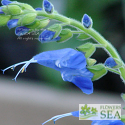
(Creeping Big Leaf Sage) Cobalt blue flowers float in airy clusters above the giant, velvety, green leaves of this South American native. Short and spreading by woody rhizomes, this is an ideal groundcover. As a bold statement in a container, it has no equal.
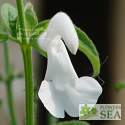
(White Trophy Gentian Sage) White Trophy loves partial shade and is the finest white Salvia patens available, with very large flowers that age to pale blue.
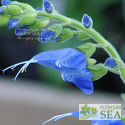
(Tall Big Leaf Sage) Cobalt blue flowers seem to float in airy clusters on 12-inch-tall branching spikes above the bright green, velvety foliage of this South American native. Up to 5-feet tall, tidy and upright in habit, this sage makes a fine background or border planting when massed.
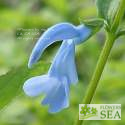
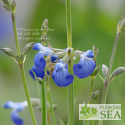
(Cambridge Blue Gentian Sage) Cambridge Blue is one of the most famous varieties of Salvia patens, which was discovered in Central Mexico in 1838. Its powder blue flowers are delightful and cooling in the landscape.
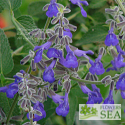
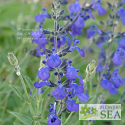
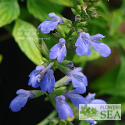
(Arizona Blue Sage) We are so impressed with this top-performing, drought-resistant ground cover that we have rated it best of class. Arizona Blue Sage is adaptable to a variety of shady conditions and blossoms so abundantly that it seems to have as many rich blue flowers as it has leaves. It is native to dry, shaded areas in mountain canyons in Arizona, New Mexico and Texas.
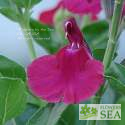
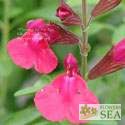
(Elk Pomegranate Autumn Sage) We're proud to say that this is an FBTS cultivar. It is one of the finest dark flowered, compact Autumn Sage varieties we have seen. Its extraordinarily large, raspberry blossoms bloom from spring into fall.
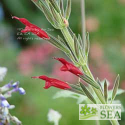
(Red Michoacán Sage) No other Salvia has flowers that are such a deep blood red. The 3-to-4 inch long tubular blossoms of this shade-loving shrub are displayed in clusters at the ends of the stems, which have light green, textured leaves that are almost round.
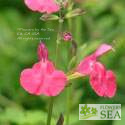
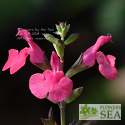
(Pink Preference Autumn Sage) Two-tone, hot pink flowers and contrasting bracts make this Autumn Sage stand out. This drought tolerant Autumn Sage from Central Texas is also compact, rugged, heat tolerant and capable of handling Zone 6 chill.
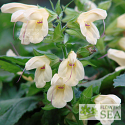
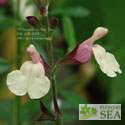
(Kyushu Woodland Sage) We are in love with this short forest sage from Kyushu, Japan. Its clusters of large creamy flowers pale as fresh-churned butter begin blooming in September. Even when not blooming, its foliage is showy in a shady garden.
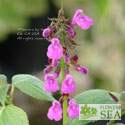
(Bolivian Mountain Sage) Neon lilac-pink flowers light up the handsome, furry foliage of this distinctive sage from high in the Andes cloud forests. Its large, textured leaves have dark, velvety purple undersides. Unhappy in dry heat, this is a very showy plant for humid climates.
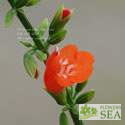
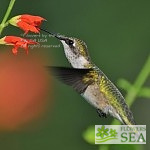
(Giant Brazilian Sage) Yes, this one is gigantic. The first season we grew this heat-tolerant sage, it reached 8 feet tall by July! Masses of small, red-orange, trumpet-shaped flowers attract hummingbirds and honeybees to long, upward curving flower spikes towering over heart-shaped foliage.
(san ye shu wei cao) So what do all those Pinyin words mean in this sage’s common name? We’ll give you an answer to the best of our ability in a minute. Meanwhile, we need to note that this medicinal Asian sage has handsome foliage and deep violet flowers.
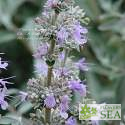
(Gayle Nielson Hybrid Sage) Whorl-like clusters of violet-blue flowers on slender stems as well as its height and width indicate that Gayle Nielson Hybrid Sage is related to some form of Salvia clevelandii.
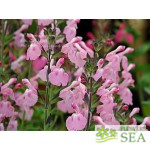
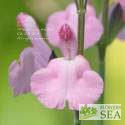
(Elk Cotton Candy Jame Sage) Rosy hairs on the upper lip and pale white throats highlight the translucent, blush pink blossoms of Elk Cotton Candy Jame Sage. Dark, deeply contrasting calyxes support the medium-size flowers.
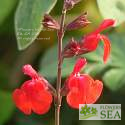
(Flame Autumn Sage) Crimson flowers contrast brightly against deep purple calyxes and stems in Flame Autumn Sage. The leaves -- tiny ellipses without veins -- are soft and shiver in the breeze.
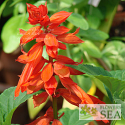
(Giant Red Scarlet Sage) Looking to fill in large shady area? This may be your best bet. This variety is largest that we know of, growing to 6 feet - 7 feet - or even more in a sheltered shady spot.
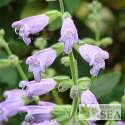
(Mystery Yunnan Sage) Sometimes we come across a beauty that has no name. This lovely species from China's Yunnan province is an excellent example. Aside from lacking scientific and common names, it arrived here as an imported seed with little information about how the plant was discovered.
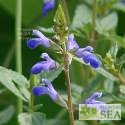
(Arizona Deep Blue Sage) In contrast to the lavender-blue flowers of Arizona Blue Sage (Salvia arizonica), the blossoms of Arizona Deep Blue are nearly purple. They are the kind of deep lavender that you might see in a southwestern sunset.
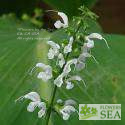
(White Meadow Sage) Whorls of pure white flowers shaped like parrot beaks rise on tall spikes from the wrinkly, basal foliage of Salvia pratensis 'Swan Lake'. The large, mid-green leaves have attractively serrated edges.
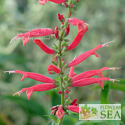
(Frieda Dixon Pineapple Sage) Most varieties of Salvia elegans have bright red flowers. But Frieda Dixon Pineapple Sage, which blooms abundantly beginning in late fall, has softer salmon-pink blossoms set against mid-green, lance-shaped leaves.
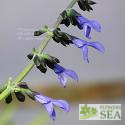
(Huntington Garden Mexican Sage) In areas with mild end-of-year weather, this sage is a tower of nectar for hummingbirds. Large blue-to-purple flowers shaped like open parrot beaks reach out from dark calyxes. Their spikes stretch out horizontally and gently curve upward from the plant's mid-green foliage.
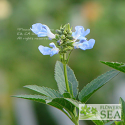
(Dwarf Bog Sage) Intense sky blue flowers with white beelines are set against mid-green foliage in this dwarf Bog Sage that is about half as tall and wide as its parent species when in bloom.
The following terms were added to your search to help improve the result. Click here to exclude these extra terms from the search.
- after
Results for afternoon from the blog
| New at FBTS |
| 1. Himalayan Sage Is the Salvia Collector’s Holy Grail: Part 1 |
| For plant collectors, a mystique surrounds rare species like Salvia hians (Himalayan or Kashmir Sage). This is especially true when there is uncertainty about what the plant should look like. Perhaps the most famous image of S. hians is a 2012 photograph of UK plant collector Chris Chadwell next to an abundantly blooming stand of large violet-blue flowers with white lower lips. Why doesn’t the Flowers by the See variety of this rare species look exactly like the plant Chadwell found — a plant that seems to be the Holy Grail of Salvia collectors? We’ll do our best to explain. |
| Cultivating Color |
| 2. Bedding Plant Royalty: Splendid Salvia Splendens |
| If the world were to coronate a Salvia as its favorite annual, there's little doubt that a deep red variety of Scarlet Sage ( Salvia splendens ) would bear the sceptre. It's a long blooming, global favorite sometimes called Bedding Sage or Red Sage. When it was first introduced to horticulture in 1822, it was known as Lee's Scarlet Sage. Flowers by the Sea Online Nursery explains the growth habits and history of Scarlet Sage and suggests numerous favorite cultivars to add grandeur to your garden. |
| 3. Fall Planting: 8 Sages for Fragrance by Your Front Door |
| Colorful plantings make entryways attractive. Even better are pretty plantings that are fragrant and provide a sensory lift before you journey indoors. Scent wakes up memories and makes us see in a different way. Here are eight sensible suggestions for adding lovely scents to your landscape. |
| Sacred Sages |
| 4. Sacred Sage: Giant Bolivian Sage |
| Of all the mint family's more than 6,500 species worldwide, Giant Bolivian Sage (Salvia dombeyi) has the longest blossoms and tallest growth. Each tubular crimson flower grows up to 5 inches long and has a burgundy calyx at its base.The plant's bright green, heart-shaped leaves are equally long. In South America, the flowers are pollinated by hummingbirds with extremely long beaks. However, Giant Bolivian Sage don't need pollination to flower beautifully for many seasons if growing conditions are right. |
| New at FBTS |
| 5. Himalayan Sage Is the Salvia Collector's Holy Grail: Part 2 |
| Plants don’t have voices but they have stories to tell, including tales of discovery. It’s easy to see why the early 18th century plant explorer Victor Jacquemont would have paused to collect the rare Salvia hians while traversing broad expanses of northwestern India. This second half of our article about the alluring species digs into its history. |
| 6. In the Native Garden: Colorful California Salvias Plus a Cousin |
| Native plants, including California's many indigenous sages, are like the boys or girls next door who were overlooked until outsiders discovered their good looks and other fine attributes. Flowers by the Sea grows hardy, drought-resistant California Salvias that are native to a broad swath of the West Coast ranging from Northern Baja to Southern Oregon. Many tolerate heat. They are well suited to waterwise landscapes, including dry gardens. |
| Quick Digs |
| 7. Quick Digs: Zone 5-9 Groundcover Gardens for Damp Conditions |
| Quick Digs is a serial containing short posts focused on a central issue about Salvia gardening. The topic for the first series is Salvia groundcovers for weed control, and this is the third article. If you are a Salvia lover facing the difficult scenario of cold winters and damp soil, the sages listed here are right for winter conditions from USDA Zone 5 to 9. All are water-loving, shade-tolerant species and have handsome foliage that adds to landscaping even when the plants aren't blooming. By massing these plants, you gain coverage more rapidly and increase weed deterrence. |
| 8. Quick Digs: Prepping and Overwintering in Salvia Gardens |
| In autumn, even while the days are bright and balmy, you may be wondering how to help favorite Salvias survive local winter temperatures and freeze-thaw cycles. Although we can't offer you foolproof solutions, we provide ideas in this first article of our Quick Digs series on winter mulching Salvias and overwintering them both outside and indoors. |
| 9. Quick Digs: Zone 5 - 9 Weedbuster Gardens for Average Moisture |
| Quick Digs is a serial containing short posts focused on a central issue of Salvia gardening. The topic for the first series is Salvia groundcovers for weed control, and this is the second article. Baby, it can be cold outside in Zone 5 during the winter! But the roots of all of the tough Salvias listed here survive sustained frost and snow, then rise up again in spring. To minimize weed growth, the best defense is the good offense of dominating a flowerbed with sages, especially mat-forming groundcovers. |
| Salvias Down South |
| 10. Salvias Down South: How Salvias Behave in Florida |
| Salvias that grow well in Florida may behave differently from one region of the state to another. This may mystify gardeners who have just moved to Florida or have moved to a different area in the state. Based primarily on seasonal variations in temperature, the four main regions are North, Central, South and Tropical Florida. |
| Salvia Small Talk |
| 11. Salvia Small Talk: Researching Before Ordering |
| Researching a Salvia before buying it means considering its traits and seeing if it fits your climate and proposed planting site. I know Aristotle did his research! |
| 12. Salvia Small Talk: Too Much Sunlight? |
| Synopis: In high-altitude, dry climates, some afternoon shade is good for full-sun Salvias. |
Common terms in this search: creeping big leaf sage cobalt blue flowers float airy clusters -inch spikes above velvety green leaves south american native from summer into fall short spreading woody rhizomes ideal groundcover foliage herbaceous perennial looks similar sweet potato dramatic container border raised planter its giant heart-shaped cascading over sides some gardeners grow houseplant fast-growing adaptable almost full sun cool climates shade however