
Advanced Search
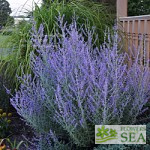
(Rocketman Russian Sage) A cloud of cool, lavender-blue flowers shoot upward from the fine-leafed, gray-green foliage of Salvia yangii ‘Rocketman’. This is a shorter, more upright form of Russian Sage, which was known botanically as Perovskia atriplicifolia until 2019 when the species was reclassified as a Salvia.
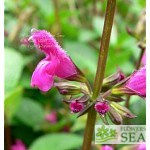
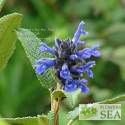
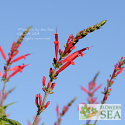
(Pineapple Sage) An indispensable fall-blooming addition to the garden, this tender perennial is, perhaps, the best of all hummingbird plants. When in bloom, it is covered in 3-inch-long red flowers.
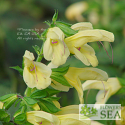
(Shinano-akigiri) Japan's largest island, Honshu, is home to Salvia koyamae, a shade- and moisture-loving herbaceous perennial that is perfect for woodland gardens or shady borders. It is notable for yellow flowers, which bloom from late summer into fall, as well as arrow-shaped foliage.
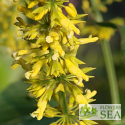
(Forysthia Sage) This statuesque perennial grows up to 10 feet tall, but spreads only 3 feet wide. It is a late bloomer from Mexico's Sierra Madre Oriental mountains where it grows at altitudes of 4,000 to 5,000 feet and tolerates temperatures down to 20 degrees F.
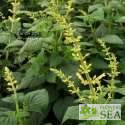
(Red Stem Forsythia Sage) The thick, square, red stems of this variety of Forsythia Sage make it conspicuously different from the species and from everything else in your garden. Its jointed stalks look a little like rhubarb gone mad!


(Waverly Sage) A pale pink to lavender blush adds delicate color to the white flowers of Waverly Sage, which are supported by plum-colored calyxes. Its mid-green leaves are lance shaped and veined.
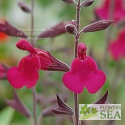
(Raspberry Delight Sage) Dark raspberry-red flowers, burgundy stems and calyxes and deep green foliage make this one of our most attention-grabbing varieties.
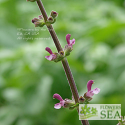
(Mid-East Sage) Native to the mountains shared by Israel and Lebanon, this tidy sage is drought resistant, heat tolerant and long blooming. Its basal foliage rises up and spreads only about 18 inches, but it has long flower spikes.
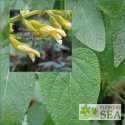
(Silver Leaf Forysthia Sage) It's the foliage of this clone that makes it so different from its parent plant. The leaves are a lovely silver and smaller than the green leaves of the species. However, they both have buttery yellow, Forsythia-like blossoms.
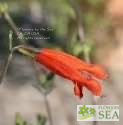
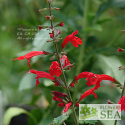
(Cedar Sage) Scarlet flowers abound on this small, mounding, woodland sage that is native to Texas, Arizona and Northern Mexico. Grow it as a small scale groundcover or mix it with other shade-loving sages in a perennial border or along a path.
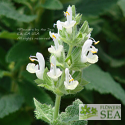
(Mauretania Tingitana Sage) Native to Northern Africa and Saudi Arabia, this sage gets by on little water. and has a long history of cultivation going back 400 years. It wove throughout various countries in the Middle East and North Africa before arriving in Europe in the 1700s and was first described scientifically in 1777.
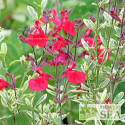
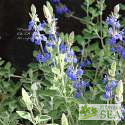
(Marine Blue Sage) The name and origin of this fine cultivar has long been in dispute. It may be a clone or hybrid of the Mexican plant Salvia chamaedryoides var.isochroma. It is one of the prettiest, strongest sages we grow.
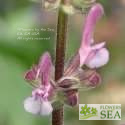
(Jerusalem Sage) This lovely herbaceous perennial is native to Cyprus, Israel, Jordan, Lebanon, Syria, and the West Bank. Its clear pink flowers change at times to a pink highlighted with violet lines and dots. Prominent glandular hairs on the buds, bracts and floral stems exude a fragrance that is delightful on a warm day.

(Autumn Purple Sage) Small but numerous, the flowers of this sage are a variable shade of light purple that is unlike any other we grow. Native to Southern Mexico and Guatemala, this shrub regularly grows up to 5 feet tall (or taller) and 4 feet wide.
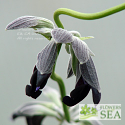
(Purple Bract Peruvian Sage or Concolor Sage) Similar to its wild relative, Peruvian Sage, which is also known as Concolor Sage, this cultivar has foliage that is smooth, apple green on top and fuzzy with silver hairs on the bottom. Major differences appear in the dramatic bracts.
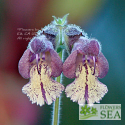
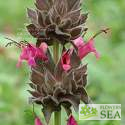
(Giant Hummingbird Sage or Pitcher Sage) Powerline Pink is the largest variety of Salvia spathacea that we grow. Its large, dark pink flowers are surrounded by bracts so furry that they look silvery.
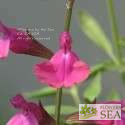
(Plum Wine Autumn Sage) Frilly, lavender-tinged, pink flowers with a pretty white dot at the throat make this another outstanding contribution from North Carolina nurseryman Richard Dufresne.
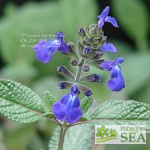
(Elk Blue Little Sage) if it were up to us, we would never have named this plant Little Sage. Although it is dainty, it is also one of the most fascinating species we grow. We particularly love its pebbly, oval leaves that are a shiny purple/green on top and a furry white below.
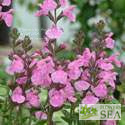
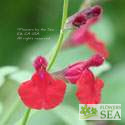
(Cherry Red Mountain Sage) This isn't just another red sage. Brilliant cherry-red flowers with dark purple bracts and cold weather tolerance to USDA Zone 6 make this a valuable landscaping plant.
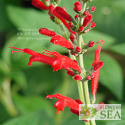
(Cinnabar Sage) Think of this plant as Pineapple Sage on steroids. It grows 5 feet tall and can be twice as wide and bursts with large, intensely red, furry flowers all winter. Our overwintering hummingbirds adore it. This cinnabar-red sage is hard to forget once you see it in full bloom.


(Giant Brazilian Sage) Yes, this one is gigantic. The first season we grew this heat-tolerant sage, it reached 8 feet tall by July! Masses of small, red-orange, trumpet-shaped flowers attract hummingbirds and honeybees to long, upward curving flower spikes towering over heart-shaped foliage.
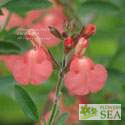
(Tangerine Ballet Hybrid Jame Sage) Soft pinkish-orange flowers with contrasting yellow eyes make this Jame Sage look as tasty as sorbet. Hardy to at least 10 degrees F, Tangerine Ballet is also heat tolerant, drought resistant and long blooming-- all marks of Salvias in the closely related Autumn and Mountain Sage group.

(Anatolian Cushion Sage) Rising up only 6 to 8 inches, this is a pixie-sized sage that loves gritty soils. It is perfect for dry gardens with gritty soils in USDA Zones 5 to 9. In fact, it seems to love the colder zones best. We think it is particularly fond of frozen ground in winter, because that helps keep its roots from getting too damp.
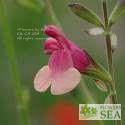
(Shell Dancer Sage) So many sages combine resilience and loveliness. This includes Salvia 'Shell Dancer', which withstands heat and drought yet has delicate looking blossoms and lush green foliage.
The following terms were added to your search to help improve the result. Click here to exclude these extra terms from the search.
- form, formation, former
Results for forms from the blog
| 1. Plant Safari Salvia in the South African Fynbos -- Part 2 |
| Flowers by the Sea is a home away from home for a number of South African Salvias that enjoy our moderate, Mediterranean climate. None are endangered species, but all face the threat of land development in the Western Cape's Fynbos Biome -- unparalleled for its variety of medicinal and ornamental native plants found nowhere else in the world. Preservationists are working to balance changes in land use and to maintain biodiversity in the CFR. Brutal poaching of rhinoceroses is one of the toughest problems they face. |
| Portraits in Gardening |
| 2. Portraits in Gardening: Michael and Kathi Rock's Hummingbird Journey |
| A wedding gift led to Kathi Johnson Rock and Michael Rock's passion for hummingbirds. These Wisconsin birders offer tips and plant suggestions for hummingbird gardeners at FBTS. Although now known as Madison's "Hummingbird People," the Rocks aren't ornithologists or biologists. They are home gardeners and customers of Flowers by the Sea. This article includes a list of favorite hummingbird plants found in the Rocks' gardens. |
| Sage Experts |
| 3. Sage Experts: Nancy Newfield, Hummingbird Gardener, Part III |
| It is ironic that one of the least social types of birds inspires so much sociability in human beings. We refer to hummingbirds, which are the object of festivals and the communal effort of bird banding research nationwide. This is the third and final article in a series about renowned hummingbird expert Nancy L. Newfield, who grows many Salvias in her hummingbird gardens. We recount a visit to Louisiana to observe Newfield and her team banding hummingbirds in winter. You'll also find a rainbow of top hummingbird Salvias listed here. (Photo credit: John Owens) |
| Cultivating Color |
| 4. Cultivating Color: Tracking the Elusive History of Autumn & Mountain Sage Warm Pastel Hybrids -- Part II |
| Luminous Salvia x jamensis pastel flowers began warming up nursery catalogs in the late 1990s. Their journey from steep Mexican mountains to American and European gardens began in the mid-19th century with the discovery of Autumn Sage (Salvia greggii). This is the second post in a two-part article about these Jame Sage hybrids of Autumn and Mountain Sage (S. microphylla). It includes descriptions of ten favorite Jame Sages. |
| 5. True Blue Salvias You Can Rely On for Garden Serenity |
| Forget all the mournful music telling you that blue is the color of sadness. In a Salvia garden filled with hot colors, true blue is a peacemaker -- a reliable harmonizer that commands peace in the garden. This article talks a tiny bit about football, Madonna and the chemistry of true blue flowers. Then it offers a lot of true blue sages for gardens coast to coast from our Flowers by the Sea Online Nursery catalog. |
| Quick Digs |
| 6. Quick Digs: Zone 5 - 9 Weedbuster Gardens for Average Moisture |
| Quick Digs is a serial containing short posts focused on a central issue of Salvia gardening. The topic for the first series is Salvia groundcovers for weed control, and this is the second article. Baby, it can be cold outside in Zone 5 during the winter! But the roots of all of the tough Salvias listed here survive sustained frost and snow, then rise up again in spring. To minimize weed growth, the best defense is the good offense of dominating a flowerbed with sages, especially mat-forming groundcovers. |
| Salvia Small Talk |
| 7. Salvia Small Talk: Deadheading Versus Pruning Sages |
| Deadheading refers to light pruning — or trimming — of withered flowers during the growing season. It makes ornamentals, like Salvias, look tidy and encourages repeat bloom. In contrast, pruning is a heavier shearing that usually occurs at the beginning and end of the growing season. |
| Salvias Down South |
| 8. Salvias Down South: Salvia Success in Florida |
| Florida is one of the wettest states in the nation, yet it is a fine place to grow Salvias if you select shade-tolerant, moisture-loving species and ones native to Florida. Gardeners who are accustomed to growing Salvias in a dry climate face a variety of surprises in Florida gardens. These include recurrent periods of drought, many cloudy days and soil that is so poor it has to be amended for Salvias. |
| Container Gardening |
| 9. A Guide to Successful Potting Soils for Salvias |
| One of the decisions that Salvia gardeners face in spring is what kind of potting mix to use for outdoor container plants. Find answers in FBTS Farm & Online Nursery's guide to successful potting soils for Salvias. |
| Ask Mr. Sage |
| 10. Ask Mr. Sage: When Is It Too Late for Autumn Planting? |
| Learn how to determine the best start and stop times for fall planting. Ask Mr. Sage is a Q&A feature based on topics raised in calls and emails to Flowers by the Sea. This post concerns fall planting and provides tools for making decisions based on local frost dates and temperatures. |
| Cultivating Color |
| 11. Cultivating Color: New FBTS Tools Aid Garden Design |
| Have we got tools for you! No, we aren't selling Ginzu clippers, rust-free shovels, a miraculous compost-in-minutes machine or anything requiring payments. We're talking about a set of color tools for accurately visualizing and comparing the floral and foliage colors of Salvias. As you wander through the riot of hues in our online catalog at Flowers by the Sea, these tools aid plant selection and landscape planning. Beginning in fall 2014, we began identifying the colors of all FBTS plants based on the internationally standardized color system published by the U.K.'s Royal Horticultural Society. This improves descriptions of plant colors and makes color comparisons of plants easier for garden design. |
| Shade Gardening |
| 12. Made for Shade: Japanese Woodland Salvias |
| Sturdy, shade-loving Japanese Salvias are lovely additions to woodland gardens with their lush, large-leafed foliage and delicate-looking flowers in colors including pinks, purples and yellows. They're ideal for bordering shady paths where they invite visitors to pause for close-up views. Flowers by the Sea suggests Japanese species for woodland gardens and organizes them according to their cold hardiness. |
Common terms in this search: rocketman russian sage cloud cool lavender-blue flowers shoot upward from fine-leafed gray-green foliage yangii 'rocketman' shorter more upright form which known botanically perovskia atriplicifolia 'rocketman'until when species reclassified distance looks like large lavender shrub similar many other mint family plants fragrant tolerates cold heat drought long blooming lovely focal point low-water cottage garden massed border along walkway boundary container planting