
Advanced Search
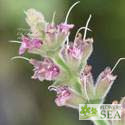
(Eig's Sage)Bicolor ruby and pale pink flowers bloom winter to spring on this small sage that is native to Northern Israel. Salvia eigii is at home in the silty, gravelly loam of low fallow fields near rivers. So it does best in rich soil aerated with plenty of humus.
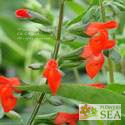
(Eyelash Sage) All Salvia blepharophylla varieties are native to Mexico, but this one was hybridized in Germany by plant breeder Christiaan Unger. Hairs on the edge of the sageâs dark green leaves give it the appearance of having eyelashes. It is a compact, slightly mounding Salvia that spreads gradually by underground stolons.
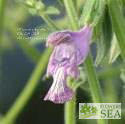
(san ye shu wei cao) So what do all those Pinyin words mean in this sage’s common name? We’ll give you an answer to the best of our ability in a minute. Meanwhile, we need to note that this medicinal Asian sage has handsome foliage and deep violet flowers.
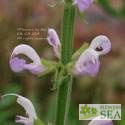
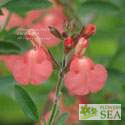
(Tangerine Ballet Hybrid Jame Sage) Soft pinkish-orange flowers with contrasting yellow eyes make this Jame Sage look as tasty as sorbet. Hardy to at least 10 degrees F, Tangerine Ballet is also heat tolerant, drought resistant and long blooming-- all marks of Salvias in the closely related Autumn and Mountain Sage group.

(Anatolian Cushion Sage) Rising up only 6 to 8 inches, this is a pixie-sized sage that loves gritty soils. It is perfect for dry gardens with gritty soils in USDA Zones 5 to 9. In fact, it seems to love the colder zones best. We think it is particularly fond of frozen ground in winter, because that helps keep its roots from getting too damp.
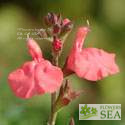
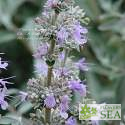
(Gayle Nielson Hybrid Sage) Whorl-like clusters of violet-blue flowers on slender stems as well as its height and width indicate that Gayle Nielson Hybrid Sage is related to some form of Salvia clevelandii.
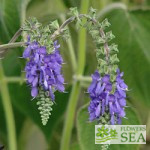
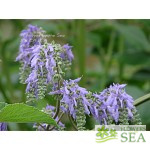
(Nodding Sage) "Dancing in the air" is how garden writer Joseph Tychonievich describes the tall, graceful flower spikes of Nodding Sage, which can tower up to 5 feet tall over the plant's 18-inch-tall foliage during the summer flowering season.
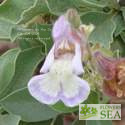
(Pilgram's Rest Pink Sage) Spring into summer, this heat-tolerant sage from South Africa produces lilac and white blossoms with profuse, fragrant, gray foliage. It's the burgundy calyxes, which turn a rusty pink after the flowers blossom, that give this sage part of its common name.
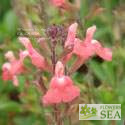
(Salmon Autumn Sage) Creamy salmon-colored flowers with white throats make this elegant Autumn Sage perfect for a pastel garden or as a cooling color in a mixed sage border. Bloom time is spring into fall for this petite Salvia greggii native to the American Southwest and Mexico.
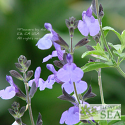
(Elk Blue Moon II Jame Sage) The phrase "blue moon" signifies a rare event. Elk Blue Moon Jame Sage is an unusual combination for a Salvia x jamensis hybrid -- dusky violet flowers with pale-blue throats, dark blue calyxes and mid-green foliage.
Note: This is a new (2014) cultivar that we chose to replace the original 'Elk Blue Moon'. It is a superior grower, and otherwise very similar.
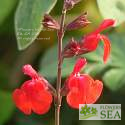
(Flame Autumn Sage) Crimson flowers contrast brightly against deep purple calyxes and stems in Flame Autumn Sage. The leaves -- tiny ellipses without veins -- are soft and shiver in the breeze.
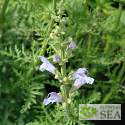
(Xobo Valley Sage) Although petite, the rare Xobo Valley Sage is eyecatching due to its lacy, bright green foliage and powder blue flowers. It's even possible that this long-blooming sage may have caught Nelson Mandela's eye as he grew up in the Wild Coast area of South Africa's Eastern Cape.
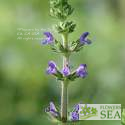
(Wild Sage) Toothed and attractively wrinkled, the gray-green, basal foliage of Wild Sage contrasts prettily with deep lavender-to-purple flowers supported by grassy green bracts. This cold-hardy sage is native to northern Africa and parts of Asia and Europe.
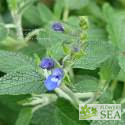
(Furry Colombian Sage) The leaves of this rare shrub are a glossy mid-green on top and fuzzy with hairs underneath, which is why it's commonly called Furry Colombian Sage.
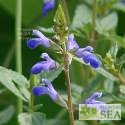
(Arizona Deep Blue Sage) In contrast to the lavender-blue flowers of Arizona Blue Sage (Salvia arizonica), the blossoms of Arizona Deep Blue are nearly purple. They are the kind of deep lavender that you might see in a southwestern sunset.
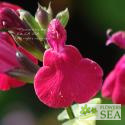
(Killer Cranberry Mountain Sage) Masses of magenta flowers on tall spikes lure honeybees and hummingbirds to the rich nectar of Salvia microphylla 'Killer Cranberry'. Its prolific flowers are a killer attraction for people too.
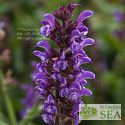
(Lyrical Silvertone Meadow Sage) European Meadow Sages are known for their intense color. However, Salvia nemorosa 'Lyrical Silvertone' is exceptional for its violet-blue and silver two-tone flowers supported by dark calyxes.
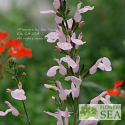
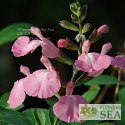
(Elk Pink Cloud Sage) Abounding with clusters of large, soft pink flowers on spreading branches, Salvia x 'Elk Pink Cloud' has a fluffy, cumulonimbus look when spilling over the edges of a hanging basket
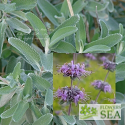
(Spreading California Purple Sage or Spreading California Gray Sage) Songbirds love this California native as do honeybees and hummingbirds. This Salvia leucophylla clone was collected in 1982 by Dr. Dale Smith of University of California Santa Barbara (UCSB #82152) at Point Sal near Santa Barbara.
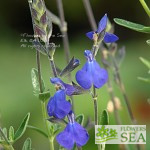
(Elk Blue Note Sage) In Europe and Australia there is a popular and widely used seed grown Salvia variety called 'Blue Note'. Our offering, 'Elk Blue Note', is the result of several generations of careful breeding and selection.
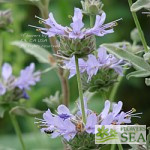
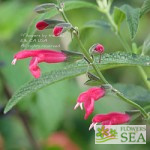
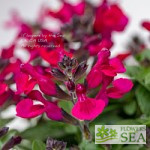
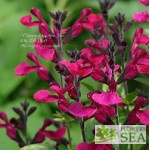
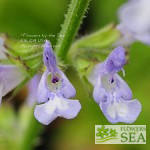
(Cut Leaf African Blue Sage) In botanical names, aurita means “ear shaped.” It’s the ear-like lobes of this sage’s leaves that give the species part of its name Salvia aurita ssp. galpinii. The cut leaf foliage is heavily lobed, mint green and lightly hairy.
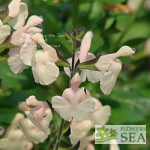
(Elk Morning Sun Jame Sage) Kelly green and black calyxes support the long blooming, creamy white and pale pink flowers of Salvia x ‘Elk Morning Sun’. A waterwise sage, it likes average watering but resists drought.
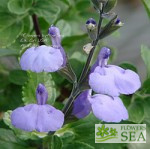
(Elk Blue Moon III Jame Sage) Dark calyxes cup dusky blue flowers that age to lavender and rise up from the veined, mid-green foliage of Salvia x ‘Elk Blue Moon III’.
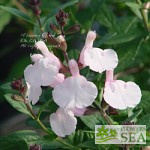
(Elk Pink Cloud Jame Sage II) Abounding with clusters of large, soft pink flowers on spreading branches, Salvia x ‘Elk Pink Cloud II’ looks like a fluffy, cumulonimbus cloud.
The following terms were added to your search to help improve the result. Click here to exclude these extra terms from the search.
- groundcovers
Results for groundcover from the blog
| Salvias Down South |
| 1. Salvias Down South: 15 Thirsty Salvias for Florida |
| Flowers by the Sea grows Salvias that are already popular in the Southeast as well as others we would like to introduce to gardeners seeking thirsty flowering plants that can also adjust to dry spells. Many are fine choices for Florida hummingbird gardens. Our suggestions are organized into categories based on moisture tolerance – average and ample -- as well as sun requirements. |
| Butterflies in the Garden |
| 2. Salvias Down South: Southern California Butterfly Favorites |
| Wildscaping a butterfly-friendly garden in Southern California is an act of kindness, especially toward imperiled species. Gardeners from Santa Barbara southward may want to group coastal sage and chaparral plants in their butterfly gardens, because those are among favorite sources of nectar for adult butterflies and host plants for caterpillars. Sages are popular nectar choices. Plants, such as Milkweeds and Impatiens, that work well both as nectar providers and caterpillar hosts are important additions. |
| Salvias Down South |
| 3. Salvias Down South: Tough Texans Sing the Blues |
| Blue Salvias bring peace to flower gardens. True blues, such as West Texas Grass Sage (Salvia reptans), are especially eye-catching. The same anthocyanins that make berries a healthy dietary choice also give them their colors. Similarly these chemicals create the wide variety of blues, purples and reds in the petals of flowers such as Salvias. Flowers by the Sea offers six varieties of tough Texas sages that can help you create a soulful garden bursting with blue. Drought-resistant and long-blooming, they grow happily in USDA plant hardiness zones 8 to 9, with some flourishing in areas as cool as Zone 4 and as hot as Zone 11. |
| Book Reviews |
| 4. Book Reviews: Three Top Reads for Dry Gardening |
| Don’t think “drab” when you hear the phrase “dry garden.” With guidance from good books and a willingness to experiment, you can create colorful flowerbeds and landscapes that require little to no supplemental watering. Here is a quick overview of three books that are excellent resources about sustainable dry gardening. |
| Xeric Choices |
| 5. Xeric Choices: 5 Must-Have Native Salvias for Southern California |
| Native plants are the best ones for local conditions. But sometimes boundaries designating what is native may be artificial. Here are five outstanding Xeric Salvias for Southern California, including one, not far over the Baja border, that offers intense drought resistance and violet-blue flowers. |
| 6. About our Farm: Growing Sage by the Sea |
| Flowers by the Sea (FBTS) is a small, family farm that raises hundreds of species of Salvia and companion plants, including Plectranthus. We are proud of our beautiful plants, excellent customer service and 100 percent guarantee of satisfaction. |
| 7. A New Category - Autumn Sage & Mountain Sage |
| Without a doubt, this group of closely related plants are the most widely grown of the genus. From 'Hot Lips' to 'Texas Wedding', there is something here for everyone. |
| Book Reviews |
| 8. Book Review: Waterwise Plants for Sustainable Gardens |
| "font-style: italic;"> Lauren Springer Ogden and Scott Ogden are garden designers and writers who split their time between Texas and Colorado, but their suggestions for low water, xeriscapic landscaping can benefit gardeners far from the American West, Southwest and Deep South. The authors agree with their Dutch contemporary, Piet Oudolf, that a naturalistic landscape design based on local climate -- including water limitations -- is the most sustainable choice. |
| Cultivating Color |
| 9. Cultivating Color: Rare Yellows in the Salvia Garden |
| Among Salvias, one might say yellow represents rarity because, overall, it’s an uncommon flower color for sages. But China and Japan are home to a number of yellow-flowered species, especially shade-loving types. Read more at Everything Salvias. |
| Book Reviews |
| 10. Book Review: Lawn Gone! Low-Maintenance, Sustainable, Attractive Alternatives for Your Yard |
| Lawn Gone by Texas landscaper and garden writer Pam Penick concerns replacement or minimization of lawns through xeriscape, the art of planting attractive waterwise landscapes. Penick redefines suburban yards through designs including perennial groundcovers and small shrubs -- such as Autumn Sages ( Salvia greggii spp.) -- as well as ornamental grasses, sedges and hardscape, including water features. Flowers by the Sea specializes in Salvias and other xeriscapic plants. |
| New at FBTS |
| 11. Dig Deep & Fast for Salvias in Expanded Quick Look Galleries |
| Speedy access to well-illustrated, well-organized information is important. To help you dig deep and fast into the Flowers by the Sea online nursery catalog of Salvias and companion plants, FBTS has expanded its Quick Look Picture Galleries and information. |
| 12. Upcoming at FBTS: Hummingbirds Love Cute Cupheas |
| Bright orange, tube-shaped blossoms cover Cuphea x 'David Verity' like tiny windsocks blowing in a breeze and beckoning hummingbirds. Similar to Salvias, Cupheas are rich sources of nectar that fuel hummingbird migration. At Flowers by the Sea, we are always interested in expanding choices for creating wildlife habitat. So we are growing a wide variety of Cupheas for sale this coming spring, including David Verity. |
Common terms in this search: bicolor mulberry pale pink flowers bloom winter spring small sage native northern israel eigii home silty gravelly loam low fallow fields near rivers does best rich soil aerated plenty humus eig's blooms its name tribute botanist alexander eig who one israel's first plant researchers head botany department hebrew university jerusalem designed botanical gardens based his country's plants fragrant foliage mint