
Advanced Search
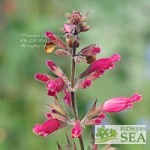
(Gray Roseleaf Sage) The University of California at Berkeley developed this hybrid from Karwinskii's Sage (Salvia karwinskii) and a variety of Roseleaf Sage (Salvia involucrata v. puberula) collected in Mexico by North Carolina nurseryman Richard Dufresne.
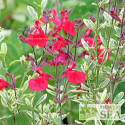
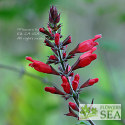
(Mister Jules Hybrid Sage) Long, dark, velvety stems contrast dramatically with the deep red flowers of this hybrid, spreading sage from the University of California, Santa Cruz, Arboretum. The parent plants are Mexican Winter Sage (S. holwayi) -- a superior, spreading groundcover or sprawling shrub -- and Cardinal Sage (S. fulgens), which is an upright shrub with large, deep red flowers.
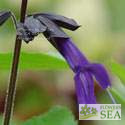
(Friendship Sage) Thank you Rolando Uria of the University of Buenos Aries for this very fine plant. Discovered in 2005 at a plant show in Argentina, this truly unique hybrid sage has generated a great deal of excitement in the Salvia world.
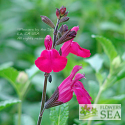
(Dark Pink Joy Sage) Salvia x 'AlegrÃa Dark Pink' is one of the most vigorous new plants at Flowers by the Sea. It is a South American introduction from Roland Uria, an agronomy professor and plant researcher from the University of Buenos Aires in Argentina. This select clone is a deep burgundy pink shade.
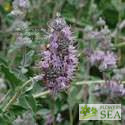
(Bee's Bliss Sage) If you are looking for a California native sage to use as a groundcover, Bee's Bliss is a fine choice. Low-growing, widespreading and colorful, it is ideal for choking weeds.
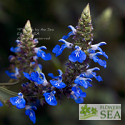
(Bog Sage) Highly adaptable, Salvia uliginosa is ideal for the beginning sage gardener. It isn't fussy about soil type, sun exposure, drainage or frequency of watering.
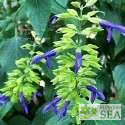
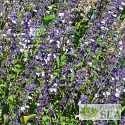
(Phyllis' Fancy Sage) The parentage of this lavender-flowered hybrid sage is unknown. However, it may be a cross between Mexican Bush Sage (Salvia leucantha) and Chiapas Sage (S. chiapensis).
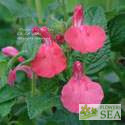
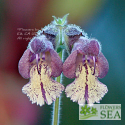
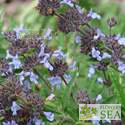
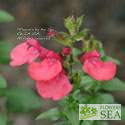
(People's Park Mountain Sage) Sometimes nature can be rebellious. This is one the Mountain Sages known as the Turbulent Sixties Series developed from an outlaw cultivar of the Southwestern native Salvia microphylla. Monterey Bay Nursery (MBN) named their accidental hybrid ‘Berzerkeley.’
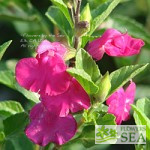
(Telegraph Avenue Dwarf Mountain Sage) Here’s another member of the Turbulent Sixties Series of Southwestern Mountain Sages (Salvia microphylla), which developed from one of nature’s rebels – an accidental hybrid that Monterey Bay Nursery (MBN) named ‘Berzerkeley’ after finding it taking a stand in the nursery’s gravel paving.
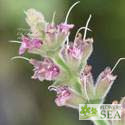
(Eig's Sage)Bicolor ruby and pale pink flowers bloom winter to spring on this small sage that is native to Northern Israel. Salvia eigii is at home in the silty, gravelly loam of low fallow fields near rivers. So it does best in rich soil aerated with plenty of humus.
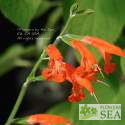
(Mystery Peruvian Sage) Airy spikes of fuzzy, bright orange-red flowers and grassy green calyxes mark this Peruvian sage as a mystery worth pursuing. Little is certain about its parentage.
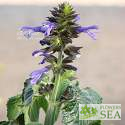
(Lolly's Mexican Sage) Our variety of Salvia mexicana 'Lolly' is the tall kind growing up to about shoulder height. A shorter form is often called "Lollie Jackson" or "Lolly Jackson." Who or what the mysterious Lolly is remains unclear.
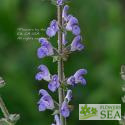
(Iranian Oil Sage) Butterflies and honeybees are drawn to the long blooming, dusky violet-blue flowers of Salvia atropatana. However, deer say no to its charms, due to its essential oils being less than tasty.
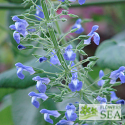
(Amethyst Sage) Growing up to 12 inches long, the triangular basal leaves of Salvia amethystina subsp. ampelophylla are the largest we know among sages. They have long silky hairs on their undersides and are fragrant when bruised.
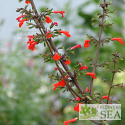
(Tall Red Colombian Sage) Salvia rubescens subsp. dolichothrix may tower over your head when in full bloom with its creamy red trumpet blossoms and dark calyxes. Its leaves are large and attractively textured.
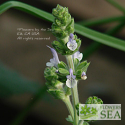
(Strong Spanish Sage) Fuzzy green stems and bracts mature to burgundy on this lovely, lavender flowered sage that roughly doubles in height when blooming. Salvia valentina is a variety of the European native S. nemorosa, a Meadow Sage.
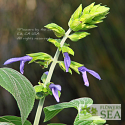
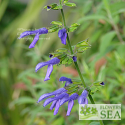
(Margie Griffith Sage) Salvia x 'Margie Griffith' is a big, purple-flowered beauty with glossy green, ribbed foliage. It feeds hummingbirds year round down South and on our coastal, Northern California farm where winter temperatures are moderate.
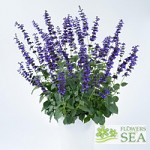
(Magic Wand Sage) Salvia x ‘Magic Wand’ is perky with vertical spikes of long blooming, rich purple flowers and dense, mid-green foliage. Overall, it reminds us of Salvia x ‘Big Blue’, but has smaller flowers and usually doesn’t grow as tall.
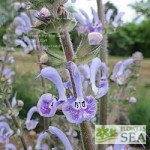
(Shangri-la Sage) Take a close look at Salvia moorcroftiana x indica ‘Shangri-la’ and you’ll notice that its lavender flowers have lighter lower lips with deep purple freckles.
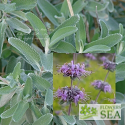
(Spreading California Purple Sage or Spreading California Gray Sage) Songbirds love this California native as do honeybees and hummingbirds. This Salvia leucophylla clone was collected in 1982 by Dr. Dale Smith of University of California Santa Barbara (UCSB #82152) at Point Sal near Santa Barbara.
The following terms were added to your search to help improve the result. Click here to exclude these extra terms from the search.
- universitys
Results for university from the blog
| Hummingbirds in the Garden |
| 1. Red Birds in a Tree: How a Rare Wildflower Became a Hummingbird Garden Star |
| Red Birds in a Tree, known botanically as Scrophularia macrantha , is a rare, cold-hardy, Wild West perennial with cheery red flowers hummingbirds love. Southwest New Mexico botanist O.B. Metcalfe collected it in 1904. |
| Sage Experts |
| 2. Sage Experts: How Dr. Dufresne Became the Sultan of Salvia |
| December 18, 2018 - With great sadness we have learned that our friend Rich as passed away at his home in Candor, NC. A chance encounter with Pineapple Sage led organic chemist Dr. Richard F. Dufresne to become one of America's leading Salvia researchers. Sage Experts focuses on specialists -- both professionals and amateurs -- who have helped popularize the Salvia genus. Dufresne's life course changed the day he visited Rhode Island's Biodynamic Meadowbrook Herb Farm. Discovering the heady pineapple fragrance of Salvia elegans at Meadowbrook gave him a cause. |
| 3. Sage Experts: Meet Salvia Researcher Jesús Guadalupe González-Gallegos |
| The FBTS Sage Experts series focuses on Salvia specialists -- both amateurs and professionals -- in settings ranging from botanic gardens to universities. This article focuses on Jesús Guadalupe González-Gallegos of the University of Guadalajara, an expert in the taxonomy of Salvias native to Western Mexico. He discusses the megadiversity of Mexican flora and problems involving incorrect identification of sage species. |
| 4. Salvia Summit II: An International Gathering of Sage Thought, March 7 to 10 |
| Salvias thrive in many different climates and parts of the world. Consequently, those who love the genus are an international tribe stretching from Alaska to Argentina and from South Africa to Southern California. Members of the tribe, from Salvia experts to home gardeners, will gather March 7 to 9 at Huntington Botanical Gardens in San Marino, California, for Salvia Summit II. Speakers will include academics, horticulturists, researchers and a forensic scientist specializing in Salvia chemistry. This event follows up on Salvia Summit I, which was held in 2008 on California's Central Coast at Cabrillo College. |
| Sage Words About Wildlife |
| 5. Sage Words About Wildlife: Climate Change Alters Hummingbird Migration |
| Nature doesn't come to a sudden, overall halt, when the timing of its ecosystems slip, including ones involving hummingbirds. Instead, change occurs gradually. Plants and the animals that pollinate them have coevolved to meet each other's needs. You can help by planting hummingbird habitat in your home garden. Learn more in the Everything Salvias Blog at FBTS Online Nursery. |
| 6. How to Defend Homes Against Wildfires & Firescape with Salvias |
| Home improvement, including landscaping, involves lots of decisions. This is especially true when modifying your property to protect against wildfires. Flammability is usually the last thought on a gardener's mind when planning what to purchase. But if you live in wildfire country and are a Salvia lover, you may have noticed sages on lists of fire-resistant plants. Read more about wildfire preparedness at FBTS. |
| Salvias Down South |
| 7. Salvias Down South: 15 Sages to Pink Up Landscapes |
| Winter is a good time for warm thoughts about rosy colors pinking up the landscape. Not only is pink pleasant, but it is soothing. As psychologists discovered in the late 20th century, it's also the color of calm and is used in serenity gardens. Flowers by the Sea details a variety of pink sages here, some of which bloom in winter. |
| 8. Battles in the Salvia Garden: Controlling Spider Mites - Part I |
| Salvias often suffer when spider mites become legion in gardens. This is Part 1 of a two-part series about understanding and overcoming these dangerous pests. As summer temperatures rise, so do the numbers of the family Tetranychidae -- spider mites -- especially if conditions are dry. Controlling spider mites in your Salvia garden may be as simple as keeping plants hydrated and regularly spraying the little nippers off foliage. Or it may take a number of interventions, including biological controls, such as predatory mites, as well as the use of insecticidal soaps, oils and pesticides |
| Ask Mr. Sage |
| 9. Ask Mr. Sage: First-Aid for Salvia Frost Damage |
| Harsh winter weather in areas that normally have mild conditions can bring unwelcome surprises, including the death of favorite plants. This article talks about how and when to remediate frost damage to favorite Salvias in warmer USDA Cold Hardiness Zones. It concludes with a sidebar about a harmful cold snap in California's Bay Area that killed plants as well as birds in 1972 and which changed planting choices at the University of California Botanical Garden at Berkeley. Ask Mr. Sage is a regular feature that is based on topics raised in calls and emails we receive at Flowers by the Sea. |
| 10. Battles in the Salvia Garden: Controlling Spider Mites - Part II |
| Pollinators lose important food sources when Salvias and other nectar-rich flowers are destroyed by spider mites. This is Part 2 of a two-part series about understanding and overcoming these dangerous pests. Along with the non-chemical interventions described in Part 1 of this series, gardeners sometimes need the help of predatory insects and mites, insecticidal soaps and horticultural oils. Pesticides called miticides may also eventually be necessary, but should be the last resort. |
| 11. Battles in the Salvia Garden: Pretty Southern Pink Moth |
| Southern Pink Moth (Pyrausta inornatalis) is diminutive and pretty, but it’s a powerful pest in Salvia gardens. As the common name indicates, it is primarily found in the South. Yet it is flitting into gardens further north. Read more to learn how to identify and control this pest. |
| Ask Mr. Sage |
| 12. Ask Mr. Sage: How to Combat Whiteflies Safely |
| Ask Mr. Sage is our blog's new question-and-answer feature, based on calls and emails received at Flowers by the Sea. This question concerns how to safely rid Salvias of Whiteflies and their eggs. |
Common terms in this search: gray roseleaf sage university california berkeley developed hybrid from karwinskii's karwinskii variety involucrata puberula collected mexico north carolina nurseryman richard dufresne northern coast begins blooming early fall continues through spring until perform annual pruning flower spikes feet long covered dozens tubular magenta blossoms inches they staple our winter cut-flower bouquets plant combines strong points both parents similar species adaptable full