
Advanced Search
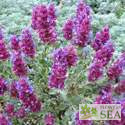
(Giant Purple Desert Sage) It’s best to plant this flamboyant native of the Southwest in spring or summer. However, once established, it tolerates winters from USDA Zones 5 to 9. Purple tubular flowers and burgundy bracts flare up its 10-inch flower spikes like flames on this softly rounded shrub.
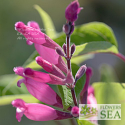
(Boutin Roseleaf Sage) Boutin means "button" in French. Perhaps the creamy, mulberry pink flowers of Salvia involucrata 'Boutin' looked cute as buttons to whoever named the cultivar.
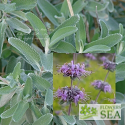
(Spreading California Purple Sage or Spreading California Gray Sage) Songbirds love this California native as do honeybees and hummingbirds. This Salvia leucophylla clone was collected in 1982 by Dr. Dale Smith of University of California Santa Barbara (UCSB #82152) at Point Sal near Santa Barbara.
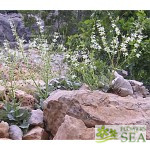
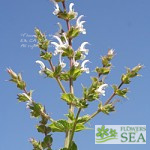
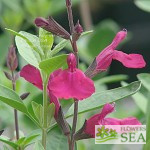
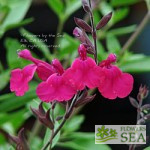
(Raspberry Autumn Sage) Dark calyxes and stems contrast intensely with the bright berry-colored flowers of Salvia greggii ‘Raspberry’. It's one of our fastest growing, earliest blooming Autumn Sages and has fragrant foliage.
The following terms were added to your search to help improve the result. Click here to exclude these extra terms from the search.
- direct, director
Results for Direct from the blog
| Ask Mr. Sage |
| 1. Ask Mr. Sage: Can I Plant Salvias in Summer? |
| Watch out for sayings that warn against planting in summer. It's a good time to transplant Salvias if you give them some extra care. Ask Mr. Sage is a regular feature of Our Everything Salvias Blog and is based on customer questions. |
| 2. Ask Mr Sage: What do I do with a dry root ball? |
| Plants may wither even if you regularly water them. When the ground surrounding a new planting's root ball is moist but the roots remain dry, that indicates moisture isn't transferring properly from the outer soil. Flowers by the Sea Nursery outlines a process for diagnosing dry root ball and combating it. |
| Xeric Choices |
| 3. Four Top Drought-Resistant Perennials for Dry Shade |
| Searching for shade-tolerant plants is difficult. Finding ones that grow well in dry conditions, especially as groundcovers, is even more challenging. Flowers by the Sea talks about different types of shade and four drought-resistant perennials for these varying levels of sun exposure. It also explains how to search the company's extensive product menu. |
| Sacred Sages |
| 4. A Guide to Growing and Respecting Sacred White Sage |
| White Sage (Salvia apiana) is a sacred plant for Native Americans, especially tribes in its Southern California native lands. It's a challenging plant to grow. Flowers by the Sea Farm and Nursery talks about the history and religious use of Salvia apiana as well as providing a guide to growing it. |
| 5. Pixels Not Print: Go Paperless in 2013 |
| Flowers by the Sea welcomes the Google "Go Paperless in 2013" initiative. From our viewpoint, it particularly highlights the need for commonsense actions, such as not publishing print catalogs. But the initiative isn't catching on fire. |
| Hummingbirds in the Garden |
| 6. 6 Indispensable Hummingbird Flowers for Long, Easy Bloom |
| Hummingbirds are like tiny combat jets dive bombing each other when staking claim to the nectar-rich flowers they need for survival. Fights over nectar habitat can reduce hummingbird gardens to single occupancy. FBTS Farm and Online Nursery details and tells stories about its top six hummingbird flowers. Plant lots of them to accommodate a village of hungry hummers. |
| 7. 6 Salvias for Shade |
| Most gardeners associate plants in the genus Salvia with full sun, rocky soil, drought and semi-arid native lands. Although a number of sages fit this picture, far more appreciate loamy, fertile garden soil. Some require lots of water. Also, a large number of sages thrive in partial shade, and some tolerate full shade. Here are six of the many shade lovers that Flowers by the Sea grows. |
| 8. Blazing Red Sages for Sun and Partial Shade |
| Warm colors tend to take center stage in a landscape as well as brightening the shade. Yet warm colors generally aren't associated with shady sage (Salvia) gardens, because there are far more shade-tolerant sages in the blue to purple range. So we decided to poke around our catalog and pull together some hot choices that thrive in partial shade. To make landscaping even easier, you may want to limit your choice of plants to one color. Massing is dramatic. |
| 9. Fall Planting: Tips for Salvia Success |
| For people and for plants, cool fall weather is comfortable for working in the garden. As gardeners dig, amend soil, weed and water, newly planted perennials focus their efforts on growing strong root systems before the chill of winter. Most perennial sages ( Salvia spp.) thrive if planted in fall. As temperatures decline, the soil remains warm. These conditions cause plants to decrease their growth above ground and focus on root expansion. Here are some tips about why and how you can succeed in the Salvia garden by planting during autumn. |
| Getting Started with Salvias |
| 10. Getting Started: Salvias for the Rocky Mountain West |
| High altitude, distance from large bodies of water and powerful chinook winds make the Rocky Mountain West a dry gardening environment even in years of higher than average rain and snow. The region's steep mountains have a major impact on where and how precipitation falls. Instead of a single mountain chain, the Rocky Mountains are made up of 100 separate ranges. Similarly, the Salvia genus contains a broad range of sages, many of which thrive in the climactic extremes of the Mountain West. |
| 11. Getting Started: How Much Sun Salvias Need |
| Answering the question of how much sunlight Salvias need is dependent on the lands and conditions in which they originated. Also called true sages, Salvias may range from full sun to full shade species. But many prefer a combination of sun and shade. Flowers by the Sea is an online, mail-order nursery where you can buy hundreds of different sages. |
| Hummingbirds in the Garden |
| 12. Hummingbird Falls Sage: Answers to Your Questions |
| Hummingbirds are vital pollinators that need lots of rich nectar to survive and keep gardens blooming. Salvia BODACIOUS 'Hummingbird Falls' is a unique hanging basket plant that is a natural replacement for plastic nectar feeders. |
Common terms in this search: giant purple desert sage it's best plant flamboyant native southwest spring summer however once established tolerates winters from usda zones tubular flowers burgundy bracts flare its -inch flower spikes like flames softly rounded shrub fragrant drought resistant heat tolerant isn't particular about soils long they drain well give lots sunshine little water performance have learned experience species grows where there