
Advanced Search
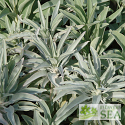
(Sacred White Sage) Bees, hummingbirds and spiritual blessings are all connected to Salvia apiana, an elegant shrubby sage that is an important herb to indigenous Californians. It deserves a place in salvia gardens that can meet its demands. Stiff and almost fleshy, its leaves are tight rosettes of brilliant, silvery green that is almost white.
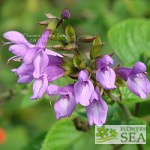
(COOL Lavender Blush Anise Scented Sage) Dusky green and red-edged bracts surround the pale-throated lavender blossoms of Salvia COOL Lavender Blush. It's a magnet for hummingbirds.
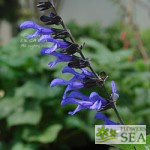
(Rhythm and Blues Anise-Scented Sage) The large, deep bluish-purple flowers of Salvia BODACIOUS ‘Rhythm and Blues’ are shaped like parrot beaks and supported by black calyxes. It's foliage smells sweet with a hint of licorice. It's superior to the old standby Salvia guaranitica 'Black and Blue'.
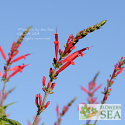
(Pineapple Sage) An indispensable fall-blooming addition to the garden, this tender perennial is, perhaps, the best of all hummingbird plants. When in bloom, it is covered in 3-inch-long red flowers.
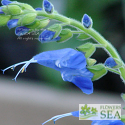
(Creeping Big Leaf Sage) Cobalt blue flowers float in airy clusters above the giant, velvety, green leaves of this South American native. Short and spreading by woody rhizomes, this is an ideal groundcover. As a bold statement in a container, it has no equal.
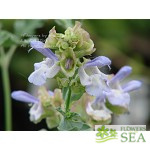
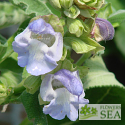
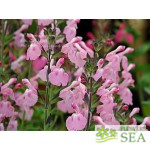
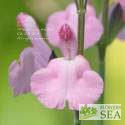
(Elk Cotton Candy Jame Sage) Rosy hairs on the upper lip and pale white throats highlight the translucent, blush pink blossoms of Elk Cotton Candy Jame Sage. Dark, deeply contrasting calyxes support the medium-size flowers.
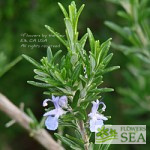
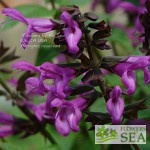
(COOL Fandango Anise Scented Sage) A combination of dark, rosy bracts and magenta blossoms make Salvia COOL Fandango dance. It’s vivid, floriferous, and a hummingbird favorite.
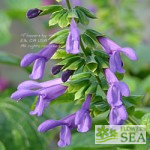
(COOL Lavender Mist Anise Scented Sage) Bright green bracts and rich lavender blossoms sing in Salvia COOL Lavender Mist. Hummingbirds keep this bountiful bloomer buzzing.
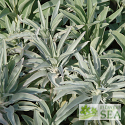
(Compact Sacred White Sage) Salvia apiana var. compacta is significantly shorter than the common species of Sacred White Sage and somewhat more cold tolerant. Its smaller leaves and compact form make it a tidier choice for home gardens with the right kind of growing conditions.
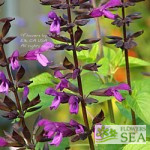
(Smokey Jazz Anise-Scented Sage) The dusky black calyxes of Salvia BODACIOUS® ‘Smokey Jazz’ support large flowers shaped like parrot beaks the unique color of boysenberries — a hue between red and purple.
The following terms were added to your search to help improve the result. Click here to exclude these extra terms from the search.
- sweet, sweeten, sweetness
Results for Sweet from the blog
| 1. The Power of Scent |
| While it's true that not all Salvias smell, well, pleasant, many varieties are grown specifically for the aromatic or even sweet aromas that they release into the air. These ten Salvias are our top picks for the best-smelling varieties in the garden. |
| Sage Words About Wildlife |
| 2. Sage Words About Wildlife: Do Deer Devour Salvia? |
| Salvias are not a favorite food for deer. However, they will eat some when plants they consider tasty are in short supply. There is no such thing as deer-proof plants, but you can limit deer damage to your landscaping and vegetable garden by planting lots of sages and other plants that aren't among deer favorites. |
| Sage Experts |
| 3. Sage Experts: Nancy Newfield, Hummingbird Gardener, Part III |
| It is ironic that one of the least social types of birds inspires so much sociability in human beings. We refer to hummingbirds, which are the object of festivals and the communal effort of bird banding research nationwide. This is the third and final article in a series about renowned hummingbird expert Nancy L. Newfield, who grows many Salvias in her hummingbird gardens. We recount a visit to Louisiana to observe Newfield and her team banding hummingbirds in winter. You'll also find a rainbow of top hummingbird Salvias listed here. (Photo credit: John Owens) |
| 4. 15 Select Salvias for Dry, Partial-Shade Gardening |
| Learning how to garden in dry shade requires mediation of the needs of all the plants involved. Dry shade is particularly abundant under trees, because they consume lots of water. Fortunately, numerous drought-resistant Salvias can handle life in dry, partial shade. Flowers by the Sea details basic considerations of dry shade gardening and identifies 15 sages for it. |
| 5. A Community of Anise Scented Sages We Adore |
| You might expect the foliage of a plant called Anise-Scented Sage (Salvia guaranitica) to smell robustly like licorice, which shares the same fragrance as anise. Some gardeners detect a hint of licorice after crushing a leaf, but many say the foliage merely smells sweet. These popular sages are native to Brazil where indigenous peoples used their leaves as a medicine. Flowers by the Sea grows many varieties in a wide range of sizes and flower colors |
| Hummingbirds in the Garden |
| 6. Bat-Faced Beauty: Gardeners & Hummingbirds Love Cuphea schumannii |
| Most bat faces only look beautiful to their mothers. However bat-faced Cuphea schumannii seems pretty as punch to hummingbirds in search of a sweet drink of nectar. If you take a close look at the ragged, open end of each flower, you'll see two, tiny, lavender petals standing straight up like bat or mouse ears. So, despite its common name, Orange Cigar Plant, this species is known as a bat-faced Cuphea. Aside from being excellent for attracting pollinators, Cupheas are becoming important agricultural crops that reduce pesticide use. |
| Xeric Choices |
| 7. Drought Praise: 5 Hot Red Salvias for Hummingbirds |
| Hummingbirds love the nectar of Salvias, particularly red ones, which they can see but bees can't. Also, unlike most birds, hummingbirds can taste sweets and seek out flowers that produce lots of sugary nectar. However, nectar can be difficult to come by during drought. The Salvia genus is well known for its bright flowers, rich nectar and many drought-tolerant plants. We suggest five bright red, drought-tolerant Salvias that hummingbirds love. |
| Getting Started with Salvias |
| 8. Getting Started: Salvias for the Rocky Mountain West |
| High altitude, distance from large bodies of water and powerful chinook winds make the Rocky Mountain West a dry gardening environment even in years of higher than average rain and snow. The region's steep mountains have a major impact on where and how precipitation falls. Instead of a single mountain chain, the Rocky Mountains are made up of 100 separate ranges. Similarly, the Salvia genus contains a broad range of sages, many of which thrive in the climactic extremes of the Mountain West. |
| New at FBTS |
| 9. Grow a Riot of Color with New Salvia Cottage Garden Collections |
| Cottage gardens make humble homes look spectacular with their densely packed color and foliage. FBTS Cottage Garden Collections are designed to brighten your yard with a riot of Salvias and companion plants. |
| Butterflies in the Garden |
| 10. Growing Habitat: Three Tough Milkweeds to Help Monarchs |
| Flowers by the Sea Farm and Online Plant Nursery is serious about wildlife gardening and grows a number of milkweed species considered among the best for supporting Monarch butterflies. Three of the nursery's toughest, loveliest milkweeds are Indian Milkweed (Asclepias eriocarpa), Showy Milkweed (Asclepias speciosa) and Common Milkweed (Asclepias syriaca). Read about the history of milkweeds and the reasons why Monarch butterflies are threatened due to a shortage of these tough yet lovely plants caused by herbicides. Learn how herbicides and pesticides harm Monarchs and other milkweed-loving pollinators. |
| Hummingbirds in the Garden |
| 11. How David Verity Cuphea Became a Famous Hummingbird Flower |
| When massed in borders or standing out as a main attraction in a container planting, Cuphea x ‘David Verity’ is a visual feast for people as well as an actual feast for small wildlife. Rich in nectar, the plant’s dainty, cigar-shaped, orange-red flowers nestle amid a cloud of mid-green leaves shaped like tiny garden trowels. |
| 12. Leonotis: Mint Family Members that Roar in the Landscape |
| Orange is an aggressive color in the garden. It doesn't purr. The fuzzy, shaggy, hot orange flowers of Lion's Ear ( Leonotis ) growl for attention. Their stems are so tall that they may reach up to 6 feet, towering over the foliage like gawky Dr. Seuss blossoms. You'll find them at Flowers by the Sea Online Nursery. |
Common terms in this search: sacred white sage bees hummingbirds spiritual blessings all connected apiana elegant shrubby important herb indigenous californians deserves place insalvia gardens can meet its demands stiff almost fleshy leaves tight rosettes brilliant silvery green flower spikes soar above foliage hundreds small white-to-lavender flowers one most sources pollen nectar pollinators along southern california's coast mountains valleys also source native american smudge sticks