
Advanced Search
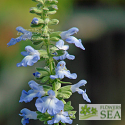
(Big Pitcher Sage) As its scientific name indicates, this sage has very large flowers. They are almost two-tone, changing from deep violet to a light blue or white at their base where they are cupped by dusky purple calyxes.
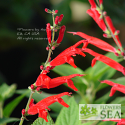
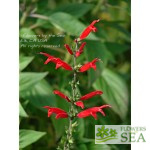
(Elk Sonoran Red Pineapple Sage) A new Pineapple Sage variety that has the traditional fruity fragrance but blooms much earlier in the season than the traditionally grown clone. Short and compact, it resembles the varieties 'Honey Melon' and 'Tangerine' size wise, but has the unmistakable aroma of ripe pineapples.
Results for finally from the blog
| Business Buzz |
| 1. Buying Salvias Online from FBTS: How to Order & What to Expect - Updated |
| When you purchase plants online, it's understandable to feel a bit nervous. After all, a tender green life is being sent to you in a box. Will it survive the journey in healthy condition? Also, how secure will your credit card information and other data be? Furthermore, how do you sort through all those plants in the online catalog? Flowers by the Sea provides answers. |
| Bees in the Garden |
| 2. Types of Bees Working in Your Garden |
| America buzzes with bee diversity, including 4,000 native species and many types of nonnative honeybees. Flowers by the Sea details the variety and value of our imperiled bees. This is the second article in a two-part series focused on identifying and understanding bees, becoming aware of threats to their survival and noting ways gardeners can protect these tiny wildlife. It includes tips on how to avoid bee stings. |
| Hummingbirds in the Garden |
| 3. 6 Indispensable Hummingbird Flowers for Long, Easy Bloom |
| Hummingbirds are like tiny combat jets dive bombing each other when staking claim to the nectar-rich flowers they need for survival. Fights over nectar habitat can reduce hummingbird gardens to single occupancy. FBTS Farm and Online Nursery details and tells stories about its top six hummingbird flowers. Plant lots of them to accommodate a village of hungry hummers. |
| 4. A Community of Anise Scented Sages We Adore |
| You might expect the foliage of a plant called Anise-Scented Sage (Salvia guaranitica) to smell robustly like licorice, which shares the same fragrance as anise. Some gardeners detect a hint of licorice after crushing a leaf, but many say the foliage merely smells sweet. These popular sages are native to Brazil where indigenous peoples used their leaves as a medicine. Flowers by the Sea grows many varieties in a wide range of sizes and flower colors |
| Ask Mr. Sage |
| 5. Ask Mr. Sage: Can I Plant Salvias in Summer? |
| Watch out for sayings that warn against planting in summer. It's a good time to transplant Salvias if you give them some extra care. Ask Mr. Sage is a regular feature of Our Everything Salvias Blog and is based on customer questions. |
| 6. Ask Mr Sage: What do I do with a dry root ball? |
| Plants may wither even if you regularly water them. When the ground surrounding a new planting's root ball is moist but the roots remain dry, that indicates moisture isn't transferring properly from the outer soil. Flowers by the Sea Nursery outlines a process for diagnosing dry root ball and combating it. |
| 7. Ask Mr. Sage: What Size Pot Is Best for Transplanting Sages? |
| After your Salvias from Flowers by the Sea arrive, what size pots should you transplant them in for your container garden? The answer depends on the kind of sages you need to transplant. Ask Mr. Sage is a regular feature in our FBTS Everything Salvias Blog that answers customer questions about growing sages and companion plants. |
| 8. Ask Mr. Sage: Where Can You Grow Agastache? |
| Hummingbirds love Agastache. Mr. Sage explains that just because one kind of Agastache is wrong for your climate, it doesn't mean they all are and that the genus is native to most of the United States. Ask Mr. Sage is a regular feature in our Everything Salvias Blog that answers customer questions. |
| 9. Ask Mr. Sage: How to Use the 'Email Me When Back in Stock' Button |
| Ask Mr. Sage is a question-and-answer feature based on topics raised in calls and emails that Flowers by the Sea receives. This post concerns the FBTS "Email Me When Back in Stock" button -- a feature on our plant description pages that allows customers to request notification as soon as out-of-stock plants become available again. |
| 10. August in the Salvia Garden |
| August is a time when many sages grow rapidly and feed a frenzy of pollinators in need of rich nectar and pollen. It's hot, so you have to be careful not to let plants or yourself wilt. Here are some tips for tasks from watering to planning when tending your garden this month. |
| 11. Battles in the Salvia Garden: Controlling Spider Mites - Part II |
| Pollinators lose important food sources when Salvias and other nectar-rich flowers are destroyed by spider mites. This is Part 2 of a two-part series about understanding and overcoming these dangerous pests. Along with the non-chemical interventions described in Part 1 of this series, gardeners sometimes need the help of predatory insects and mites, insecticidal soaps and horticultural oils. Pesticides called miticides may also eventually be necessary, but should be the last resort. |
| Hummingbirds in the Garden |
| 12. 5 Big Orange Bedding Plant Beauties for Hummingbirds |
| You'll hear a lot about red when planting annuals for wildlife gardens, because hummingbirds garden love red, tubular, nectar-rich flowers. But orange is another hummingbird favorite not to be neglected. Flowers by the Sea suggests five long blooming species for your landscape that begin shouting "Orange, orange, orange" in spring when hummingbirds are big-time hungry now, now, now as they head north for the nesting season. |
Common terms in this search: big pitcher sage its scientific name indicates has very large flowers they almost two-tone changing from deep violet light blue white their base where cupped dusky purple calyxes tall sprawling stems just right mixed plantings how grow wild texas nebraska great prairie heat- cold-tolerant superb choice native garden it's also home back middle more refined borders anywhere put expect bees